
REVIEW · MARRAKECH
Marrakech: Cycling Tour in Palm Groove with Local Breakfast
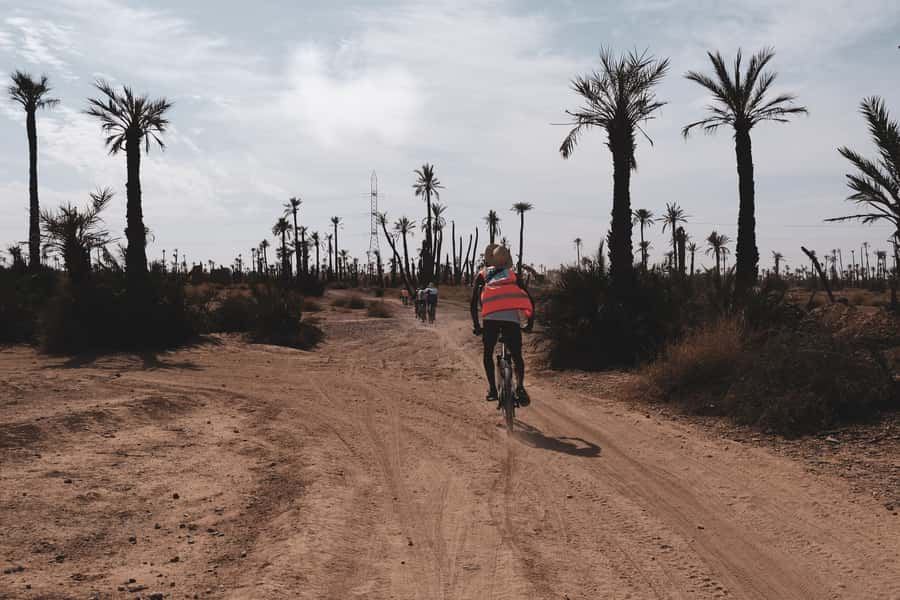
The best part of this Marrakech cycling tour is the quick change of scenery. Within about 15 minutes of leaving the city center, you move from Medina streets and grand villas to dirt tracks, palm trees, small villages, and old water channels. I like the easygoing local contact at Aziz’s atelier, and I like that the ride explains how water, bread, palms, and craft work shape daily life. The main catch is the city riding at the start and finish, which can feel tense if you are not used to cycling in narrow Marrakech streets.
I also like the tour’s human scale. Guides such as Ahmed, Yassim, Ayoub, and Khawla are young local cyclists who explain their own culture rather than delivering a dry script. Allow for roughly 17 kilometers of riding, mostly flat, and remember that hotel or riad pickup is not included.
Key points before you book
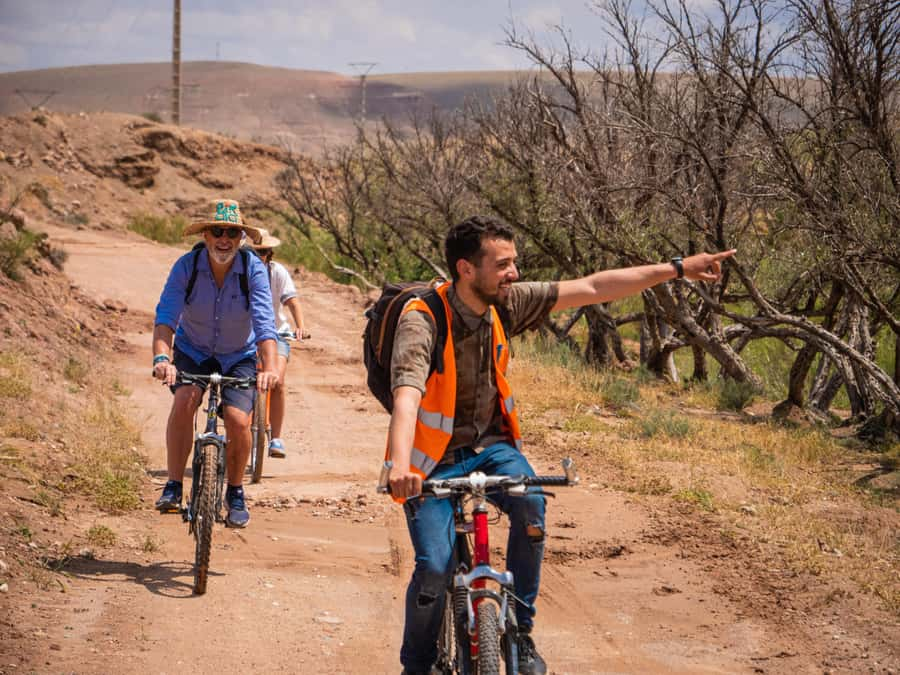
- Leave the Medina behind by bicycle: The first and last sections involve city cycling, with guides helping you handle the streets.
- Reach the Palmeraie without a long transfer: The palm oasis is accessed under your own power, making the change from city to countryside part of the experience.
- Break bread with Aziz: Tea, juice, Moroccan pastries, fresh bread, butter, and olive oil are served in a peaceful local setting.
- See water at work: An old irrigation system helps explain how communities have supported life in this dry area.
- Meet working craftspeople: Small zellige tile workshops show the patient handwork behind Moroccan decoration.
- Spend two and a half hours outside: Bikes, water, suncream, and the food stop are included for $34 per person.
From Pikala Bikes to the palm oasis
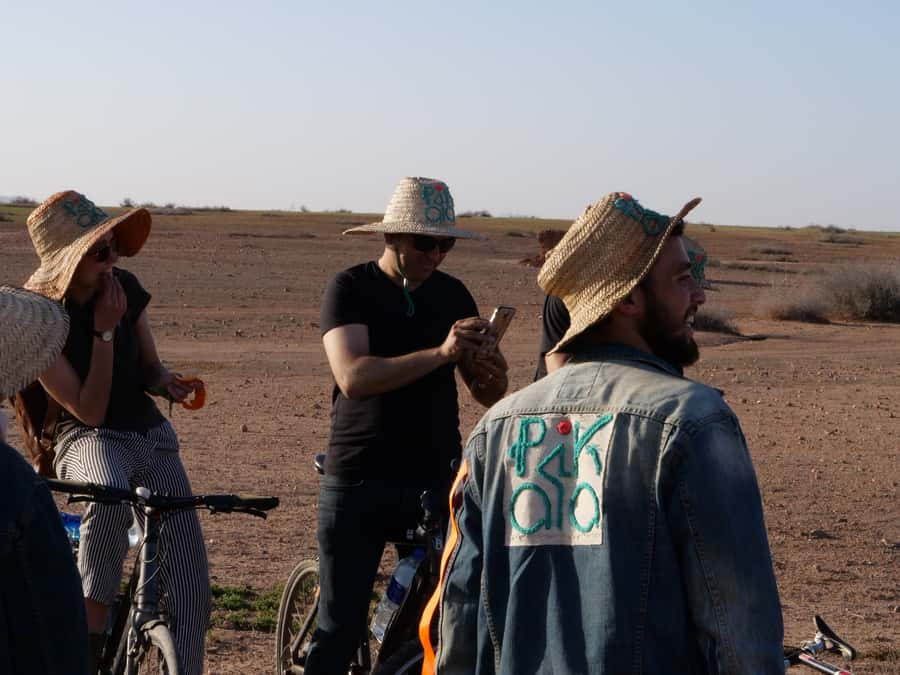
Your starting point is the Pikala Bikes headquarters. This is not a coach excursion with a short photo stop. You begin on a bicycle and make the transition from central Marrakech to the Palmeraie yourself.
The city section takes about 15 minutes from the center before the route opens up. At first, you may need to concentrate more on traffic, corners, pedestrians, and the rhythm of Medina streets than on the scenery. That is the part that makes some riders nervous. One parent riding with her daughter found the Medina cycling difficult at first, but said the guide’s calm help soon made her feel in control.
That is useful advice: do not book this expecting a silent, traffic-free ride from the first turn. You need basic confidence on a bicycle. The guides are there to help with safety and route finding, but you still need to pay attention.
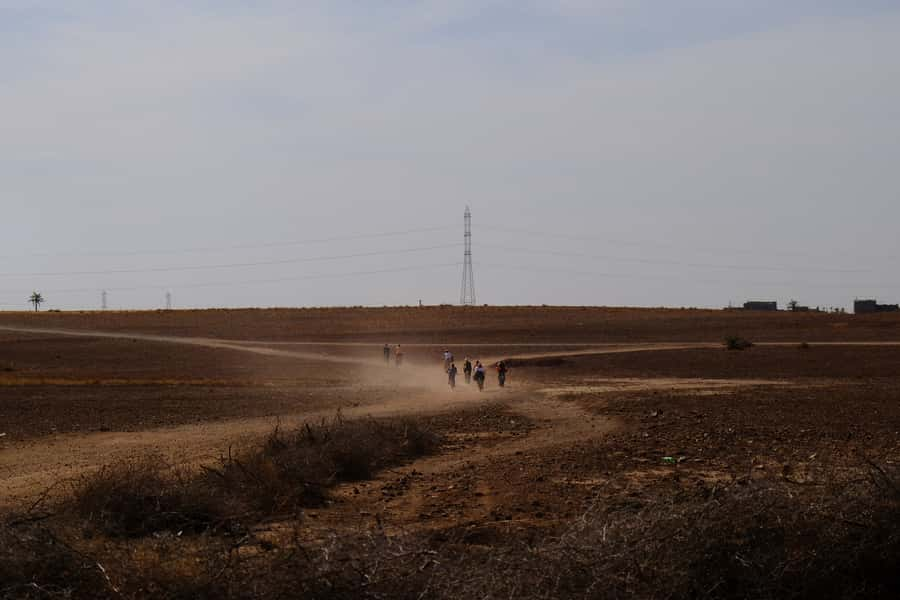
The payoff comes quickly. The paved city setting gives way to off-track roads and quieter paths through the oasis. The route passes large villas and castle-like properties before reaching small villages where local life feels far removed from Marrakech’s hotel districts.
The contrast is the point. You see the money that has flowed into the Palmeraie, then ride into communities where people still depend on old systems, local ovens, palm trees, and small workshops. A taxi could take you to the palm grove, but it would not give you this gradual change.
More Cycling Trips in Marrakech:
- Marrakech: Cultural Bicycle Tour with Pastry and Tea
★ 4.8 · 583 reviews - Marrakech: Bicycle Tour with a Local Guide
★ 4.7 · 495 reviews - Marrakech : Electric Bicycle City Tour
★ 4.8 · 363 reviews
Palmeraie life beyond the villas
The Palmeraie is not simply a row of palm trees set aside for sightseeing. It is an oasis with homes, workshops, cultivated areas, paths, and a long relationship between people and water.
Your guide explains the importance of the palms and the ways local communities continue to live in a difficult dry setting. That context matters. Without it, the palm grove can look like a pretty backdrop for a bike ride. With it, you begin to see why the trees matter and why water management has always been central here.
The guides also add a personal angle. Yassim, for example, has spoken about growing up in Morocco and about the area and its customs. Ahmed has been especially attentive to riders’ needs and safety, while Khawla has brought extra attention to culture and architecture. Your guide may be someone else, but the experience is built around local voices.
The route has been described as a fairly gentle, flat ride, although the total distance can reach about 17 kilometers. That makes it manageable for regular casual cyclists, but it is not a short pedal around a garden. You will be out for 150 minutes, with riding, stops, food, and conversation all included.
If you cycle often, the pace should feel relaxed. If you rarely ride, the length and city traffic deserve an honest look before booking. The guides can make the route easier, but they cannot remove the need to pedal.
Aziz’s tea stop and Moroccan breakfast
The food stop is one of the tour’s most appealing details because it takes place with a local host rather than in a standard café aimed at tour groups.
At Aziz’s atelier, you sit down for tea or juice with Moroccan pastries, fresh bread, butter, olive oil, and other simple breakfast items. The meal is not presented as a formal restaurant service. It is a chance to pause, talk, and hear Aziz’s stories in his own setting.
I like this kind of stop because the food explains more than a menu can. Bread, olive oil, butter, and tea are basic parts of Moroccan hospitality, and sharing them in a quiet place gives the ride a welcome pause. You are not rushing from one attraction to the next with a camera in one hand and a snack in the other.
The setting also helps break up the ride. After city streets and rougher tracks, sitting down with a drink and fresh bread gives your legs a rest. The stop is included in the $34 price, along with water, suncream, and the bicycles.
Do not expect a large breakfast buffet. The supplied details describe a modest local spread of bread, pastries, butter, olive oil, and drinks. If you need a substantial meal before cycling, eat something beforehand. The food is part of the cultural visit as much as it is fuel.
An old irrigation system in a dry country
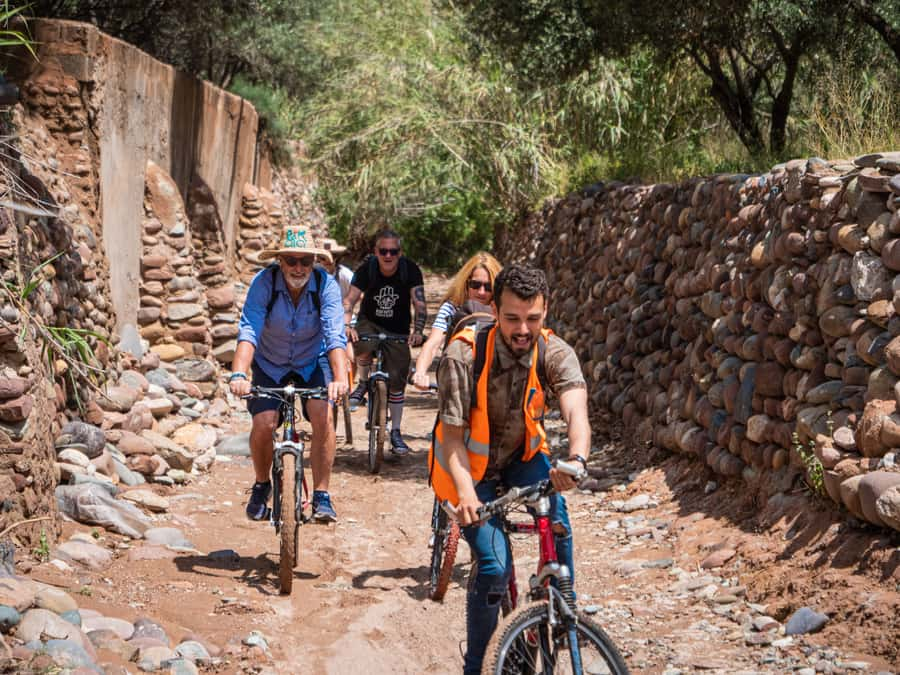
The water stop gives the tour its strongest practical lesson. Marrakech sits in a dry part of Morocco, so an oasis cannot survive on palm trees alone. Your guide explains the old irrigation system and how communities have moved and shared water across the area.
This is the kind of detail that changes how you read the scenery. A palm grove may look natural at first glance, but the life around it depends on planning, maintenance, and local knowledge. The visit helps you understand why water is treated as precious and why the survival of village communities is tied to these systems.
The tour does not include entry to the Water Museum. That is important to note because the irrigation stop and the museum are separate things. You can see and discuss the old water system on the cycling route, but museum admission is not part of the $34 fee.
The guide’s explanation is likely more valuable here than a quick photograph. Ask questions about how the channels work, who maintains them, and how the palm grove has changed. The listed tour languages are English and French, so choose the language in which you can ask detailed questions comfortably.
Same roads, a different saddle:
- Cycling Adventure in Marrakech
★ 5.0 · 289 reviews - Dutch Bike Tour in Marrakech with Local Guide
★ 4.7 · 269 reviews - Marrakech:Guided City Cycling Tour – Culture, Colors & Charm
★ 4.7 · 231 reviews - Marrakech’s Best Cycling Tour: Culture, Colors, and Charm
★ 5.0 · 154 reviews
Bread baked in a village oven
One of the more memorable stops is a local oven where villagers bake bread. You see women preparing and cooking bread in an open-air setting, and the guide explains why bread carries such weight in Moroccan culture.
This is a small scene, but it gives you a direct look at ordinary work. Moroccan food is often presented to visitors as finished dishes in restaurants. Watching bread being made shows the labor and routine behind a food that appears at almost every table.
The stop also pairs well with the breakfast at Aziz’s place. First, you eat fresh bread as part of a welcome. Then, you see how bread is prepared and baked in the community. That connection makes the meal more meaningful without turning the visit into a cooking class.
Be respectful here. A village oven is a working place, not a staged attraction. Follow your guide’s instructions about where to stand and when to take photos. The details provided do not promise hands-on baking, so expect to watch and learn rather than make bread yourself.
Zellige workshops and the patience of tile work
The route includes several stops at small Moroccan tile workshops. Zellige, often written zellij, is the familiar Moroccan tile art made from carefully shaped and arranged pieces.
These ateliers offer a look at the craft behind the patterned surfaces you see in palaces, riads, fountains, and public buildings. The attraction is not just the finished pattern. It is the close work, repetition, and skill needed to turn small pieces into geometric designs.
This is another reason the bicycle route works well. You are not only visiting major monuments. You are seeing modest working spaces where craft remains part of local life. The stops are brief enough to fit the cycling itinerary, but they add useful context to the architecture you will notice elsewhere in Marrakech.
If you want to buy souvenirs, ask the guide how the workshop visits work. The supplied details confirm that you meet Moroccan craftspeople, but they do not promise shopping time, prices, or a sales-free visit. Go mainly for the demonstration and conversation.
What the $34 price really covers
At $34 per person, this is good value if you want more than a bicycle rental. The price includes the bike, water, suncream, the guided route, local explanations, the tea or juice stop, pastries, and breakfast foods at Aziz’s place.
The strongest value comes from the access and structure. You get a guide to lead you safely out of the Medina, interpret the irrigation system, introduce village life, explain bread culture, and point out tile work. Arranging all of those contacts independently would take time and local connections.
The price does not include transport to Pikala Bikes, hotel or riad pickup, hotel or riad drop-off, or the Water Museum. Plan your route to the headquarters before the start time. If you are staying deep inside the Medina, allow extra time to walk to the meeting point.
You also receive a flexible booking policy. You can cancel up to 24 hours before the activity for a full refund, and you can reserve now and pay later. Starting times depend on availability, so check the chosen date carefully.
The total duration is 150 minutes. That is long enough for a proper outing but short enough to fit around another Marrakech plan. I would avoid scheduling a tight lunch reservation immediately afterward, since city riding, stops, and conversation can affect the exact return time.
Who will enjoy this ride most
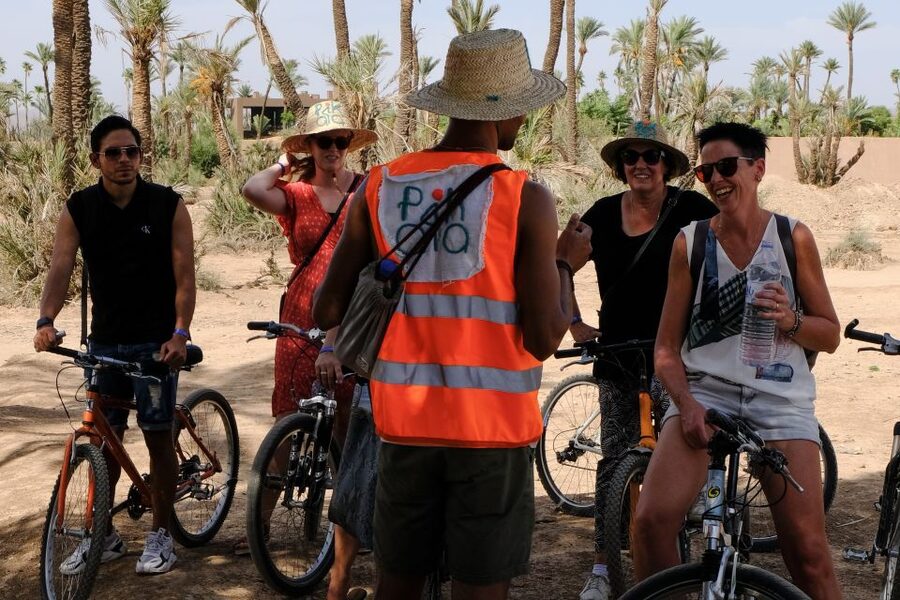
This tour suits you if you want to see how Marrakech extends beyond the famous squares and palaces. It is especially good for people who like local food, working crafts, environmental subjects, and meeting residents in smaller communities.
It also suits families with older children who can ride confidently. The guide’s patience helped one mother and daughter settle into the Medina section, but the tour still requires attention and stamina.
Regular cyclists should find the flat route comfortable. You do not need a racing bike or mountain-bike skills based on the route description, but you should be ready for off-track roads and city streets. Wear practical clothes, bring sun protection, and choose shoes that work for a few hours on a bicycle.
You may want to skip it if you dislike riding in traffic, want a luxurious villa tour, or prefer a fully passive sightseeing experience. The route is gentle in effort but active in attention. You are part of the outing from start to finish.
A better way to judge the guides
The guide can make or break a cycling tour, and this experience puts considerable weight on that person. The most praised qualities are patience, clear communication, attention to safety, and a willingness to answer questions.
Ahmed has been described as humble, patient, and careful about rider needs. Yassim has shared personal detail about growing up in Morocco. Ayoub has led an enjoyable outing, while Khawla has brought energy to cultural and architectural explanations.
Names can change from one departure to another, so you should not book only because you want one particular guide. Instead, look for the qualities the team is known for: calm support in the Medina, useful local explanations, and a relaxed manner.
The guide also sets the pace. If you are nervous, say so at the start. If you want more detail about irrigation, bread, or tile work, ask. This is a small-group style experience where questions can make the difference between a pleasant ride and a genuinely useful one.
Should you book the Palmeraie cycling tour?
Book it if you want a moderately active half-day outing that connects Marrakech’s city streets with village life in the Palmeraie. The combination of palm groves, irrigation, a local breakfast, bread baking, and zellige workshops gives you a broader picture than a simple sightseeing ride.
The best reasons to go are the local guide contact, the gentle mostly flat route, and the chance to see ordinary work rather than only polished attractions. The main reasons to hesitate are the Medina traffic, the roughly 17-kilometer riding distance, and the lack of hotel pickup.
For $34, the tour offers solid value, especially because food, bicycle, water, and guidance are included. I would choose it early in a Marrakech stay, when it can help you understand the city’s water, villages, architecture, and food before you spend the rest of your visit exploring on foot.
FAQ
Where does the cycling tour start?
You meet at the Pikala Bikes headquarters.
Is hotel or riad pickup included?
No. Hotel or riad pickup and drop-off are not included.
How long does the tour last?
The activity lasts 150 minutes, or two and a half hours.
What languages are available?
The live tour guide can lead the experience in English or French.
What food and drinks are included?
You receive water, tea or juice, Moroccan pastries, fresh bread, butter, olive oil, and other breakfast items at Aziz’s place.
Is the Water Museum included?
No. A visit to the Water Museum is not included.
Can I cancel for a full refund?
Yes. You can cancel up to 24 hours in advance for a full refund.
Do I need to pay when I book?
You can reserve now and pay later, which allows you to keep your plans flexible.
Newest rides we have reviewed in Marrakech
- Rental Bike at Marrakech by: Go Green★ 5.0 · 24 reviews
- Marrakech by city bike tur★ 4.0 · 13 reviews
- Suncycling in Marrakech’s Palm Groove – Breakfast Included★ 5.0 · 25 reviews
- From Marrakech: Biking Day trip Atlas Mountain & Berber villages★ 5.0 · 21 reviews
- Marrakech’s Best Cycling Tour: Culture, Colors, and Charm★ 5.0 · 154 reviews
- Biking day trip Atlas Mountains★ 5.0 · 32 reviews
- Marrakech Food Tasting Tour by Bike★ 5.0 · 50 reviews
- Half-Day Highlights of Marrakesh Bike Tour★ 5.0 · 84 reviews
Marrakech Cycling Tours, compared.
Guided City Cycling Tour – Culture, Colors & Charm
Read our review →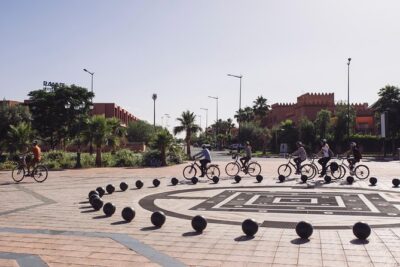
Marrakech’s Best Cycling Tour: Culture, Colors, and Charm
Read our review →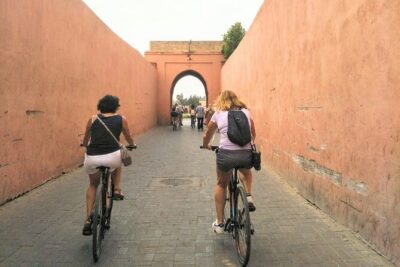
Other lists this ride turns up in