
REVIEW · MARRAKECH
Marrakech: Cultural Bicycle Tour with Pastry and Tea
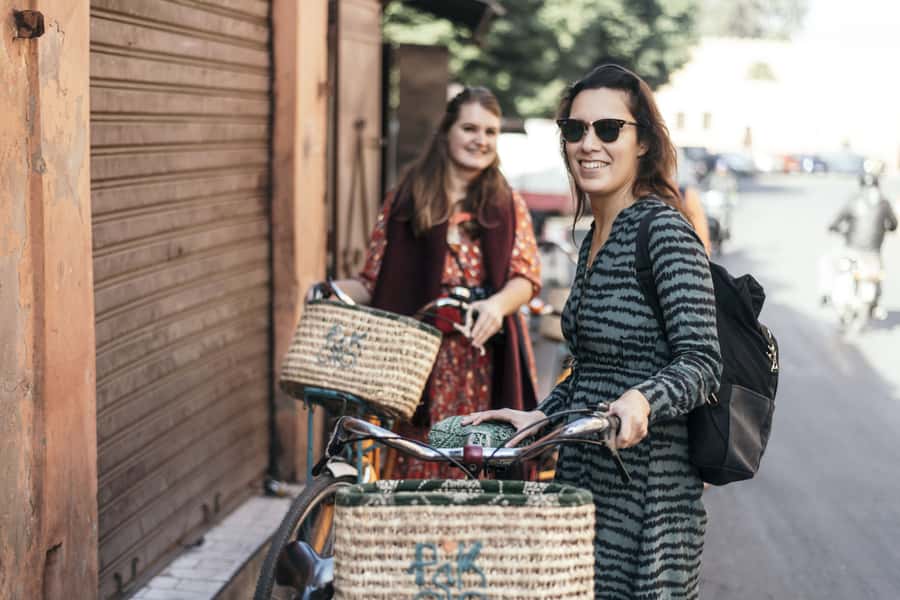
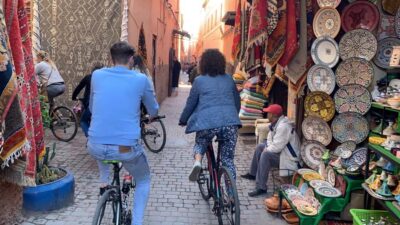
Marrakech makes more sense from a bicycle. You slip through narrow medina lanes, pass donkeys and mopeds, then roll into broad modern boulevards where cafes and hotels replace souk stalls. The contrast is the point, and the local guides make it meaningful by explaining everyday life, not only monuments.
I like the visit to the community bakery, where bread goes into a clay oven, and the stop at a zellige workshop, where artisans shape the small geometric tiles found across Morocco. I also like that Pikala trains Moroccan youth as guides, giving you a more personal look at the city while supporting a social enterprise.
The catch is traffic. The first hour can be tense, especially in crowded alleys shared by pedestrians, mopeds, carts, and donkeys. You should be a confident cyclist and stay alert, but the pace is gentle, the route is mostly flat, and guides such as Hamid, Rabab, Ayoub, Yassir, and Kenza are attentive about keeping the group together.
Key points at a glance
- Bread baked in a clay oven: See how a daily staple is made and taste it fresh.
- Zellige craftsmanship: Watch Moroccan tile work up close instead of seeing it only on palace walls.
- A look at the hammam: Learn how public bathhouses function as places for washing, routine, and social life.
- Old and new Marrakech: Ride from medina lanes to Gueliz and Hivernage boulevards.
- Good social purpose: Pikala Bikes trains Moroccan youth to lead cultural tours.
- Strong value at $34: Water, fruit, suncream, local stops, and a cafe break with pastries and tea are included.
Why a bicycle gives you a better view of Marrakech
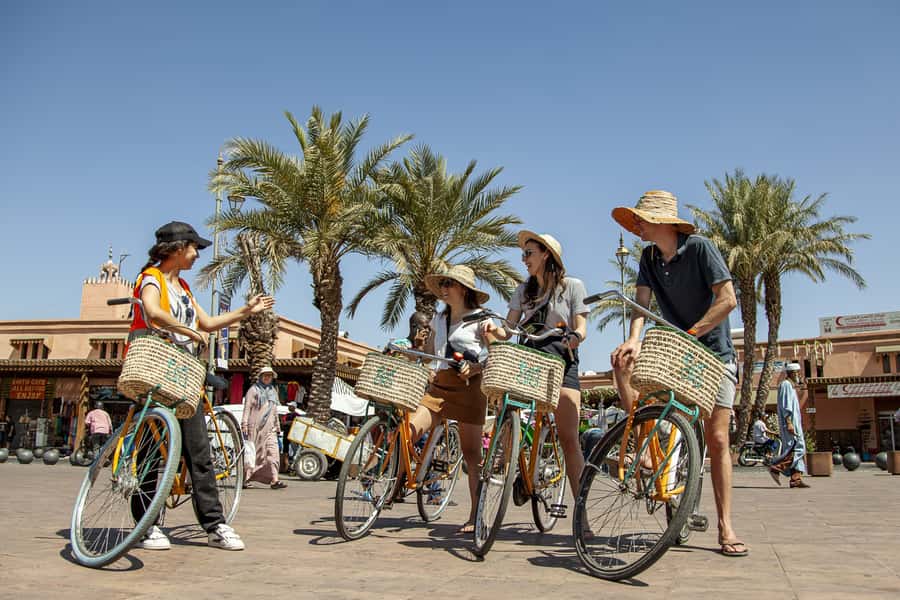
A walking tour can show you the medina. A taxi can move you across town. A bicycle does something different: it connects the two sides of Marrakech at street level.
You begin at Pikala Bikes and head into the old city, where the route becomes a moving lesson in how the medina works. You are not simply looking at old walls. You are watching people carry goods, moving around corners with very little space, and seeing how daily business continues in streets designed long before modern traffic.
The ride then opens out toward newer parts of the city. Gueliz and Hivernage bring wide roads, cafes, luxury hotels, and a more modern rhythm. That change helps you understand Marrakech as a living city rather than a museum built around the souks.
The tour lasts three hours and costs $34 per person. For that price, you receive the bike, water, fruit, suncream, entry to the local stops, and a cafe visit with Moroccan pastries and drinks. I consider that good value, especially if you want cultural context rather than a simple sightseeing ride.
More Cycling Trips in the world:
- Lion City Bike Tour of Singapore
★ 5.0 · 6,211 reviews - Big Bike tour Amsterdam – See all in 3 unforgettable hours
★ 4.7 · 4,929 reviews - 3-Hour Porto Highlights on a Electric Bike Guided Tour
★ 5.0 · 4,392 reviews
Starting in the medina with Pikala Bikes
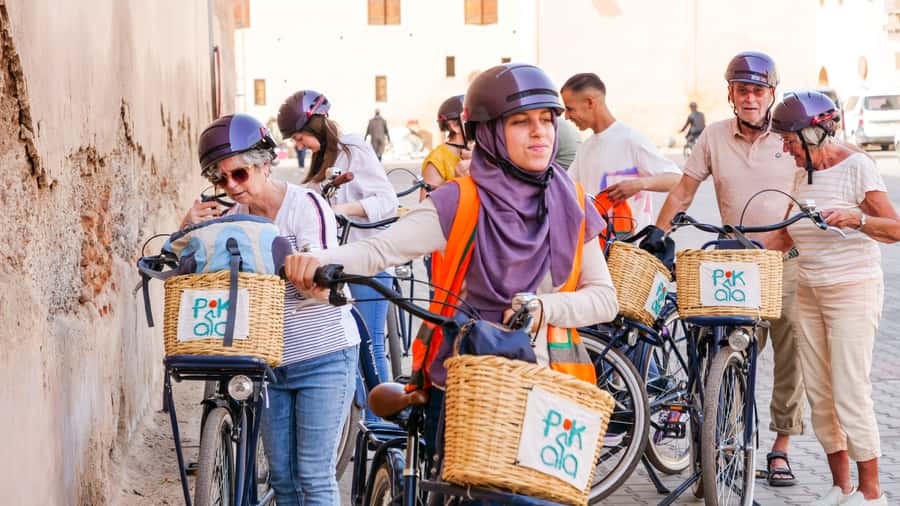
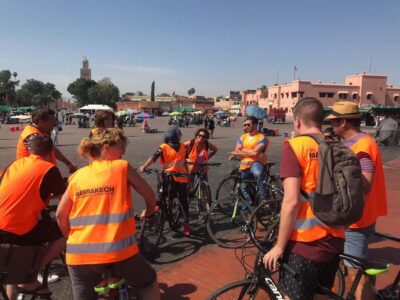
The meeting point is the Pikala Bikes headquarters. From there, your guide sets the pace and helps the group get comfortable with the bikes before the route becomes more crowded.
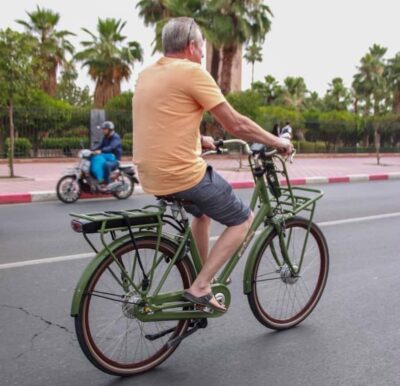
Pikala uses Dutch-style bicycles. They are described as solid, with comfortable saddles, though some riders find them a little heavy. The ride itself is not fast, and the route is mostly flat, but handling a bicycle at low speed around people and vehicles demands attention.
Guides have received particular praise for being friendly, patient, and careful. Hamid, Rabab, Ayoub, Yassir, Sayid, Kenza, Yasmin, Khalil, and others have led tours in English or French. Names and assignments can change, but the important point is the guide’s role. You need someone who can explain the culture while also watching the road, and Pikala’s guides appear to take both jobs seriously.
Wear loose clothing and comfortable shoes. Long skirts and dresses can catch on the bike or make pedaling awkward. Bring a light layer if you ride early or on a cooler day, since one morning rider found a jumper useful when the sun disappeared.
Sidi Bel Abbas and the medina’s quieter corners
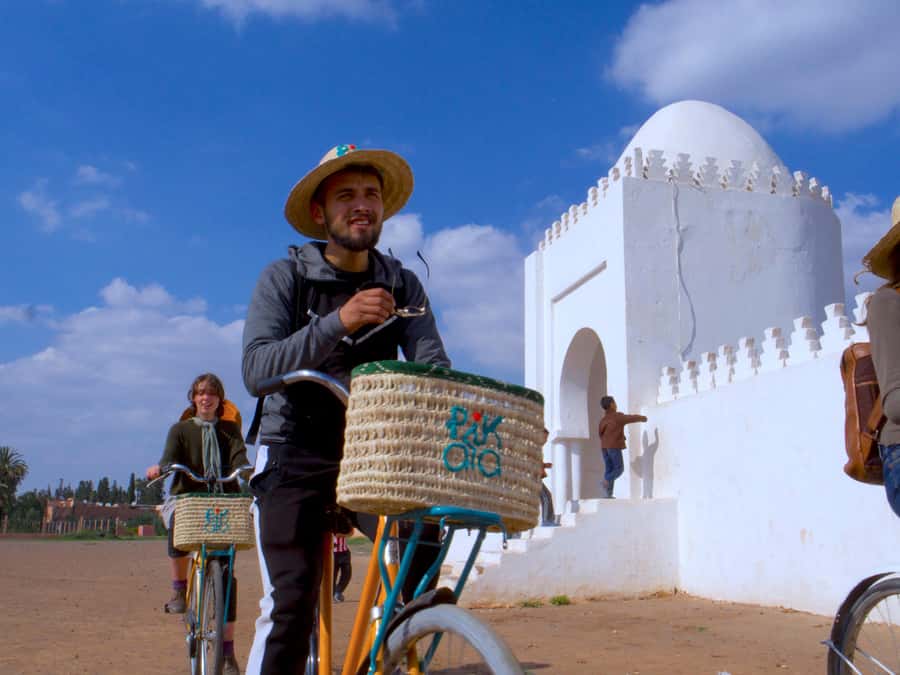
One early stop is the Zawiya of Sidi Bel Abbas, where you pause for about 15 minutes. A zawiya is associated with religious teaching and spiritual practice, so this stop gives your guide a chance to explain a side of Marrakech that is easy to miss while rushing between markets.
The tour also passes several less obvious corners of the medina. The exact stops may feel like small details, but that is where the ride earns its keep. A guide can point out how neighborhoods are arranged, how local businesses operate, and what you are seeing beyond the usual postcard subjects.
You should expect short stops rather than long formal visits. The rhythm is ride, pause, listen, and continue. That keeps the three-hour tour active, but it also means you will not have time to study every place at length.
The bakery and the meaning of Moroccan bread
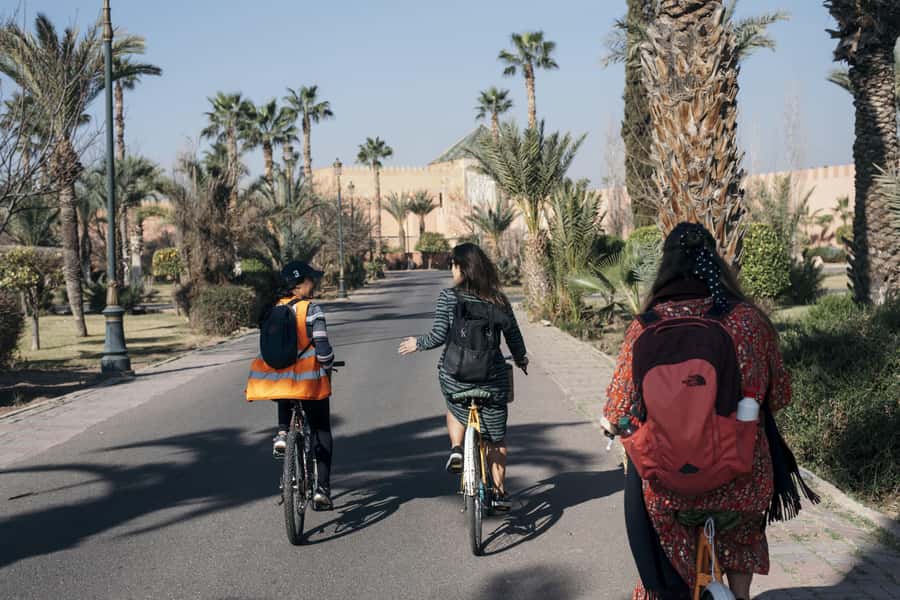
The local bakery is one of the best stops because it connects food with daily life. You step inside, watch bread being baked in a clay oven, and taste it fresh.
Bread in Morocco is not just something placed beside a meal. It is a daily staple, and the community bakery shows how food production can be shared at neighborhood level. The visit also gives you something tangible to remember: heat from the oven, the smell of fresh bread, and a simple process that has survived modern changes.
This is not a cooking class, so you should not expect to knead dough or bake your own loaf. The value comes from seeing a working bakery and hearing why bread matters in Moroccan households.
Same roads, a different saddle:
- Ninh Binh Full-Day Tour from Hanoi to Hoa Lu, Tam Coc & Mua Cave Via Boat & Bike
★ 5.0 · 4,384 reviews - Small Group Guided Bike Tour of Amsterdam’s Hidden Gems
★ 5.0 · 3,936 reviews - 3-hour Complete Prague Bike Tour
★ 5.0 · 3,674 reviews - Bangkok: Temples, Canals & Local Life Bike Tour
★ 4.9 · 3,511 reviews
Place des Ferblantiers and the tile workshop
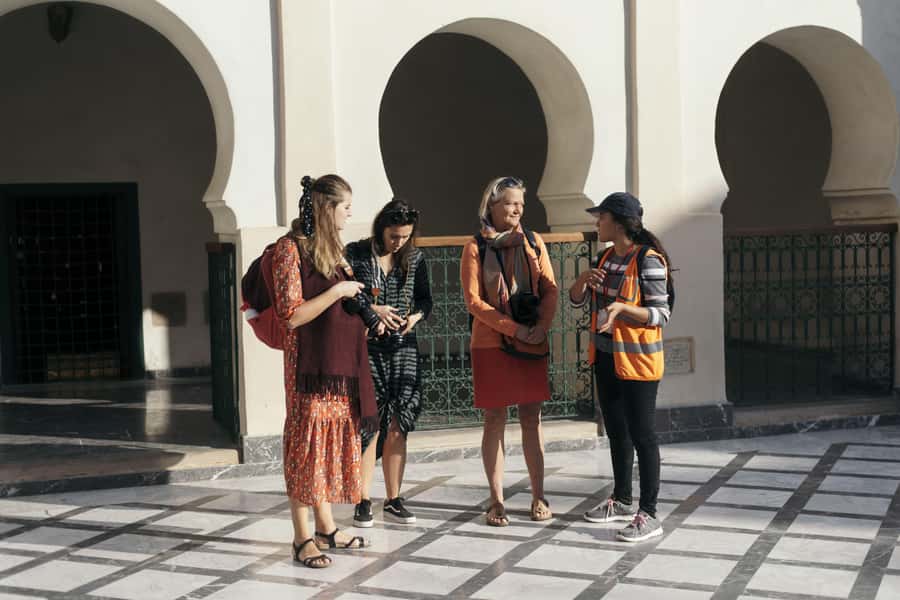
The route reaches Place des Ferblantiers, where you have around 20 minutes for a break, photographs, and a look around. It is a useful point in the ride because you have had time to adjust to the traffic, and the open space gives the group a pause before moving on.
The zellige tile visit is another strong section. Moroccan zellige is made from small geometric pieces, arranged into complex patterns. You see the craft at close range and learn how this work has decorated palaces, mosques, and homes for centuries.
I value this stop because it replaces a polished architectural view with the labor behind it. When you later notice tiled walls or fountains around Marrakech, you will have a clearer idea of the patience and skill involved. The visit is about craftsmanship, not a sales pitch, though you should always feel free to ask your guide how the stop is organized.
The Royal Palace gardens from the public side
The ride passes the public gardens around the Royal Palace, also known as Dar El-Makhzen. You admire the palace from outside and hear about its place in Morocco’s monarchy and political story.
This is an exterior view, not a palace tour. That distinction matters. You will not enter the royal buildings, but you do get a sense of the scale and setting of an important national site without spending time in a formal security queue.
The gardens also make a good cycling stop because they provide a change from tight lanes and crowded market streets. Your guide can connect the palace to the wider idea of Morocco’s monarchy while keeping the explanation grounded in what you can actually see.
What the hammam stop really offers
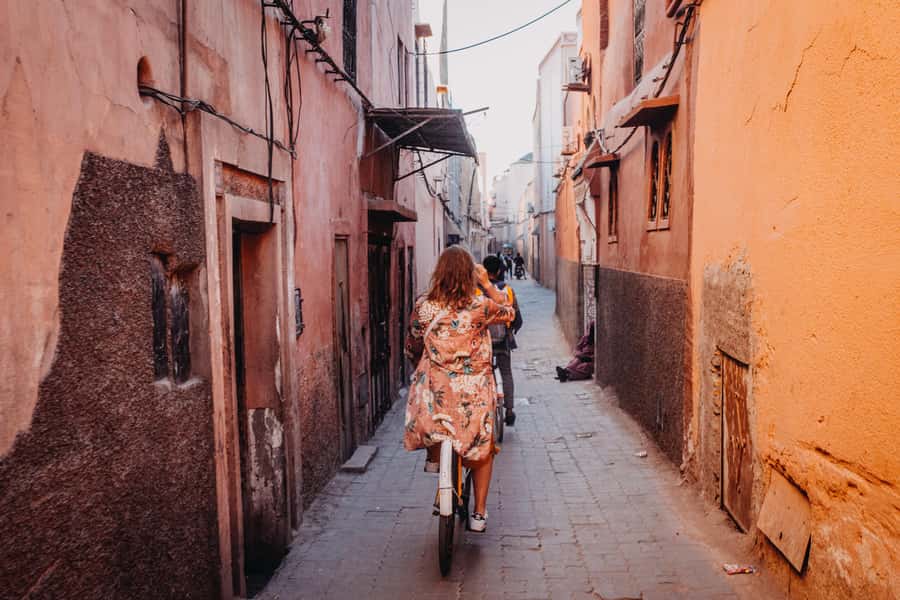
The hammam is presented as a cultural visit. You learn about the rituals, practical routines, and social role of the public bathhouse in Moroccan life.
Do not book this tour expecting a spa treatment. The information provided describes an introduction to hammam culture, not a bathing session or massage. That is useful for many people, since you can understand the tradition without needing to change clothes or plan around a treatment.
The hammam matters because it is both practical and social. It has long been part of ordinary life, and the guide can explain how people use the space and why it remains important. This is one of the stops that gives the tour a daily-life focus instead of concentrating only on famous sights.
Koutoubia, the Church of the Holy Martyrs, and a wider view
The bicycle route passes the Koutoubia Mosque, Marrakech’s best-known landmark. The stop is brief, about ten minutes, so think of it as an orientation point rather than a full visit.
Your guide can place the mosque within the city’s religious and visual identity. You will see how its minaret helps orient people around Marrakech, even as the streets and buildings change around it.
The route also includes a photo stop at the Church of the Holy Martyrs. This adds another layer to the city’s story and gives you a reminder that Marrakech contains more than one religious and cultural tradition.
Together, these stops work well because they are short and connected to the ride. You are not spending the whole morning standing in front of monuments. You are moving through the city and using major landmarks to understand where you are.
Crossing into Gueliz and Hivernage
The shift from the medina to modern Marrakech is one of the clearest reasons to choose this tour. In Gueliz and Hivernage, you ride along wider boulevards lined with cafes, hotels, and newer buildings.
The change can feel intimidating at first. Medina traffic is tight and slow, while modern roads may have more open space but faster movement. Several riders found the first part nerve-wracking and then adjusted to the local traffic pattern.
Marrakech traffic can look chaotic to anyone used to strict lanes and predictable crossings. You need to remain road-aware, follow the guide, and avoid assuming that vehicles will behave as they do at home. The guides are expected to check the group, lead crossings, and keep everyone together, but no guide can remove the need for your own attention.
This section suits confident cyclists best. If you are comfortable riding in an urban setting and can react calmly around mopeds, pedestrians, carts, and donkeys, it becomes part of the adventure. If traffic makes you freeze, a walking tour would be a calmer choice.
Tea, pastries, and a pause at Pikala Cafe
The final stop is Pikala Cafe, where you have about 20 minutes for tea, coffee, juice, and local snacks. Moroccan pastries and mint tea provide a welcome finish after the ride, and the cafe gives you time to ask questions that came up along the way.
The included refreshment is simple but well judged. A small sweet snack and a cold drink can make a real difference after cycling through the city, especially in warm weather. Water and fruit are also included during the experience, along with suncream.
The cafe is connected to Pikala’s wider work, so the stop feels like part of the project rather than a random restaurant break. You can also choose to focus on conversation instead of eating. One rider skipped the snack after getting carried away talking with the group, which tells you something about the relaxed social side of the stop.
Who will get the most from this ride
I would choose this tour early in a Marrakech visit. It gives you a practical map of the old and new parts of town, and the cultural explanations help you make sense of later walks through the souks.
It suits:
- Confident cyclists who can handle narrow streets and mixed traffic.
- First-time visitors who want more than the main monuments.
- Families with older children or adults who enjoy active sightseeing.
- People interested in bread, crafts, religion, local routines, and modern city life.
- Anyone who likes supporting a youth training project while exploring.
It is less suitable for anyone who is uncomfortable on a bicycle, nervous around traffic, or hoping for a slow, quiet ride. The pace is gentle, but the surroundings are not always calm. One 72-year-old rider used a tandem and managed well, but that option should be confirmed with Pikala before booking rather than assumed.
Small groups make the experience easier to manage, and some departures may be especially personal if only a few people book. English and French are available. Free cancellation is offered up to 24 hours ahead, and you can reserve while paying later, which helps if your schedule is still shifting.
Is $34 a fair price?
Yes, provided you want a cultural ride rather than a basic bicycle rental. The price includes the bike, guide, water, fruit, suncream, local entrance costs, and the cafe stop. More important, it combines several kinds of experience that would be harder to arrange alone: a working bakery, tile production, a hammam explanation, royal gardens, religious landmarks, and modern districts.
You are also paying for route planning and group management in difficult traffic. That has real value in Marrakech, where finding the right alleys is easy for a local and much harder when you are navigating on your own.
The main limitation is time. Three hours gives you a strong introduction, but not extended visits at each stop. If you want detailed architecture, long museum visits, or a full hammam treatment, choose separate activities.
Should you book the Pikala cultural bicycle tour?
Book it if you want to see Marrakech through ordinary neighborhood life, not just its famous squares. The bakery, tile workshop, and hammam stop give the ride substance, while the move from the medina to Gueliz shows how the city changes from one district to the next.
Skip it if you are not a confident cyclist or if urban traffic causes serious anxiety. For everyone else, this is a lively, useful introduction to Marrakech, with a social purpose and a price that makes sense. Choose a morning departure if available, since one rider found the roads quieter around 9:30, and wear practical clothes that let you pedal freely.
FAQ
How long does the Marrakech cultural bicycle tour last?
The tour lasts three hours, with stops for cultural visits, photos, breaks, and refreshments at Pikala Cafe.
How much does the tour cost?
The listed price is $34 per person.
Where does the tour begin and end?
It starts and finishes at the Pikala Bikes headquarters. Hotel pickup and drop-off are not included.
Which languages are available?
Live guiding is available in English and French.
Is the tour suitable for beginner cyclists?
You should be a confident cyclist because the route includes narrow medina lanes and traffic shared with mopeds, pedestrians, donkeys, and carts. The pace is gentle and mostly flat, but you must stay alert.
What is included in the price?
The tour includes water, fruit, suncream, entry to the local stops, and juices and Moroccan pastries at a cultural cafe.
Newest rides we have reviewed in the world
- London Christmas Lights Bike Tour★ 4.5 · 70 reviews
- Ljubljana by E-Bike: Guided City Highlights Tour★ 4.8 · 28 reviews
- Lisbon: Portuguese Petiscos Tasting Tour by E-Bike★ 5.0 · 16 reviews
- Liverpool: The Beatles Tour on Electric Pedal-Assist Ebikes★ 5.0 · 17 reviews
- Lisbon Bike Tour: Langs de rivier van Belém naar Lissabon★ 4.7 · 59 reviews
- Lisbon: E-Bike Adventure Through the City of Seven Hills★ 5.0 · 28 reviews
- Lisbon: 7 Hills Panoramic Guided Tour by E-Bike★ 4.8 · 50 reviews
- Lisbon: Guided E-Bike Tour to Belém★ 4.8 · 115 reviews
Marrakech Cycling Tours, compared.
Other lists this ride turns up in