
REVIEW · BERLIN
Berlin: The Wall and Third Reich Guided Bike Tour
Berlin’s past makes more sense when you can follow it across the city. This three-hour bike tour links the Berlin Wall, East German escape routes, Nazi bunker remains, and the planned Germania district on a 15-kilometer route. I like the quiet backstreets and cycle paths, which get you away from tour-bus traffic, and the way guides such as Carl, Juliet, Jake, and Fabian adjust their stories to your questions.
I also like that the bike lets you cover far more ground than a walking tour, including original watchtowers, a flak tower, and lesser-known Wall sites. The main drawback is that three hours moves quickly: you will see many places, but most stops are brief, and a few busy roads require care.
Key points at a glance
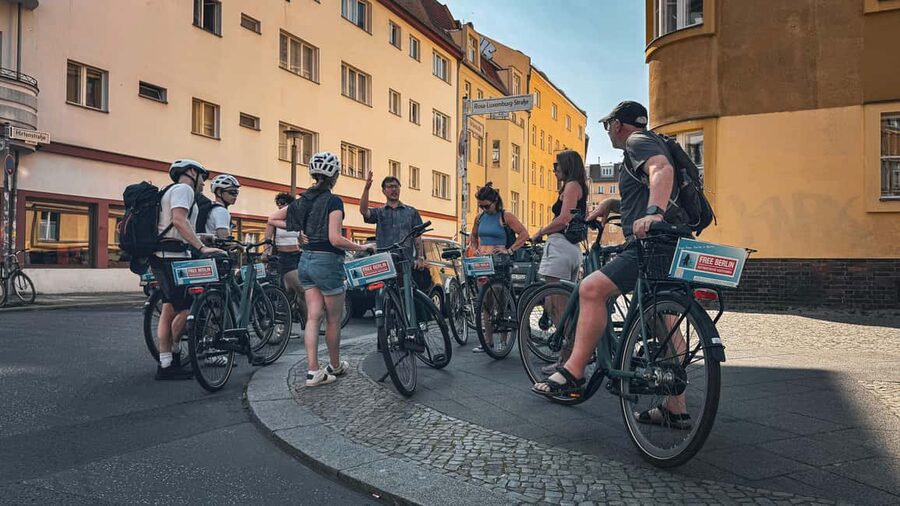
- 15 kilometers by bike: A practical way to connect scattered Nazi and Cold War sites in one morning or afternoon.
- The Wall beyond Checkpoint Charlie: See Bernauer Straße, watchtowers, the Mauerweg, a Wall section, and the memorial to Günter Litfin.
- Bunker history with limits: Learn about Humboldthain’s flak tower, the Boros Bunker, and Hitler’s bunker site, which is not accessible.
- Personal guiding: The route can change with the group, and guides including Carl, Juliet, Jake, and Fabian have been praised for clear, engaging explanations.
- Useful equipment: Rental bikes have baskets, helmets are available on request, and waterproof ponchos are supplied if rain arrives.
- Good value at $41: The price includes the bike, guide, and equipment, making it a reasonable choice if you want both transport and history in one outing.
Why a bike works so well for Berlin history
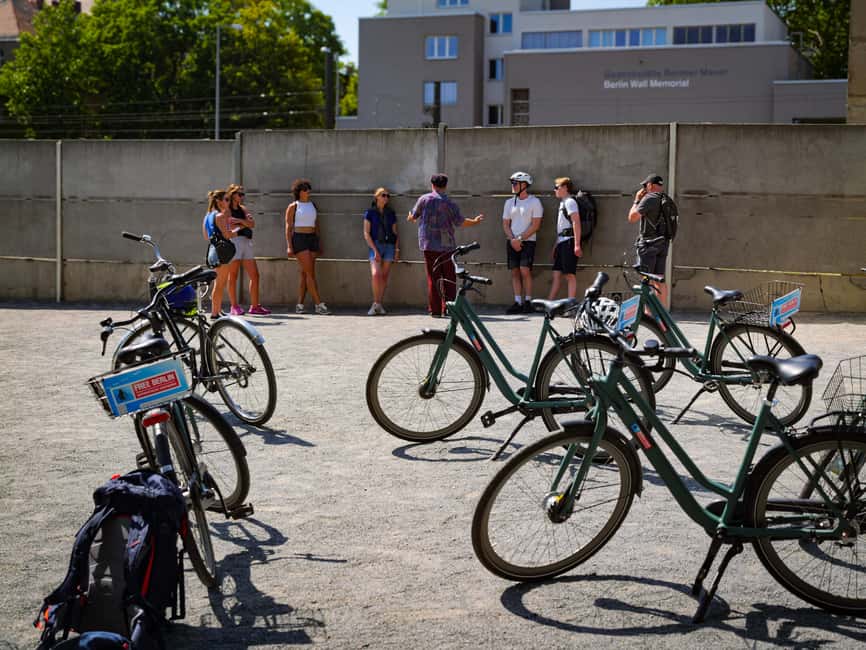
Berlin’s major 20th-century sites are spread across a wide area. A walking tour can explain one district well, but it may leave you choosing between the Wall, the bunkers, and central government sites. This route joins them in a single outing without putting you on a bus.
You cover about 15 kilometers, but the ride is described as active yet relaxed rather than a race. Several people found the route manageable even without much bike-tour experience. You should still expect a physical activity, especially in cold weather or on damp paths.
The route uses quieter streets and cycle paths where possible. There are also a couple of busier roads, so you need to follow the guide closely and stay with the group. Guides have been praised for keeping everyone together and checking that the pace suits the group.
That balance is one of the tour’s strongest features. You are moving often enough to see a large part of Berlin, but regular stops give the guide time to explain what happened at each site. The result is less about ticking off famous addresses and more about seeing how the city’s past remains built into ordinary streets.
More Guided Rides in Berlin:
- Berlin: Sights and Highlights Bike Tour with a Local Guide
★ 4.8 · 2,698 reviews - Berlin: Guided Bike Tour to Explore the Highlights
★ 4.8 · 506 reviews - Berlin: Cold War & Berlin Wall History Guided Bike Tour
★ 4.8 · 422 reviews
Starting in Nikolaiviertel and the Jewish Centre
You meet at the Free Berlin office in the courtyard entrance at Poststraße 11. Look for the FREE BERLIN sign. The location is in Nikolaiviertel, about five minutes from the TV Tower, so it is easy to pair with central Berlin sightseeing.
After choosing a rental bike, you begin in one of the city’s oldest central areas. The short Nikolaiviertel stop helps place you in Berlin’s historic center before the tour turns toward the 20th century.
The New Synagogue Berlin and Jewish Centre follows as an early reminder that Berlin’s story cannot be reduced to the Wall alone. The guide connects the site to the destruction and persecution of Jewish life under the Nazi regime. Expect a short guided stop rather than a full museum visit.
This opening section gives the tour a useful frame. Nazi history and Cold War history are not isolated chapters. They altered the same streets, neighborhoods, and communities, and the route lets you see those layers close together.
Bernauer Straße, Ruppiner Straße, and Mauerpark
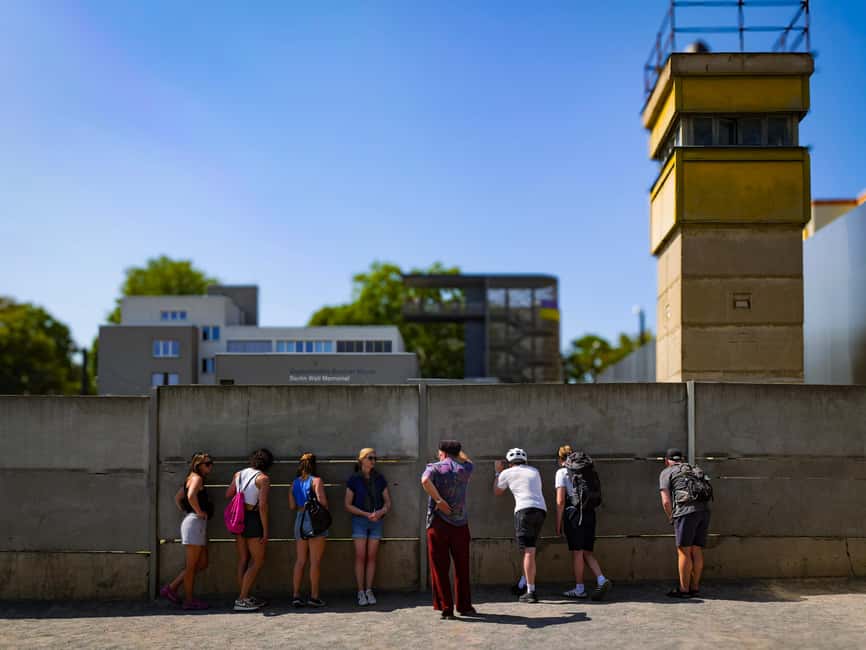
The Berlin Wall Memorial on Bernauer Straße is one of the tour’s most important stops. This is where the border divided buildings, sidewalks, families, and daily routines. The memorial area makes the Wall easier to understand because it preserves sections of the former border zone rather than presenting only a painted fragment.
Your guide explains how people lived with the barrier and how escape attempts worked. The stories are often more powerful here than a general city lecture because the street itself shows how close the two sides once were.
At Ruppiner Straße, the focus shifts to another part of the former border. You may see how the old division has been absorbed into present-day Berlin, with roads and buildings now carrying on where military barriers and patrols once controlled movement.
Mauerpark offers a different view of the former borderland. The park sits on land once shaped by the Wall, but its present use is social and open. That contrast is worth noticing: a place built for separation has become a place people use freely.
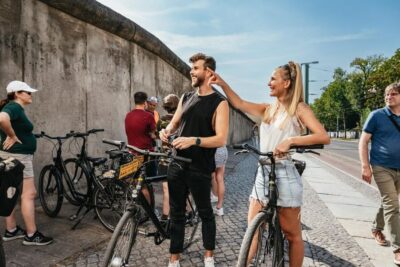
The tour then follows sections of the Berlin Wall Trail, known as the Berliner Mauerweg. This is where the bike format earns its keep. You can follow the old line for a distance, rather than seeing one isolated section and then taking public transport to the next stop.
Watchtowers, escapes, and the divided city
At Behmstraßenbrücke, the guide discusses how the border functioned in practical terms. Bridges and rail lines were not simply ways across town. They could become controlled crossings, observation points, or dangerous gaps in the divided city.
The tour also covers escape attempts and ghost stations. During the division of Berlin, some underground stations in West Berlin trains passed through East Berlin without stopping. These sealed or heavily guarded stations became part of the strange geography of the Cold War city.
This is one of the tour’s more useful subjects because it shows daily life rather than only political speeches. You learn how a subway ride, a bridge, or a walk to work could be shaped by an international conflict.
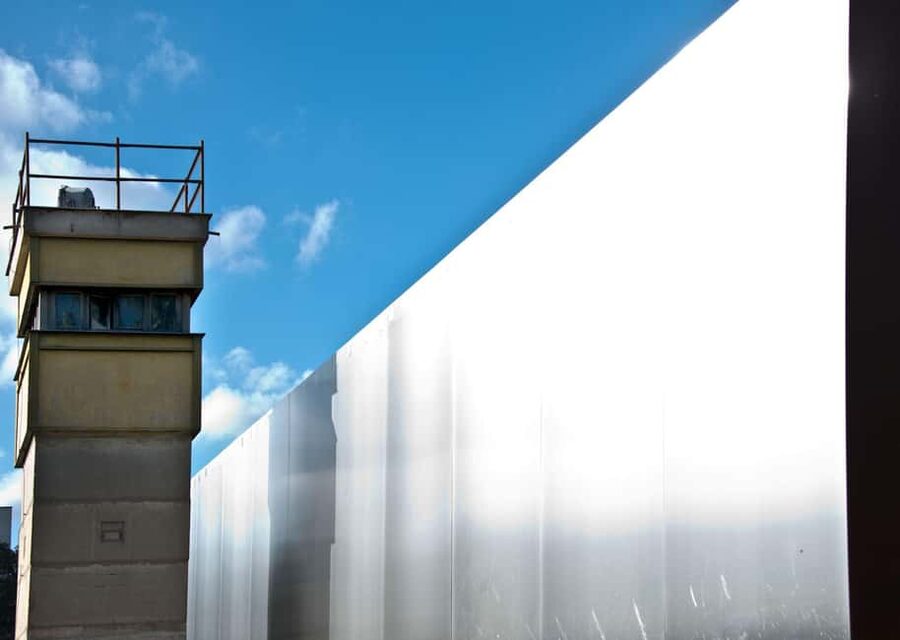
The Wall sections are also suited to visual comparisons. One guide used old photographs beside present-day locations, helping the group see exactly where barriers, patrol roads, and watch posts once stood. Bring your attention to the ground as well as the guide: traces of the old border are sometimes less obvious than the famous Wall murals.
More Cycling Trips in Berlin:
- Berlin Highlights 3-Hour Bike Tour
★ 5.0 · 948 reviews - Berlin City Bike Tour with Beer Garden Stop
★ 5.0 · 917 reviews - Berlin Highlights: 3-Hour Bike Tour
★ 4.9 · 809 reviews - Berlin Highlights Sightseeing Bike Tour in Small Groups
★ 5.0 · 652 reviews
Humboldthain and Berlin’s bunker remains
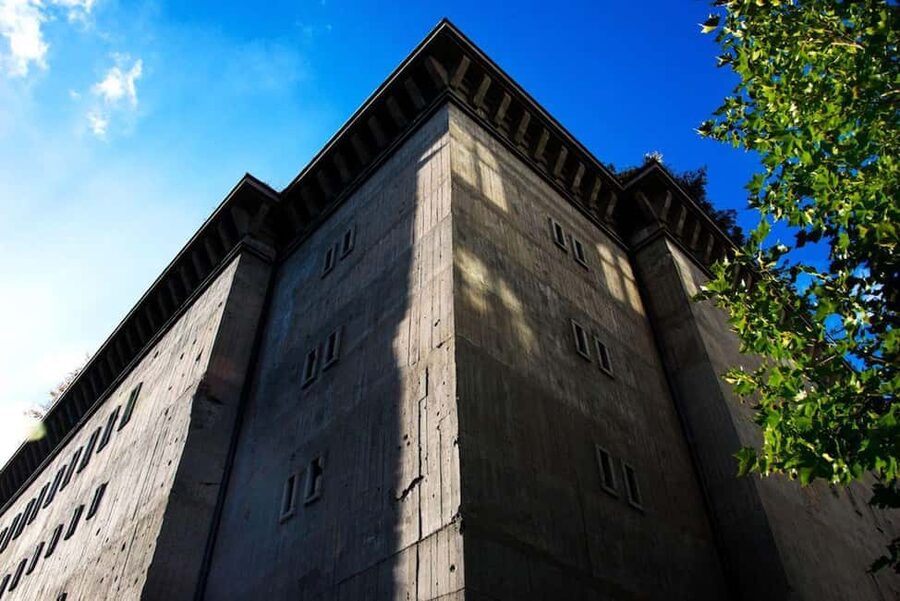
Flak Tower III in Volkspark Humboldthain is a striking stop. These enormous concrete structures were built for air defense during the Nazi era and were later partly destroyed or covered. The site gives you a sense of the scale of wartime construction in a way that a photograph cannot.
The route includes a photo stop and a short explanation. Do not expect a long underground exploration as part of this bike outing. The value here is seeing the structure in its urban setting and hearing how Berlin dealt with these difficult remnants after the war.
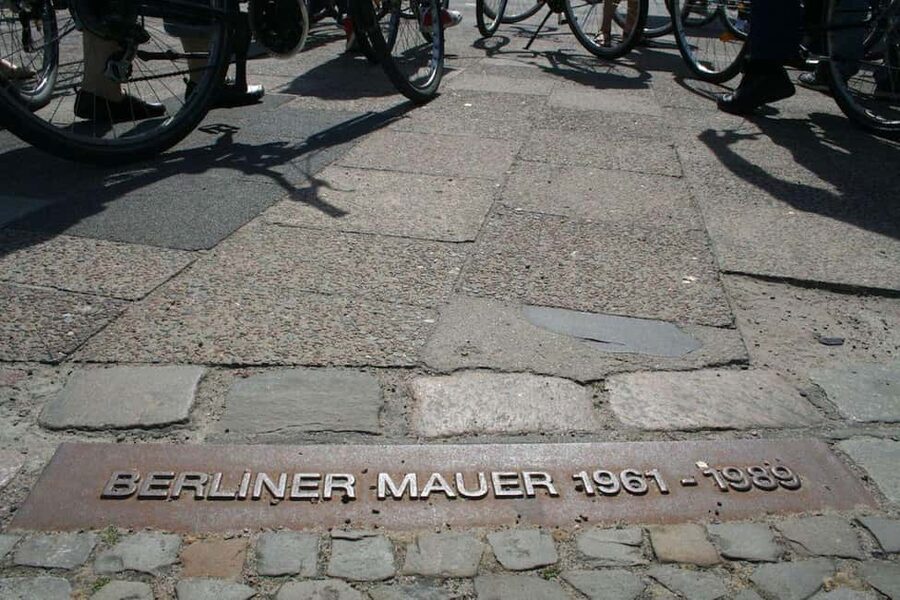
You also stop at a remaining piece of the Berlin Wall. On its own, a short section can seem modest, but it makes more sense after the longer ride along the former border. By this point, you have seen the Wall as a system, not just as a slab of concrete.
The Memorial to Günter Litfin adds a personal human story. Litfin was killed while trying to cross from East Berlin, and the stop puts a name and individual fate beside the larger political history. This is the sort of detail that prevents the Wall from becoming a simple symbol detached from real lives.
Invalids’ Cemetery brings another historical layer. The cemetery has connections to Berlin’s military past, and the guide uses it to explain how different periods overlap in the city. As with several stops, the tour gives you a short orientation rather than time for a full cemetery visit.
The Boros Bunker and the planned Germania
The Boros Bunker is one of the route’s more unusual sights. This heavy concrete bunker has had several lives, and its present association with the Boros Collection gives it a surprising place in modern Berlin’s art scene.
The tour’s purpose here is historical context. You should not assume that your ticket includes entry to the collection or a full interior visit. The guided stop lets you understand the building’s wartime purpose and later reuse, which is valuable even if you are not visiting the art collection separately.
The route also explains Germania, the vast Nazi plan to reshape Berlin as a monumental capital. Much of this vision was never completed, but the planning reveals how architecture was meant to serve power and propaganda.
You will not see a finished dream city because there never was one. Instead, the guide points out areas connected with the plan and explains how Berlin’s current streets sit over ambitions that war and defeat ended. This is a good example of the tour’s broader approach: it focuses on what remains, what disappeared, and what the city chose to reuse.
Holocaust Memorial and Hitler’s bunker site
The Holocaust Memorial is one of the route’s most serious stops. The concrete stelae create a powerful space, but the guide’s role is especially useful here because the memorial’s meaning is not fully explained by its appearance alone.
You should allow yourself a quiet moment rather than treating the site as a quick photo backdrop. The formal stop is short, and the bike tour cannot replace the memorial’s information center or a longer museum visit, but it gives you a clear place to pause and consider the history.
Nearby, you learn about Hitler’s bunker. The bunker itself is not open to visitors. The site is now marked in a way that avoids turning it into a shrine, and the guide explains why the location is not accessible in the way many people imagine.
This part of the tour handles difficult material directly. It does not present the bunker as a sensational attraction. Instead, you learn what happened there, why the physical remains are largely inaccessible, and how modern Berlin has chosen to address a site connected to the end of the Nazi regime.
The final stop is near the Federal Ministry of Justice before you return to the Free Berlin office. It brings the route back into present-day government Berlin, where the city’s current institutions occupy a place shaped by the conflicts the tour has traced.
Guides, group size, and the personal side of the tour
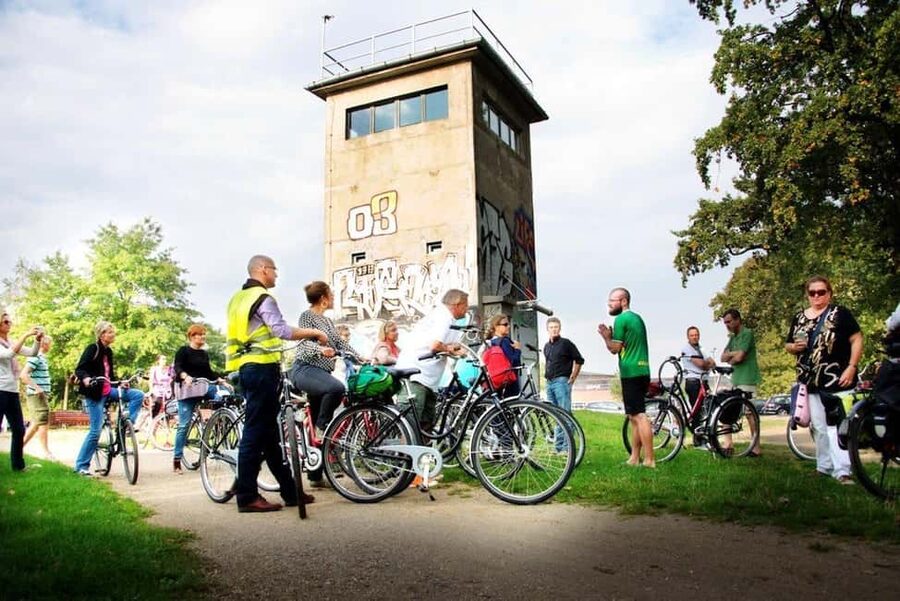
The company allows guides to shape the route around the group, current conditions, and shared interests. That means the exact emphasis can differ. One guide may spend more time on East German daily life, while another may focus on Nazi architecture, escape stories, or family experiences of divided Berlin.
Names that appear repeatedly in the guide feedback include Carl, Juliet, Jake, Fabian, Bjorn, and Vince. Their styles vary, but the consistent strength is personal explanation and an openness to questions. A Berlin native has even connected the tour’s history with his own family’s experience, which can make the subject feel less remote.
The tour is available for private groups or small groups. A private booking is especially useful if you already know a lot about Berlin and want the guide to adjust the depth and pace. It also suits families or friends who want more control over stops.
The family-friendly setup helps, too. Children are welcome, and infant seats can be provided on request. Still, the serious subject matter and three-hour cycling time mean you should judge the outing by your child’s interest and stamina, not just the age policy.
Is $41 a fair price?
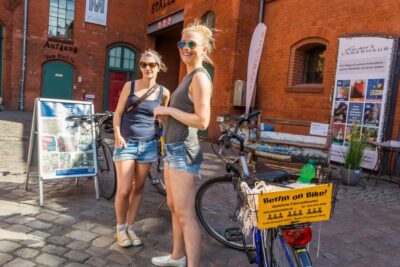
At $41 per person, the tour offers solid value if you want active sightseeing. The fee includes the bicycle, guide, and a helmet if requested. Bikes are fitted with baskets and checked regularly by a certified mechanic, and waterproof ponchos are available if the weather turns wet.
You are paying not only for transport but also for a guide who connects sites that would otherwise take several separate journeys. A museum ticket is not the point here, and you should not book it expecting extended indoor visits. The value comes from covering a large part of Berlin while receiving context at each stop.
The flexible booking terms also help. You can cancel up to 24 hours before the start for a full refund, and reserve now while paying later. Large luggage can be left safely with the operator during the tour, which is useful if you are between hotels, though you should arrange this in advance.
Practical advice for a better ride
Wear comfortable clothing and shoes that work for three hours of cycling. In winter, bring warm layers and gloves. A past winter outing was enjoyable but felt cold, particularly at stops.
Choose a dry day if you can. One rider noted that some paths can become slippery when wet, and rain changes the comfort of a long bike ride even with a poncho. The tour operates in poor weather, but sunshine will make the route easier and the Wall remains more legible in good light.
Ask for a helmet when you collect the bike if you want one. Use the basket for a small day bag, but avoid carrying more than you need. The company can hold larger luggage, so you do not have to pedal with a suitcase.
You should also set expectations about photographs. There are photo stops at the Wall Memorial, Humboldthain flak tower, and Holocaust Memorial, but this is primarily a moving history tour. If you want long, careful photography sessions, a private tour gives you a better chance of adjusting the timing.
Who should book this Berlin bike tour?
I would choose this tour if you want a broad introduction to Berlin’s Nazi and Cold War history and prefer streets to lecture rooms. It works particularly well early in a Berlin visit because it gives you a map of the city and points you toward places you may want to revisit on foot.
It suits active adults, families with children who can manage the distance, and visitors who find standard bus tours too passive. It is also a strong option for repeat visitors because the route includes quieter corners, old border traces, and bunker sites beyond the usual central sights.
I would choose a different format if you need extensive museum time, have difficulty cycling for three hours, or want a slow, single-site study of the Wall. The route covers a lot, and its short stops can feel rushed if you want every detail.
Should you book it?
Book this tour if the idea of riding between the Berlin Wall, Nazi bunkers, memorials, and former border routes appeals to you. At $41, the bike, equipment, guide, and 15-kilometer route make it a practical way to cover ground while still hearing the human stories behind the sites.
For the best experience, request a private or small group if you have strong interests or limited time. Choose a dry day, dress for the season, and treat the tour as a well-guided overview rather than a series of long museum visits. That is where it works best: moving through Berlin and seeing how its past survives in the city around you.
FAQ
Where does the bike tour start?
Meet at the Free Berlin office in the courtyard entrance of the building at Poststraße 11. Look for the FREE BERLIN sign in Nikolaiviertel, about five minutes from the TV Tower.
How long is the tour?
The tour lasts three hours and covers about 15 kilometers by bicycle.
What languages are available?
Guides are available in English, German, and French.
Is bike rental included?
Yes. The rental bicycle is included in the tour price. Bikes have baskets and are regularly checked by a certified mechanic.
Can I request a helmet?
Yes. Helmets are available on request.
Does the tour operate in the rain?
Waterproof ponchos are provided if it rains. Some paths may become slippery when wet, so a dry day is preferable when possible.
Can children join the tour?
Yes. The tour is family-friendly, and infant seats can be provided on request.
Can I visit Hitler’s bunker?
No. The bunker itself is not accessible. The tour visits the site and explains its history and why it is no longer open to visitors.
Newest rides we have reviewed in Berlin
- From Berlin: Gardens & Palaces of Potsdam Bike Tour★ 5.0 · 61 reviews
- Berlin: Small Group Bike Tour Through City Center★ 4.9 · 64 reviews
- Berlin: Illuminated Berlin by Bike Taxi★ 4.8 · 162 reviews
- Berlin: Green City Guided Bike Tour★ 4.6 · 29 reviews
- Berlin: 48-Hour or 72-Hour Bike Rental★ 5.0 · 14 reviews
- Berlin (E)Bike Tour Historical Highlights in Small groups★ 4.5 · 24 reviews
- Berlin: From East to West & Wall Tour by Bike with a Guide★ 4.8 · 171 reviews
- Berlin: 3-hour bike tour – A journey through time in the capital★ 4.8 · 24 reviews
Berlin Cycling Tours, compared.
Sights and Highlights Bike Tour with a Local Guide
Read our review →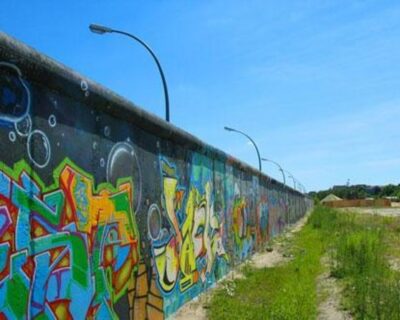

Berlin Highlights Sightseeing Bike Tour in Small Groups
Read our review →
Alternative Bike Tour of Kreuzberg & Friedrichshain
Read our review →
Cold War & Berlin Wall History Guided Bike Tour
Read our review →Other lists this ride turns up in