
REVIEW · E-BIKE TOURS IN ROME
Appia Antica & Aqueducts e-Bike Tour – Official Provider
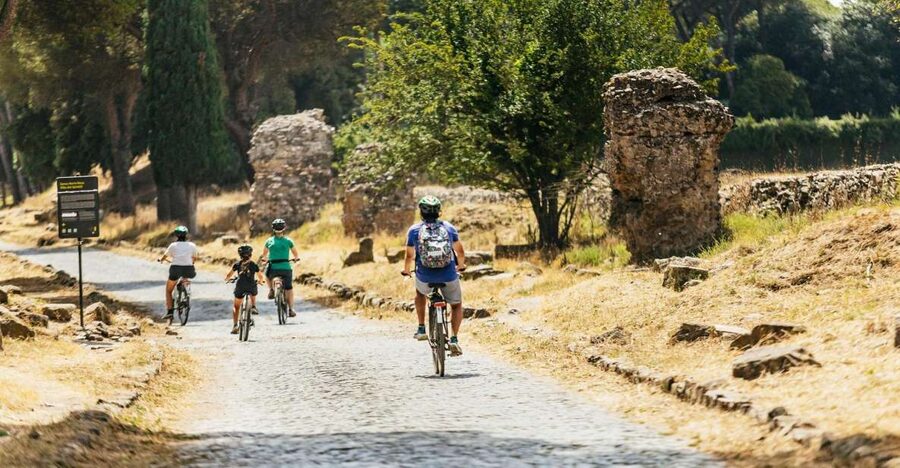
The best part of this ride is that Rome’s noisy center gives way to 2,000-year-old road stones, open fields, tombs, churches, and huge aqueduct arches. This is the Appian Way as a living archaeological corridor, not a quick stop for a photograph.
I like the electric bikes, which make the long route manageable, and I like the balance between famous sights and quieter parkland. The main catch is that this is not a gentle city spin: the route includes traffic, uneven surfaces, and a group pace that can slow down when riders are inexperienced.
Key points to know before booking
- Ride the full Appian Way route: Travel from the Domine Quo Vadis Church through the Caffarella Valley and on to the Aqueducts Park.
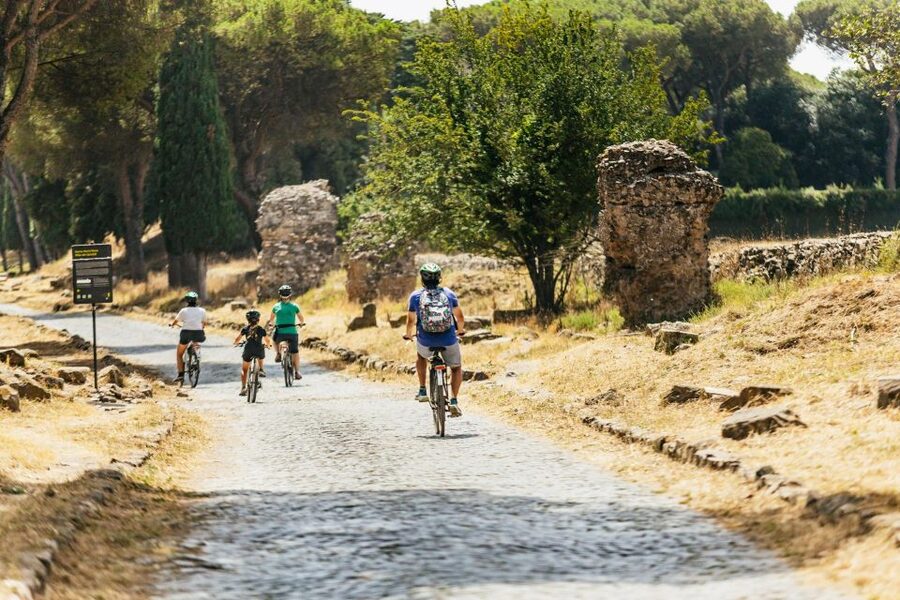
- Expect a mostly off-road ride: About 70 percent of the route is off-road, with the rest on streets and traffic sections.
- See major Roman remains: The route includes Maxentius’ Circus, Cecilia Metella’s tomb, Villa dei Quintili, ancient tombs, and aqueducts.
- Add a catacomb visit: Saint Sebastian or Saint Callixtus can be visited independently for €10 per person each.
- Use the e-bike, not a standard bicycle: This full route is offered only with electric bikes, which are available from age 9 and 135 centimeters.
- Plan for real riding: Helmets, locks, maps, water, and child seats up to 20 kilograms are included, but the tour is not suitable for children under 13, pregnant women, or people with back problems.
Why the Appian Way is worth leaving central Rome
You can see Rome’s headline monuments in a day or two, but the Appian Way shows a different side of the city. Just a short distance from Circus Maximus, the Regional Park of the Appian Way stretches across about 4,500 hectares of protected land.
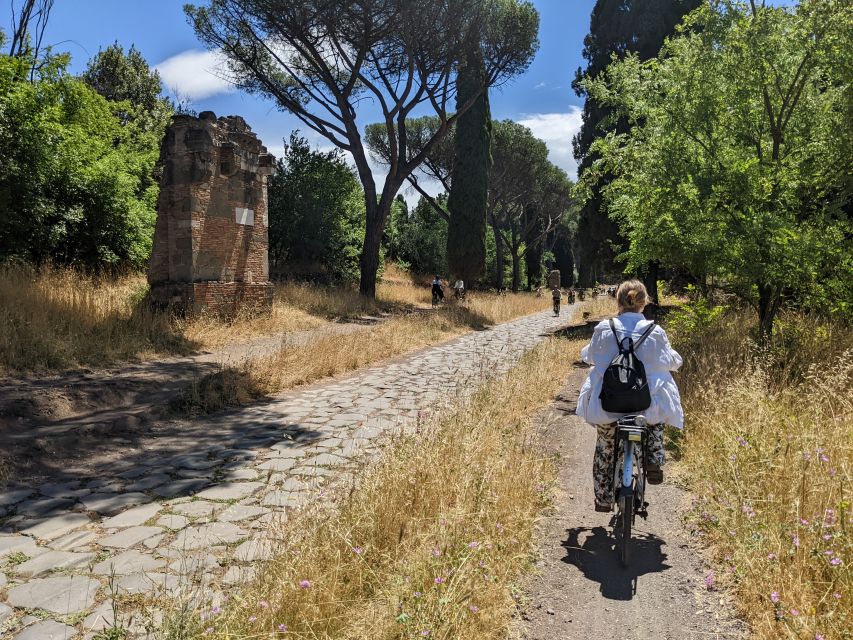
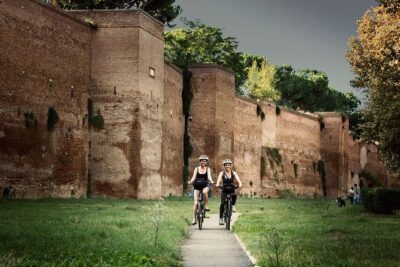
The ancient road once carried Roman armies, merchants, pilgrims, scholars, and other long-distance visitors. Today, you ride beside tombs, churches, villas, and broken walls, with far more space around you than in central Rome.
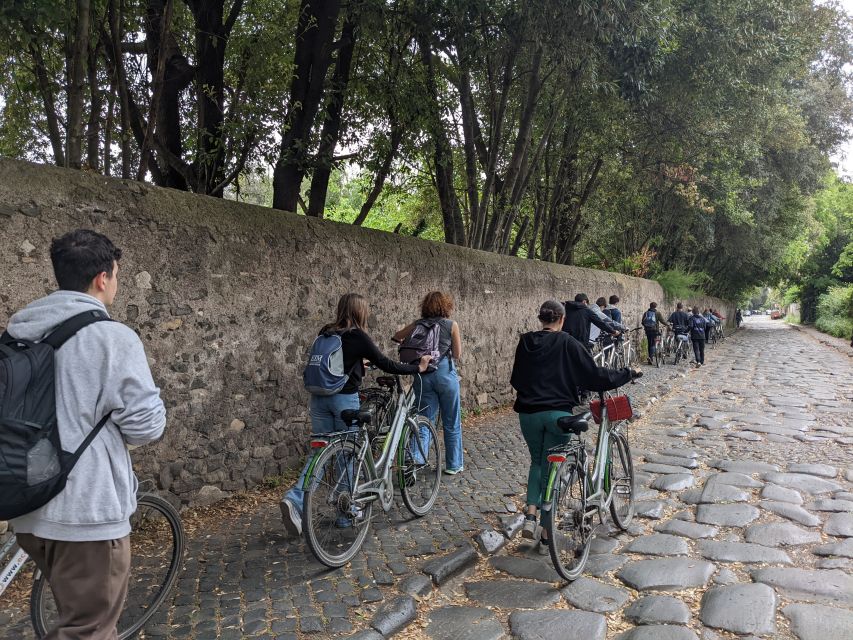
The original paving stones are the star. Wagon wheels left grooves in the road centuries ago, and you can still see and touch those marks. An e-bike matters here because the historic surface is rough in places, and the route covers enough ground that a standard bicycle could turn the outing into hard work.
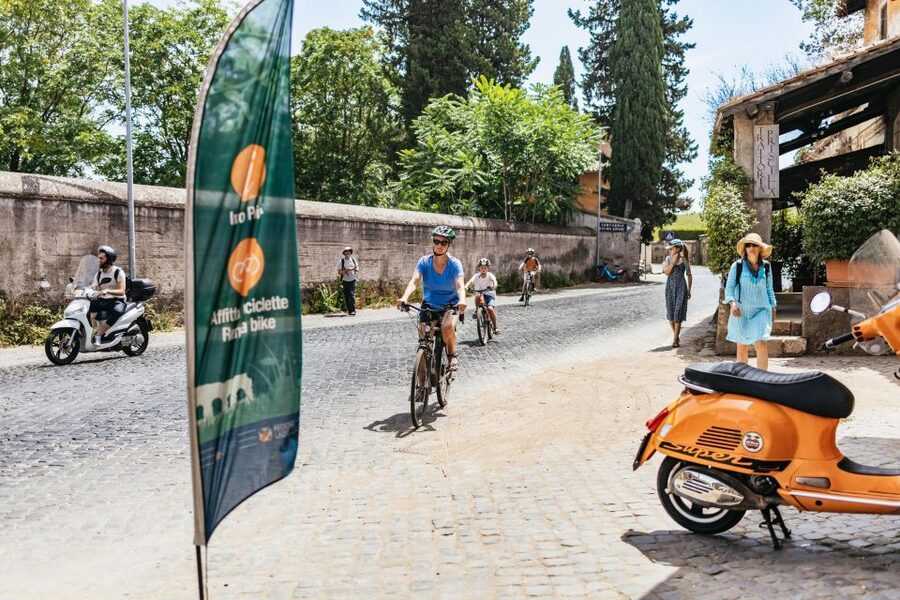
The ride begins at Centro Servizi Appia Antica, EcoBike, at Via Appia Antica 60. Before setting off, the English-speaking guide explains how to use the e-bike and gives you an introduction to the area. That short orientation is useful if you have not ridden an electric bicycle before.
More E-Bike Tours in Italy
- Rome EBike Tour: Appian Way, Catacombs & Roman Aqueducts
★ 5.0 · 1,766 reviews - Rome: Top Highlights & Hidden Gems Tour by Cannondale E-Bike
★ 4.9 · 1,760 reviews - Rome: Appian Way & Aqueducts E-Bike Tour (Catacombs & Food)
★ 4.9 · 1,498 reviews
From Domine Quo Vadis to the ancient road
The first landmark is the small Domine Quo Vadis Church. Christian tradition says Saint Peter was fleeing Nero’s persecution when he met Jesus on this road. Jesus disappeared after leaving footprints in the pavement, according to the story.
You do not need to treat the legend as proven fact to appreciate the setting. The church gives the route a human starting point before the ride moves into the archaeological park.
From here, the Appian Way becomes a long open-air corridor of Roman remains. The guide helps connect the scattered stones and ruins to the road’s original purpose. You are not simply pedaling past old walls. You are following one of the ancient world’s major transport routes.
The surface can be uneven, and the ride has some street sections. Keep your attention on the road rather than trying to take photographs while moving. The guide also manages crossings and keeps an eye on the group, an important service on a route that is not entirely separated from traffic.
Catacombs beneath the Appian Way
Saint Sebastian and Saint Callixtus are the two catacomb options. The underground visits are not included in the tour price, but you can choose one and pay €10 on site.
This is a useful choice for different types of visitors. If you are especially interested in early Christianity and burial customs, the catacombs add an underground layer to the above-ground ruins. If you would rather keep the ride moving, you can skip them and continue with the group.
The schedule matters here. The listed tour lasts 3.5 hours, so adding a catacomb visit may affect the rhythm of the outing. Ask the guide about timing at the start. The catacombs are optional, not a required part of the route.
Maxentius’ Circus and the chariot-race setting
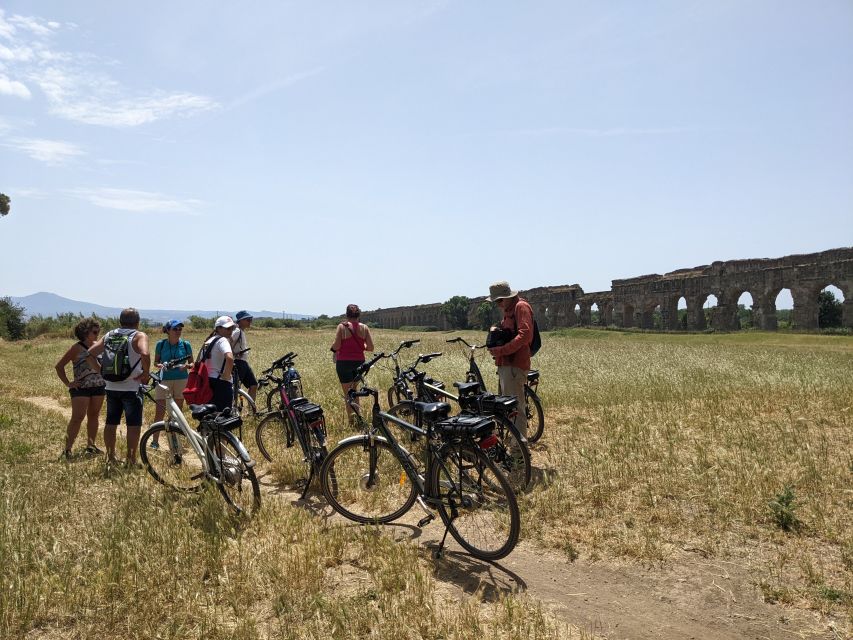
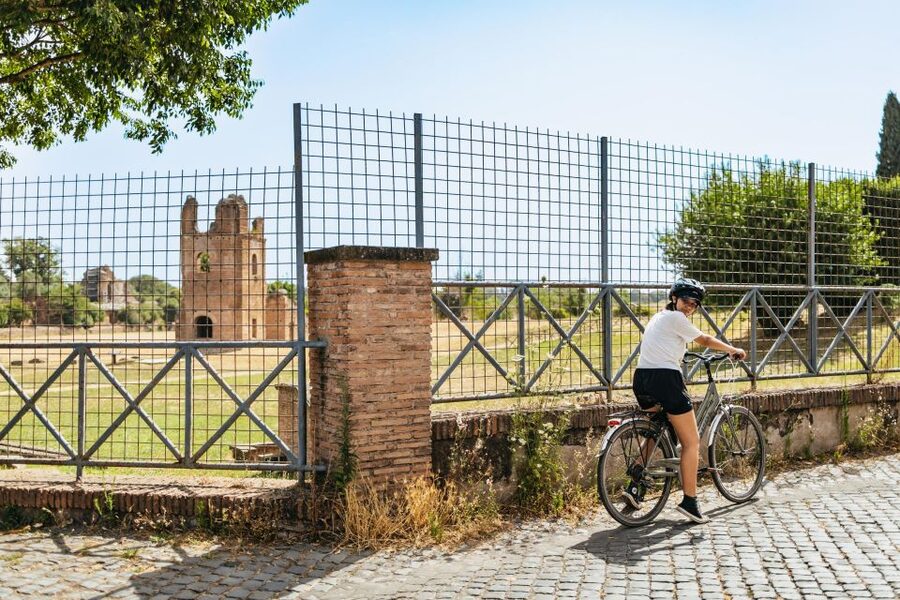
The private circus of Emperor Maxentius is one of the strongest stops. It is described as the best-preserved Roman circus in the world, and the complex also includes Maxentius’ villa and the mausoleum of his son, Valerius Romulus.
You can enter the complex without an extra charge during the tour. The circus is especially easy to picture because it recalls the scale and drama of Roman chariot racing. The film Ben-Hur used this location for its chariot-race scene, giving the ruins an unexpected link to modern cinema.
This stop also helps you understand that the Appian Way was not just a road lined with graves. It was part of a wider zone of villas, public buildings, estates, and imperial projects.
More E-Bike Tours in Rome
- Rome: Appian Way, Catacombs, & Roman Aqueducts E-bike Tour
★ 4.9 · 1,421 reviews - Rome City Small Group Bike Tour with quality Cannondale EBike
★ 5.0 · 1,380 reviews - Rome by Night – Ebike Small Group Tour – Food and Wine (Option)
★ 5.0 · 1,275 reviews - Rome by Night: E-bike Small Group Tour -Food & Wine (Option)
★ 4.9 · 1,233 reviews
Cecilia Metella and the power of a roadside tomb
The Tomb of Cecilia Metella is one of the most recognizable structures along the road. The huge round tomb sits on a raised lava plateau dating back more than 260,000 years, and its size makes clear that this was a very important family.
Little is known about Cecilia Metella beyond her family connections, but the tomb’s later use tells another story. During the Middle Ages, several families used the site as a fortress. The Caetani family later controlled the area, enclosing it and creating a small self-contained settlement.
People passing through had to pay a duty to cross the controlled section. That detail makes the site more than a grand Roman tomb. It shows how old monuments were reused as practical centers of power long after the Roman Empire had faded.
The itinerary passes by the tomb rather than promising a lengthy interior visit. That keeps the ride moving, but it also means you should not book this tour expecting an in-depth visit to every monument.
Villa dei Quintili and the route toward the aqueducts
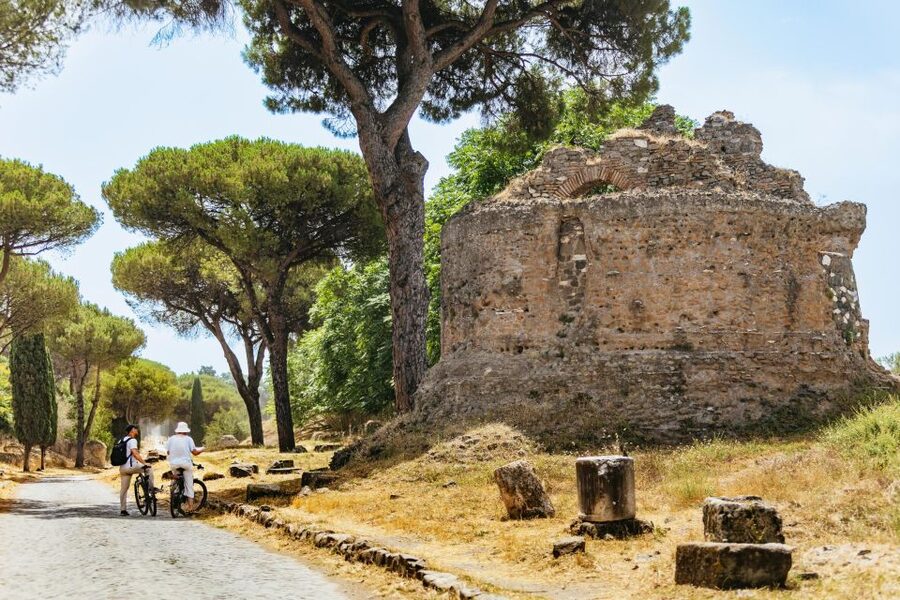
The ride continues past Villa dei Quintili, an aristocratic Roman villa complex. You see it as part of the broader chain of wealthy estates, burial monuments, and public engineering works lining the Appian Way.
The route then reaches the Quintili Nymphaeum before continuing into the Aqueducts Park. Even when a stop is a pass-by rather than a formal visit, the sequence helps you read the area as one connected Roman zone.
This is where the e-bike earns its keep. You cover a substantial stretch of the park rather than stopping at a single ruin and turning back. The electric assistance reduces the strain, but you still need to steer, brake, and handle uneven ground.
The Aqueducts Park delivers the big view
The Aqueducts Park is the visual high point. Great Roman engineering arches cross the open park, and their scale is easier to appreciate when you are standing beneath them rather than looking at a photograph.
The guide explains the aqueducts as part of the Roman water system and points out how the structures fit into the wider archaeological route. The setting also gives you a break from the tighter streets and crowded monuments of central Rome.
The park is not an isolated sightseeing stop. It is the final section of a ride that links roads, tombs, villas, baths, and waterworks. That connection is the real value of the tour. You see how Roman infrastructure shaped a large part of the countryside around the city.
A ride through the Caffarella Valley
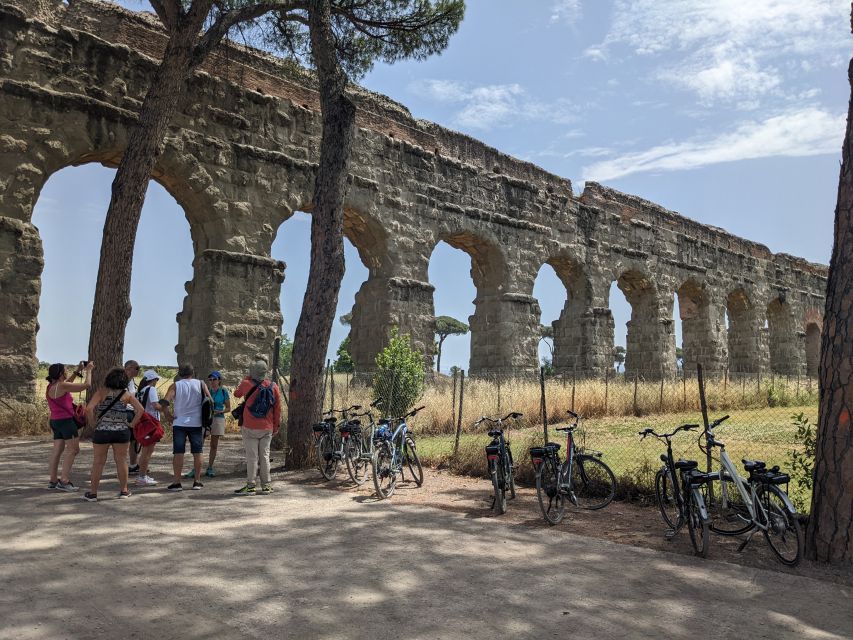
The Caffarella Valley adds a greener, more open section to the itinerary. You ride through parkland rather than spending the whole time beside formal monuments.
This part helps explain why the Appian Way remains special. The archaeological remains have not been boxed into a museum compound. The road, fields, ruins, and water channels share the same space.
The route is about 70 percent off-road and 30 percent on streets, based on the stated riding breakdown. That is good news if you want an active outing, but it is also why the tour is not suitable for everyone. People with back problems may find the surface uncomfortable, and pregnant participants are advised not to take part.
How the guide affects the experience
The guide is central to this tour. The best-known guides from the available information are Federico, Sara, and Alex. Federico is described as attentive to the group and strong on route knowledge, while Sara and Alex are also named as guides who bring clear explanations and entertaining stories.
A good guide matters here because many of the remains are fragmentary. Without context, a tomb may look like a pile of old stone. With the story of its owner, later medieval use, or place in Roman engineering, the same structure becomes easier to understand.
The guide also helps with road crossings and group control. That is especially useful because this is not a fully closed route. One practical warning: riders with little cycling experience can slow the pace considerably. If you are a confident cyclist, you may occasionally wish the group moved faster. If you are less confident, the guided format gives you support and reassurance.
What the $59 price includes
At $59 per person, the cost is reasonable for a 3.5-hour outing that includes a professional guide, a high-quality e-bike, a helmet, a lock, a map, and half a liter of mineral water.
The strongest value is the amount of ground you cover. A walking tour could show you a small part of the Appian Way, but it would not connect the road, Caffarella Valley, Maxentius’ Circus, Villa dei Quintili, and the Aqueducts Park as efficiently.
The price does not include lunch or the optional catacomb admission. Bring food only if you plan to eat before or after the tour, since lunch is not part of the experience. The catacomb visit costs €10 per person at either Saint Sebastian or Saint Callixtus.
Free cancellation is available up to 24 hours before departure, and you can reserve now and pay later. The tour runs in rain or shine, so check the forecast and dress for conditions. Bare feet and alcoholic drinks in the vehicle are not allowed.
Who should book this e-bike tour
I would choose this outing if you have already seen the central Roman sights and want an active half-day away from the usual circuit. It suits adults and older children who can manage a bicycle and want ruins, open parkland, and Roman engineering in one trip.
The e-bike is available from age 9 and 135 centimeters, but the tour is listed as unsuitable for children under 13. Adults’ e-bikes are approved up to 90 kilograms. Child seats for children up to 20 kilograms are available by request, though the age restrictions still apply.
You should be comfortable with a mixture of rough paths and streets. This is not a polished bike lane ride, and it is not a private tour where you set your own pace. If you want complete control over stops and speed, a self-guided rental may suit you better. One rider specifically found that inexperienced cyclists slowed the group and preferred the idea of riding independently.
For most people, though, the guide adds enough value to justify the group format. You get help with the route, historical explanations, safety at crossings, and a practical way to cover a huge area.
Should you book the Appia Antica e-bike tour?
Book it if you want to see Rome beyond the Colosseum and fountains, and if you are happy to trade polished city streets for ancient paving, park paths, and occasional traffic. The combination of the Appian Way, Maxentius’ Circus, Caffarella Valley, and the Aqueducts Park gives you a strong sense of how large ancient Rome really was.
Skip it if you dislike cycling on uneven ground, have back problems, need a private schedule, or want long interior visits at each monument. For everyone else, the $59 price buys a useful mix of transport, history, and scenery, with the optional catacombs available for an extra fee. The 4.8 rating from 21 listed reviews fits the experience: the guides and route are the main strengths, while group pace and riding ability are the main variables.
FAQ
How long does the Appia Antica e-bike tour last?
The tour lasts 3.5 hours, including the guided ride from EcoBike through the Appian Way, Caffarella Valley, and Aqueducts Park before returning to the starting point.
What language is the tour offered in?
The live tour guide speaks English.
Are catacomb visits included?
No. You may visit Saint Sebastian or Saint Callixtus independently during the outing, with admission costing €10 per person at each catacomb.
What does the tour price include?
The price includes a professional guide, a high-quality e-bike, half a liter of mineral water, a helmet, a lock, and maps. Child seats for children up to 20 kilograms are available by request.
Is the tour suitable for children?
E-bikes are available from age 9 and 135 centimeters, but the tour is listed as unsuitable for children under 13. Adults’ e-bikes are approved up to 90 kilograms.
What should I bring and what happens if it rains?
Bring a passport or identity card, with a copy accepted. The tour operates in rain or shine, and lunch is not included.
Newest rides we have reviewed in Rome
- Rome: Guided eBike Evening Tour with italian Aperitif★ 5.0 · 16 reviews
- Rome: Villa Borghese E-Bike Tour (Small Group or Private)★ 4.9 · 92 reviews
- Rome: Taste of Rome by quality Cannondale E-Bike★ 5.0 · 12 reviews
- Rome: Appian Way, Aqueducts, & Catacombs E-Bike Guided Tour★ 4.9 · 54 reviews
- Rome: Villa Borghese, Villa Ada, and Coppedè E-Bike Tour★ 4.8 · 78 reviews
- Rome: Panoramic Off-the-beaten-track Cannondale E-Bike tour★ 5.0 · 71 reviews
- Sunrise in Rome: Small Group E-Bike Tour & Italian breakfast★ 4.9 · 177 reviews
- Rome: Top 10 Highlights Guided Tour by Bike or E-Bike★ 4.4 · 15 reviews
E-Bike Tours, compared.
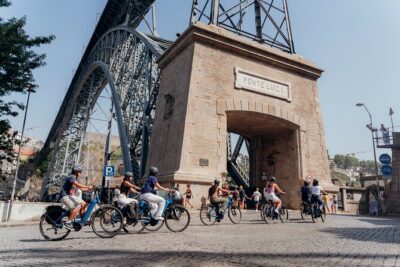
3-Hour Porto Highlights on a Electric Bike Guided Tour
Read our review →
Hills, Alfama, and Mouraria Tour by Electric Bike
Read our review →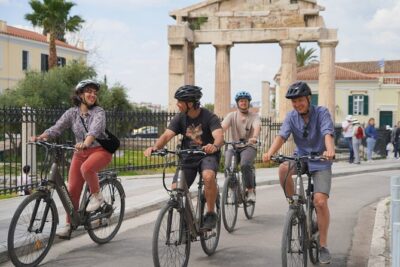
Athens Scenic Electric Bike Tour with optional Acropolis visit
Read our review →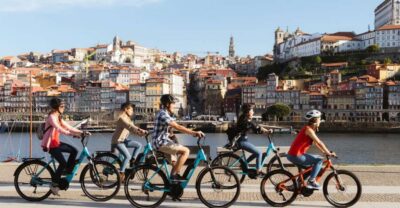
City Highlights 3-Hour Guided Electric Bike Tour
Read our review →
Rome EBike Tour: Appian Way, Catacombs & Roman Aqueducts
Read our review →
Top Highlights & Hidden Gems Tour by Cannondale E-Bike
Read our review →Other lists this ride turns up in