
REVIEW · E-BIKE TOURS IN ROME
Rome: Appian Way E-bike Tour, Catacombs, Aqueducts & Transfer
Rome’s ancient Appian Way is at its best away from the city center, where broken Roman paving, tombs, farms, and umbrella pines replace scooters and tour buses. This outing lets you reach that quieter side by shuttle, then explore it on a pedal-assist e-bike.
I like two things right away: you avoid most city traffic, and the tour combines three very different sights, the catacombs, the Appian Way, and the aqueducts. The main caution is the rough surface. About 90 percent of the ride is on ancient Roman paving, so you need basic to moderate bike skills and a willingness to bounce a little.
Key points at a glance
- A smart escape from central Rome: The shuttle leaves from Viale Aventino near Circus Maximus, saving you from starting the ride in busy city streets.
- Three major experiences in one outing: You visit the Catacombs of San Callisto or San Sebastiano, cycle the Appian Way, and stop at the Aqueduct Park.
- Pedal assist helps on rough ground: The e-bikes make the distance and uneven paving much easier, though they do not turn the ride into a smooth road cycle.
- Guides add the real value: Emanuele, Alessio, Laura, Guido, and other local guides have been praised for clear explanations, safety, and good photo stops.
- Small-group feel: The tour normally runs with a minimum of four and is limited to eight on small-group departures, though the published overall maximum is 15.
- Plan for countryside conditions: Bring water, expect uneven paving, and remember that refreshments are not included.
Why this ride shows you a different Rome
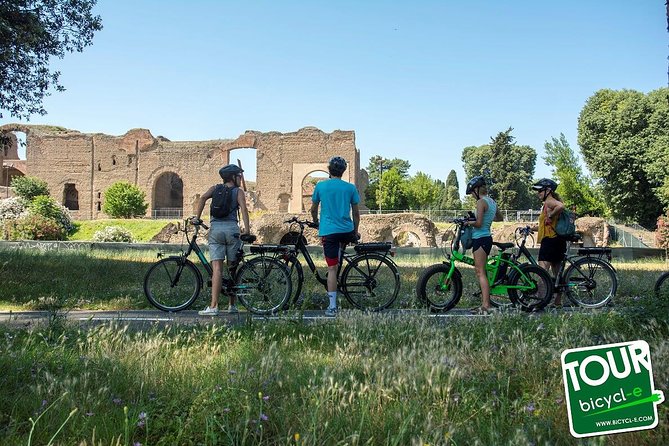
Most first-time visits focus on the Colosseum, Roman Forum, Trevi Fountain, and Pantheon. This tour heads in another direction. The Appian Way begins outside the tight center and runs through a quieter mix of archaeological sites and open countryside.
That change of pace is the point. You are not just looking at Roman ruins from a pavement beside a road. You are riding along an ancient route, passing tombs and old structures at bicycle speed, with time to stop and hear why they matter.
The shuttle is an important part of the design. It takes you from the meeting point near Circus Maximus toward the catacombs and bike route, with the journey taking about 20 minutes each way. You get the historic setting without first having to negotiate Rome’s busiest streets on two wheels.
The ride is not entirely traffic-free. The operator says there are only two crossings when moving between the Appian Way park, Aqueduct Park, Tor Fiscale Park, and Caffarella Park. A few riders also found sections near traffic less comfortable, particularly with children. Your guide stays with the group, but you should still expect an outdoor cycling experience rather than a protected bike path from start to finish.
More E-Bike Tours in Italy
- Rome EBike Tour: Appian Way, Catacombs & Roman Aqueducts
★ 5.0 · 1,766 reviews - Rome: Top Highlights & Hidden Gems Tour by Cannondale E-Bike
★ 4.9 · 1,760 reviews - Rome: Appian Way & Aqueducts E-Bike Tour (Catacombs & Food)
★ 4.9 · 1,498 reviews
Meeting near Circus Maximus and riding by shuttle
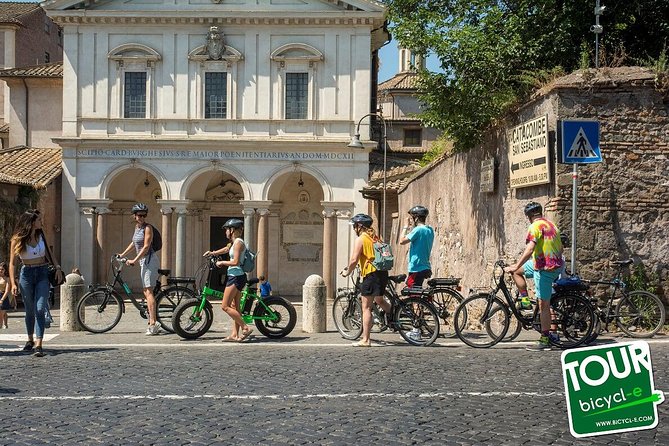
The meeting point is Viale Aventino 46, near Circus Maximus. From there, a private shuttle carries you toward the ancient sites. This solves one of the tour’s biggest practical problems: getting from central Rome to the countryside without wasting energy or taking risks in heavy traffic.
The shuttle also gives the guide a chance to point out sights along the way. The Baths of Caracalla are viewed from the vehicle rather than visited on foot, so do not book this expecting a full stop inside the baths. Think of it as a useful introduction to the Roman outskirts before the main activity begins.
The return follows the same general plan. After the cycling finishes, you board the shuttle and go back to the original meeting point. That makes the timing easier to manage if you have dinner plans or another activity later in the day, though I would still leave some breathing room because the stated duration is approximately four and a half hours.
Going below ground at the catacombs
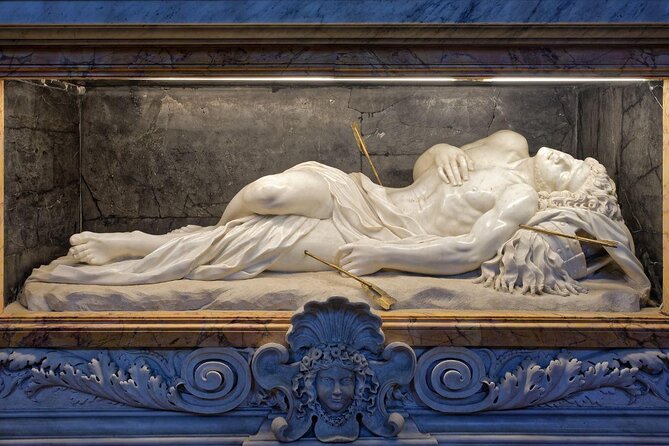
The first major stop is the Catacombs of San Callisto or San Sebastiano. The included guided visit lasts about 45 minutes, and the catacombs provide a strong opening because they take you below the familiar monuments of imperial Rome.
Expect a separate catacomb guide inside. The visit explains the underground burial spaces and the people connected with them. One account describes descending several levels at San Callisto, which gives you a sense of the enclosed nature of the visit. The underground setting can be memorable, but it may not suit anyone who dislikes confined spaces or stairs.
This is more than a quick photo stop. The admission ticket is included, and the guided portion gives you context before you begin cycling past roadside tombs and ancient structures. I would not skip the catacombs simply because you came for the bike ride. The two parts work well together: first you see how ancient communities treated the dead, then you follow the road that carried people, armies, and goods away from Rome.
The exact catacomb can be San Callisto or San Sebastiano. If one location matters especially to you, confirm the plan before booking, since the itinerary allows either.
Collecting the e-bikes near Cecilia Metella
After the catacomb visit, the shuttle stops near the Mausoleum of Cecilia Metella and the Castrum Caetani. You walk for roughly three minutes over ancient paving before taking possession of the bikes.
The mausoleum is not listed as a full included admission stop. Instead, it marks the transition into the cycling section. This is where the tour begins to feel less like a standard sightseeing circuit and more like an outing through the Roman countryside.
The supplied bikes are pedal-assist e-bikes with helmets included. Several guides have been singled out for checking riders carefully, giving a briefing, and keeping a relaxed pace. The bikes have generally been described as modern and easy to operate, though one rider reported a brake problem and another found a bike older than expected. Before leaving, check your saddle, brakes, gears, and helmet fit, then tell the guide about any concern.
Children under 139 centimeters use a children’s extension. Children can ride their own e-bike from age 12. A baby seat for a child up to 20 kilograms is available if needed, but the ride still requires enough balance and control for uneven ground.
More E-Bike Tours in Rome
- Rome: Appian Way, Catacombs, & Roman Aqueducts E-bike Tour
★ 4.9 · 1,421 reviews - Rome City Small Group Bike Tour with quality Cannondale EBike
★ 5.0 · 1,380 reviews - Rome by Night – Ebike Small Group Tour – Food and Wine (Option)
★ 5.0 · 1,275 reviews - Rome by Night: E-bike Small Group Tour -Food & Wine (Option)
★ 4.9 · 1,233 reviews
The Appian Way on two wheels
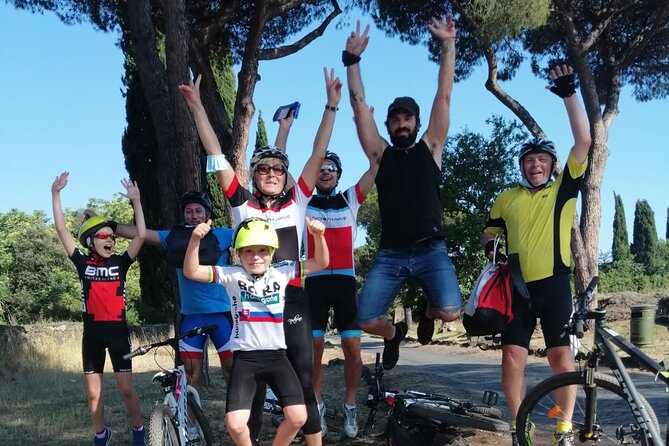
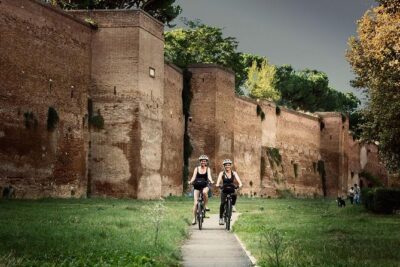
The cycling portion lasts about two hours and is the heart of the experience. The Via Appia Antica is one of Rome’s oldest roads, and the appeal comes from moving through it slowly rather than viewing it through a vehicle window.
The surface is the biggest feature and the biggest challenge. Ancient paving stones are uneven, so your e-bike will shake and your speed will be moderate. The motor assists with effort, but it cannot smooth the ride. Sit comfortably, keep both hands steady, and follow the guide’s line through the rougher sections.
This is not a race. Guides such as Emanuele, Alessio, Manfreddi, Laura, and Guido have been praised for stopping often to explain monuments, tombs, road construction, and local stories. Emanuele in particular has been noted for combining Roman history with careful riding instructions and frequent safety checks.
The route offers an unusual sense of scale. You can see the road stretching through the park, then pause beside ruins and tombs that have survived for centuries. Some guides also point out farms, local produce, mineral water, and residential areas along the way. These small details help you see the Appian Way as more than an archaeological strip. It is also a living edge of Rome.
The tour includes a poncho if rain arrives, but you should still dress for outdoor conditions. The operator does not include refreshments, so bring water and perhaps a small snack. The route is long enough that arriving without something to drink would be a mistake.
Aqueduct Park and the broad Roman view
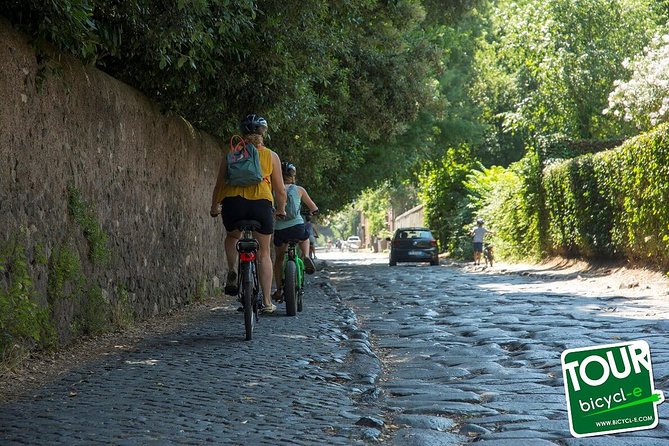
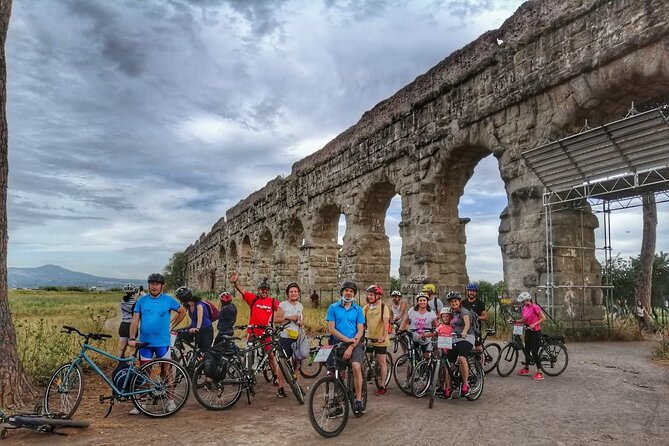
The route continues to Parco degli Acquedotti, where long stone arches cross the open park. This is one of the tour’s most striking visual moments. The aqueducts are large enough to dominate the view, and the open setting lets you appreciate how Roman water systems were built across the countryside.
You spend about an hour at the park, including time for explanations and photographs. This is a good place to slow down after the rougher Appian paving. The guide can explain how the aqueducts served Rome and why their position outside the center mattered.
The setting also gives you a break from the compact streets around the historic core. You see grass, open sky, ruins, and distant city edges rather than dense blocks of buildings. If you want photographs, this is one of the best sections, and guides familiar with the route often know good places to stop.
Tor Fiscale and Caffarella parks
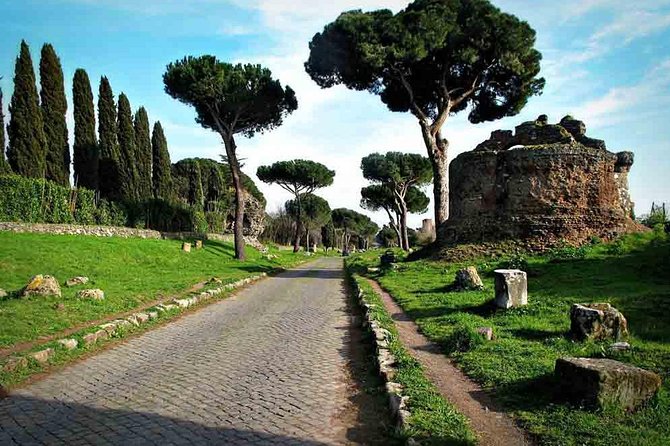
The ride then passes through Tor Fiscale Park for about 20 minutes. This section adds another layer to the route, with ancient Roman remains set among quieter country paths. It is a short stop, but it helps connect the Appian Way and aqueducts into one larger archaeological area.
From Tor Fiscale, you continue toward Caffarella Park. The Caffarella section lasts about 15 minutes and feels particularly close to the city while still having a rural character. The tour describes it as a piece of countryside near central Rome, which is exactly why this route works so well for a second or third day in the city.
These parks are not presented as long walking visits. You are passing through by bicycle, stopping for selected explanations, and keeping the route moving. If you want to inspect every ruin at length, a dedicated archaeological walk would suit you better. If you want a broad taste of the area without spending a full day on foot, the e-bike format is more efficient.
How safe and demanding is the ride?
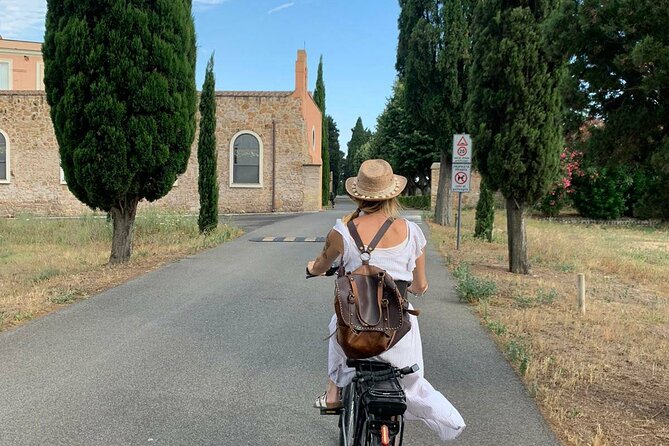
The operator favors quieter roads and says the guide accompanies the group throughout. Most of the route has no car traffic, with access mainly limited to local residents. That is a major improvement over starting the ride in central Rome.
Still, do not treat this as a beginner’s cycling lesson. Basic to medium bike skills are required, and the operator reserves the right to turn away anyone judged unfit because of riding ability or health. That decision carries no refund, so be honest when assessing your own comfort.
The route is manageable for confident riders because the e-bike reduces the effort. It is less suitable if you are nervous on loose or uneven surfaces, have trouble controlling a bike at low speed, or are traveling with children who have only limited road experience. One account found the ride excellent for adults but less comfortable for children near the few traffic sections.
The small group size helps. A maximum of eight is given for small-group tours, while another published condition sets an overall maximum of 15. Because those numbers differ, ask which applies to your departure. The group option requires at least four participants. If that minimum is not reached, you are offered another arrangement or a full refund.
Guides, photos, and the human side
The guide can make or break a history-heavy ride, and this outing depends on good storytelling. Emanuele is repeatedly noted for clear English, Roman history, and close attention to safety. Alessio has been praised for friendliness and for knowing memorable photo locations. Laura is described as an avid cyclist who gives a careful briefing, while Guido is noted for a personal style and useful facts about the route.
That range matters because the tour has many pauses. You are not simply following a leader from point to point. The guide explains what you are seeing, answers questions, manages the group, and helps riders feel comfortable on the old paving.
Several guides also take photos. This is not a separate professional photo package, but it is a helpful extra if you want a picture of the ride without handing your phone to a stranger. Some guides know attractive stopping points and can help frame a shot among the ruins or aqueducts.
Is $107.68 a fair price?
At $107.68 per person, this is not the cheapest way to see the Appian Way. The price includes round-trip private shuttle transport from central Rome, the e-bike, helmet, local guide, catacomb admission, and the Aqueduct Park visit.
The value improves when you add up the logistics. On your own, you would need to arrange transport to the Appian Way, find a bike, work out a safe route, and decide how to combine the catacombs, aqueducts, Tor Fiscale, and Caffarella. The shuttle alone saves time and removes the least pleasant part of riding in Rome.
It is also a good use of half a day if you want more than monuments in the center. The private-tour upgrade can make sense for a couple or family that wants a more flexible pace. For solo visitors, a small-group departure keeps the price more reasonable and still provides guidance.
The price is less attractive if you already have transport, a rental bike, and strong knowledge of the area. It also does not include drinks or food, so budget for those separately.
Who should book this experience?
I would choose this tour if you want ancient Rome with fresh air, a bit of exercise, and fewer crowds. It suits confident cyclists, couples, active families with older children, and repeat visitors who have already seen the central monuments.
You should book it if the following sounds appealing:
- Riding on historic paving matters more to you than speed.
- You want catacombs and aqueducts in the same half-day.
- You prefer a guide who explains ruins instead of simply leading the way.
- You want to avoid starting with Rome’s busiest traffic.
- You are comfortable with an outdoor activity that can be bumpy.
I would choose something else if you want a smooth, flat bike path, a long indoor archaeological visit, or a completely traffic-free route. The Appian Way is beautiful, but it is not polished. That roughness is part of the character and part of the work.
Cancellation is free up to 24 hours before the start time. Changes or cancellations inside that window are not refunded, and the tour can be changed or refunded if the minimum group size is not reached.
Should you book the Appian Way e-bike tour?
Yes, if you want to see a quieter, more physical side of Rome and you are ready for uneven paving. The combination of shuttle, catacombs, Appian Way, aqueducts, and parks gives you a lot in four and a half hours without forcing you to plan the route yourself.
Before booking, check the group size, confirm which catacomb is scheduled, and be realistic about your cycling ability. Bring water, wear clothes suited to the weather, and expect a bumpy ride. For the right rider, this is one of the most rewarding ways to get beyond Rome’s famous center.
FAQ
Where does the tour start and finish?
It starts at Viale Aventino 46, near Circus Maximus. The activity ends back at the same meeting point after the return shuttle.
How long does the experience last?
The tour lasts approximately four hours and 30 minutes. The shuttle journey takes about 20 minutes each way.
Is the e-bike included?
Yes. The price includes a pedal-assist e-bike and helmet.
Are the catacombs included?
Yes. Catacomb admission and a guided visit of about 45 minutes are included. The stop may be at the Catacombs of San Callisto or San Sebastiano.
How much cycling experience do I need?
You need basic to medium bike-riding skills. About 90 percent of the route uses the uneven Roman paving of the Appian Way, so you should be comfortable riding off the beaten track and in the countryside.
Can children join the tour?
Children up to 139 centimeters ride with a children’s extension. Children can ride their own e-bike from age 12, and a baby seat is available for children up to 20 kilograms.
Newest rides we have reviewed in Rome
- Rome E-Bike Tour: Ultimate Street Food and Market Feast★ 4.9 · 50 reviews
- Rome’s Best by E-bike: Guided City Tour (Small Group or Private)★ 5.0 · 207 reviews
- Rome: Appian Way, Aqueducts & Catacombs (Small Group or Private)★ 5.0 · 103 reviews
- Private Rome City Bike Tour with quality Cannondale EBike★ 5.0 · 176 reviews
- Rome E-Bike Small Group Tour of the Appian Way with Private Option★ 5.0 · 130 reviews
- Rome: Cannondale E-Bike Evening Tour with Optional Dinner★ 4.9 · 251 reviews
- Rome: Electric Bike Rental★ 4.6 · 99 reviews
- Bike Rental inside Appian Way Regional Park★ 4.5 · 104 reviews
E-Bike Tours, compared.
3-Hour Porto Highlights on a Electric Bike Guided Tour
Read our review →
Hills, Alfama, and Mouraria Tour by Electric Bike
Read our review →
Athens Scenic Electric Bike Tour with optional Acropolis visit
Read our review →
City Highlights 3-Hour Guided Electric Bike Tour
Read our review →
Rome EBike Tour: Appian Way, Catacombs & Roman Aqueducts
Read our review →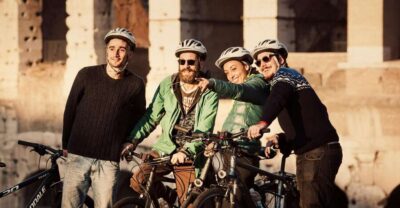
Top Highlights & Hidden Gems Tour by Cannondale E-Bike
Read our review →Other lists this ride turns up in