
REVIEW · CROATIA
Best of Zagreb: 4-Hour Cycling Tour
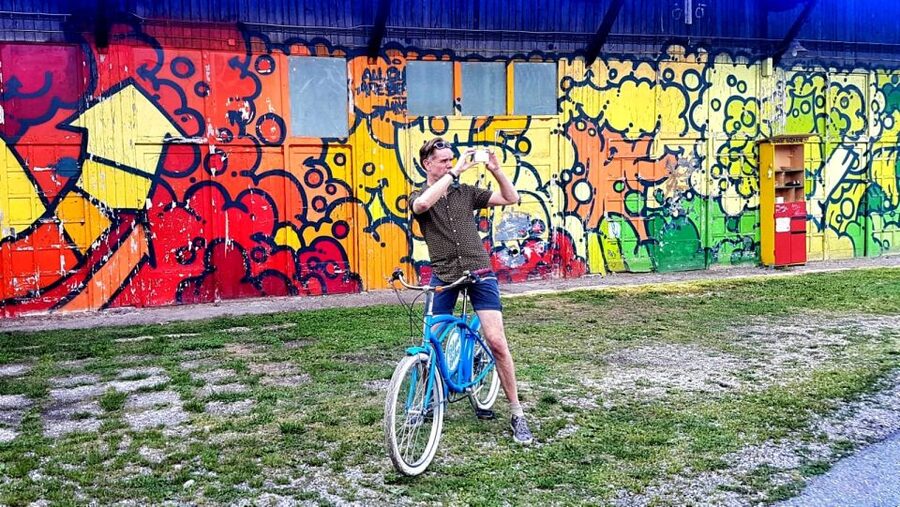
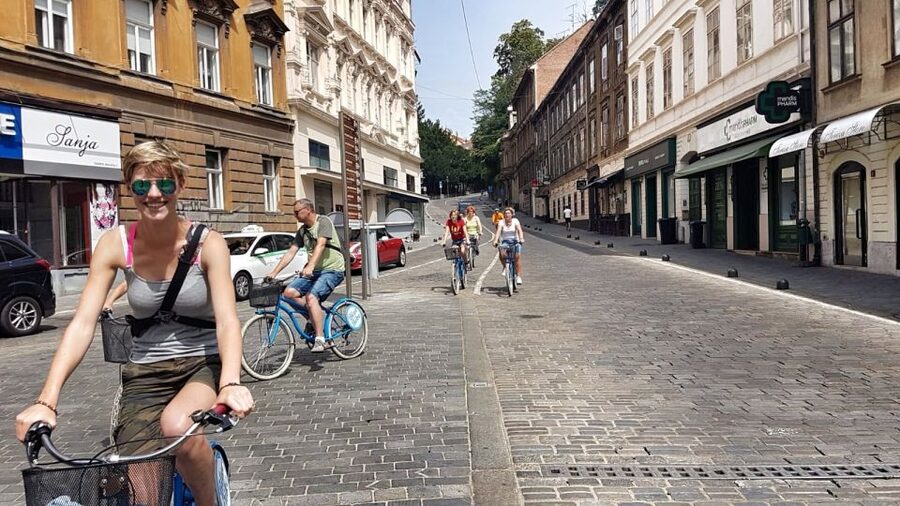
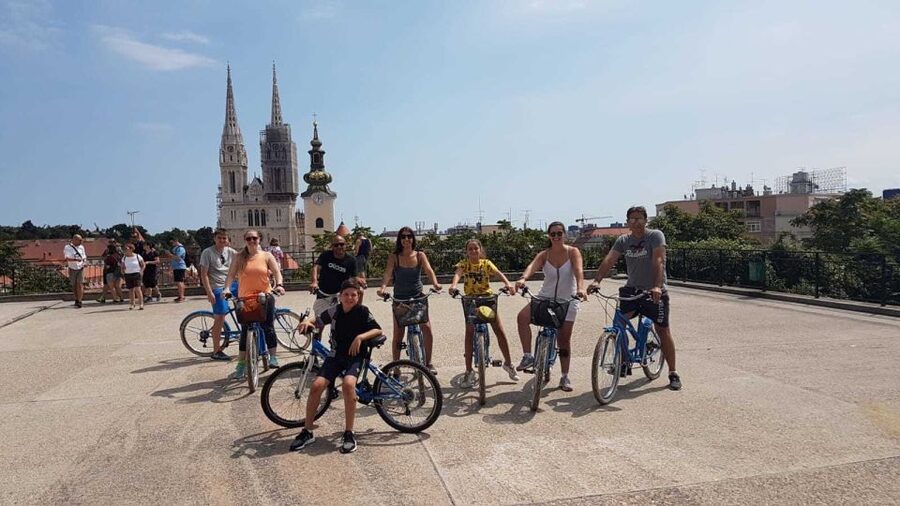
Zagreb reveals itself quickly from a bicycle. In four hours, you can pedal from the grand Lower Town to the medieval Upper Town, then cross into New Zagreb, where wide modern districts tell a very different story. The sharp change in scenery is the heart of this tour.
I like the efficient route and the local storytelling. You see landmarks such as the National Theatre, Parliament, Government House, Stone Gate, and Bundek, while guides including Alida and Roza add personal context about Zagreb from Yugoslav times to today. I also like that the pace adjusts to the slowest rider. The main drawback is simple: if you prefer to linger inside museums or take long photographs at every stop, four hours may feel brisk.
Key points to know before you ride
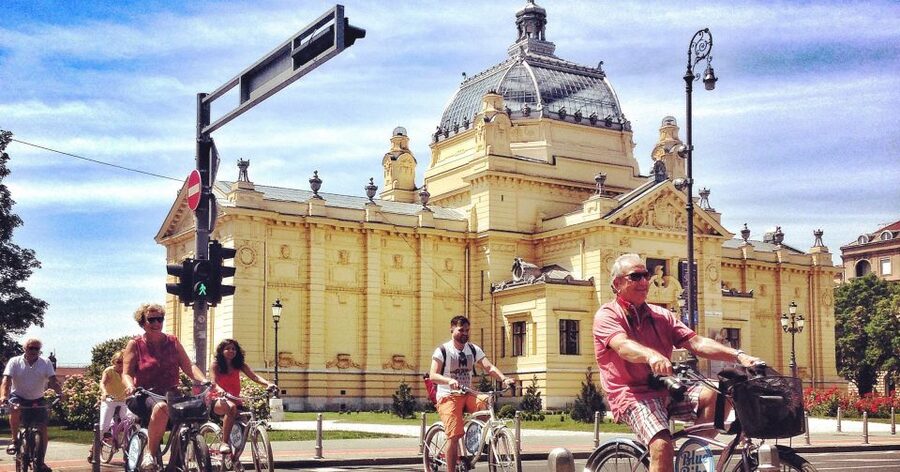
- Old Zagreb and New Zagreb in one outing: Compare the historic Upper Town and Lower Town with the broad, modern districts south of the Sava River.
- A relaxed family-friendly pace: The tour is suitable for babies through grandparents, with frequent stops and a rhythm adjusted to the slowest rider.
- Local stories beyond the landmarks: Learn why Zagreb has a daily noon cannon blast, what happened at Bloody Bridge, and who is associated with Stone Gate.
- Useful after-tour advice: Your guide can point you toward shopping areas, restaurants, coffee spots, beer, and rakija.
- A small-group format: Smaller groups make it easier to ask questions and keep the ride comfortable.
- Optional coffee pause: You can add a break if four hours of sightseeing feels better with time at a café.
Why a bicycle is such a good fit for Zagreb
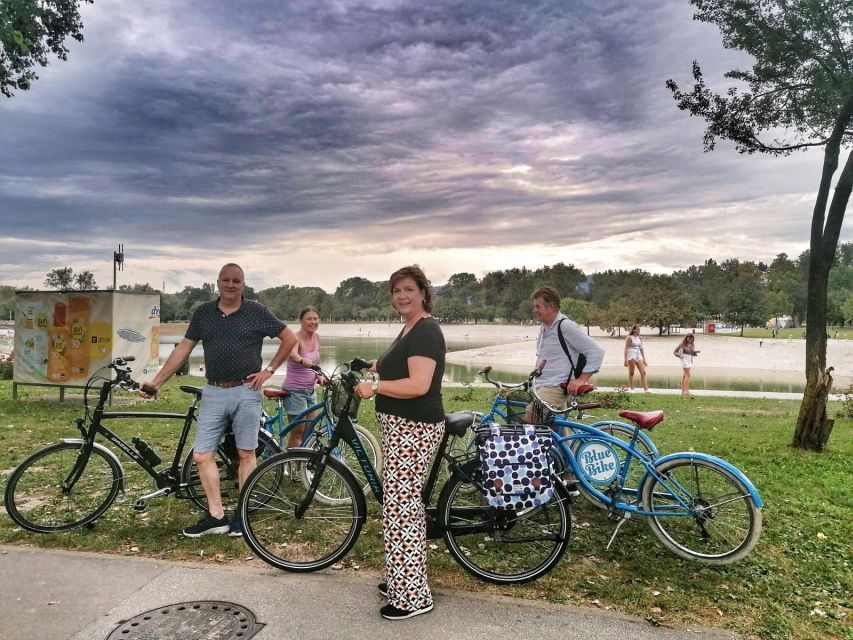
Zagreb is compact enough to explore on foot, but its districts have distinct personalities. A walking tour can cover the core sights well, yet it takes more time to connect the historic center with Bundek and New Zagreb. On a bicycle, you get those links without spending much of the day in transit.
The route also gives you a useful sense of scale. In one outing, you can watch the city shift from Austro-Hungarian public squares and older streets to postwar planning and newer urban life. That comparison is more valuable than collecting a long list of monuments.
You will not simply pedal past everything. The tour includes frequent stops, and you can stop when you want and stay as long as you want within the group’s schedule. That makes the ride a sightseeing tour rather than a cycling workout.
The pace is described as easy and suitable for all ages. You do not need to be a strong cyclist, and the guide adjusts the rhythm to the slowest member of the group. Still, you should feel comfortable riding a bicycle for several hours and wearing outdoor clothing.
More Cycling Trips in Croatia:
- City Bike Tour of Split
★ 5.0 · 331 reviews - Elafiti Islands Sea kayaking: Full-Day Bike and Kayak tour on Lopud and Šipan
★ 4.5 · 236 reviews - Hvar Island Self-Guided E-Bike Tour
★ 5.0 · 144 reviews
Starting at the main square
The meeting point is Trg bana Josipa Jelacica 15, Zagreb’s main square. The Blue Bike Zagreb office is inside an alley, in the direction the statue on the square points. Give yourself a few minutes to find that entrance, especially if you are meeting the group early in your Zagreb stay.
The main square is a sensible place to begin. It puts you right in the center of the city, close to the Lower Town, and makes it easy for the guide to explain how Zagreb is arranged before you set off. You will receive a comfortable bicycle and can take a helmet if you want one. A child seat is also available.
The guide leads in English. Guides such as Alida and Roza have been praised for combining city history with personal experience, including changes from the Yugoslav period to the present day. That kind of first-person context can help you understand why different parts of Zagreb look and feel so unlike one another.
The exact group size is not given, but the tour is described as small-group. That matters on city streets. You can ask questions without shouting across a crowd, and it is easier for the guide to keep an eye on riders with different levels of confidence.
Lower Town and Zagreb’s green horseshoe
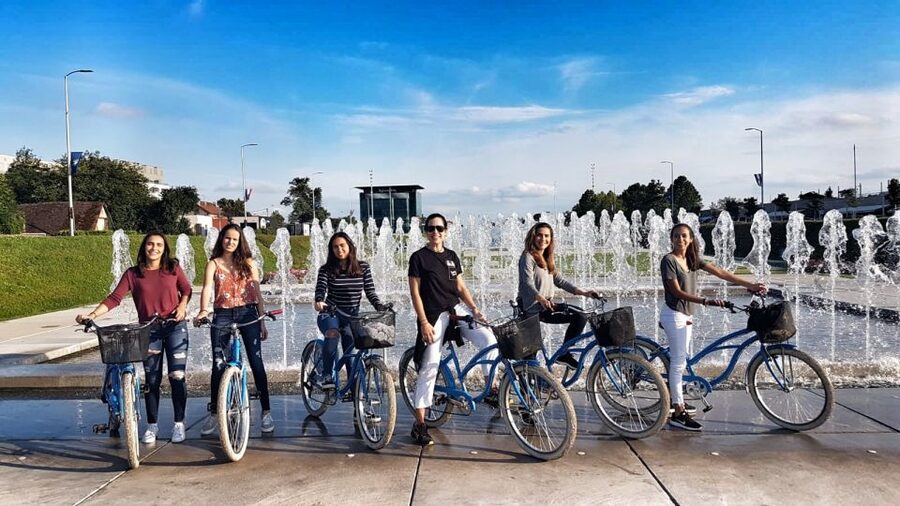
The first major part of the ride covers Zagreb’s Lower Town, with about 45 minutes of cycling. This is the orderly, central part of the city, where broad streets and public buildings give Zagreb much of its formal character.
You will see the National Theatre, Parliament, and Government House during the wider route. These are not random photo stops. Together, they help explain Zagreb as Croatia’s political and cultural center.
The tour also introduces Zagreb’s green horseshoe. This chain of parks and open spaces gives the central city a softer structure and helps explain why Zagreb can feel spacious despite being a compact capital. From a bicycle, you can connect these public areas more naturally than you can on a hurried walk.
This section is useful early in your visit because it gives you a map in your head. After the tour, you will have a better idea of where to return for an evening walk, a museum visit, or a meal. Your guide also offers practical suggestions for shopping, restaurants, coffee, beer, and rakija.
Do not expect an inside tour of every building. The emphasis is on seeing the city from the street and understanding the setting. If you want detailed museum time, plan that separately.
Bundek and the change in city scale
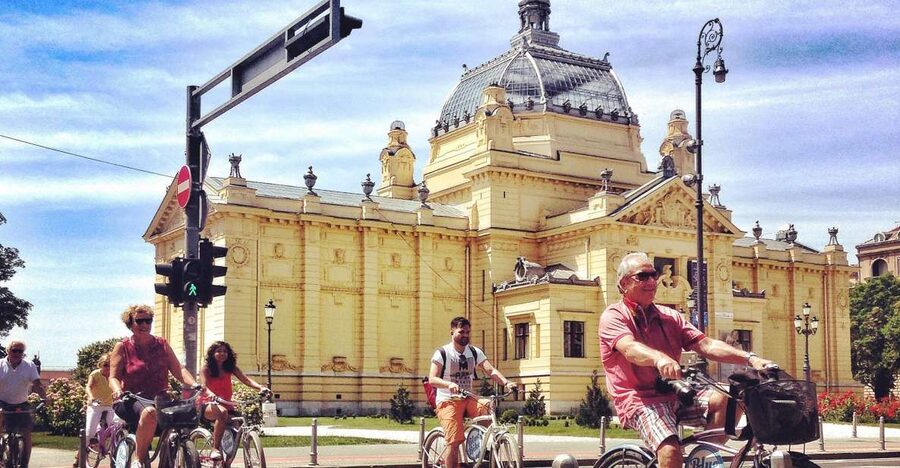
The ride to Bundek takes about 45 minutes. This part gives the tour room to breathe after the tighter streets of the center.
Bundek helps show Zagreb as more than its historic core. The route here lets you see a different setting and gives you a clearer sense of how residents use the city beyond the main sightseeing zone. It is also one reason the bicycle format works well. Reaching this area on foot would take more time and energy, while riding lets you include it without giving up the central sights.
The route is not designed as a hard-distance challenge. Frequent stops and an easy pace keep the emphasis on observation. If you are traveling with older relatives or children, that matters more than the raw number of kilometers.
This is also a useful point to judge your energy. The full experience lasts four hours, and the schedule includes several substantial riding sections. You can request a coffee break, so you do not have to treat the whole outing as one continuous ride.
The practical tradeoff is that Bundek may appeal more to people interested in everyday Zagreb than to those seeking one famous monument after another. If your priority is only the medieval center, part of this section may feel less urgent. If you want to understand how the city works beyond its postcard streets, it adds real value.
Same roads, a different saddle:
- Split 3-Hour Guided Bike Tour
★ 4.8 · 117 reviews - Split City Electric Bike Tour
★ 4.9 · 106 reviews - Split Electric Bicycle Tour
★ 5.0 · 105 reviews - E-Bike Tour + Gourmet Snack + Wine Tasting (Small Group)
★ 5.0 · 95 reviews
New Zagreb and the city after the old center
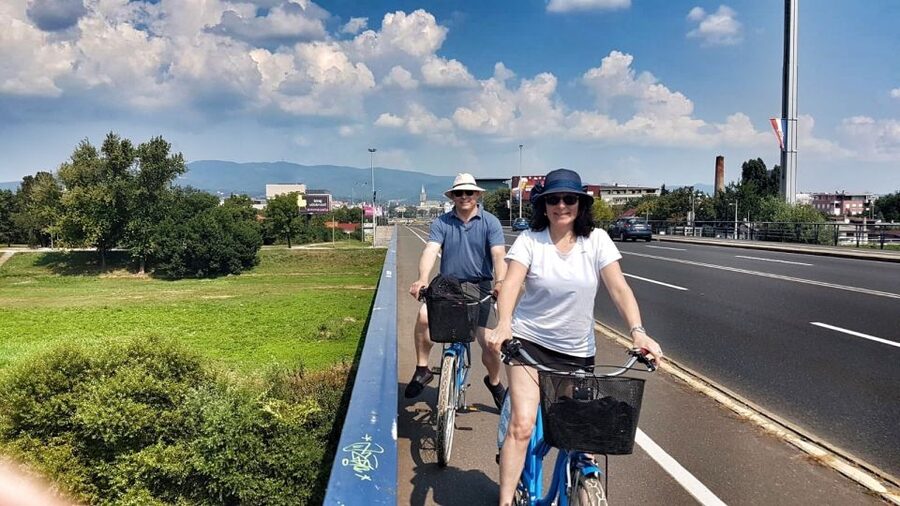
The New Zagreb portion is one of the most useful parts of the experience. The tour presents it as a sharp contrast with the Upper and Lower Town, and that contrast is exactly what makes the route worthwhile.
Here, you can see how Zagreb changed through the decades and how the lifestyle of its residents changed with it. The architecture and planning are tied to the city’s Yugoslav and postwar periods, giving you a different frame for understanding Zagreb today.
You may notice that the route shifts from the older city’s historic streets to wider, more modern spaces. The tour does not treat this area as an afterthought. It uses New Zagreb to show that the city’s story did not stop with its medieval gates or nineteenth-century public buildings.
I especially like this part for visitors who have already seen several European old towns. Zagreb’s Upper Town is appealing, but many capitals can offer an old quarter. Fewer city tours make a clear point of showing how an older center connects with later housing, public space, and urban planning.
A walking tour can explain those changes, but the bicycle makes them visible in sequence. You physically move from one type of city to another, rather than hearing about the difference in a single square.
The everyday stories of Upper Town
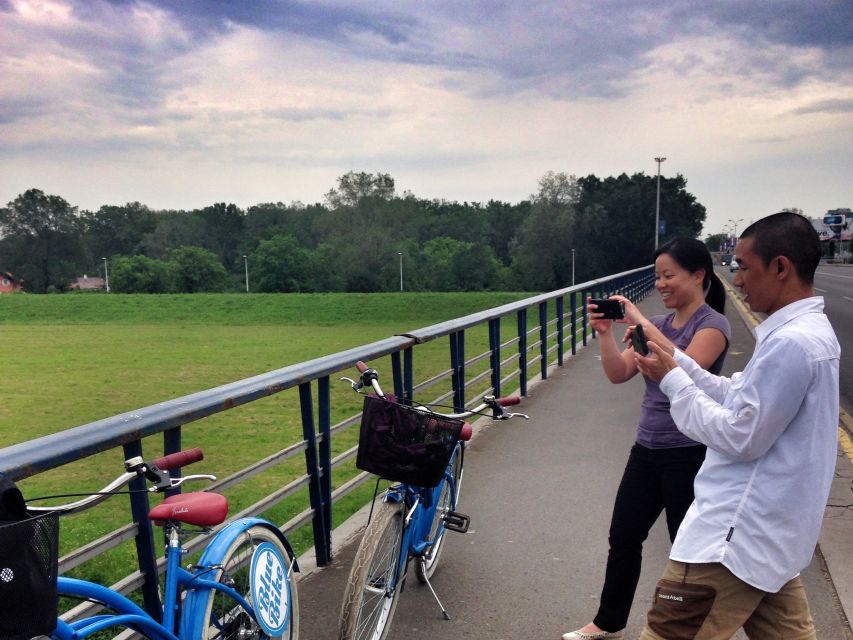
The Upper Town section lasts about 45 minutes and brings the tour back to Zagreb’s older core. This is where the route’s more unusual stories come forward.
You will hear why Zagreb has a big bang every day at noon. You will also learn what is so bloody about Bloody Bridge and who is stoned at the Stone Gate. These details give the older streets character without turning the tour into a dry list of dates.
The Stone Gate is especially useful as a stop because it connects architecture, local belief, and daily city life. Bloody Bridge, meanwhile, helps you look at an ordinary-sounding street name with more curiosity. The guide’s job here is not just to tell you what you are seeing, but to give you reasons to notice it.
The Upper Town includes slopes and older streets, so riders should expect some changes in surface and grade. The stated pace is easy, and the group stops often, but you should still wear practical outdoor clothing and ride within your comfort level.
This is also where a local guide can make a large difference. Alida has been praised for explaining Zagreb through personal experience, including the city’s transition from Yugoslav times to the present. That perspective can add meaning to places that might otherwise look like attractive old streets with no larger story.
A tour that makes room for questions
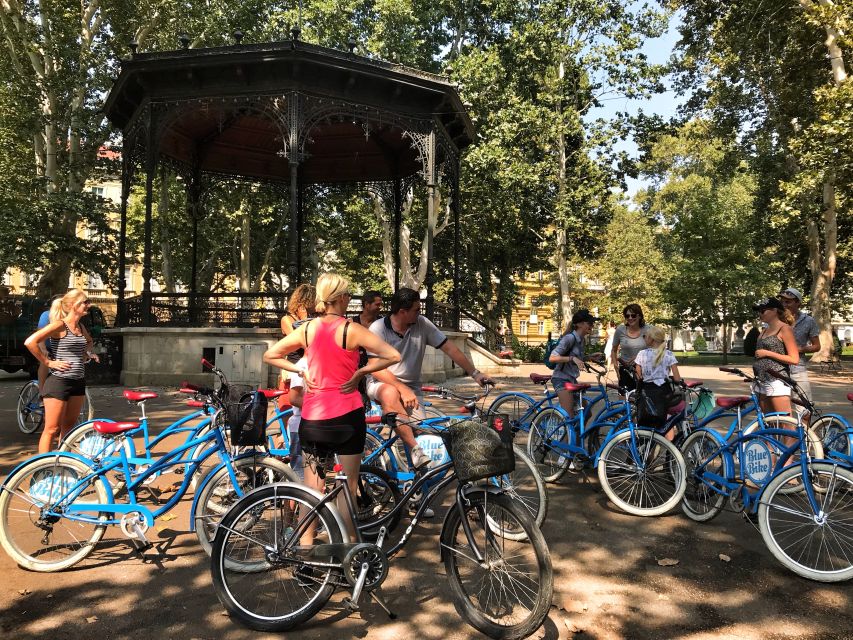
The tour is structured, but it is not presented as a rigid race through Zagreb. You make frequent stops, and the guide can adjust the rhythm to the slowest rider. That is good news if your group includes people with different cycling habits.
The small-group approach should also make conversation easier. You can ask about where to eat, where to shop, or which café is worth your time. Advice about coffee, beer, and rakija is particularly useful in Zagreb, where sitting down for a drink is part of the local rhythm rather than a quick stop between sights.
The available guide names include Alida and Roza, and the feedback about them is consistently warm. Alida is noted for connecting historical events to her own experience in Zagreb, while Roza is described as lively and well informed about the city. The names are useful to know, but the larger point is that the guide shapes the quality of the day.
A bike tour also creates small chances to see ordinary city life between formal stops. You will ride through areas tourists may not reach on a short walking route and get a sense of how residents move through Zagreb. The experience is not limited to a neat line between major monuments.
The $94 question: is the value there?
At $94 per person, this is not a bargain-basement city tour. The price needs to earn its place in your budget.
I think the value is strongest for a first visit. You receive a bicycle, an optional helmet, a child seat if needed, a certified local English-speaking guide, and four hours covering both the historic center and New Zagreb. A walking tour might cost less, but it would not cover the same amount of ground as efficiently.
The time saved is part of the value. One early booking can give you an overview that would otherwise require several separate walks. The route also helps you decide what deserves a longer visit later.
The price is less compelling if you only want a short orientation around the main square and Upper Town. You would not need four hours or a bicycle for that. It is also not the best match if you want extensive interior visits, a food-focused outing, or a fast athletic ride.
For families, the value improves because the pace is adjusted and a child seat is available. For couples or solo visitors, the benefit comes from seeing more of Zagreb while getting local advice you can use for the rest of your stay.
Practical details that affect your day
The tour lasts four hours, with starting times available according to the booking schedule. Since the ride begins and ends at Blue Bike Zagreb, you do not need to arrange separate transportation between neighborhoods.
Bring outdoor clothing. A helmet is available if you want one, and a child seat can be included. Meals and drinks are not included, but you can ask for a coffee break during the outing.
Free cancellation is available up to 24 hours before the start for a full refund. You can also reserve now and pay later, which is useful if you are still arranging the rest of your Zagreb plans.
The tour is suitable for all ages, from babies to grandparents. That does not mean every rider will find the day effortless, so be honest about your group’s comfort on bicycles. The stated pace is easy, and the guide adjusts to the slowest person, but four hours is still a full sightseeing block.
Who should book this Zagreb bike tour?
I would choose this tour early in a Zagreb visit, especially if you want a broad introduction before deciding how to spend the rest of your time. It is a strong fit for first-time visitors, families, couples, and anyone who wants both historic Zagreb and the city’s later development in one outing.
It also suits travelers who enjoy context more than a checklist. The daily noon cannon, Bloody Bridge, Stone Gate, Yugoslav-era changes, and local café advice give you useful threads to follow after the ride.
I would hesitate if you dislike bicycles, need long indoor museum visits, or want to spend most of the day photographing a single neighborhood. The route covers a lot, so the reward is range rather than prolonged time at one sight.
For most people who are comfortable riding at an easy pace, the combination of coverage, local explanation, and practical advice makes the $94 reasonable. You see the city’s main contrasts in one morning or afternoon, then return to Blue Bike Zagreb with a better plan for the rest of your stay.
FAQ
Where does the Zagreb cycling tour start?
It starts at Blue Bike Zagreb, at Trg bana Josipa Jelacica 15 on the main square. The office is inside an alley in the direction the statue on the square points.
How long does the tour last?
The tour lasts four hours. You should check the booking schedule for available starting times.
What language is the tour conducted in?
The live tour guide speaks English.
Which parts of Zagreb does the route cover?
The route includes the Lower Town, Bundek, New Zagreb, and the Upper Town. It returns to Blue Bike Zagreb at the end.
Which sights will I see?
The route includes the National Theatre, Parliament, Government House, Zagreb’s green horseshoe, Stone Gate, and Bloody Bridge. You will also learn about Zagreb’s daily noon cannon blast.
Is the cycling pace difficult?
The pace is easy, and the rhythm is adjusted to the slowest rider. The tour is described as suitable for all ages, from babies to grandparents.
Is a helmet or child seat available?
A helmet is available if you want one, and a child seat can be provided.
Are food and drinks included?
No. Meals and drinks are not included, but you can request a coffee break during the tour.
Newest rides we have reviewed in Croatia
- Hvar Island Self-Guided E-Bike Tour★ 4.9 · 24 reviews
- Hvar Island E-Bike Tour with Wine Tasting and Starters★ 4.9 · 25 reviews
- From Zadar: Full-Day Ugljan Self-Guided Bike Tour★ 4.7 · 12 reviews
- Explore Zadar: Laid-Back Fun Bike Tour★ 4.8 · 35 reviews
- Zagreb: 2.5-Hour Highlights Bike Tour★ 4.8 · 93 reviews
- Split Electric Bicycle Tour★ 5.0 · 105 reviews
- Split 3-Hour Guided Bike Tour★ 4.8 · 117 reviews
- Split City Electric Bike Tour★ 4.9 · 106 reviews
Croatia Cycling Tours, compared.
Elafiti Islands Sea kayaking: Full-Day Bike and Kayak tour on Lopud and Šipan
Read our review →
E-Bike Tour + Gourmet Snack + Wine Tasting (Small Group)
Read our review →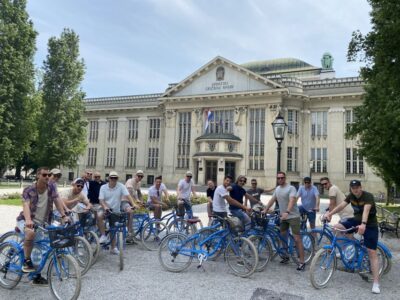
Other lists this ride turns up in