
REVIEW · SMALL-GROUP BIKE TOURS IN GERMANY
Berlin Wall History Small Group Cycling Tour
The most moving part of this tour comes right at the start: you cross the former Bornholmer Straße border, the first East German crossing to open on November 9, 1989. From there, you follow the old Wall route by bicycle, passing watchtowers, sections of Death Strip, escape sites, and memorials that are easy to miss on a standard city tour.
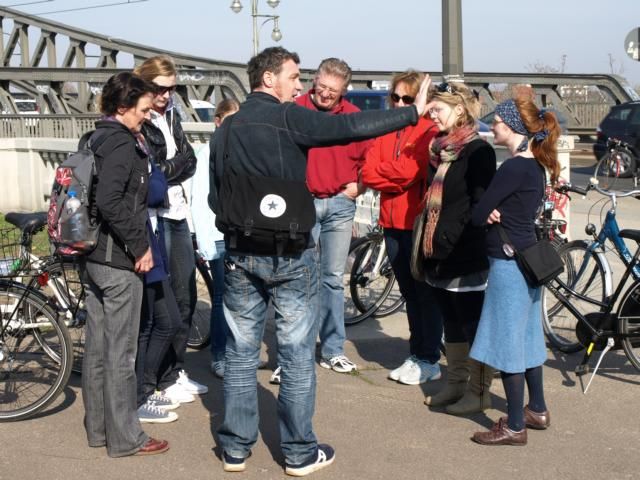
I like the small group of three to eight people, which gives the guide room to explain details and answer questions. I also like the route itself, especially the mix of famous places such as Brandenburg Gate and Checkpoint Charlie with quieter stops like Invaliden Cemetery and the Parliament of the Trees. The main consideration is language: the live tour is in German, so it may not suit you if you need English commentary.
Key points about this Berlin Wall bike tour
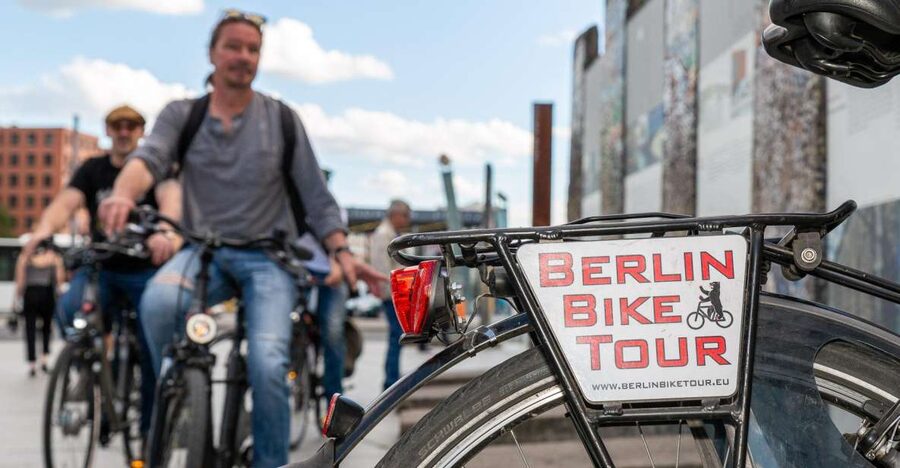
- Begin at Bornholmer Straße, the first border crossing to open on November 9, 1989.
- Cycle through Mauerpark and along former Death Strip areas, with original watchtowers and Wall traces.
- Visit Bernauer Straße, the Chapel of Reconciliation, Chausseestraße, and Invaliden Cemetery, where the human cost of division becomes clear.
- See the Parliament of the Trees, a memorial made from sections of the former border.
- Finish with major Berlin sights, including Brandenburg Gate, Potsdamer Platz, Checkpoint Charlie, and the Tränenpalast.
- Ride for four hours in a group of no more than eight, with a bicycle and rain poncho supplied.
Why starting at Bornholmer Straße matters
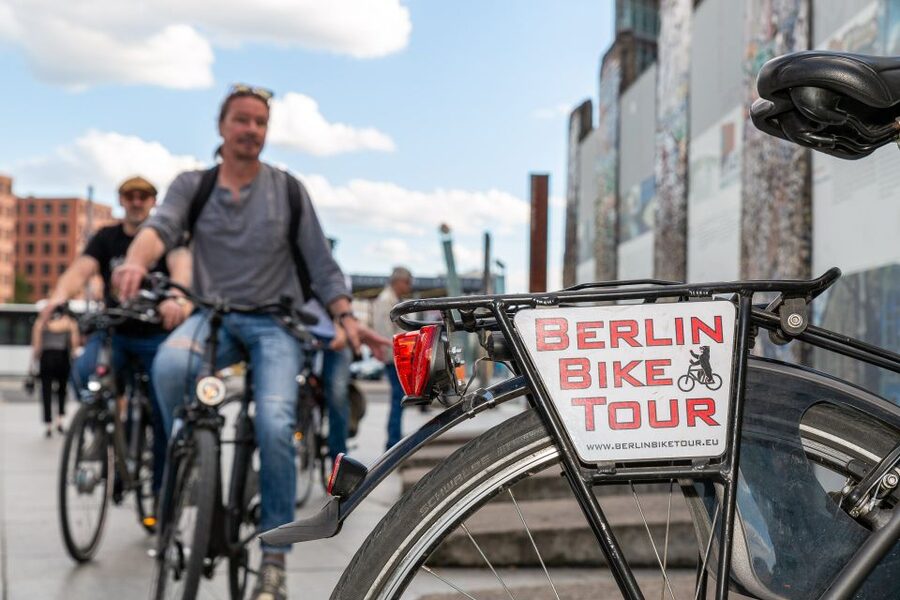
Many Berlin Wall tours begin in the city center, where the Wall has become part of a busy sightseeing circuit. This one starts farther north at Bornholmer Straße, and I think that gives the story a stronger shape.
You meet at 75 Bornholmer Straße, close to the Square of November 9, 1989. This is the place where the first East German citizens crossed into West Berlin after the border opened. You are not beginning with an abstract political date. You are beginning at the exact point where the system started to break apart.
Your guide explains how the cherry trees on Bornholmer Straße came to be planted. You also see an original watchtower and part of the former Death Strip. The Wall itself is mostly gone, so these surviving pieces matter. They help you picture the fortified border as more than a line on a map.
The route then follows the Mauerweg, the path associated with the former Wall. You may see small rabbit pictures painted on the ground, a reference to the rabbits that lived in the restricted strip when the area was off-limits to most people. It is a small detail, but it helps make the former border feel like a real place rather than a museum diagram.
More Small-Group Bike Tours in Germany
- Small-Group Historical Bike Tour in Berlin
★ 4.5 · 103 reviews - Berlin: Small Group Bike Tour Through City Center
★ 4.9 · 64 reviews - Munich Small-Group Bike Tour
★ 4.5 · 510 reviews
Mauerpark and Bernauer Straße: history beside everyday Berlin
The ride through Mauerpark shows how quickly Berlin changes once the Wall disappears. The park occupies part of the former border zone, but today it is also a familiar city recreation area. That contrast is one reason a bicycle works so well here. You can move from a place of fear and control into an ordinary public park within minutes.
At the Bernauer Straße Wall Memorial, the history becomes more personal. This area is closely linked with divided homes, escape attempts, and the separation of families. The memorial preserves sections of the border layout, including parts of the former Death Strip, so you can see how much space and security equipment stood between East and West.
The Chapel of Reconciliation is another important stop. It occupies the site of a church that stood inside the former border area and could not be used normally during the division. The chapel gives the route a quieter pause after the open spaces of Mauerpark.
I would pay close attention here, since the details can be easy to miss if you only stop for a quick photograph. Your guide connects the physical remains with stories of people who tried to cross, lived near the Wall, or were trapped by the border.
Chausseestraße and Invaliden Cemetery
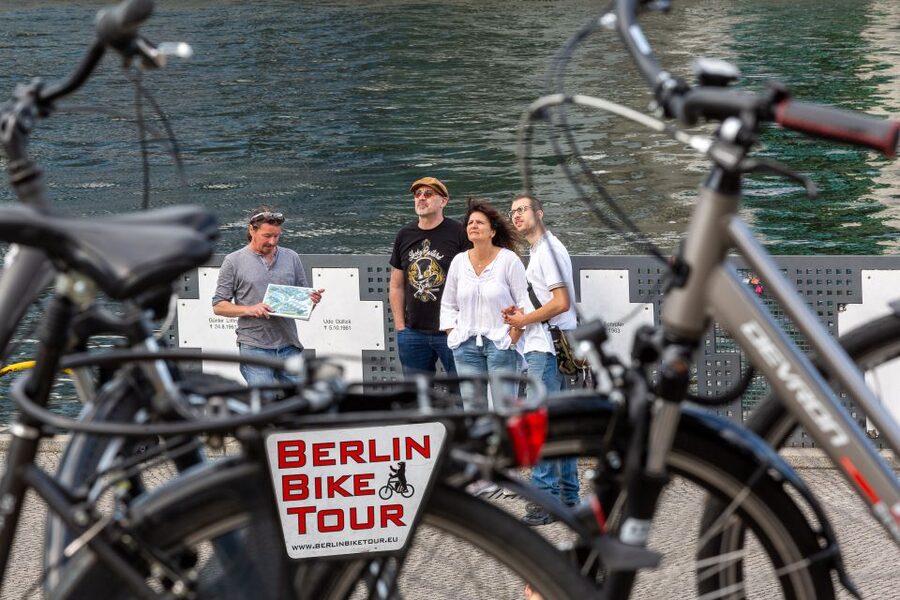
The former Chausseestraße crossing adds a different side to the tour. It was one of the official points through which people passed between East and West Berlin. Standing near a former crossing helps explain that the Wall was not simply a barrier placed at the edge of the city. It cut through streets, neighborhoods, transport routes, and daily routines.
The ride continues to Invaliden Cemetery. This is one of the more unusual stops because the cemetery itself was affected by the border system. Parts of the former restricted zone ran through or beside the grounds, and the site helps show how the Wall disrupted older parts of Berlin.
You also visit the memorial to Günter Litfin. Litfin was one of the first people killed while trying to cross the Berlin Wall. The memorial is tied to an original watchtower, making the stop especially direct and sobering. It is not a grand monument surrounded by heavy ceremony. That is part of its force. You are looking at a specific place connected to a specific death.
The guide’s job is important here. A bike route can move quickly, and without context these sites might seem like scattered pieces. The tour links them into a clear account of how the border worked and what it cost.
Along the Government Bank to the Parliament of the Trees
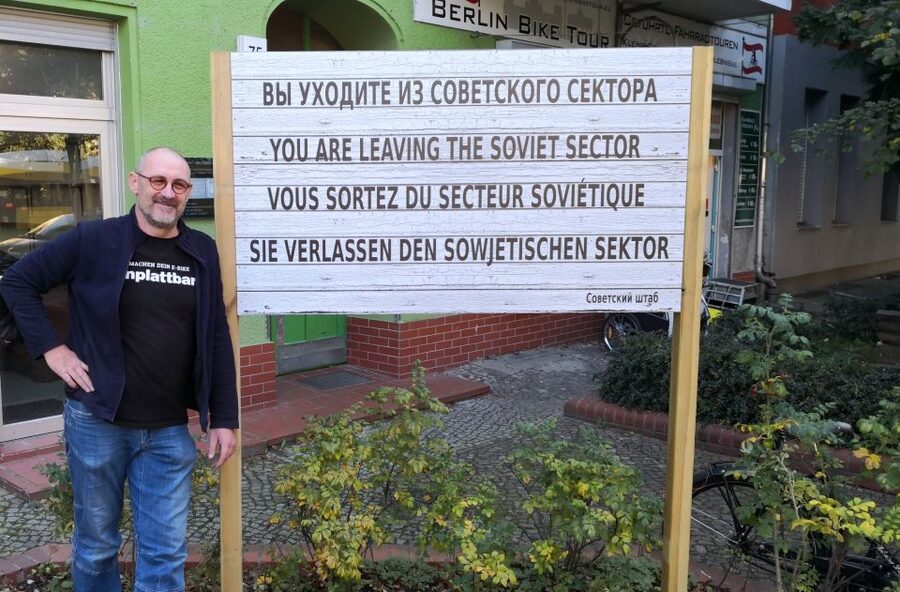
The route next follows the Government Bank toward the Parliament of the Trees. This section gives you another chance to see how memorials have been placed into the modern city without erasing what happened there.
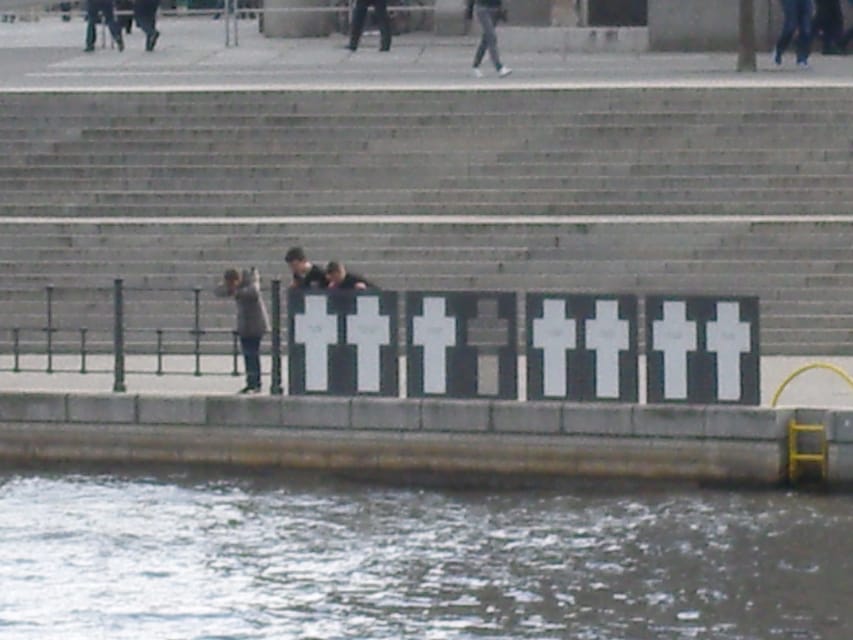
The Parliament of the Trees uses sections of the former Wall and is dedicated to those who died at the border. The memorial includes painted sections and information connected with the people killed trying to cross. It is a good example of Berlin’s approach to remembrance: fragments of the old barrier remain, but they are framed by art, text, and open public space.
I like this part of the ride because it does not treat the Wall as a single object. You see watchtowers, border crossings, memorial stones, surviving sections, and empty spaces where the barrier once ran. Together, these fragments tell a fuller story than one preserved block of concrete can.
The pace should also feel more manageable than a walking route covering the same ground. You can travel between distant points without spending your best sightseeing hours on foot. Still, you will stop often, so this is not a fast recreational ride. It is a history tour using bicycles as its transport.
More Small-Group Bike Tours in Berlin:
- Small Group Guided Bike Tour of Amsterdam’s Hidden Gems
★ 5.0 · 3,936 reviews - Rome City Small Group Bike Tour with quality Cannondale EBike
★ 5.0 · 1,380 reviews - Complete Cracow Bike Tour (small group of maximum 15 people!)
★ 5.0 · 1,322 reviews - Rome by Night – Ebike Small Group Tour – Food and Wine (Option)
★ 5.0 · 1,275 reviews
Brandenburg Gate and the final approach through central Berlin
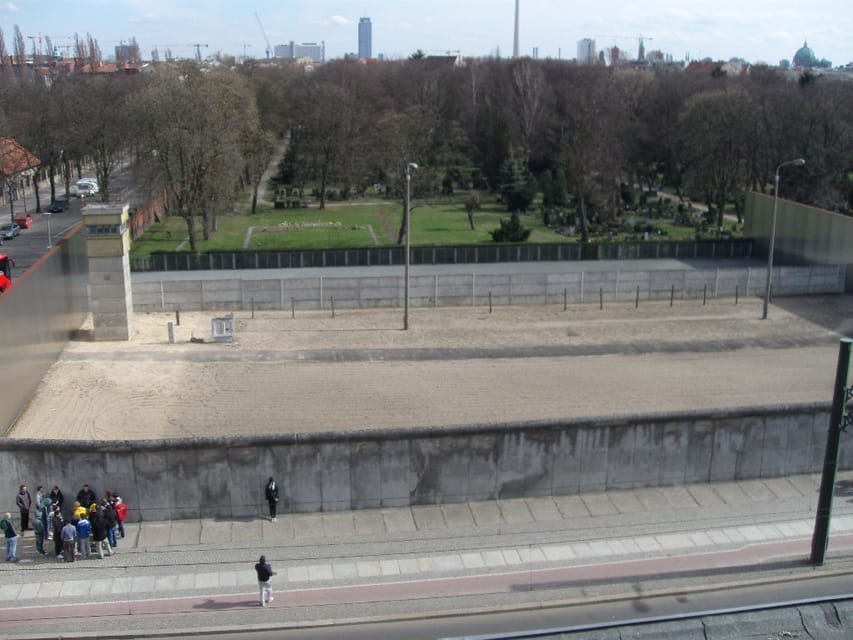
The route reaches Brandenburg Gate, one of Berlin’s most recognizable sights. Here, the Wall once ran directly past a symbol of the divided city. Today, the gate is open and easy to approach, but it can be hard to picture how closed and inaccessible this area once was.
The tour continues through the gate and toward the Tränenpalast on Friedrichstraße. Along the way, you pass the Friedrichstadt Palace, Museum Island, the New Synagogue, and the Old Berlin Post Office. These sights widen the story beyond the Wall itself. You see how the old border crossed a city filled with major cultural, religious, and civic places.
The rabbit symbols may appear again along the route. They create a quiet thread between the northern starting point and central Berlin. I would not expect every stop to receive the same amount of time, since the tour covers many locations in four hours, but the sequence gives you a useful overview of the Wall’s path through the city.
The Tränenpalast, or Palace of Tears, was a departure hall at Friedrichstraße station. Its name comes from the emotional farewells that took place there when people had to leave family members behind. This is a fitting late stop because it shifts attention from the physical barrier to the human consequences of controlled travel.
Potsdamer Platz and Checkpoint Charlie
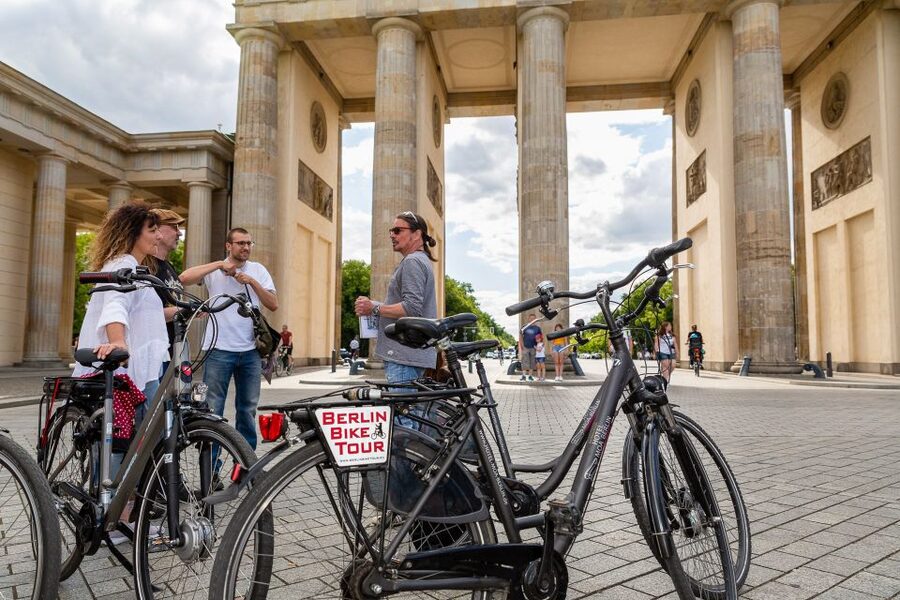
At Potsdamer Platz, you see one of Berlin’s clearest examples of a divided area transformed after reunification. The modern buildings and open spaces make it difficult to read the old border without a guide. That is exactly why this stop is useful. Your guide helps place the modern city against the former Wall route.
Checkpoint Charlie is more familiar, and it can feel more commercial than some of the quieter memorial sites. Even so, it is an important part of the story because it was a major border crossing between East and West Berlin. The contrast between its fame and the more subdued memorials earlier in the tour is worth noticing.
I appreciate that the route does not rely only on headline sights. If you visited just Brandenburg Gate, Potsdamer Platz, and Checkpoint Charlie on your own, you could easily miss the original watchtower, the cemetery, the former border paths, and the smaller memorials. The bicycle connects these places into one continuous route.
What the four-hour format is really like
Four hours is long enough to cover a serious section of the Wall route without turning the day into a full-day commitment. You begin in the north and finish back at the bicycle shop at 75 Bornholmer Straße, so plan for a complete half-day rather than a short central-city activity.
The group size is limited to eight participants, with a minimum of three. That matters on a tour with frequent stops. A large group would make it harder to hear explanations, gather safely, or ask about specific escape stories. In a small group, the guide can keep the discussion more personal.
The supplied bicycle is included in the $40 price, as are fees and the city guide. A rain poncho is provided if needed, and the tour runs in all weather. You should still dress for the forecast and bring sunglasses and a sun hat on bright days. Large bags and luggage are not allowed, so leave bulky belongings elsewhere.
The route includes city streets and many stops, but the supplied information does not specify the bicycle model, bicycle sizes, or the exact riding conditions. If those details matter to you, ask the provider before booking. You should also carry a passport or identity card, as requested for the activity.
The guide language is German. Ferenz is one guide named in the tour information, and his approach combines clear historical explanation with personal memories of the period around reunification. That personal connection can add weight to the story, though German comprehension is essential if you want to follow the explanations fully.
Price, timing, and who gets the best value
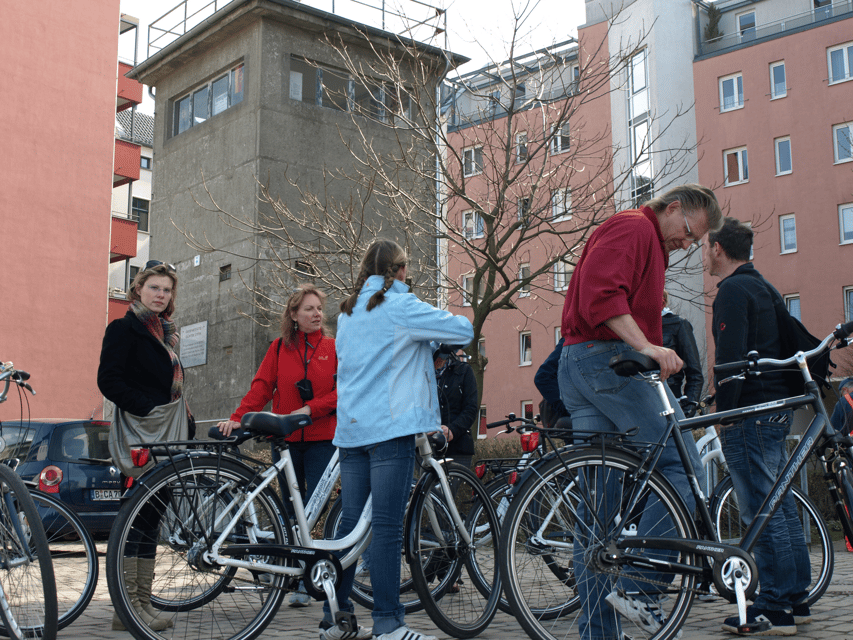
At $40 per person, this is a solid value if you want both transportation and guided history. You receive a bicycle, a four-hour route, a small group, and access to a series of places that would take more planning to connect on your own.
The price is less attractive if you only want a quick look at the best-known Wall fragments. You would not need four hours for Brandenburg Gate, Potsdamer Platz, and Checkpoint Charlie. The value comes from the full route, the northern starting point, the memorial stops, and the explanations between them.
I would recommend it most strongly for first-time visitors who want to understand how the Wall cut through Berlin. It also suits families with older children and teenagers who can manage a four-hour bicycle tour. A direct personal story from the guide can make the subject more immediate for young people than a museum label alone.
This is not the right choice if you need English guiding, dislike cycling in a city, want a relaxed café-focused morning, or have luggage with you. The tour also runs in rain, though the poncho helps. If poor weather would spoil the experience for you, check the forecast and cancellation terms before committing. Free cancellation is available up to 24 hours in advance, and you can reserve now and pay later.
Should you book the Berlin Wall cycling tour?
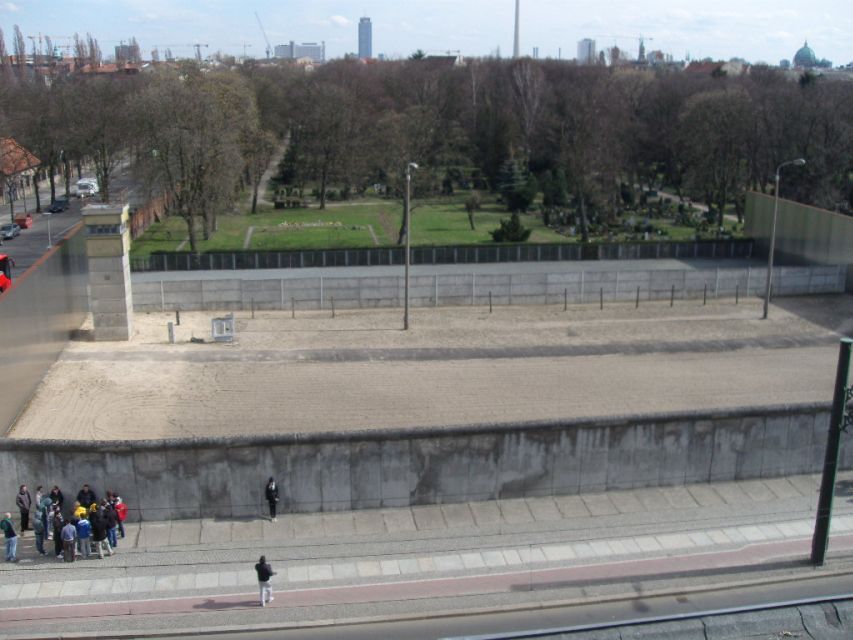
I would book this tour if you want the Berlin Wall explained as a chain of real places, not just as a famous strip of concrete in the center. The route begins at the first border crossing to open, passes memorials connected with escape attempts and deaths, and finishes among Berlin’s major central sights.
The strongest reasons to go are the small German-speaking group, the northern starting point, and the range of less obvious stops. The main reason to pause is the language. If you need English commentary, choose another tour or confirm that an English guide is available, since the stated live language is German.
For $40, this is a practical half-day choice for history-minded visitors who are comfortable on a bicycle and prepared for all weather. You will come away with a much clearer sense of where the Wall ran, how the border operated, and why its traces still matter.
FAQ
Where does the Berlin Wall cycling tour start?
The meeting point is BERLIN BIKE TOUR at 75 Bornholmer Straße, Berlin 10439.
How do I reach the meeting point by public transport?
The meeting point is one minute from the Björnsonstraße tram stop, served by M1, M13, and M50. It is two minutes from Bornholmer Straße S-Bahn station, served by S1, S2, S8, S25, and S85. Schönhauser Allee S-Bahn and U-Bahn station is about ten minutes away on foot.
How long does the tour last?
The tour lasts four hours and returns to the bicycle shop at 75 Bornholmer Straße.
Is the bicycle included?
Yes. The bicycle, activity fees, and city guide are included in the price. A rain poncho is also supplied when necessary.
What language is the tour in?
The live tour guide language is German. A guide named Ferenz is among the guides associated with the experience.
What happens if it rains?
The tour operates in all weather. On rainy days, you are given a rain poncho. You should bring suitable clothing and should not bring luggage or large bags.
Newest rides we have reviewed in Berlin
- From Berlin: Gardens & Palaces of Potsdam Bike Tour★ 5.0 · 61 reviews
- Berlin: Small Group Bike Tour Through City Center★ 4.9 · 64 reviews
- Berlin: Illuminated Berlin by Bike Taxi★ 4.8 · 162 reviews
- Berlin: Green City Guided Bike Tour★ 4.6 · 29 reviews
- Berlin: 48-Hour or 72-Hour Bike Rental★ 5.0 · 14 reviews
- Berlin (E)Bike Tour Historical Highlights in Small groups★ 4.5 · 24 reviews
- Berlin: From East to West & Wall Tour by Bike with a Guide★ 4.8 · 171 reviews
- Berlin: 3-hour bike tour – A journey through time in the capital★ 4.8 · 24 reviews
Small-Group Bike Tours, compared.
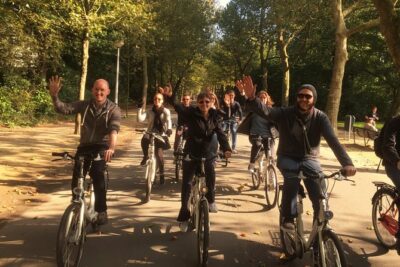
Small Group Guided Bike Tour of Amsterdam’s Hidden Gems
Read our review →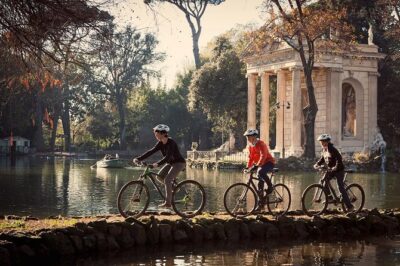
Rome City Small Group Bike Tour with quality Cannondale EBike
Read our review →
Complete Cracow Bike Tour (small group of maximum 15 people!)
Read our review →
Rome by Night – Ebike Small Group Tour – Food and Wine (Option)
Read our review →
Rome by Night: E-bike Small Group Tour -Food & Wine (Option)
Read our review →
Historic Athens: Small Group Electric Bike Tour
Read our review →Other lists this ride turns up in