

REVIEW · SOUTH AFRICA
bicycle tour soweto
Soweto’s story comes into focus quickly on two wheels. This three-hour ride takes you past the former homes of Nelson and Winnie Mandela and Archbishop Desmond Tutu, then brings the history of the 1976 student uprising into sharper view at Orlando West High School and the Hector Pieterson Museum. You are not simply looking at landmarks from a vehicle. You are moving through the neighborhood with a local guide leading the way.
I like the way the tour combines major historical sites with ordinary Soweto streets, including a stop at a mineworker hostel and, on some outings, a walk through narrow township lanes with a visit inside a local resident’s home. I also like the private format, since your group can discuss the history and ask questions without being folded into a large bus tour.
The main caution is consistency. Some guests have found bikes in poor condition, and one pickup was seriously delayed. Confirm the transport and bicycle condition before setting off, and expect a direct, lived-in look at Soweto rather than a polished sightseeing ride.
Key points to know before you book

- A compact route with major names: See the Mandela and Tutu homes, Hector Pieterson Museum, Orlando Stadium, and Orlando Towers in about three hours.
- A local guide sets the pace: Guides such as MK and M.K. have been praised for clear, passionate explanations and for tailoring the ride to your interests.
- History is tied to real places: The tour explains the 1976 school uprising, local education, mineworker hostels, and Apartheid-era Soweto.
- The private format matters: Only your group takes part, which gives you more room for questions and conversation.
- Practical extras are covered: Round-trip transport to Soweto, bicycle, helmet, bottled water, and entrance fee are included.
- Check the equipment and pickup: Bike condition and driver timing have not always been dependable, so confirm details before departure.
Why seeing Soweto by bicycle changes the day
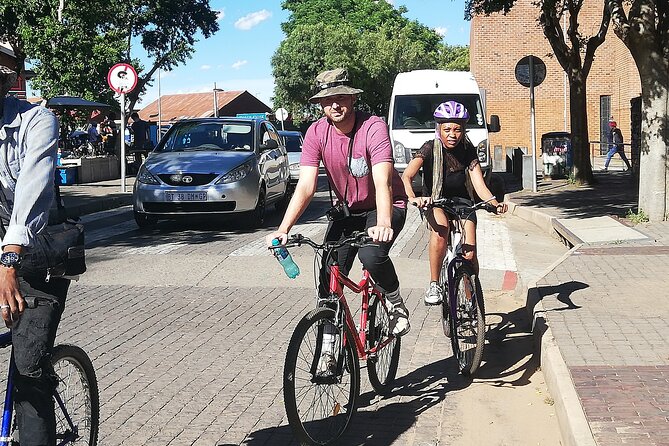
Soweto is too important to reduce to a quick drive past a few famous addresses. The area holds political history, family stories, school memories, sports culture, and the daily routines of a large urban community. A bicycle lets you connect those points at street level.
You will cover more ground than you would on foot, but you will still have the chance to stop and listen. That balance is the chief reason to choose this outing. You can move from Orlando Soccer Stadium to Orlando Towers, then on to homes and museums, without spending the whole visit inside a vehicle.
The guide is central to the experience. You could find several of these places on a map, but a map cannot explain why a school became a flashpoint in 1976 or how the former homes of Mandela and Tutu fit into Soweto’s wider political story. Guides such as MK and M.K. have received especially strong praise for their enthusiasm, personal approach, and ability to explain South African history in a way that feels connected to the streets around you.
The pace also gives the tour a more personal feel. One guide asked about a rider’s interests and adjusted the outing accordingly. That is useful if you want more time on Apartheid history, local life, sport, or the people connected to Soweto’s famous addresses.
More Cycling Trips in South Africa:
- Soweto: Guided Bicycle Tour with Lunch
★ 4.9 · 292 reviews - Stellenbosch: Historical Bike Tour & Wine Tasting
★ 4.9 · 248 reviews - Cape Town City Cycling Tour
★ 5.0 · 199 reviews
Starting with Hector Pieterson and the 1976 uprising
The Hector Pieterson Museum and Memorial is the clearest historical anchor on this route. The site is linked to the 1976 student uprising, when schoolchildren protested the education system and the forced use of Afrikaans in classrooms. The tour uses this place to explain how a local school protest became a major turning point in the struggle against Apartheid.
The museum entrance is included, so you do not need to budget for a separate admission charge. Your guide provides context as you visit, helping connect the exhibits and memorial to Orlando West High School, which is also part of the story.
This stop can be emotionally heavy. The subject is not presented as a distant chapter in a textbook. It concerns young people, schools, families, and the ways political decisions shaped daily life. Give yourself time to listen and reflect rather than treating the museum as a quick photo stop.
The route also offers an introduction to Soweto’s local schooling system. That detail matters because education was one of the clearest ways Apartheid policies reached into everyday life. You get more from this stop if you ask the guide how the school system affected families and young people, rather than focusing only on dates.
Mandela, Winnie, and Tutu: famous homes with local context
The tour takes you past the former homes of Nelson and Winnie Mandela and Archbishop Desmond Tutu. These are not unrelated celebrity addresses. Together, they show how Soweto became home to several of the most important figures in South Africa’s political and religious life.
Mandela’s former home is one of the route’s main draws. You will have the chance to see the house connected with his life in Soweto, while the guide explains its place in the neighborhood. The stop is especially useful for people who want to connect Mandela’s national story with the streets where he actually lived.
The Tutu home adds a different perspective. Archbishop Desmond Tutu was a major religious and moral voice during the Apartheid years, and seeing his former residence alongside Mandela’s helps you understand that Soweto’s political story was shaped by different kinds of leadership.
The tour also includes Winnie Mandela’s home. Taken together, these addresses make the past feel close and specific. You are not just hearing a list of names. You are seeing where those names belonged within a real community.
Do not expect each house to function like a large museum. The value is in the setting and the explanation from the guide. The ride works best when you listen to the stories around the buildings and consider how public figures lived within a neighborhood that also included workers, students, and families with less public recognition.
Orlando Stadium, Orlando Towers, and the view from the saddle
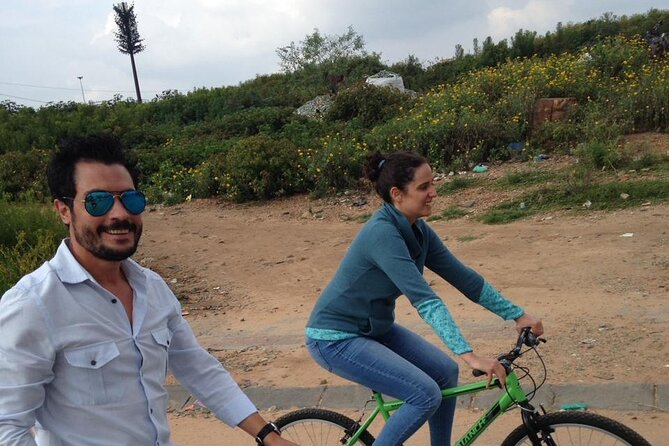
The route passes Orlando Soccer Stadium and the Orlando Towers, two of Soweto’s most recognizable landmarks. These stops provide a welcome change of tone after the museum and memorial.
Orlando Stadium connects the ride to Soweto’s sporting life. Orlando Towers, with their bold industrial form, offer a memorable visual marker and a reminder of the area’s working past. The tour summary refers to the towers as the Soweto stacks, a name you may hear during the ride.
On a bicycle, these landmarks arrive as part of the neighborhood rather than as isolated attractions. You can see how the roads, homes, public spaces, and major structures relate to one another. That street-level view is one of the strongest reasons to choose cycling over a standard vehicle tour.
The ride is listed at roughly three hours, so the route is designed to cover several important places without becoming an all-day outing. You should still be ready for physical activity. The tour provides a bicycle and helmet, but the supplied information does not give a distance, bike size range, or detailed fitness rating. If you have concerns about cycling, ask the operator for current equipment and route details before booking.
Same roads, a different saddle:
- Cape Town: Guided Bike Tour
★ 4.9 · 193 reviews - Guided Bicycle Tour of Soweto with Lunch
★ 5.0 · 180 reviews - Soweto: Bike Tour with a Local Tour Guide
★ 4.7 · 114 reviews - Franschhoek: E-Bike Guided Winery Tour
★ 4.6 · 96 reviews
Mineworker hostels and the everyday side of Soweto
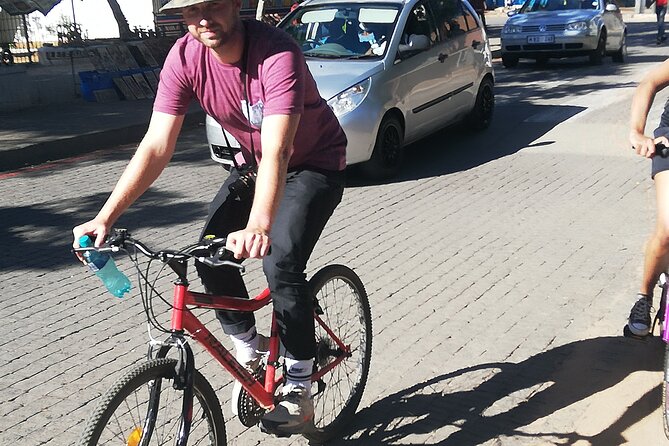
One of the more useful parts of the route is the visit to a hostel for mineworkers. This takes the tour beyond the best-known political names and into the labor system that helped shape Johannesburg and its townships.
The stop gives the guide a chance to explain how mineworkers lived and how the city’s economic life affected Soweto. It also keeps the tour from becoming a procession of memorials. You are given a view of the social conditions that sat behind the larger political story.
The experience may feel more direct than a conventional museum visit. That is a strength if you want to understand how people lived, but it also means you should approach the stop with respect. Listen carefully, avoid treating private areas as photo backdrops, and follow the guide’s lead.
At one point, the route may include a guided walk through narrow alleyways and a visit inside a local resident’s home, where you can meet the family. This is a significant part of the experience when it occurs because it shifts the focus from famous figures to people living in Soweto today.
That portion also deserves a clear boundary. A home visit should be treated as a personal exchange, not a staged attraction. Be polite, ask before taking photographs, and remember that the strongest part of the encounter is the conversation.
What the guides add to the ride
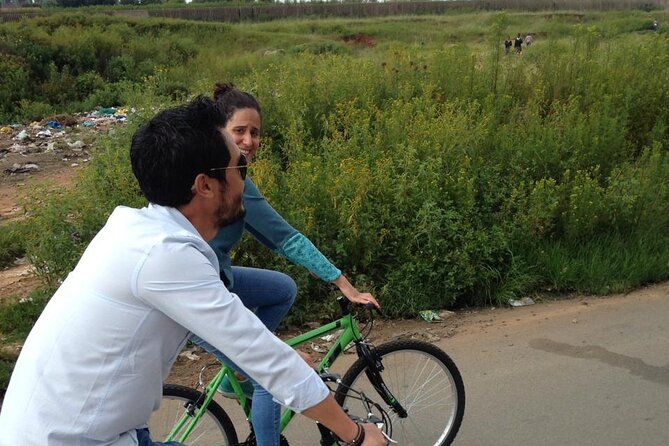
The best part of this outing is likely to be the person leading it. MK has been described as an excellent host who combines South African history with local introductions and a good workout. M.K. has also been praised for passion, strong explanations, and a willingness to shape the ride around your interests.
Those details matter because Soweto cannot be understood through addresses alone. A guide can explain why one street, school, hostel, or home matters, then answer the practical questions that arise as you ride.
The experience is private, so only your group participates. That gives you more control than a large group excursion. You can ask for clarification, spend more time on a subject, or tell the guide if the pace needs adjusting.
There is one concern to keep in mind. Two comments raise questions about guide compensation and bicycle arrangements. The operator disputed those specific claims, so you should not assume the worst, but it is sensible to ask who will guide your group and whether the bicycle comes directly from the tour provider.
Price, transport, and what the $80.75 covers
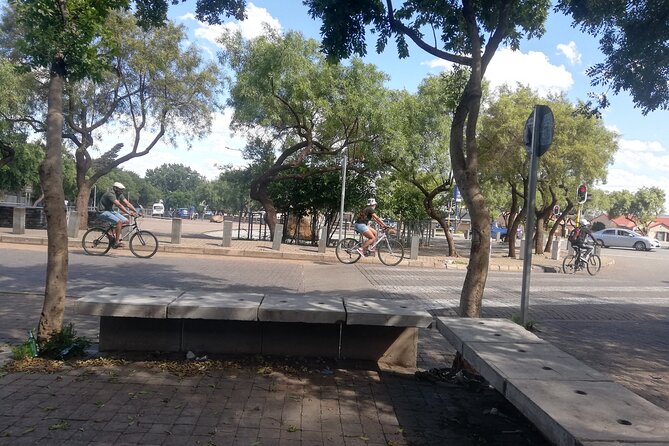
At $80.75 per person, this is not the cheapest way to see Soweto. The price includes round-trip transport to Soweto, a guide, bicycle, helmet, bottled water, and the entrance fee. That package can be fair value if you are staying outside Soweto and want a private, history-focused visit without arranging separate transport.
The private format adds value for couples, families, or small groups who prefer conversation over a fixed large-group script. You are paying for the guide’s time, the equipment, the transfer, and access to several sites within a short outing.
The value is weaker if you mainly want a casual bike ride or a quick look at landmarks. The tour’s strength is its interpretation of history and local life, not simply the act of cycling.
Pickup is offered, and round-trip transport is included. Still, punctuality has not been perfect. One reported pickup was an hour late and required an Uber instead. That appears to be an isolated complaint rather than a stated rule, but it is a practical reason to confirm your pickup time and contact details before the morning of the tour.
Bottled water is included, which is useful for a three-hour ride. Gratuity is not included, so plan for a tip if the guide provides good service.
Bike condition, comfort, and preparation
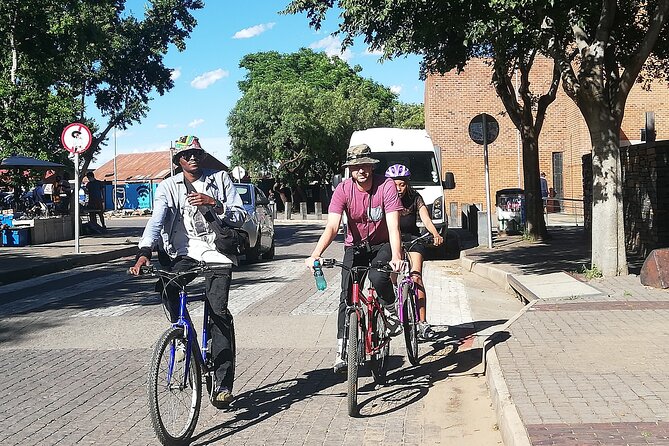
The bicycle is not just transport here. It shapes the entire experience. A well-maintained bike makes the route easy to enjoy, while a poor one can turn a short sightseeing trip into hard work.
One rider specifically found the bikes in need of updating. The operator said it would look into their condition. Since that issue has been raised, ask about the current bikes when you book, especially if you are particular about seat height, brakes, gears, or general maintenance.
The tour includes helmets, and bottled water is supplied. The information does not state the type of bicycle, route surface, distance, or level of hills, so ask those questions if they affect your decision.
Wear practical clothing and shoes suitable for cycling. You should also be comfortable riding for much of a three-hour activity, with stops for museums, landmarks, and explanations. Most people can participate, but the listing does not provide detailed medical or fitness guidance.
Service animals are allowed, and the activity is near public transportation. Those details may help you compare it with other options, though pickup is already part of the package.
Who will enjoy this Soweto bicycle tour?
I would choose this tour if you want a compact introduction to Soweto that joins history with local streets. It suits people who prefer active sightseeing and want more than a vehicle window view.
It is especially useful for:
- First-time visitors who want the main historical sites in one outing
- People interested in Mandela, Tutu, Apartheid, and the 1976 student uprising
- Small groups who value a private guide
- Riders who enjoy meeting local people and seeing daily life
- Visitors with limited time in Johannesburg
I would think twice if you need guaranteed premium equipment, exact transport timing, or a highly polished attraction with little unpredictability. This is a community-based experience, and that can include rougher bikes, changing arrangements, or a more personal style of guiding.
The tour is booked, on average, 34 days ahead. That suggests planning early is wise, particularly if your Johannesburg schedule is tight. Free cancellation is available until 24 hours before the start time. Cancellations inside that window are not refunded, and changes are not accepted. If the minimum number of participants is not reached, the provider offers another date or experience, or a full refund.
Should you book it?
Book this bicycle tour if you want Soweto explained by a local guide while you move between its most important places. The strongest reasons are the private format, the combination of Hector Pieterson and 1976 history with Mandela and Tutu sites, and the chance to see more ordinary parts of the neighborhood.
Before paying, confirm the pickup plan, the guide’s name, and the condition of the bicycles. If those details are in order, the $80.75 price can be worthwhile for a focused three-hour introduction to Soweto.
If you want only a quick photo stop or a flawless sightseeing operation, choose another format. If you want history, conversation, exercise, and a closer look at local life, this is a strong option.
FAQ
How long is the bicycle tour?
The tour lasts approximately three hours.
Where does the tour take place?
The tour takes place in Soweto, Johannesburg, South Africa.
Is pickup included?
Yes. Round-trip transportation to Soweto is included, and pickup is offered.
What sites are included?
The route includes the Hector Pieterson Museum and Memorial, Orlando Soccer Stadium, Orlando Towers, the former homes of Nelson and Winnie Mandela, and the former home of Archbishop Desmond Tutu.
Is the Hector Pieterson Museum entrance included?
Yes. The entrance fee is included in the tour price.
Are bicycles and helmets provided?
Yes. A bicycle and helmet are included.
Is bottled water provided?
Yes. Bottled water is included.
Is this a private tour?
Yes. Only your group participates in this private activity.
Can service animals join the tour?
Yes. Service animals are allowed.
What is the cancellation policy?
You can cancel at least 24 hours before the start time for a full refund. Cancellations or changes made less than 24 hours before the start time are not accepted, and no refund is provided.
Newest rides we have reviewed in South Africa
- Guided Bicycle Tour of Soweto with Lunch★ 5.0 · 180 reviews
- Cycling The Cradle of Humankind in Game Reserve★ 5.0 · 18 reviews
- Franschhoek Sip & Cycle Experience Full Day – Private Tour★ 5.0 · 14 reviews
- Franschhoek Cycle Experience Half Day – Private Tour★ 5.0 · 12 reviews
- Franschhoek Winelands Luxury EBike Tour★ 5.0 · 18 reviews
- Cape Town City and Woodstock Bicycle Tour★ 4.5 · 15 reviews
- Bicycle Township Tour in Cape Town★ 5.0 · 43 reviews
- Mountain Biking Table Mountain to Constantia Morning Ride★ 5.0 · 17 reviews
South Africa Cycling Tours, compared.
Stellenbosch: Historical Bike Tour & Wine Tasting
Read our review →


Other lists this ride turns up in