REVIEW · CITY HIGHLIGHTS BIKE TOURS IN BERLIN
Berlin: E-Bike Tour of the Berlin Wall and Mitte Highlights
Berlin’s Wall story makes the strongest part of this 210-minute e-bike tour. You begin at Bornholmer Strasse, the former crossing where the gates opened on November 9, 1989, then follow a route through places that show how the Wall cut through daily life. I like that the tour does not treat the Wall as a single monument. It connects border crossings, a former ghost station, a memorial, and ordinary streets.
I also like the small group of up to eight and the practical range of the route. You cover Mauerpark, Bernauer Strasse, the government quarter, Unter den Linden, and Alexanderplatz without spending your day on foot. The main consideration is that this is a rain-or-shine ride, and the tour is conducted in German, so you should be comfortable cycling for several hours while following historical explanations in that language.
Key details at a glance
- Start and finish at Bornholmer Strasse 75: The route begins and ends near one of the most important former Berlin Wall crossings.
- A 210-minute ride through divided Berlin: You move between former East and West Berlin while seeing major sights in Mitte.
- Eight-person maximum: The small group gives the guide room to explain details and keep the ride manageable.
- An e-bike keeps the long route practical: You stay active, but the electric assistance helps make a broad central Berlin circuit possible.
- German-speaking guidance: Guide Ference has been specifically associated with clear, lively explanations on this route.
- $48 includes the essentials: Your e-bike, lock, guide, and tour are covered, while food, drinks, and attraction entry fees are not.
Why this route works better than a standard city ride
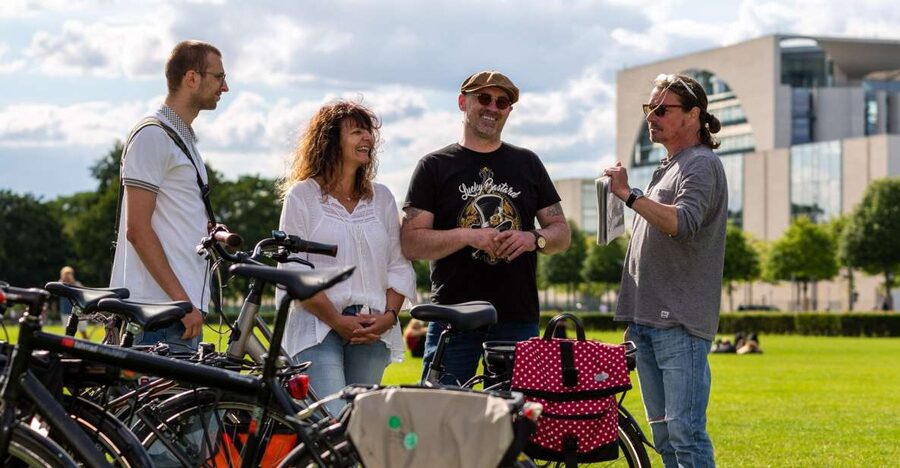
Many Berlin sightseeing routes give you a string of famous buildings with little sense of how the city was divided. This one has a clearer thread. You start with the Berlin Wall, follow its former path through several districts, then see how the capital changed after reunification.
The e-bike matters because the route is not confined to one compact square. Bornholmer Strasse sits north of the main Mitte sights, while Brandenburg Gate, Gendarmenmarkt, Museum Island, and Alexanderplatz are spread across central Berlin. Electric assistance lets you cover that distance without turning the outing into a hard workout.
You still pedal, so this is not a bus tour with a bicycle-shaped prop. You need to steer, stop, and pay attention to the road. But the motor takes some strain out of the ride, which is useful when you want to listen to the guide instead of counting how many hills remain.
The group limit is another real advantage. With no more than eight people, the guide can usually keep the ride together and point out details that are easy to miss from a large group. The route includes serious subjects, including political repression, escape attempts, wartime murder, and the division of families and neighborhoods. A smaller group suits that material better than a noisy crowd.
More City Highlights Bike Tours in Berlin
- Berlin: Sights and Highlights Bike Tour with a Local Guide
★ 4.8 · 2,698 reviews - Berlin Highlights 3-Hour Bike Tour
★ 5.0 · 948 reviews - Berlin Highlights: 3-Hour Bike Tour
★ 4.9 · 809 reviews
Bornholmer Strasse and the night the border opened
Meet the guide outside Bornholmer Strasse 75. This is not a random starting point. Bornholmer Strasse was an important crossing between East and West Berlin, and it became one of the first places where people crossed after the Wall gates opened on the night of November 9, 1989.
That gives the tour a strong opening. You are not beginning with a general introduction to Berlin, but with the event that changed the city almost overnight. The guide sets the scene before you ride away, helping you understand why this location mattered.
The first section also gives you an immediate sense of scale. The Wall was not just a line drawn on a map. It cut across streets, railways, parks, and neighborhoods. Starting at a former crossing makes that fact easier to grasp.
Mauerpark and Bernauer Strasse: a border through ordinary life
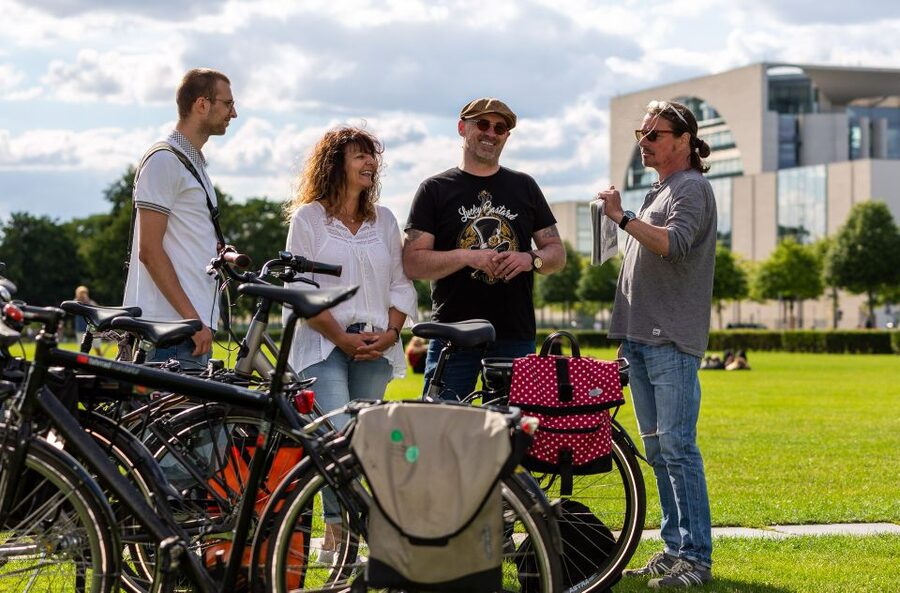
The ride continues to Mauerpark, a public space whose name still recalls the Wall that once divided it. Today it is known as an open urban park, but the tour uses it to explain how the border split a place that should have belonged to everyone nearby.
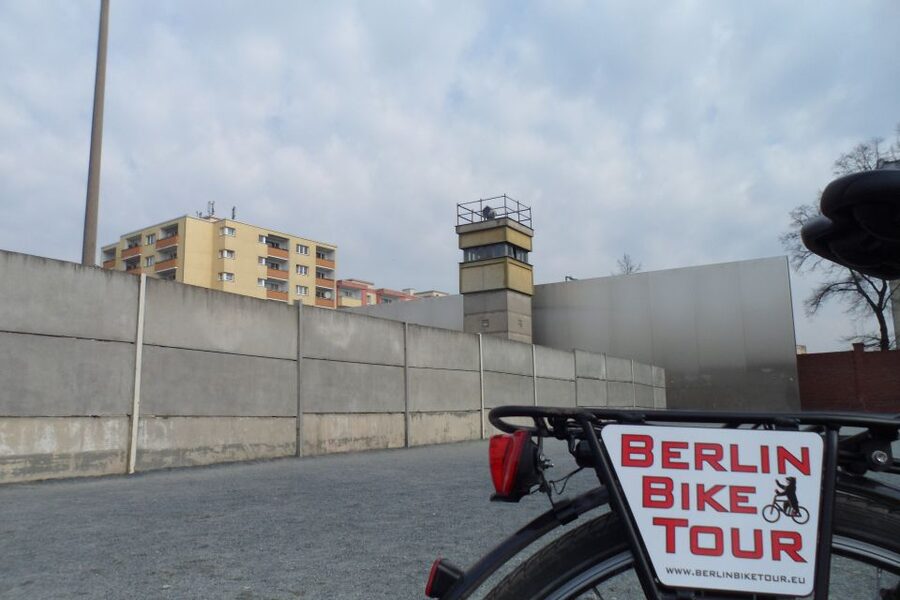
From there, you continue along Bernauer Strasse. This is one of Berlin’s most important Wall areas because the border ran directly beside homes, sidewalks, and church property. The street helps you picture the human cost of division more clearly than a preserved slab of concrete standing alone.
You stop at the Wall Memorial and the Chapel of Reconciliation. The memorial preserves parts of the former border area and gives the guide room to explain how the barriers worked. The chapel adds a quieter point of reflection to a route that otherwise keeps moving.
This is one of the most valuable parts of the day, but it is also emotionally heavy. You should not expect a lighthearted sightseeing ride from beginning to end. The subject calls for attention, and the tour gives Berlin’s political past a serious amount of space.
Nordbahnhof and the ghost stations of East Berlin
Nordbahnhof introduces a less familiar part of the Wall story. During the division of Berlin, some railway stations in the eastern sector were closed to passengers because train lines from West Berlin passed through them. These became so-called ghost stations, watched and sealed rather than used as normal stops.
You see Nordbahnhof as part of the route through Mitte. The stop helps explain that the Wall affected underground and rail travel as well as surface streets. A person could be physically close to a station and still be unable to use it.
This kind of detail is where a good guide adds value. A photo of the Wall tells you what it looked like. A closed station shows how the border controlled movement in quieter, more practical ways. Guide Ference has been praised for making these stories clear and vivid, and that style suits a location like Nordbahnhof.
More City Highlights Bike Tours in Germany
- Berlin Highlights Sightseeing Bike Tour in Small Groups
★ 5.0 · 652 reviews - Berlin: Guided Bike Tour to Explore the Highlights
★ 4.8 · 506 reviews - Berlin (E)Bike Tour Historical Highlights in Small groups
★ 4.5 · 24 reviews - Munich: Guided City Tour by Bike with Beer Garden Stop
★ 4.7 · 604 reviews
Charité, the Reichstag, and the government quarter
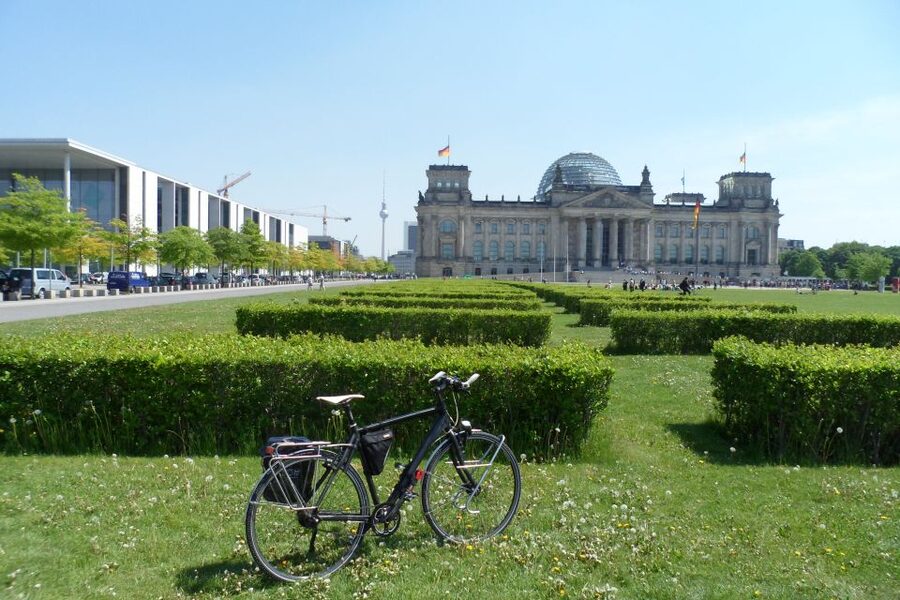
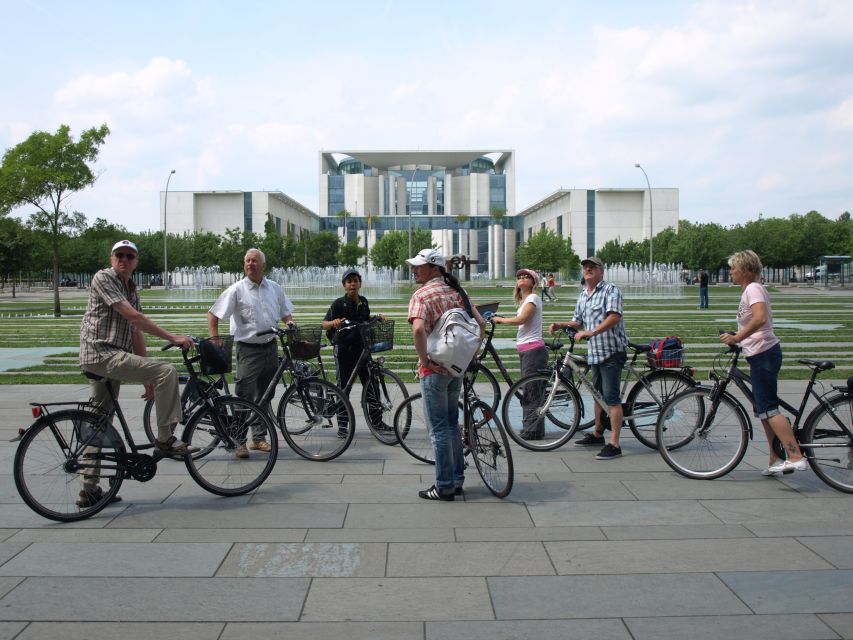
The route then shifts from Wall history to the modern capital. You pass Berlin’s long-standing Charité hospital before reaching the government quarter, where the Reichstag and other national institutions frame a very different image of the city.
Charité is a useful stop in the story because it is an active institution with a long presence in Berlin. It helps connect the city’s political history to everyday civic life. You are not only looking at ceremonial buildings. You are riding through a working central district.
At the Reichstag, the scale changes again. The building represents the German state and its political past, including the period when Berlin was divided and the national government was based elsewhere. The tour does not include entry, so you see the building from outside rather than visiting its interior.
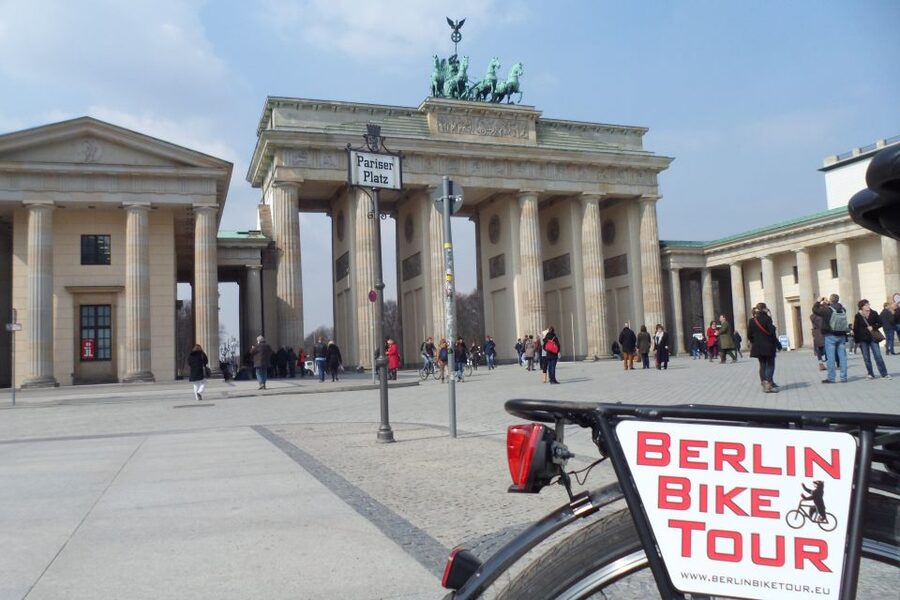
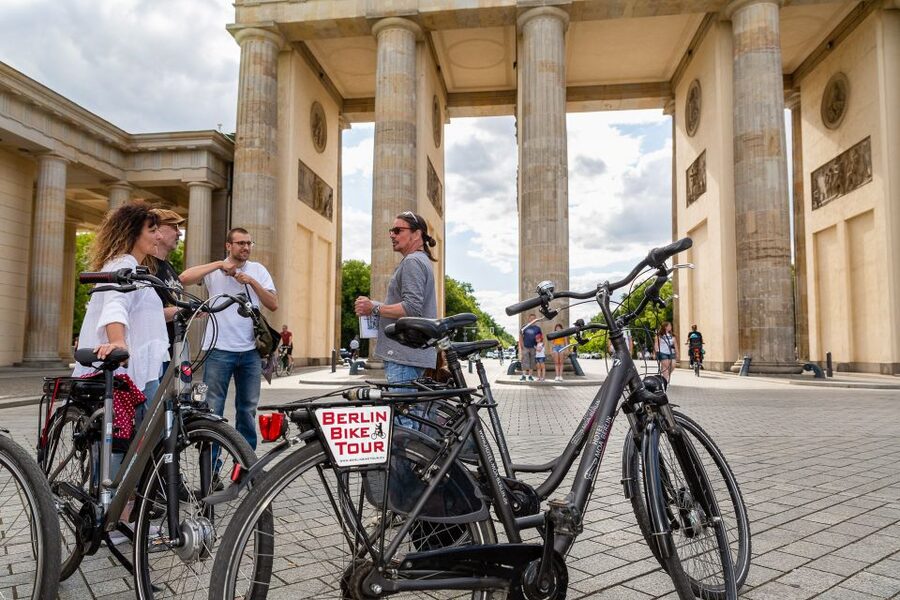
Brandenburg Gate follows naturally. Once positioned beside the Wall, it became one of the best-known symbols of a divided Berlin. Today it is a central landmark, but the tour encourages you to view it through the city’s earlier separation. That historical contrast is more useful than simply stopping for a photograph.
The Holocaust Memorial and two serious reminders
The ride pauses at the Holocaust Memorial, formally dedicated to Europe’s murdered Jews during World War II. The memorial’s field of concrete blocks creates a stark setting in the middle of the capital.
You should allow yourself a quiet moment here. The tour places the memorial among government buildings and major avenues, which makes the site feel connected to the city rather than isolated from it. The stop also broadens the day beyond the Cold War and the Berlin Wall, reminding you that Berlin’s difficult past did not begin in 1961.
This is another point where the pace matters. You are on a cycling tour, not a museum visit, so the stop is part of a larger route and not an extended indoor presentation. If you want substantial time at the memorial or inside a museum, plan a separate visit.
Gendarmenmarkt and Bebelplatz
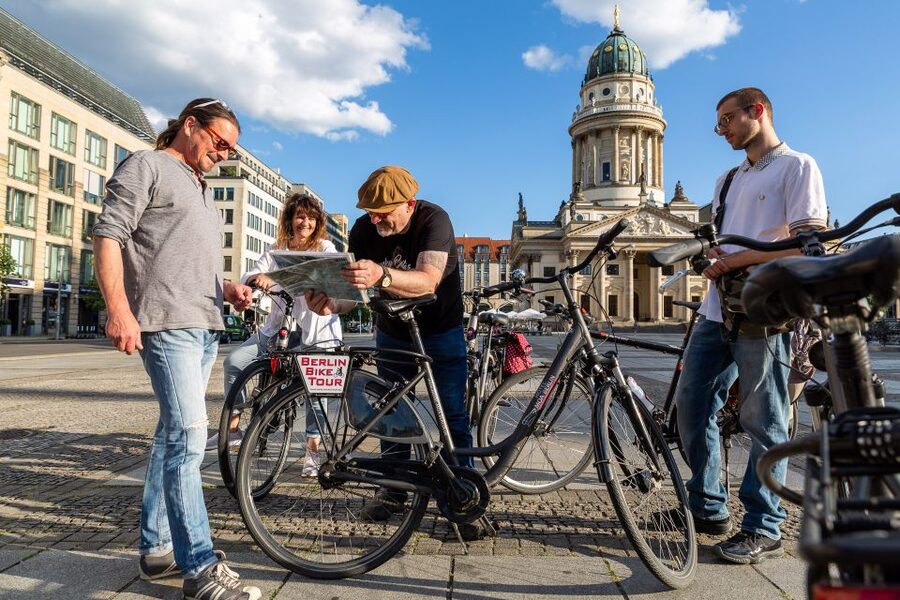
From the government quarter, you ride toward Gendarmenmarkt, one of Berlin’s most imposing historic squares. Its architectural setting offers a change from the Wall memorials and modern government buildings.
The square is a good place to see Berlin’s more formal face. It also gives the guide a chance to explain how central Berlin developed around grand public spaces, churches, and state buildings. Since the tour is conducted in German, the quality of your experience here depends heavily on your comfort with spoken German.
Nearby Bebelplatz carries another painful historical association. It is connected with the Nazi book burning of 1933, when works by Jewish, socialist, and other writers were destroyed in public. The square looks elegant, but its history is not decorative. This is one of the tour’s strengths: it puts impressive architecture beside the events that shaped, damaged, or threatened it.
Unter den Linden, the cathedral, and Berlin’s oldest core
You then cycle along Unter den Linden, Berlin’s long ceremonial avenue. The route brings you past the Berlin Cathedral and the renovated Berlin Palace, linking the city’s royal and state history with its modern reconstruction.
This section is visually rewarding after the heavier Wall and Holocaust sites. You see broad avenues, major buildings, and the central institutions that make Berlin feel like a capital. But the guide keeps the focus on how the city changed, rather than presenting the buildings as isolated sights.
The route continues to Nikolaiviertel, the small historic quarter associated with the original village that formed Berlin. Its streets offer a more intimate setting than Unter den Linden. You get a sense of the older settlement beneath the grand capital built around it.
Do not expect a full walking tour of every building. You are cycling through, pausing at selected points, and listening along the way. The value lies in the connections between the stops, not in detailed interior visits.
Alexanderplatz and the modern city
The final section brings you to the modern center around the TV Tower, Marien Church, Rotes Rathaus, Alexanderplatz, and the World Clock. These sights represent the East Berlin capital that developed during the German Democratic Republic period.
The TV Tower is the most obvious landmark. Its height makes it easy to spot from across the city, but from street level it also shows how East Berlin used bold modern architecture to project a new political identity. At Alexanderplatz, the World Clock adds a distinctly twentieth-century feel, while Rotes Rathaus and Marien Church provide older architectural references nearby.
This mix makes the ending effective. You have seen the Wall’s border areas, the restored ceremonial center, and the planned East Berlin core. The final stops show that Berlin’s division was not only about fences and checkpoints. It also produced different city centers, architectural styles, and public symbols.
After Alexanderplatz, you return to Bornholmer Strasse 75. Ending where you began gives the route a neat shape. You start at a place linked to the Wall’s opening and finish after seeing how the divided city has been stitched back together.
What $48 includes, and what it does not
At $48 per person, the price is sensible if you want a guided history tour and an efficient way to cover central Berlin. Your fee includes the e-bike, a bike lock, the guide, and the full tour. That is useful because renting a bicycle separately would not give you the route planning or historical explanation.
The value is strongest for first-time visitors who want orientation and context in one outing. You cover a wide area, and the guide handles the sequence. You do not need to work out how to connect Bornholmer Strasse, Bernauer Strasse, Brandenburg Gate, Gendarmenmarkt, and Alexanderplatz on your own.
Food, drinks, and entry tickets are extra. The tour is mainly an outdoor ride, so you should not expect admission to the Reichstag, TV Tower, museums, or other attractions. Bring a drink, and wear clothing suited to the forecast.
The tour runs for three and a half hours, which is long enough to feel substantial without taking your entire day. Still, the route has many stops, so explanations at each location cannot be unlimited. If you prefer a slow, detailed visit inside each sight, this format may feel brisk.
Who should book this e-bike tour
I would recommend this ride to you if you want Berlin’s major sights explained through the city’s division and reunification. It suits active visitors who would rather pedal between landmarks than sit in a vehicle, but who do not want a demanding cycling workout.
It is also a good choice for anyone who wants to see both former East and West Berlin in one outing. The route does not stay in a single historic pocket. It links the Wall sites in the north with Mitte’s major monuments and Alexanderplatz.
You should think twice if you dislike cycling in city streets, need a fully indoor activity, or are not comfortable with German-language guidance. The tour runs rain or shine, so weather is a real consideration, not a minor footnote.
The route is especially useful early in your Berlin visit. After three and a half hours, you will have a basic map of the central city and a clearer idea of which places deserve a longer return visit. If you already know Berlin well, the Wall stops and the guide’s interpretation may still make it worthwhile, but the famous central landmarks will be familiar.
Practical details before you reserve
The group is limited to eight participants, and the meeting point is outside Bornholmer Strasse 75. Check the starting time when booking, since availability determines the departure slot.
Bring drinks and weather-appropriate clothing. The tour takes place in all weather, so a warm layer or rain protection can make the difference between an enjoyable ride and a miserable one.
The activity is offered with a live German-speaking guide. Guide Ference is one name connected with the tour, and his explanations have been described as lively, informative, and easy to follow. Since guide assignments can vary, book this outing only if German works for you.
Free cancellation is available up to 24 hours before departure for a full refund, and you can reserve now and pay later. Those terms help if your Berlin schedule is still taking shape.
Should you book it?
Book this tour if you want a broad, active introduction to Berlin’s divided past rather than a short ride focused only on postcard sights. The route is unusually well connected: Bornholmer Strasse, Mauerpark, Bernauer Strasse, Nordbahnhof, Brandenburg Gate, the Holocaust Memorial, Unter den Linden, and Alexanderplatz all fit into one guided outing.
The best reasons to go are the small group, electric bikes, strong Wall focus, and the chance to move through both former sides of the city. Skip it if you need an English-speaking guide, dislike riding in poor weather, or want long indoor visits at each attraction. For the right visitor, $48 buys both transportation and a useful historical framework, not just a bicycle ride.
FAQ
Where does the Berlin Wall e-bike tour start?
The tour starts outside Bornholmer Strasse 75 and returns to the same location.
How long does the tour last?
The tour lasts 210 minutes, or three and a half hours.
What language is the tour conducted in?
The tour has a live German-speaking guide.
How many people can join the tour?
The group is limited to eight participants.
What is included in the price?
The price includes the e-bike, a bike lock, the tour guide, and the e-bike tour.
Does the tour run in bad weather?
Yes. The tour takes place rain or shine, so bring drinks and clothing suited to the weather.
More E-Bike Tours in Berlin
- 3-Hour Porto Highlights on a Electric Bike Guided Tour
★ 5.0 · 4,392 reviews - Lisbon: Hills, Alfama, and Mouraria Tour by Electric Bike
★ 4.8 · 3,438 reviews - Athens Scenic Electric Bike Tour with optional Acropolis visit
★ 5.0 · 3,350 reviews - Porto: City Highlights 3-Hour Guided Electric Bike Tour
★ 4.8 · 3,092 reviews
More E-Bike Tours in Germany
- Best of Berlin E-Bike Tour
★ 5.0 · 77 reviews - Best of Berlin E-Bike Tour
★ 5.0 · 37 reviews - Best of Munich Electric Bike Tour
★ 5.0 · 38 reviews - Dresden: E-Bike Tour and Dresden Heath Forest Trails
★ 4.9 · 34 reviews
Newest rides we have reviewed in Berlin
- From Berlin: Gardens & Palaces of Potsdam Bike Tour★ 5.0 · 61 reviews
- Berlin: Small Group Bike Tour Through City Center★ 4.9 · 64 reviews
- Berlin: Illuminated Berlin by Bike Taxi★ 4.8 · 162 reviews
- Berlin: Green City Guided Bike Tour★ 4.6 · 29 reviews
- Berlin: 48-Hour or 72-Hour Bike Rental★ 5.0 · 14 reviews
- Berlin (E)Bike Tour Historical Highlights in Small groups★ 4.5 · 24 reviews
- Berlin: From East to West & Wall Tour by Bike with a Guide★ 4.8 · 171 reviews
- Berlin: 3-hour bike tour – A journey through time in the capital★ 4.8 · 24 reviews
City Highlights Bike Tours, compared.
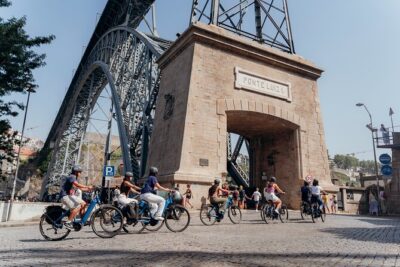
3-Hour Porto Highlights on a Electric Bike Guided Tour
Read our review →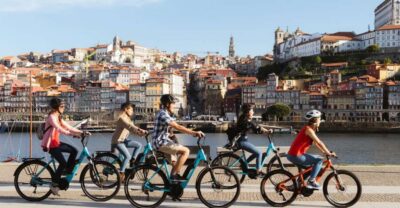
City Highlights 3-Hour Guided Electric Bike Tour
Read our review →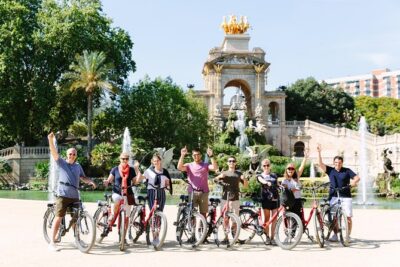
Highlights & Hidden Spots of Barcelona Bike Tour w/ Local Guide
Read our review →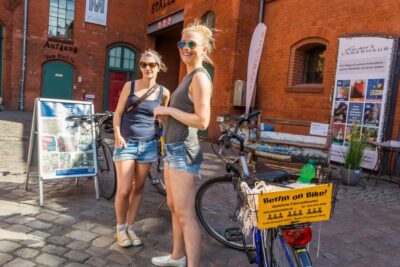
Sights and Highlights Bike Tour with a Local Guide
Read our review →
Highlights 3 Hour Bike Tour with a Local Guide
Read our review →