
REVIEW · BERLIN
Berlin: 3-hour bike tour – A journey through time in the capital
Berlin’s past comes at you quickly on this three-hour bike tour. You move from the Cold War era to Nazi Germany, the Holocaust Memorial, the Reichstag, Brandenburg Gate, Museum Island, and Gendarmenmarkt without losing time to long walks between sights. The bike gives you a broad look at central Berlin while leaving room to pause, listen, and take photos.
I like two things especially. First, the route joins famous landmarks with harder subjects, such as the former Führer’s bunker site and the Topography of Terror. Second, the pace includes a 30-minute break in Tiergarten, so the tour is not three hours of nonstop pedaling. The main consideration is that food and drinks are not included, and the route may feel brisk if you want to spend a long time at every stop.
Key points to know before you book
- Berlin history in one ride: Cover Cold War themes, National Socialism, German democracy, reunification, and modern Berlin.
- A strong central route: Visit the Topography of Terror, Holocaust Memorial, Brandenburg Gate, Reichstag, Museum Island, and Gendarmenmarkt.
- A relaxed break included: Stop for 30 minutes in Tiergarten, where you can buy a drink or snack.
- Friendly, helpful guiding: Guides such as Gio, Dio, and Fais have been praised for clear explanations, a relaxed manner, and help with photos.
- Useful language choice: Tours are offered in English, German, Spanish, and Portuguese.
- Good value at $44: Bike rental, a local guide, helmet option, photo stops, and three hours of touring are included.
Why a bike is a smart way to meet Berlin
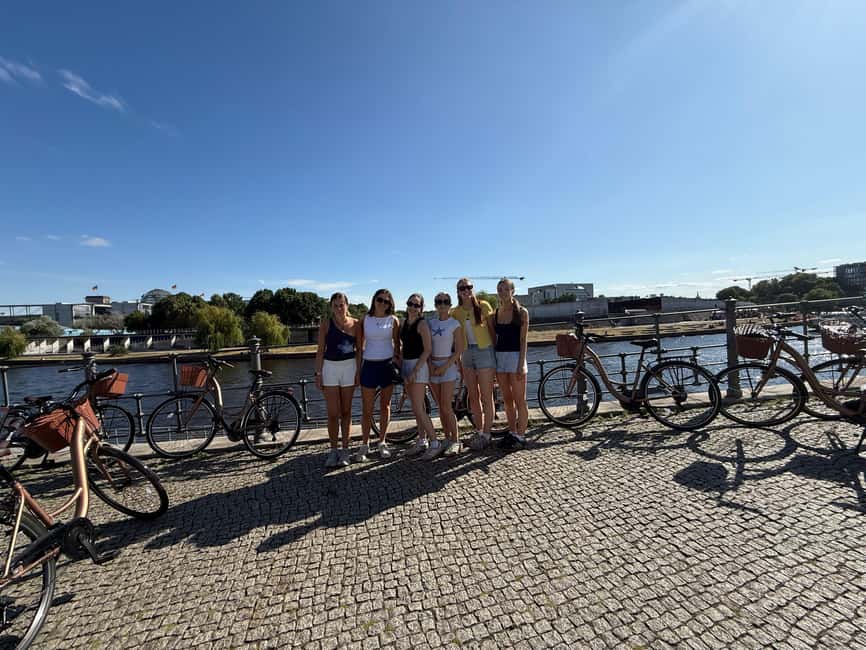
Berlin is spread out. Its major sights are not packed into one compact old town, and the distance between a Cold War site, the Brandenburg Gate, and Museum Island can make a walking tour tiring. A bicycle helps you cover that ground without turning the day into a march.
This tour uses that advantage well. You ride at a leisurely pace, with regular stops for history and pictures. You still need to pay attention to the road and remain comfortable on a bike, but the format gives you more range than a standard walking tour.
I would choose this as an early activity in Berlin. It gives you a useful mental map of central areas and helps you decide which places deserve a longer visit later. Since the tour does not include museum admission, you can return to Museum Island or another site afterward and explore inside at your own pace.
The experience is led by a local guide, rather than an audio recording or a fixed sightseeing bus commentary. That matters in Berlin, where many important places are visually quiet. The former bunker site, for example, is almost invisible today. A guide explains what you are looking at and why the spot matters.
More Three-Hour Experiences in Berlin:
- Berlin Highlights 3-Hour Bike Tour
★ 5.0 · 948 reviews - Berlin Highlights: 3-Hour Bike Tour
★ 4.9 · 809 reviews - 3-Hour Porto Highlights on a Electric Bike Guided Tour
★ 5.0 · 4,392 reviews
From Cold War Berlin to the Topography of Terror
The tour begins by taking you into Berlin’s Cold War story. The supplied details do not name a separate opening stop, so you should expect the guide to introduce this period as part of the first section rather than plan on a long museum visit.
Soon after, you reach the Topography of Terror. This documentation center sits at a place tied to the machinery of National Socialism. The stop gives the tour a serious turn, and it helps explain how state power and political terror operated.
I appreciate the way this site fits into the route. Berlin can sometimes feel like a collection of grand squares and photo stops, but the Topography of Terror pushes you to consider what happened behind the city’s monumental face. You will not have time to treat every display as a full museum visit, so think of this stop as a guided introduction.
This is also one reason the tour suits people who want more than postcard views. The history is not softened or skipped. The guide connects the place to the wider story of the Nazi regime, then moves you onward to another site with an almost empty physical presence.
The former Führer’s bunker and the Holocaust Memorial
The former Führer’s bunker is one of Berlin’s most unusual historical stops. Today, the location is nearly invisible. There is no grand ruin to photograph and no dramatic structure to enter. Without explanation, you could pass it without knowing what lay below the area.
The guide provides the context, turning an ordinary-looking place into a lesson about the final stage of Nazi rule. It is a good example of why a guided tour helps in Berlin. The city’s history often sits beneath modern streets, parking areas, and office buildings.
Next comes the Holocaust Memorial, officially known as the Memorial to the Murdered Jews of Europe. The field of concrete blocks is one of the city’s most moving spaces, and the guide explains its purpose and significance.
Give this stop your full attention. You can take pictures, but the memorial is not just a photo background. Its shape and changing levels create a serious, unsettled feeling. The tour gives you a basic historical and interpretive framework without requiring you to spend the whole day at the site.
The route’s treatment of these two places is one of its strongest features. You see a location that is almost absent, then a memorial that is impossible to miss. Together, they show two very different ways Berlin remembers difficult history.
A pause in Tiergarten, Berlin’s green center
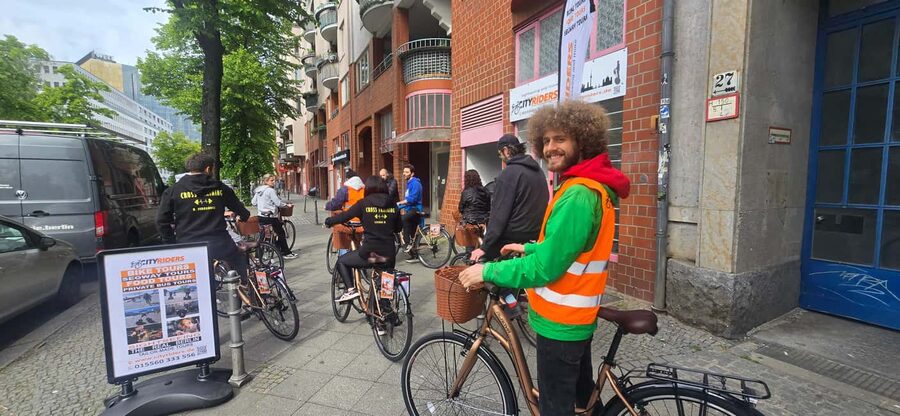
After the Holocaust Memorial, you cycle into the Tiergarten. This large city park provides a needed change of mood and a physical break from the dense concentration of historical sites.
The tour includes a 30-minute pause. Food and drinks are not part of the $44 price, so bring euros in cash or plan to buy something during the break. The supplied information specifically advises carrying cash, which is sensible for a small snack or drink.
I like this pause because it keeps the tour from becoming a long chain of speeches and landmarks. You can refresh yourself, settle into the bike, and prepare for the next section. If you are not used to cycling, this break also gives you a chance to recover.
The time is still limited. You should not expect a picnic or a long independent walk through the park. It is a practical stop within a sightseeing route, not a separate Tiergarten excursion.
More Cycling Trips in Berlin:
- Berlin: Sights and Highlights Bike Tour with a Local Guide
★ 4.8 · 2,698 reviews - Berlin City Bike Tour with Beer Garden Stop
★ 5.0 · 917 reviews - Berlin Highlights Sightseeing Bike Tour in Small Groups
★ 5.0 · 652 reviews - Berlin: The Wall and Third Reich Guided Bike Tour
★ 4.8 · 578 reviews
The Victory Column and Bellevue Palace
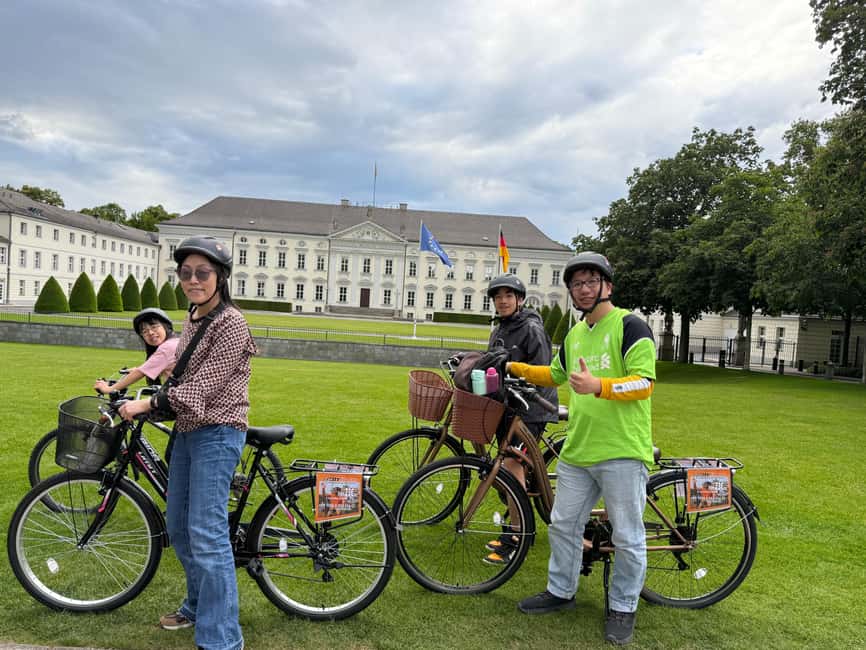
Refreshed, you ride to the Victory Column, one of Berlin’s most recognizable monuments. Its golden figure is known locally as the Golden Else, and it gives the route a striking landmark after the more somber memorials.
The column represents a different side of Berlin’s public identity, with a grand, symbolic presence in the park. Your guide can place it within the city’s changing political story and point out why it remains such a familiar part of Berlin’s image.
The route then passes Bellevue Palace, the official residence of Germany’s Federal President. The palace sits beside the Spree, adding an active government setting to the historical route.
You should not expect a palace tour or interior visit. The value here is seeing the building in relation to the river, Tiergarten, and government district. It is a quick exterior stop that helps connect Berlin’s ceremonial past with its current political life.
Along the Spree to the Reichstag
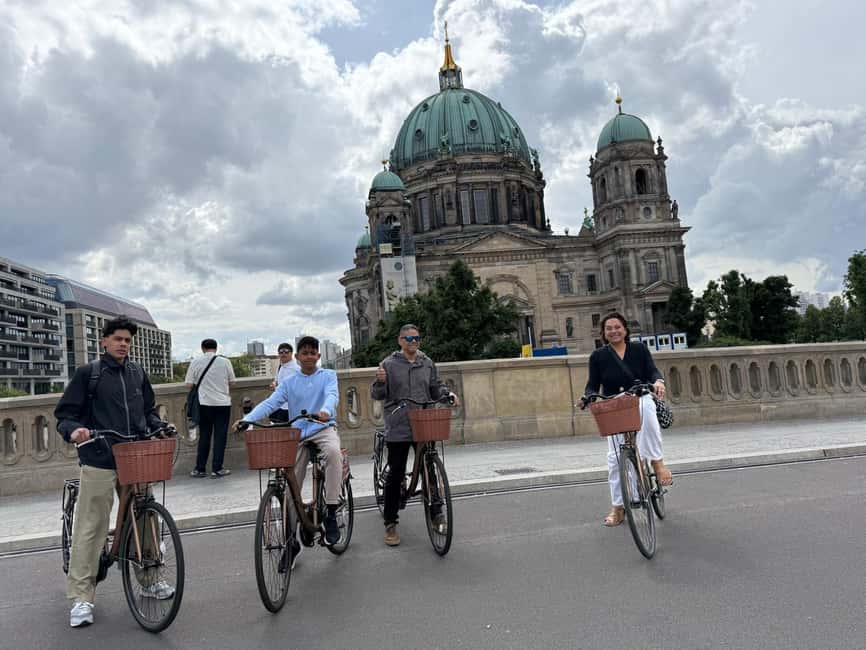
The ride along the Spree brings you toward the government district. This section gives you a pleasant change from enclosed city streets, with the river helping you understand the layout of central Berlin.
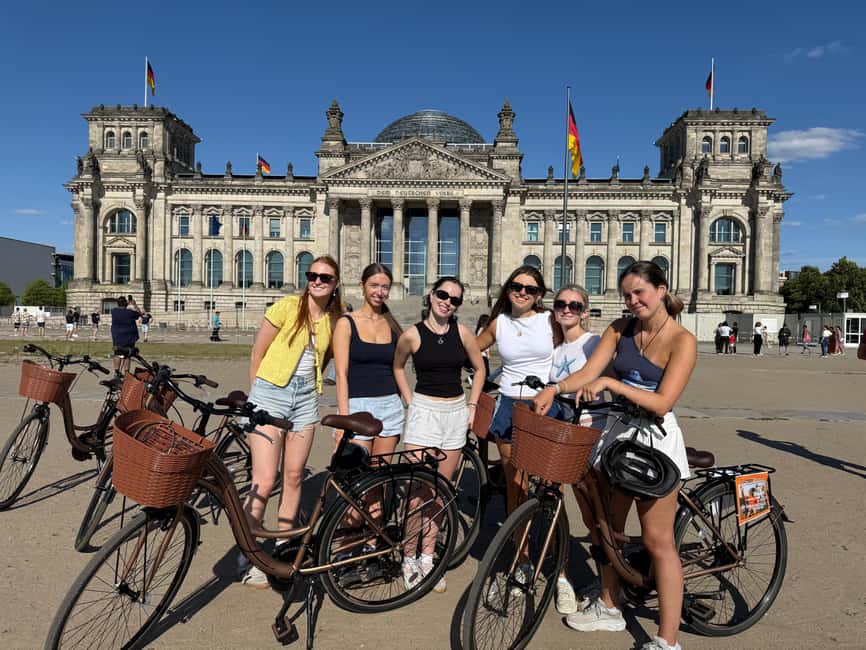
You pass the modern Federal Chancellery, whose bold architecture contrasts with the older buildings nearby. Then you reach the Reichstag, the historic home of the German parliament.
The guide uses the Reichstag to explain German democratic history, from the German Empire to the present Federal Republic. That broad span makes this more than a picture stop. You get a concise outline of how Germany’s political system changed across monarchy, dictatorship, division, and reunification.
The Reichstag building is also a useful place to think about Berlin’s repeated reinvention. Its historic shell and modern political role sit side by side. Since this is an outdoor bike tour, do not expect entry to the building or a visit to its dome. The experience is about the exterior, the setting, and the explanation.
This section is especially useful if you know Berlin mainly through its wartime history. The tour does not stop there. It carries the story forward into the democratic Germany you see today.
Brandenburg Gate and the meaning of a famous photo
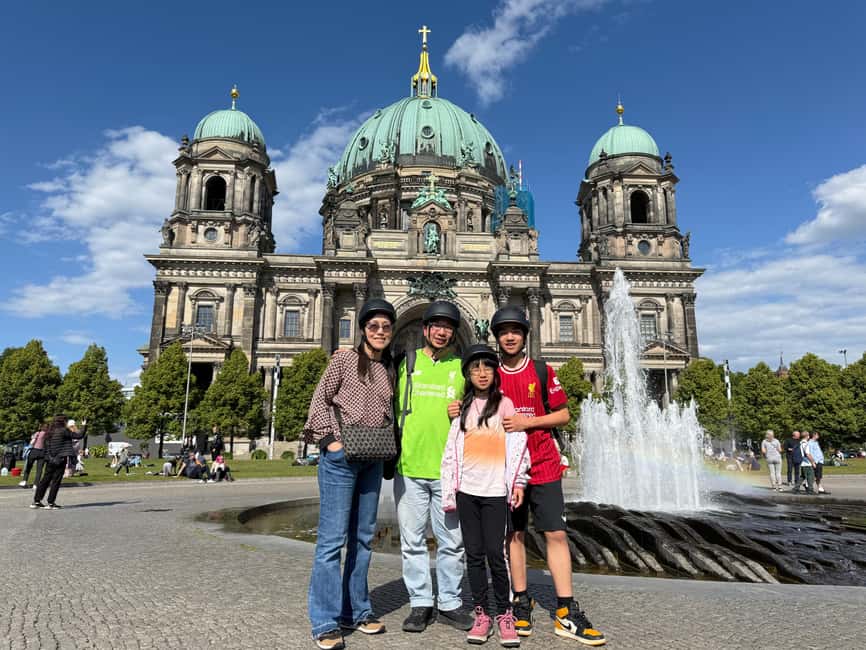
The Brandenburg Gate comes next, and the tour allows time to take in the atmosphere. This is Berlin’s most famous photo spot for good reason, but it also carries political meaning far beyond its appearance.
The gate has been linked with different chapters of the city’s history and is now widely understood as a symbol of German unity. Your guide helps give that familiar monument a clearer setting within Berlin’s divided and reunited past.
I like having the gate placed after the Reichstag. The sequence makes sense: first the story of German government, then the symbol most closely tied to unity. You get time for pictures without having to rush immediately onward.
Expect other people around the gate. It is one of the city’s best-known landmarks, so this is not a quiet discovery. Still, the bike tour lets you reach it efficiently and then continue without spending half a day walking between major sights.
Museum Island from the outside
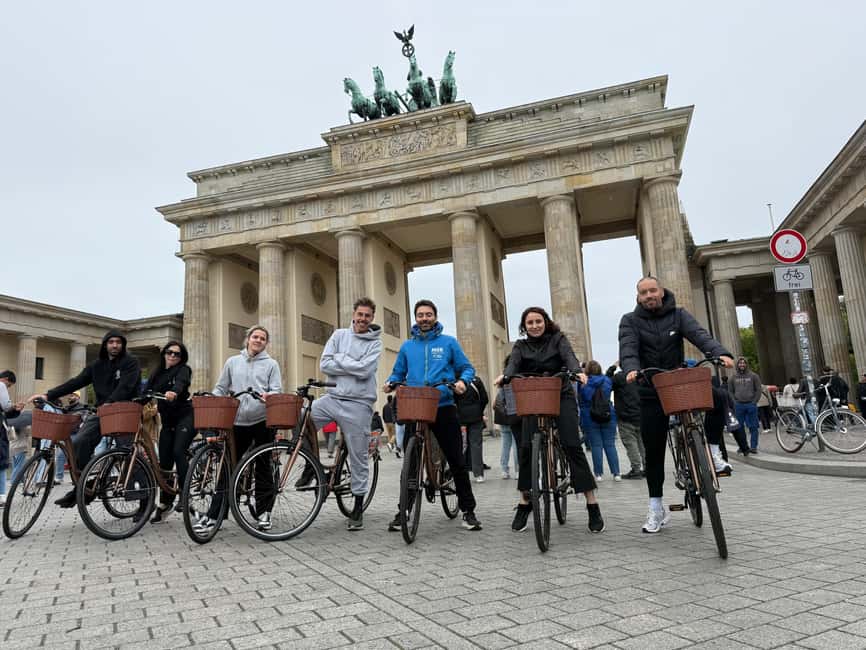
From Brandenburg Gate, the route continues to Museum Island in the Spree. The island is a UNESCO World Heritage Site and home to five major German museums.
You will not go inside the museums during this tour. That limitation is important to understand before booking. The guide instead explains the architectural history and the importance of the group of buildings as a whole.
For a first look at Berlin, this is a sensible approach. You learn how the museums fit together and see the setting from the outside. Then you can return later for a proper museum visit if one of the collections catches your interest.
If your main goal is to spend hours with ancient sculpture, paintings, or archaeological displays, book a museum ticket separately. This bike tour gives you orientation, not admission or detailed gallery time.
The island also adds another layer to the route. After political monuments, memorials, and government buildings, you see Berlin’s cultural center. It keeps the itinerary from focusing only on conflict and power.
Gendarmenmarkt closes the route
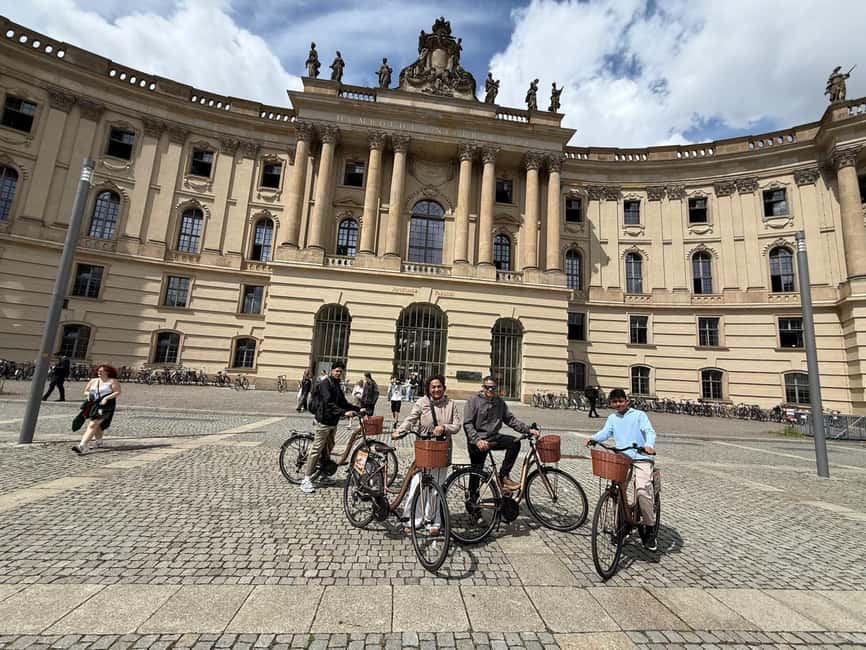
The final major stop is Gendarmenmarkt, often considered one of Europe’s most beautiful squares. The German Cathedral, French Cathedral, and Concert Hall frame the space and give it a formal, balanced appearance.
This is a satisfying place to finish. The square is visually attractive, but the guide also gives you a sense of Berlin’s architectural variety. You have moved through sites shaped by war, dictatorship, division, democracy, culture, and public ceremony.
A final stop at Gendarmenmarkt also leaves you in a useful central area for the rest of your day. The tour does not include shopping, souvenirs, or food, so you can make your own plans after the ride.
The guides and the human side of the tour
The guide can make or break a history tour, especially one that covers painful subjects in only three hours. The strongest praise for this experience focuses on the people leading it.
Gio is described as showing the group attractive places and helping with photos. Dio is praised for an informative, relaxed tour, while Fais is singled out as friendly, helpful, and highly capable. One note calls the experience an excellent introduction to Berlin, with a good mix of sights and useful information.
The overall rating is 4.8 from 24 reviews. That is a small sample, so I would not treat it as a guarantee, but the pattern is clear: clear explanations, a pleasant manner, and a tour that covers a lot without feeling overly formal.
Guiding styles can vary, of course. The listed tour languages are English, German, Spanish, and Portuguese, and some content may be presented in its original language. If precise wording matters to you, listen carefully and ask the guide to clarify a point.
What the $44 price includes
At $44 per person, the price is reasonable for a three-hour guided city tour that includes the bicycle. You also get the local guide, an optional helmet, planned photo stops, and access to rain ponchos and gloves in cold or wet weather.
The value comes from the combination of transport and interpretation. You are not only renting a bike, and you are not only paying for a short talk at one monument. The bicycle links a long list of central sights, while the guide supplies the context that many of the sites lack on their own.
Food, drinks, shopping, and souvenirs cost extra. Museum admission is also not included, though the route only visits Museum Island from the outside. Bring comfortable weather-appropriate clothing, sturdy cycling shoes, and some euros in cash.
The tour requires you to arrive at CityRiders 10 minutes early. The meeting point is near public transportation and described as easy to find. You can cancel up to 24 hours ahead for a full refund, and the reserve-now, pay-later option lets you hold a place without paying immediately.
Who will enjoy this Berlin bike tour
I would recommend it to a first-time visitor who wants to get oriented quickly. It is also a good match for anyone who prefers moving through a city rather than spending three hours indoors or walking long distances.
History-minded visitors will appreciate the range. You cover National Socialism, the Holocaust, the Cold War, German democracy, reunification, government, architecture, and art institutions in one route.
It may be less suitable if you dislike cycling, need a slow pace at every monument, or want detailed time inside museums. The tour is leisurely in cycling terms, but the itinerary is full. You will see many places, listen to explanations, and take selected photos rather than explore each stop at length.
Families and mixed-interest groups may find the format useful because it combines outdoor movement with short history lessons. Still, each rider should be comfortable wearing suitable clothes and sturdy shoes for the conditions on the day.
Should you book it?
Book this CityRiders tour if you want a well-rounded first look at central Berlin and like your sightseeing active, social, and guided. The route covers an impressive range, from the Topography of Terror and the Holocaust Memorial to the Reichstag, Brandenburg Gate, Museum Island, and Gendarmenmarkt.
I would choose it near the start of a Berlin stay, then return to the museums or memorials that interest you most. Skip it if you want long, quiet visits at individual sites or if cycling is not comfortable for you.
At $44, the package offers solid value: three hours, a rental bike, a local guide, a break, and a broad route through the capital’s most important historic center.
FAQ
How long is the Berlin bike tour?
The tour lasts three hours.
What language is the tour offered in?
Live guiding is available in English, German, Spanish, and Portuguese. Some content may be shown in its original language.
What sights are included on the route?
The route includes the Topography of Terror, the former Führer’s bunker site, the Holocaust Memorial, Tiergarten, the Victory Column, Bellevue Palace, the government district, the Reichstag, Brandenburg Gate, Museum Island, and Gendarmenmarkt.
Is a bicycle included in the price?
Yes. The rental bike is included, and a bike helmet is available as an option.
Are food and drinks included?
No. Food and drinks are not included. The tour includes a 30-minute break in Tiergarten where you can refresh yourself with a drink or snack.
Where does the tour meet?
You meet at CityRiders. The meeting point is close to public transportation and easy to find. You should arrive 10 minutes before the start.
Can I cancel the booking?
Yes. You can cancel up to 24 hours in advance for a full refund. You can also reserve now and pay later.
Newest rides we have reviewed in Berlin
- From Berlin: Gardens & Palaces of Potsdam Bike Tour★ 5.0 · 61 reviews
- Berlin: Illuminated Berlin by Bike Taxi★ 4.8 · 162 reviews
- Berlin: Green City Guided Bike Tour★ 4.6 · 29 reviews
- Berlin: Small Group Bike Tour Through City Center★ 4.9 · 64 reviews
- Berlin (E)Bike Tour Historical Highlights in Small groups★ 4.5 · 24 reviews
- Berlin: From East to West & Wall Tour by Bike with a Guide★ 4.8 · 171 reviews
- Berlin: 48-Hour or 72-Hour Bike Rental★ 5.0 · 14 reviews
- Small-Group Historical Bike Tour in Berlin★ 4.5 · 103 reviews
Berlin Cycling Tours, compared.
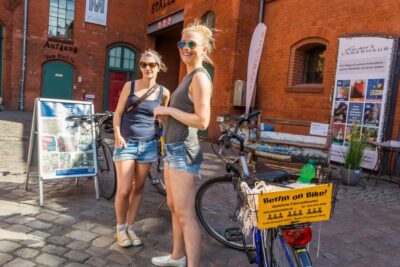
Sights and Highlights Bike Tour with a Local Guide
Read our review →

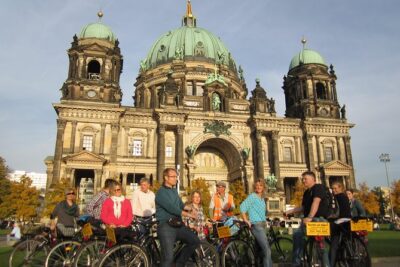
Berlin Highlights Sightseeing Bike Tour in Small Groups
Read our review →
Alternative Bike Tour of Kreuzberg & Friedrichshain
Read our review →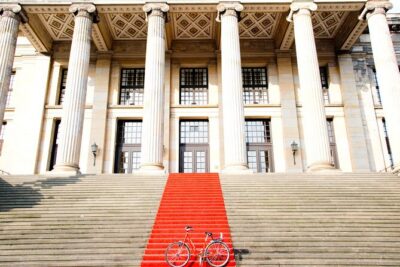
Other lists this ride turns up in