
REVIEW · BERLIN
Berlin Wall and Cold War Bike Tour in Small Groups
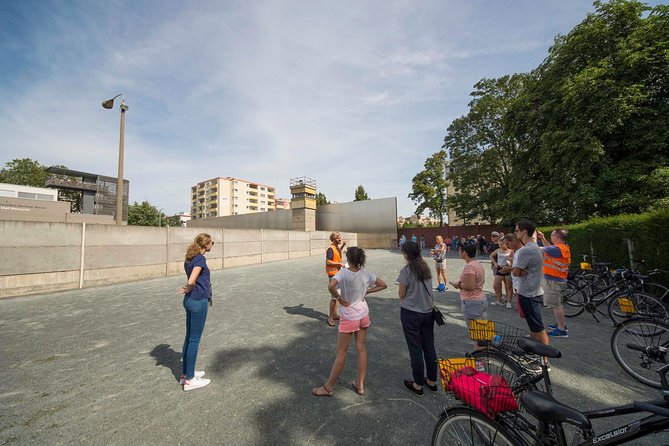
Berlin’s Wall is easier to understand when you move through the city it once divided. This small-group bike tour links famous sights with lesser-known traces, including a former watchtower and the old border area near Kieler Eck. Guides such as Giovanni, Pete, George, and Gilles bring dates and personal stories into the ride.
I like the way the tour covers about 20 kilometers without turning into a race. I also like its mix of major sights, such as the Brandenburg Gate and Checkpoint Charlie, with quieter places you might miss on foot. The main drawback is the weather: you ride in rain or cold unless conditions force cancellation, and there are limited scheduled comfort stops.
Key points to know before you book
- About 20 kilometers of easy cycling: A practical way to cover more of Berlin than you could on foot in three and a half hours.
- A serious subject told through personal stories: Expect Cold War dates, escape attempts, daily life, and the human cost of division.
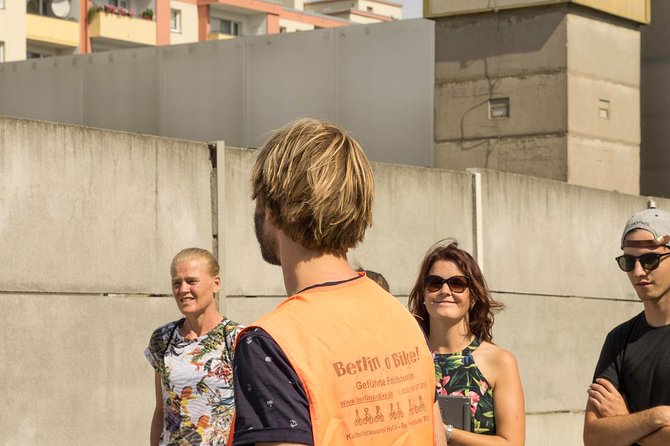
- Small groups of no more than 15: This gives you a better chance to hear the guide and ask questions.
- Major sights plus overlooked corners: The route includes the Brandenburg Gate, Wall Memorial, Mauerpark, a watchtower, Checkpoint Charlie, and the Palace of Tears.
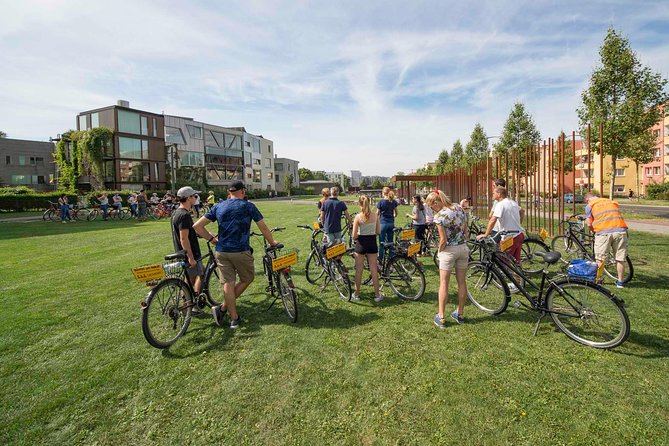
- Bikes and helmets are included: You do not need to arrange a rental separately.
- Good value at $43.54: The price covers roughly half a day of guiding and cycling, but not food, drinks, or hotel transport.
Why a bike is the right way to see the Wall
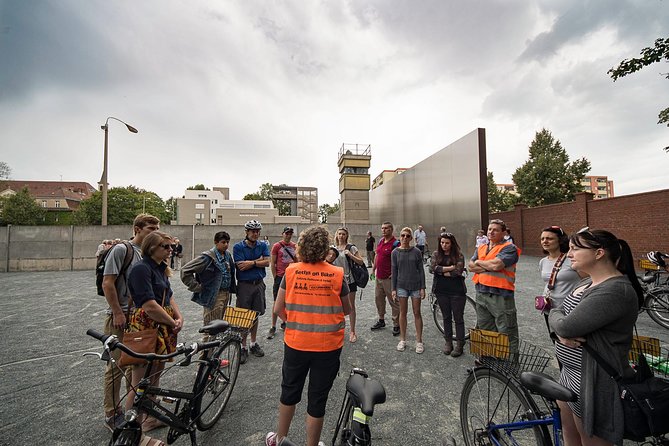
The Berlin Wall was not a single attraction. It ran through streets, parks, railway areas, residential districts, and busy central squares. That makes a bicycle useful. You can move between surviving fragments and memorial sites without spending much of your limited time underground or waiting for buses.
The ride lasts about three hours and 30 minutes. That is long enough to give the subject some weight, yet short enough to fit neatly into a day of sightseeing. At around 20 kilometers, the route asks more of you than a gentle stroll, but the cycling is described as easy. You will stop often for explanations, photographs, and orientation.
I would not book this as a hard exercise session. The point is to connect places and stories. You pedal, listen, and then move on before the information becomes tied to one single monument.
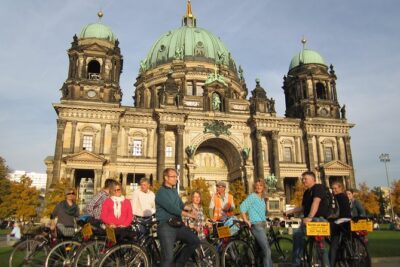
The group limit of 15 matters. Cold War history has many dates and place names, and it is easy to lose the thread in a large crowd. A smaller group also makes it simpler to hear the guide when you stop beside a street corner or memorial.
More Cycling Trips in Berlin:
- Berlin: Sights and Highlights Bike Tour with a Local Guide
★ 4.8 · 2,698 reviews - Berlin Highlights 3-Hour Bike Tour
★ 5.0 · 948 reviews - Berlin City Bike Tour with Beer Garden Stop
★ 5.0 · 917 reviews
Starting at Kulturbrauerei in Prenzlauer Berg
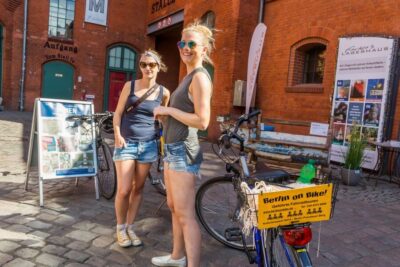
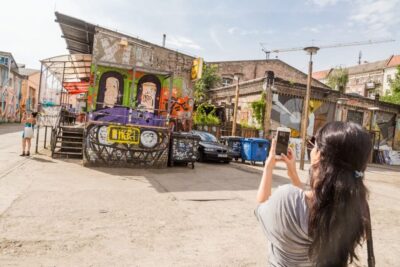
The tour begins and ends at Berlin on Bike, at Knaackstraße 97 in the Kulturbrauerei complex. This former industrial brewery occupies about 25,000 square meters and is known for its courtyards and late 19th-century architecture.
That is a useful starting point because the setting gives you an early reminder that Berlin’s past is not limited to the Wall. The Kulturbrauerei itself is a preserved industrial site, and the ride begins in a part of the city shaped by both older working life and the former East Berlin.
You receive a bicycle and helmet here. The meeting point is near public transportation, though hotel pickup and drop-off are not provided. Plan to arrive with enough time to get oriented before the group leaves.
The depot is also the endpoint, which keeps the day simple. You do not need to figure out how to return to your hotel from a distant neighborhood after the ride.
Brandenburg Gate and the meaning of a famous symbol
The Brandenburg Gate is one of Berlin’s most recognizable sights, but its Cold War setting gives it a different meaning from the usual postcard view. The neoclassical gate sits on Pariser Platz in Mitte, near the former division between East and West Berlin.
You spend about 10 minutes here. That is enough for an introduction and photographs, but not a long architectural discussion. The value is in hearing how a familiar landmark fit into a city cut apart by a fortified border.
This is also a good example of the tour’s approach. You are not simply checking off a famous building. You are using the building to understand Berlin’s political geography. The guide can explain how the Wall changed the meaning of the area and why this crossing of central Berlin became such a potent symbol after the Wall fell.
Do not expect a long stop at every location. The route works because it keeps moving.
The Berlin Wall Memorial: the clearest physical evidence
The Berlin Wall Memorial is one of the most important stops. It commemorates the division of Berlin and the people who died at the Wall. Here, the subject becomes less about Cold War strategy and more about the direct cost of separating families, streets, and neighborhoods.
You have around 10 minutes at the memorial. That is brief, so listen closely and use the stop as a framework for the rest of the ride. The guide’s stories about life in East and West Berlin are likely to make later sites easier to understand.
This stop is especially useful if your knowledge of the Wall begins and ends with the date it was built and the date it fell. The memorial helps you think about what the barrier meant between those two events. It also gives the tour emotional balance. You are not only hearing about government policy and border crossings. You are hearing about people who tried to live around, through, or beyond the division.
Same roads, a different saddle:
- Berlin Highlights: 3-Hour Bike Tour
★ 4.9 · 809 reviews - Berlin Highlights Sightseeing Bike Tour in Small Groups
★ 5.0 · 652 reviews - Berlin: The Wall and Third Reich Guided Bike Tour
★ 4.8 · 578 reviews - Berlin: Alternative Bike Tour of Kreuzberg & Friedrichshain
★ 4.7 · 548 reviews
Mauerpark and the Wall as an everyday border
Mauerpark takes its name from the Wall that once ran along this area. The park marks the former border between Prenzlauer Berg and Wedding, now associated with Prenzlauer Berg and Gesundbrunnen.
The planned stop is short, about five minutes, but its importance is geographic. A park can feel ordinary today. Knowing that the Wall once cut through this space helps you see how the border affected daily routes, local districts, and ordinary city life.
I like this sort of stop because it shifts attention away from grand political landmarks. The Wall was not only at Checkpoint Charlie or beside government buildings. It also cut through places where people lived, worked, and tried to get around town.
Five minutes will not allow a long walk through the park. Treat it as a quick orientation point rather than a full park visit.
The GDR watchtower at Kieler Eck
The old GDR watchtower at Kieler Eck is one of the more unusual parts of the route. It is a surviving piece of border infrastructure, and it helps you picture the surveillance system that made the Wall more than a concrete barrier.
The stop lasts about five minutes. That may sound short, but a watchtower does not need the same kind of explanation as a large museum. Its shape and position provide an immediate visual clue about how the border was monitored.
This is the type of place you might not seek out on your own. It is not as famous as the Brandenburg Gate, yet it gives the ride a stronger sense of place. The guide can connect it to the larger story of control, escape, and the line between East and West Berlin.
The tower is listed as an included sight, so there is no separate admission issue here.
Checkpoint Charlie and the danger of famous places
Checkpoint Charlie was one of the Wall’s border crossings from 1961 to 1990. It connected the Soviet and American sectors along Friedrichstraße, between Zimmerstraße and Kochstraße, linking East Berlin’s Mitte with West Berlin’s Kreuzberg.
The crossing is famous, and that fame can make it feel overly polished or crowded with souvenir shops in the surrounding area. The benefit of seeing it with a guide is context. You can learn what the checkpoint actually did, who used it, and why this particular crossing mattered during the Cold War.
Do not expect the current street scene to reproduce the divided city. The tour is valuable precisely because the guide helps you separate present-day appearance from historical function.
Checkpoint Charlie also gives the route a strong central Berlin moment. After visiting quieter remains and memorial spaces, you reach a site that became shorthand for the confrontation between the United States and Soviet Union.
The Palace of Tears and the pain of leaving
The Palace of Tears is the informal name for the former exit hall at Friedrichstraße station. During the years of division, it served the border crossing at the railway station between East and West Berlin.
The name comes from the farewells that took place there. Families and friends could meet, but departure could bring a painful separation. That human scale makes this stop different from a watchtower or a border crossing.
The supplied schedule does not give a separate stop length for the Palace of Tears, so you should not assume it includes a long indoor visit or museum entry. Its place in the route is to help explain how division affected travel and personal relationships.
For me, this is one of the most useful kinds of Cold War site. It shows that borders are not only military structures. They also shape who can visit, who must leave, and who may not be allowed to cross at all.
Guides who make the dates matter
The guide is central to this experience. Giovanni has been praised for bringing the struggles of East and West Berlin to life while keeping the dates and facts clear. Pete, also known as Liverpool Pete, is noted for combining historical detail with compassion and for offering lunch suggestions afterward.
George has been described as giving the ride the feel of a useful history lesson, while also helping with a video. Gilles led a French-speaking group of seven and was able to connect the history to the fall of the Wall, which occurred only days before his own experience of it. Monti has also guided the route.
Guide assignments can change, so you should not book on the assumption that one named guide will lead your departure. Still, these details show the range of the tour. The best guides do more than recite dates. They explain the subject from several angles and make room for the human stories behind the political events.
This matters for families. One parent described the ride as a good solution for a chronically bored teenager. A 12-year-old joined another family group, and the ride was considered more appealing than walking from place to place. The bicycle gives younger participants a change of pace, though the subject itself remains serious.
Weather, breaks, and practical comfort
The tour operates in all weather conditions, so dress for the forecast. You may need rain protection, warm layers, or clothing that makes a three-and-a-half-hour ride comfortable. If poor weather causes the operator to cancel, you are offered another date or a full refund.
Food and drinks are not included. A scheduled stop was made for a fast-food style place, but one useful improvement would be a clearer plan for refreshment and bathroom breaks. You should use facilities before departure and carry water, since the route keeps moving.
The cycling is described as easy, but the distance still matters. If you rarely ride a bicycle, consider how comfortable you are with several hours outdoors and a route of about 20 kilometers. Most people can participate, but this is not a sightseeing bus where you remain seated the whole time.
The helmet and bicycle are included, which makes the $43.54 price easier to justify. You are paying for equipment, a local guide, route planning, and a half-day of structured sightseeing. Compared with arranging a rental and trying to connect these sites yourself, the price offers solid value.
Who will get the most from this ride
I would choose this tour if you want more than the standard central Berlin checklist. It suits first-time visitors who need a clear introduction to the Wall, as well as repeat visitors who want to reach scattered sites that are awkward to connect independently.
It is particularly good for:
- Families with older children or teenagers who may tire of walking tours
- History-minded visitors who want stories as well as dates
- People who prefer active sightseeing to buses and indoor exhibits
- Small groups that value the chance to ask a guide questions
- Visitors with about half a day available for Berlin’s Cold War past
It may not suit you if you want long museum visits, frequent food stops, or a leisurely pace with little physical effort. The tour is also less appealing in poor weather, since it continues outdoors unless conditions lead to cancellation.
Should you book the Berlin Wall bike tour?
I would book it if you want a clear, active introduction to divided Berlin and you are comfortable cycling about 20 kilometers in changing weather. The route gives you famous names, such as the Brandenburg Gate and Checkpoint Charlie, but its real value comes from the less obvious stops: Mauerpark, the GDR watchtower, and the Palace of Tears.
The $43.54 price is fair for the included bike, helmet, guide, and three-and-a-half-hour route. Choose it for connected stories and broad coverage, not for long visits inside individual museums. If you want an easy way to see how the Wall shaped both central landmarks and ordinary neighborhoods, this is a strong choice.
FAQ
How long does the Berlin Wall bike tour last?
The tour lasts approximately three hours and 30 minutes.
How much does the tour cost?
The listed price is $43.54 per person.
What language is the tour offered in?
The tour is offered in English.
Where does the tour begin?
It begins at Berlin on Bike, Kulturbrauerei, Knaackstraße 97, 10435 Berlin, Germany.
Where does the tour end?
The tour ends back at the meeting point.
Are bicycles and helmets included?
Yes. The tour includes use of a bicycle and helmet.
Does the tour include food, drinks, or hotel pickup?
No. Food, drinks, and hotel pickup and drop-off are not included.
How many people can join the tour?
The group has a maximum of 15 participants.
What happens if the tour is canceled because of weather?
You will be offered a different date or a full refund if poor weather causes the experience to be canceled.
Newest rides we have reviewed in Berlin
- Alternative Berlin Bike Tour – Off the Beaten Tracks in Small Groups★ 5.0 · 99 reviews
- Berlin : The best bike tour with a Berlin guide and insider tips★ 5.0 · 14 reviews
- Berlin: Guided Private Bike Tour to Explore the Highlights★ 5.0 · 12 reviews
- Potsdam Bike Tour with Rail Transport from Berlin★ 4.5 · 81 reviews
- Berlin: Guided Bike tour of the Berlin Wall and Third Reich★ 5.0 · 160 reviews
- Berlin : Guided Private Sightseeing Tours with Funbikes, Teambikes★ 5.0 · 20 reviews
- Berlin: Guided Bike Tour to Explore the Highlights★ 5.0 · 159 reviews
- 3-Hour Bike Tour of Tiergarten and Berlin’s Hidden Places★ 5.0 · 26 reviews
Berlin Cycling Tours, compared.
Sights and Highlights Bike Tour with a Local Guide
Read our review →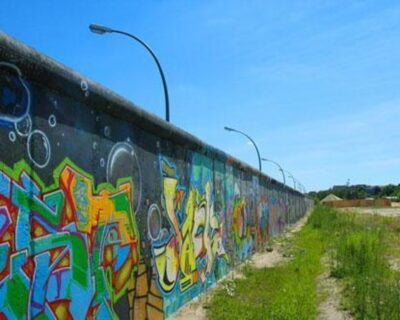

Berlin Highlights Sightseeing Bike Tour in Small Groups
Read our review →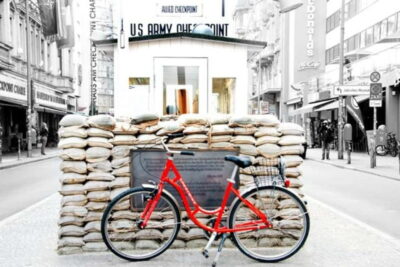
Alternative Bike Tour of Kreuzberg & Friedrichshain
Read our review →
Other lists this ride turns up in