
REVIEW · BERLIN
Berlin: Guided Bike tour of the Berlin Wall and Third Reich
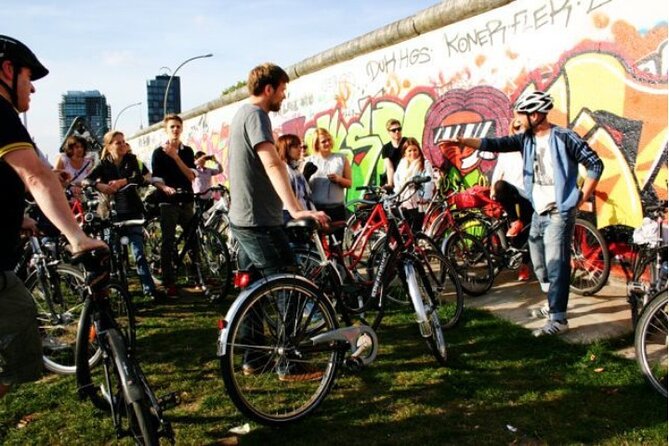
Berlin’s past is easier to grasp when you move through it. This three-hour bike tour links the Berlin Wall, escape routes, Nazi sites, Holocaust memorials, and the modern government quarter, letting you see how these chapters overlap on the city map. You may cover about 13 kilometers at an easy pace, with plenty of stops.
I like the local perspective. Guides such as Paul, a native of West Berlin, and Simon, Simone, Theo, Juliette, and others add personal stories to the dates and facts. I also like the good value: for $42.34, you get a bike, helmet, guide, and a broad look at central Berlin without paying admission at each stop.
The main catch is the flexible route. The Free Berlin concept lets each guide design a version of the tour, so you may not visit every advertised site, including Checkpoint Charlie or the Führerbunker. If one place is essential, tell your guide at the start and understand that this is an overview, not a long visit at any single memorial.
Key points to know before you pedal off
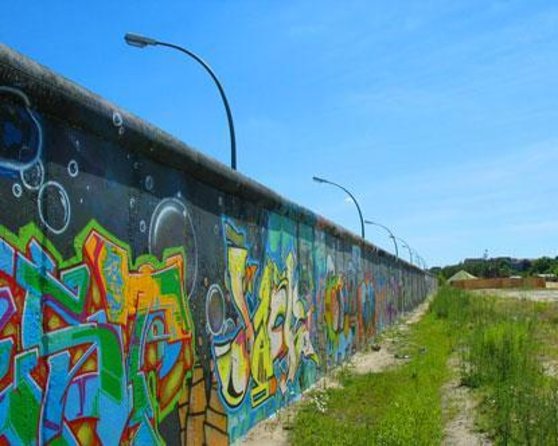
- The Wall is the main thread: You see former border zones, escape routes, watchtowers, memorials, and the death strip rather than only a short piece of painted concrete.
- The route is flexible: Each guide creates a route around the theme, so stops can change with traffic, weather, city events, and group interests.
- Expect an easy but fairly long ride: Berlin is flat, and one family covered about 13 kilometers with regular breaks.
- History comes with local voices: Paul, Simon, Simone, Theo, Juliette, Peter, Yonis, Constantine, and other guides have different styles and may add personal or family connections.
- The Third Reich portion may be shorter: The tour includes Nazi-era sites, but some versions focus more heavily on the Berlin Wall and divided Berlin.
- Families can join: Children are welcome, infant seats are available on request, and children must ride with an accompanying adult.
Starting in Nikolaiviertel, Berlin’s rebuilt old center
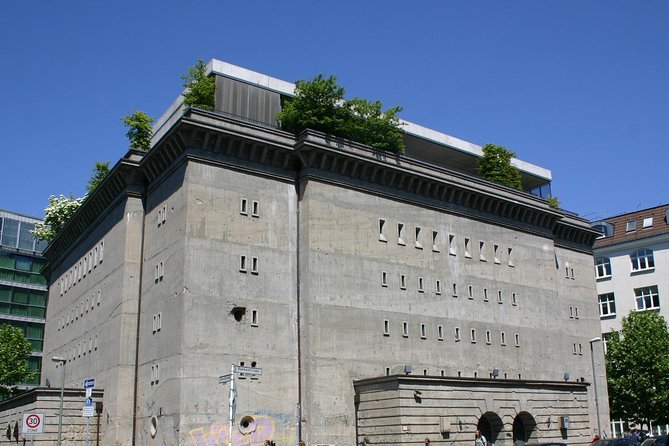
The tour begins at Free Berlin Bike Tours & Rental on Poststraße 11, near public transportation, then moves into Nikolaiviertel. This is presented as Berlin’s only real old town, though its current appearance needs a little explanation.
World War II bombing destroyed much of central Berlin. Nikolaiviertel was rebuilt in the GDR period, so the setting is old in spirit and reconstructed in much of what you see. That makes it a useful opening lesson: Berlin is full of places that look historic but carry a more complicated modern story.
You spend about 10 minutes here. That is enough for a quick introduction to the city’s destruction and rebuilding, but not enough for a detailed architectural walk. I like beginning here because it puts Berlin’s twentieth-century damage on the table before the tour turns to the Nazis, the Wall, and reunification.
More Guided Rides in Berlin:
- Berlin: Sights and Highlights Bike Tour with a Local Guide
★ 4.8 · 2,698 reviews - Berlin: The Wall and Third Reich Guided Bike Tour
★ 4.8 · 578 reviews - Berlin: Guided Bike Tour to Explore the Highlights
★ 4.8 · 506 reviews
Civil courage at the Neue Synagogue
The short stop outside the Stiftung Neue Synagoge Berlin, also called the Centrum Judaicum, focuses on the building’s survival during the November 1938 pogroms known as Kristallnacht. The guide explains how a police officer used civil courage to help protect the synagogue.
You only stop for about five minutes, so this is a brief story rather than a full visit. The point is not to tour the interior. It is to connect a striking building with an individual act of resistance during a period when public opposition was dangerous.
This is one of the tour’s strengths: you are not only given dates. You are shown how a street corner, a building, or a preserved structure can carry a human decision within a much larger tragedy.
The Wall Memorial and Mauerpark
The Berlin Wall Memorial is one of the most important stops. The tour description identifies three places where the Wall is still meaningfully preserved, and this is the section where you can best understand how the border worked.
The key idea is not simply that a wall divided Berlin. The border zone had multiple parts, including barriers, open ground, patrol routes, and watch areas. At this stop, your guide explains what the Wall did to daily life and why crossing it was so dangerous. You may spend around 10 minutes here, which gives you a useful explanation but not time to inspect every memorial element.
Mauerpark follows. Today it is linked with a Sunday flea market and open-air activity, but its past is much harsher. The area once formed part of the border zone. The tour uses it to show how a space shaped by fear and separation became a place associated with free expression.
That contrast is especially effective by bicycle. You move from a site of state control into a public park used by ordinary Berliners. You see, in a small area, how the city changed after the Wall fell.
Humboldthain Flak Tower and the Günter Litfin Memorial
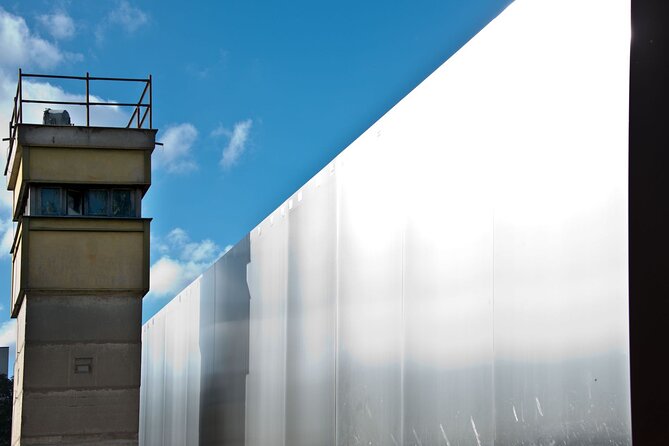
The Humboldthain Flak Tower brings the Nazi period into sharper view. Built as a huge anti-aircraft fortress and air-raid shelter, it also reflects the scale and character of Nazi military construction.
The stop lasts about 10 minutes and includes a panoramic view. The height helps you read Berlin geographically, while the structure itself prompts discussion of wartime defense and Nazi architecture. You should not expect an interior visit as part of this tour, but the exterior and the view make the stop worthwhile.
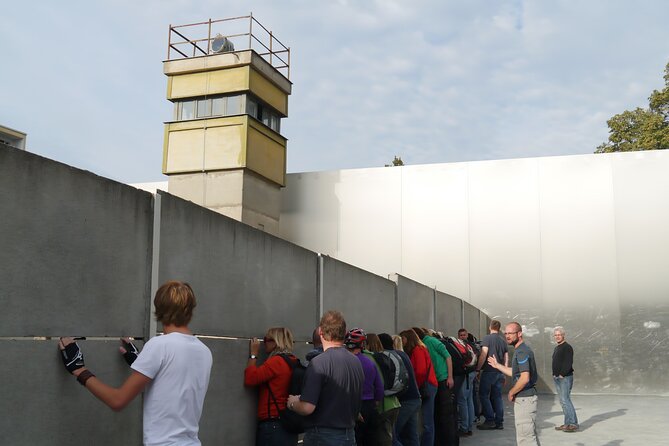
Next comes the Günter Litfin Memorial, where an original watchtower has been preserved. Günter Litfin was the first person shot at the Berlin Wall, and the memorial gives the political division a personal name.
This is a short stop of about five minutes. That brevity is appropriate for a memorial, but the guide’s explanation matters. The Wall can feel like an abstract political object until you hear about people who tried to cross it and paid with their lives.
More Cycling Trips in Berlin:
- Berlin Highlights 3-Hour Bike Tour
★ 5.0 · 948 reviews - Berlin City Bike Tour with Beer Garden Stop
★ 5.0 · 917 reviews - Berlin Highlights: 3-Hour Bike Tour
★ 4.9 · 809 reviews - Berlin Highlights Sightseeing Bike Tour in Small Groups
★ 5.0 · 652 reviews
Invalidenfriedhof and the stories of escape
Invalidenfriedhof is a burial ground with an unusual military past. It was created for Prussian military figures and was later cut through by the Berlin Wall. The tour uses the cemetery to discuss escape attempts, former checkpoints, and the nearby canal that helped form a natural boundary between East and West Berlin.
This is a quieter stop than Mauerpark or the Wall Memorial. The setting helps you see how political borders can cut through places that were never designed to be borders. Graves, paths, and old boundaries reveal how the division affected more than major streets.
You spend roughly five minutes here. If you want a detailed cemetery visit, you will need to return independently. On the bike tour, the value is the connection between the burial ground, the border, and the escape stories.
Spreebogenpark and Hitler’s unrealized Great Hall
At Spreebogenpark, the subject shifts from surviving structures to plans that were never completed. The park offers a broad view of Germany’s governing district, including the area around the Reichstag.
Here the guide explains Albert Speer’s plans for Hitler’s proposed Great Hall, a colossal building intended to hold 180,000 people. The scale is hard to grasp until you look across the government quarter and imagine how radically the area might have been remade.
This is a strong example of why moving through Berlin helps. You are not only studying a museum display. You are looking at the actual city and discussing how political power was meant to reshape it.
The Reichstag, the Holocaust Memorial, and the Führerbunker
At the Reichstag, the guide discusses Hitler’s rise to power and Germany’s democratic history. The tour stops outside, with about five minutes for the explanation, and does not include entry to the building or its glass dome.
That limitation is worth knowing. If you want to go inside the Reichstag, arrange a separate visit. The bike tour gives you context, not an interior tour.
The Holocaust Memorial follows. The field of concrete stelae is designed to create uncertainty and discomfort as you move among the blocks. The tour allows about 10 minutes here, enough for the guide to explain its purpose and to give you time to form your own response.
The memorial is one of the emotionally weightier parts of the route. A guide can offer background, but no explanation replaces your own experience of walking through it. I appreciate that the stop is not treated as a quick photograph.
The route also refers to memorials for other major victim groups of the Holocaust. These brief references widen the story beyond a single memorial site and remind you that Nazi persecution targeted several groups.
At the Führerbunker, there is no dramatic ruin to enter. The site is now a parking area, and the guide explains why the bunker was covered and why the location is handled without turning it into a shrine. This is a short stop, around five minutes, but it answers a question many visitors have when they see the ordinary setting: where Hitler spent his final weeks and died.
Checkpoint Charlie and the Cold War finish
The English version includes Checkpoint Charlie, the best-known Cold War border crossing. It was associated with the American and Soviet sectors, and a confrontation there brought the superpowers dangerously close to a wider conflict.
This stop is scheduled for about 10 minutes. It is important to keep expectations in check. The present-day checkpoint area is heavily commercialized, and the original border setting is not preserved as a complete historical scene. The guide’s explanation is more valuable than the photo opportunity.
Checkpoint Charlie appears only on the English version according to the tour information. If it is a must-see for you, choose the correct language option and confirm the day’s planned route.
How the Free Berlin route affects your experience
The company’s Free Berlin concept means each guide designs a route around the broad theme. That flexibility can work very well. Traffic, road closures, weather, large events, and the interests of the group can all affect how the three hours unfold.
It also creates the tour’s biggest weakness. One group may visit the Reichstag, Holocaust Memorial, Führerbunker, and Checkpoint Charlie, while another may spend more time on Wall sites or take a different path through parks and neighborhoods. The advertised locations are best understood as possible stops, not a fixed guarantee.
I would ask at the beginning:
- Which Wall sites are planned today?
- Will the route include Checkpoint Charlie?
- How much time will go to the Third Reich period?
- Can the group stop at one specific site that matters most to you?
A guide may not be able to promise everything. Still, asking early gives the guide a chance to shape the ride around your priorities.
Bikes, traffic, group size, and pace
The tour provides a city bike and helmet. A basket or basket carriage can hold a water bottle, coat, or small bag, which is useful because you will be riding for about three hours. Food and drinks are not included, so bring water and plan to eat before or after the ride.
Berlin is flat, and the pace is generally manageable. One family with children aged 10, 14, and 17 covered about 13 kilometers with many breaks and found the ride easy. Children are welcome, and infant seats can be requested in advance.
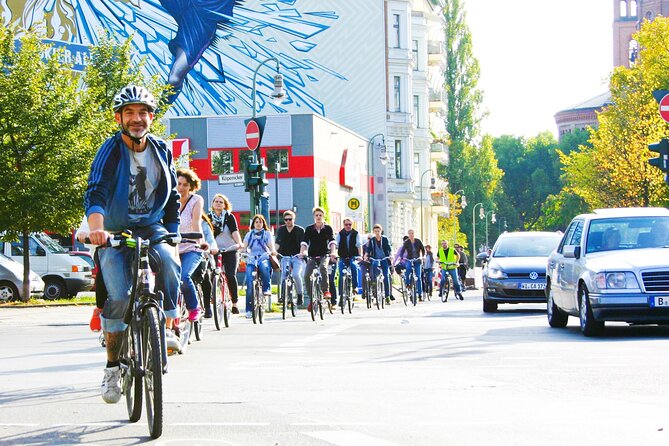
You should still be comfortable riding in city traffic. One route included main roads and cycle lanes, which can feel daunting if you rarely cycle in a large city. Guides give directions, wait at red lights, and work to keep the group together, but this is not a traffic-free park ride.
Groups range from a minimum of four to a maximum of 15 people. Fifteen is not enormous, but it can make riding and hearing instructions harder than in a small group. A group of 10 or 12 may be split into smaller units when needed, which improves control and makes the ride easier to follow.
The tour operates in all weather. Wear suitable clothing, and do not count on rain cancelling the ride. The experience ends back at the starting point.
What the guides add to the history
The guide can make or break a history tour, and this format gives you several strong names to look for. Paul has personal experience as a native of West Berlin and can explain differences between East and West Berlin before and after reunification. Peter is praised for putting faces and personal experience beside the political events.
Simon is described as warm, safe, and engaging, even in the rain. Simone brings a clear interest in history and memory, while Theo is noted for confident answers and careful group handling. Juliette has adapted routes to include the Brandenburg Gate when time allowed, and Constantine has used park routes to help nervous cyclists feel more at ease.
These are different guide styles, not a single scripted performance. That is part of the appeal, but it also explains why the route and emphasis can vary. If your main goal is the Third Reich rather than the Wall, say so clearly. One version may give the Wall most of the attention, with Nazi Germany treated as a shorter thread.
Is $42.34 good value for three hours?
At $42.34 per person, the price is fair for a three-hour guided ride that includes the bike, helmet, and guide. You are paying for both transport and interpretation, and you cover much more ground than you would on foot.
The value is strongest if you are new to Berlin and want a citywide framework. In one afternoon, you can see the Wall Memorial, Mauerpark, a flak tower, a former watchtower, a divided cemetery, the Reichstag area, the Holocaust Memorial, the Führerbunker site, and possibly Checkpoint Charlie.
The price is less attractive if you want long, quiet visits inside major sites. There is no Reichstag entry, no food, and no extended museum time. You are buying a moving overview with historical commentary, then deciding which places deserve a return visit.
Free cancellation is available up to 24 hours before the start time. The tour needs a minimum number of participants, and if that minimum is not reached, you are offered another date or experience, or a full refund.
Who should book this Berlin bike tour?
I would choose this tour early in a Berlin visit. It gives you a useful map of the city’s divided past and helps you decide where to spend more time later. It suits adults, families with older children, history-minded visitors, and anyone who would rather ride than sit on a bus.
You should book it if you want a broad mix of Berlin Wall and Nazi-era history, local storytelling, and time outdoors. You should also be ready for a flexible route, changing emphasis, and short stops.
I would choose another experience if you need a guaranteed Third Reich itinerary, a guaranteed visit to every listed site, or long time at the Holocaust Memorial and Wall Memorial. For the best result, tell the guide your must-see locations before setting off, dress for the weather, and treat the ride as a first look at Berlin’s difficult past rather than the final word.
FAQ
How long does the Berlin bike tour last?
The tour lasts approximately three hours.
What is included in the price?
The price includes use of a bicycle, a helmet, and a professional guide.
Where does the tour start and finish?
It starts at Free Berlin Bike Tours & Rental, Poststraße 11, 10178 Berlin. It ends back at the same meeting point.
Is the tour offered in English?
Yes. The tour is offered in English, and it also operates in German depending on the option selected.
Is Checkpoint Charlie included?
Checkpoint Charlie is included on the English version of the tour, but the flexible route means you should confirm the planned stops with your guide.
Will I go inside the Reichstag?
No. The tour stops outside the Reichstag and discusses Hitler’s rise to power and Germany’s democratic history. There is not enough time to go inside.
Are children allowed to join?
Yes. Children are welcome, but they must be accompanied by an adult.
Can an infant seat be provided?
Yes. Infant seats can be provided on request.
How many people are in each group?
The tour has a minimum of four and a maximum of 15 participants.
Does the tour run in bad weather?
Yes. It operates in all weather conditions, so you should dress appropriately.
Are food and drinks included?
No. Food and drinks are not included unless specifically stated.
Can I cancel for a full refund?
Yes, if you cancel at least 24 hours before the experience start time. Cancellations or changes made less than 24 hours in advance are not accepted for a refund.
Newest rides we have reviewed in Berlin
- Alternative Berlin Bike Tour – Off the Beaten Tracks in Small Groups★ 5.0 · 99 reviews
- Berlin Wall and Cold War Bike Tour in Small Groups★ 5.0 · 114 reviews
- Berlin : The best bike tour with a Berlin guide and insider tips★ 5.0 · 14 reviews
- Berlin: Guided Private Bike Tour to Explore the Highlights★ 5.0 · 12 reviews
- Potsdam Bike Tour with Rail Transport from Berlin★ 4.5 · 81 reviews
- Berlin : Guided Private Sightseeing Tours with Funbikes, Teambikes★ 5.0 · 20 reviews
- Berlin: Guided Bike Tour to Explore the Highlights★ 5.0 · 159 reviews
- 3-Hour Bike Tour of Tiergarten and Berlin’s Hidden Places★ 5.0 · 26 reviews
Berlin Cycling Tours, compared.
Sights and Highlights Bike Tour with a Local Guide
Read our review →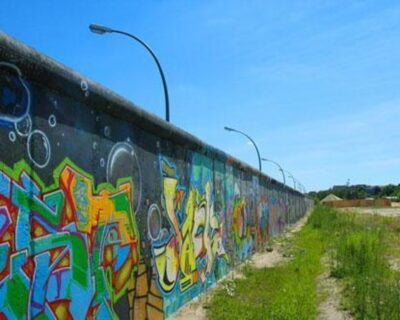

Berlin Highlights Sightseeing Bike Tour in Small Groups
Read our review →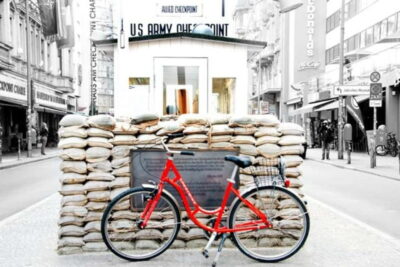
Alternative Bike Tour of Kreuzberg & Friedrichshain
Read our review →
Other lists this ride turns up in