
REVIEW · CITY HIGHLIGHTS BIKE TOURS IN BERLIN
Berlin: Guided Bike Tour to Explore the Highlights
Berlin reveals itself quickly from a bicycle. In three hours, you can pedal from the medieval-feeling Nikolaiviertel to the Brandenburg Gate, cross the former Cold War divide, and finish among the grand museums along the Spree. It is a brisk way to get your bearings without spending the day underground or in a tour bus.
I like the comfortable pace and the chance to see central Berlin as a connected city rather than a string of isolated monuments. I also like the guides’ personal approach: Jake, Simone, Simon, Marius, Reiko, Luka, and others are praised for clear storytelling, humor, and useful ideas for the rest of your visit. The main consideration is that the route gives you an introduction, not long visits inside attractions, and one English-language review found the guide difficult to understand.
Key points to know before booking
- Three hours on a bicycle: Cover major central sights faster than on foot, with regular stops for commentary.
- A serious look at Berlin’s past: The route includes the Book Burning Memorial, Checkpoint Charlie, the Holocaust Memorial, the Berlin Wall era, and the city’s divided past.
- A guide-led route: Each guide creates a slightly different route, so the exact order and emphasis can vary.
- Easy bikes and a relaxed pace: The bikes are described as light and sturdy, and the ride is generally not strenuous.
- Small groups: The tour runs with a minimum of four and a maximum of 15 participants.
- English is important to check: The English version includes Checkpoint Charlie, while Prenzlauer Berg is listed only for the German version.
Why a bike is a smart way to meet Berlin
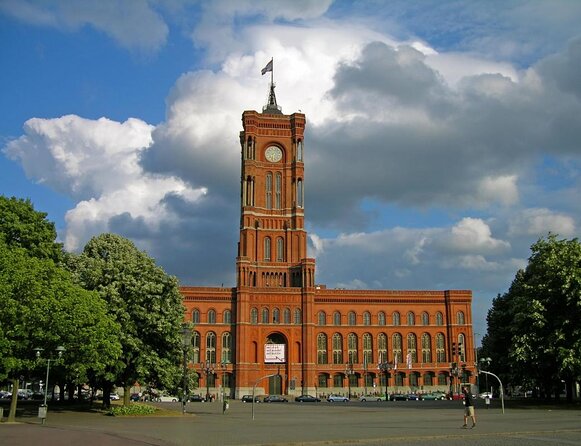
Berlin is spread out. The Brandenburg Gate, Museum Island, Potsdamer Platz, and Checkpoint Charlie are not far apart on a map, but walking between all of them takes time and energy. A bicycle lets you cover the gaps while still seeing the streets, parks, government buildings, and changing neighborhoods along the way.
This is not a racing tour. The ride is designed around stops of about 10 minutes, with longer time in Prenzlauer Berg on the German option. You can expect a comfortable pace rather than a hard workout. Several guides are praised for giving riders time to look around, while one less satisfied cyclist wanted more opportunities for photographs. That tells you something useful: the tour is built to keep moving, so have your camera ready when you arrive at each stop.
The group size matters. With no more than 15 people, the guide can usually keep the group together more easily than on a large coach tour. The minimum of four also means the tour requires a certain level of demand, so a cancellation is possible if that number is not reached. If that happens, you are offered another date or experience, or a full refund.
More City Highlights Bike Tours in Berlin
- Berlin: Sights and Highlights Bike Tour with a Local Guide
★ 4.8 · 2,698 reviews - Berlin Highlights 3-Hour Bike Tour
★ 5.0 · 948 reviews - Berlin Highlights: 3-Hour Bike Tour
★ 4.9 · 809 reviews
Starting in Nikolaiviertel, Berlin’s old heart
The meeting point is Free Berlin Bike Tours & Rental at Poststraße 11, 10178 Berlin. From there, the tour begins near Nikolaiviertel, a small historic quarter with an old-town feel.
Do not expect an untouched medieval neighborhood. Much of what you see was created or rebuilt in the late 1980s. Its value is that it gives you a readable starting point for Berlin’s long story, from its early beginnings to the heavily rebuilt capital around it.
The contrast arrives quickly. From Nikolaiviertel, you can see the TV Tower rising over the city. Opened in 1969, it was the second-tallest structure in the world at the time. The tower is a useful marker throughout Berlin and a reminder that the city’s eastern side was once the center of East Berlin.
The guide’s commentary is important here. This first section helps you understand that Berlin is not one tidy historic center. It is a city shaped by war, division, reconstruction, and bold modern projects. Guides such as Rufus, Simone, and Jake have been praised for linking those changes to the places in front of you rather than simply listing dates.
Bebelplatz and the warning beneath the square
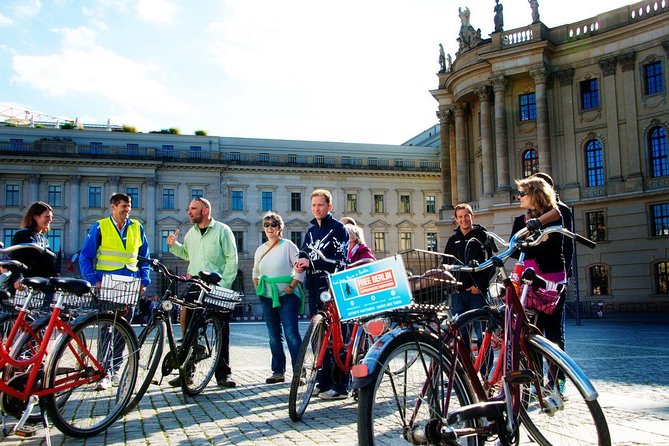
Bebelplatz is one of the tour’s most powerful stops. It is surrounded by major buildings, including Berlin’s oldest university, the old opera house, St. Hedwig’s Cathedral, a former bank building now associated with a hotel, and the guardhouse known as the Neue Wache nearby.
The square is also tied to the Nazi book burning of 1933. Thousands of books were burned here in public, and the memorial below the pavement makes the event difficult to ignore. You may find yourself looking down through the glass panel at the empty library beneath the square. The point is not spectacle. It is a quiet reminder of how public spaces can be used to promote censorship and hatred.
This is one reason the tour is better suited to older children and teenagers than to very young children. A family with 12- and 15-year-old boys found the serious historical content worthwhile, but noted that the stops involved substantial explanation. The tour is family-friendly in the practical sense, and infant seats can be requested, but the subject matter is not light.
The nearby university also gives the guide a chance to discuss Berlin’s intellectual life. More than 25 Nobel Prize winners have been associated with it, including Albert Einstein. Guides may also bring a personal connection, since some have studied there.
Checkpoint Charlie and the divided city
Checkpoint Charlie is included in the English version and is one of the clearest places to discuss the Cold War. The former border crossing became the most famous checkpoint between East and West Berlin, and its name remains familiar around the world.
The stop is brief, so do not expect a full museum visit. Instead, use the guide’s explanation to understand what the crossing represented: a tightly controlled border inside a divided city, where ordinary streets became international symbols.
This part of the ride helps the earlier stops make sense. The TV Tower reflects East Berlin’s ambitions. Bebelplatz carries the memory of Nazi repression. Checkpoint Charlie shows the later division of the city. In a short time, the tour moves through several very different chapters of Berlin’s past.
The value here depends heavily on the guide. Strong guides such as Jake and Simon have been praised for answering questions and making the material approachable. One English-language participant found the guide’s command of English insufficient, so I would pay attention to the language option you choose and contact the provider if clear English commentary is essential for your group.
More City Highlights Bike Tours in Germany
- Berlin Highlights Sightseeing Bike Tour in Small Groups
★ 5.0 · 652 reviews - Berlin: Guided Bike Tour to Explore the Highlights
★ 4.8 · 506 reviews - Berlin: E-Bike Tour of the Berlin Wall and Mitte Highlights
★ 4.7 · 60 reviews - Half-Day Guided Bike Tour of Central Berlin’s Highlights
★ 4.5 · 32 reviews
Potsdamer Platz, from nightlife to no-man’s land
Potsdamer Platz gives you Berlin’s most striking before-and-after story. In the 1920s, it was a major traffic junction and a fashionable place to be at night. During the city’s division, it became part of the empty border zone. After reunification, it turned into one of Europe’s largest construction sites around the millennium.
Today, the square is filled with modern buildings and traffic, but the important point is not simply the architecture. The place shows how quickly Berlin can change its role. A center of entertainment became a dead zone, then a symbol of reunification and commercial rebuilding.
You will likely appreciate seeing it by bicycle because the surrounding roads and open spaces make the scale easier to grasp. On foot, it can feel like a collection of separate towers. From a bike, you move through it as part of the larger city.
If modern architecture and urban planning interest you, ask questions here. One participant felt the tour focused more on World War II than on art and city design. That is a fair caution. The tour’s main strength is political and historical context, not a detailed architecture lesson.
The Holocaust Memorial and Berlin’s difficult honesty
The Memorial to the Murdered Jews of Europe is one of Berlin’s essential stops. Its field of concrete slabs creates a changing sense of height, space, and uncertainty. The tour allows you to see the memorial and hear how Germany addresses the crimes committed under Nazi rule.
This is not a stop to rush through. The memorial is open to the city, yet it also creates a quiet, serious space. You may want to walk among the slabs after the guide has finished speaking, though the scheduled stop is short and the group must continue.
The tour handles a subject that cannot be reduced to a few neat facts. Several guides are praised for approaching the Holocaust and Berlin Wall era thoughtfully, while one participant felt the emphasis on World War II was too strong for a tour billed as the best of Berlin. That difference comes down to what you want. If you want a history-centered introduction, this is a major strength. If you mainly want art, food, or neighborhood life, the balance may feel narrow.
Brandenburg Gate and the Reichstag
Brandenburg Gate is the classic Berlin image, and the bicycle tour gives you a direct route to it after the memorial. The gate has been used as a symbol of power, division, and reunification, so the guide can connect it to the events discussed earlier.
You will have time to stop, take in the proportions, and hear why the gate matters. You will not have time for an extended visit inside any nearby building. This is a photo and orientation stop, not a ticketed attraction.
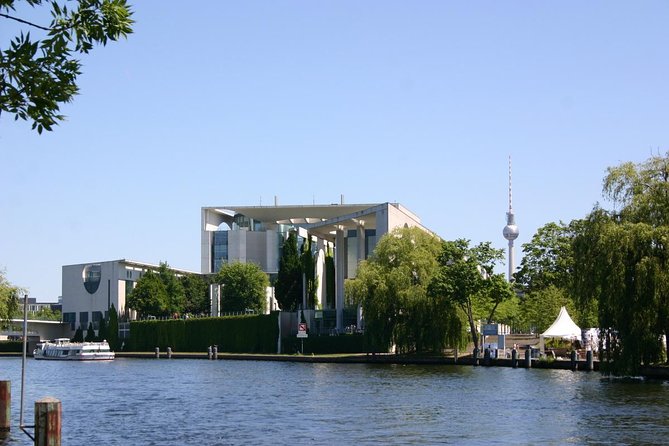
The Reichstag follows naturally. Germany’s parliament sits beside the modern government quarter, and its glass dome has become a symbol of transparency. You can see the building from outside and hear the stories attached to it. The tour does not include entry to the dome, so book a separate visit if that is a priority.
Guides often add humor here. Stories about Germany’s version of a White House may help keep the mood from becoming too heavy after the memorials, though one participant felt that unnecessary four-letter language detracted from the experience. Guide style varies, and the Free Berlin concept gives each guide room to shape the commentary.
Tiergarten and the ride between the monuments
The tour takes you through Tiergarten, one of Berlin’s largest parks. Its name means Garden of the Animals, a reference to an earlier use that does not describe the park today.
This section gives you a needed change of pace. After the dense history around Bebelplatz, Checkpoint Charlie, and the Holocaust Memorial, the open park lets you enjoy the simple act of cycling. It is also where the practical value of the tour becomes clear. You are not only moving from one famous building to another. You are seeing the spaces between them.
The bicycles are described as light, sturdy, and comfortable. The ride is suitable for most participants, and several people found it easy rather than strenuous. Children are welcome but must be accompanied by an adult. Dress for the weather, since the tour operates in all conditions.
Museum Island and the Spree Athens
Museum Island is the final listed highlight and a fitting finish. The group reaches the grand buildings along the Spree, sometimes called Berlin’s Spree Athens because of their classical scale and cultural purpose.
The stop is mainly about the architecture and the setting. Entrance to the museums is not included, and you will not have time to explore their collections during this ride. Still, the tour helps you decide which buildings deserve a later visit.
This is one of the best uses of a short city tour. You see the main cultural quarter, learn how it fits into Berlin, and can return with a plan instead of guessing which museum to choose. The tour ends back at the Poststraße meeting point, so you can continue from there on your own.
What the changing route means for you
Free Berlin’s guides design their own routes. That is a useful feature if you enjoy a more personal tour, but it also means no two departures need to feel exactly alike.
The listed central stops include Nikolaiviertel, Bebelplatz, Checkpoint Charlie, Potsdamer Platz, the Holocaust Memorial, Brandenburg Gate, the Reichstag, Tiergarten, and Museum Island. The German version also includes Prenzlauer Berg, a lively and highly livable district that shows how Berlin changed after reunification. It is listed as a German-only stop, so do not assume it will be part of an English departure.
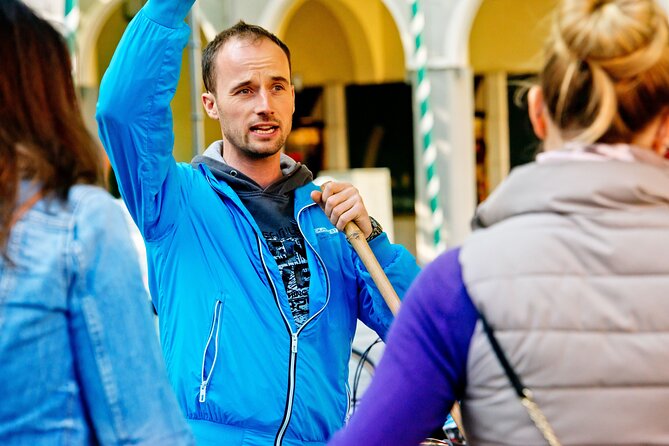
The guide’s interests can shape the experience. Rufus is praised for political insight, Simone for passion and clear explanations, Jake for humor and flexibility, and Marius for going beyond expectations. One guide even added an extra stop based on the group’s interests. That personal touch is a real benefit, although it also explains why the tour may not feel identical every time.
Price, pace, and practical value
At $42.34 per person, the tour is fairly priced for three hours with a bicycle, helmet, and professional guide. You are paying for transport between widely spaced sights, but the greater value is the interpretation. A rental bike alone gets you around Berlin; it does not explain why Potsdamer Platz was once empty or why Bebelplatz matters.
Food and drinks are not included. Plan to eat before or after the ride rather than expecting a meal break. The tour starts and ends at the same location, and confirmation is provided at booking.
Free cancellation is available up to 24 hours before the start time for a full refund. Changes or cancellations inside that window are not accepted for a refund. The tour operates in English, German, or French depending on the option selected, and the stated maximum is 15 people.
Who should book this bike tour?
I would choose this tour for a first visit to Berlin, especially if you have only a few days and want a clear map of the central sights. It also works well early in a stay, since the guide can suggest places to return to for longer visits.
History-minded adults, couples, solo visitors, and families with older children should find the format useful. The ride is relaxed, and the most praised guides combine facts with humor and practical advice.
I would think twice if you want long photography stops, museum entry, a strong focus on art, or a quiet neighborhood tour. The content leans heavily toward Berlin’s political past, and the route keeps moving. Language matters too, so choose the English option carefully if you need clear, detailed commentary.
Should you book it?
Yes, if you want to understand Berlin’s major sights in one manageable ride. The combination of easy bicycles, a small group, and stops at Brandenburg Gate, Checkpoint Charlie, the Holocaust Memorial, the Reichstag, and Museum Island gives you a strong first look at the city.
Book it with realistic expectations. This is an orientation tour, not a substitute for museum visits or a full study of Berlin’s history. Choose the English departure for Checkpoint Charlie, expect a serious historical focus, and bring clothing for any weather. At this price, it is a sensible way to get your bearings fast and decide what deserves more of your time.
FAQ
How long does the Berlin bike tour last?
The tour lasts approximately three hours.
What sights are included?
The route includes Nikolaiviertel, Bebelplatz, Checkpoint Charlie, Potsdamer Platz, the Holocaust Memorial, Brandenburg Gate, the Reichstag, Tiergarten, and Museum Island. The exact route can vary because each guide designs their own version.
Is Checkpoint Charlie included in the English tour?
Yes. Checkpoint Charlie is specifically listed as included in the English version.
Is Prenzlauer Berg included in the English tour?
No. Prenzlauer Berg is listed as included only in the German version.
Are bicycles and helmets provided?
Yes. Bicycle use and a helmet are included in the tour price.
Can children join the tour?
Yes. Children are welcome, but they must be accompanied by an adult. Infant seats can be provided on request.
What languages are available?
The experience operates in English, German, and French, depending on the option selected.
What happens if I need to cancel?
You can cancel up to 24 hours before the start time for a full refund. Cancellations or changes made less than 24 hours before the start time are not refunded or accepted.
Newest rides we have reviewed in Berlin
- Alternative Berlin Bike Tour – Off the Beaten Tracks in Small Groups★ 5.0 · 99 reviews
- Berlin Wall and Cold War Bike Tour in Small Groups★ 5.0 · 114 reviews
- Berlin: Guided Private Bike Tour to Explore the Highlights★ 5.0 · 12 reviews
- Berlin : The best bike tour with a Berlin guide and insider tips★ 5.0 · 14 reviews
- Potsdam Bike Tour with Rail Transport from Berlin★ 4.5 · 81 reviews
- Berlin: Guided Bike tour of the Berlin Wall and Third Reich★ 5.0 · 160 reviews
- Berlin : Guided Private Sightseeing Tours with Funbikes, Teambikes★ 5.0 · 20 reviews
- 3-Hour Bike Tour of Tiergarten and Berlin’s Hidden Places★ 5.0 · 26 reviews
City Highlights Bike Tours, compared.
3-Hour Porto Highlights on a Electric Bike Guided Tour
Read our review →
City Highlights 3-Hour Guided Electric Bike Tour
Read our review →
Highlights & Hidden Spots of Barcelona Bike Tour w/ Local Guide
Read our review →
Sights and Highlights Bike Tour with a Local Guide
Read our review →
Highlights 3 Hour Bike Tour with a Local Guide
Read our review →
Other lists this ride turns up in