
REVIEW · E-BIKE TOURS IN AMSTERDAM
Amsterdam Anne Frank and Jewish History E Bike Tour
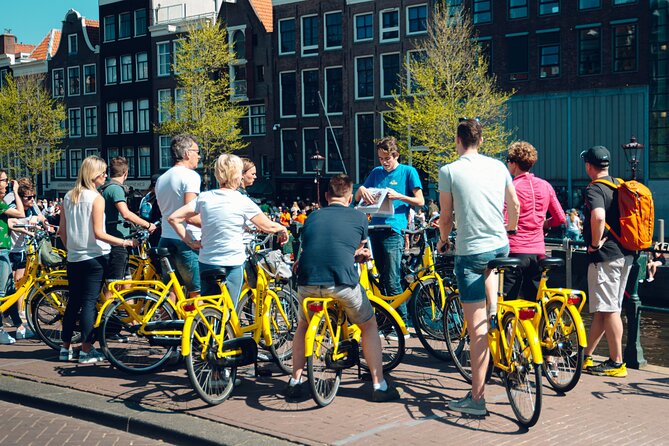
Amsterdam’s Jewish story comes into focus as you pedal from the old center to the places tied to Anne Frank’s family. This is not just a ride past famous addresses. You stop at the National Holocaust Names Monument, hear about the February Strike, and visit Merwedeplein, where Anne lived before going into hiding.
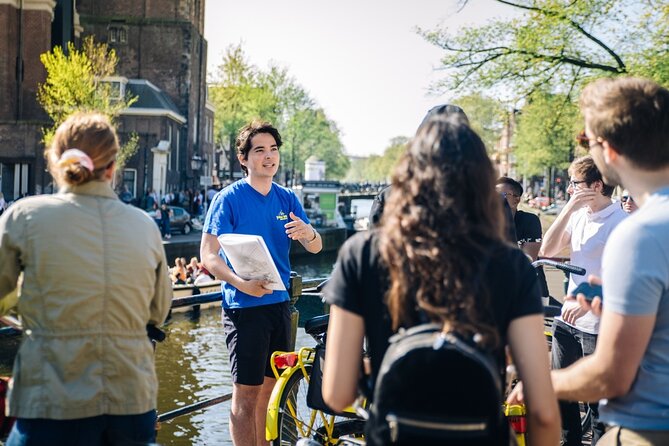
I like two things right away: the e-bike makes a wide route manageable, and the tour connects major wartime events with ordinary city places, including a bookstore, school, bridge, and neighborhood square. Guides such as Willem, Lucas, Ruben, and Wilhelm are praised for clear storytelling and warm, engaging manner.
The main drawback is that admission to the Anne Frank House and Portuguese Synagogue is not included. You also see the Anne Frank House from outside, so this tour works best as a historical ride and orientation, not as a substitute for an interior visit.
Key points to know before you book
- A three-hour route with an e-bike: You cover central Amsterdam, the Jewish Quarter, and Anne Frank’s former neighborhood without making the whole journey on foot.
- The Holocaust Names Monument is a major stop: You have about 30 minutes to walk around and hear about the Jewish, Sinti, and Roma people murdered during the Second World War.
- Anne Frank’s Amsterdam is broader than the canal house: The route includes her bookstore, sculpture, former home, school, and the square where she grew up.
- The guide shapes the experience: Willem, Lucas, Ruben, and Wilhelm are among the guides praised for warmth, humor, clear explanations, and strong historical knowledge.
- The tour does not include entry tickets: You see the Portuguese Synagogue and Anne Frank House from outside, and must arrange admission separately if you want to go inside.
- The start and finish are simple: Meet at Nieuwezijds Kolk 29 at 2 pm, then return to the same meeting point.
Why an e-bike helps on this history route
Amsterdam is easy to explore by bike, but the subject matter here spreads across several districts. The route begins near the old center, moves toward the Jewish Quarter, then continues to Anne Frank’s former neighborhood farther south. An e-bike saves energy and leaves you more attention for the guide.
The bike also fits the city. You are not sealed inside a vehicle while the streets pass by. You move through the same urban setting that shaped Amsterdam’s Jewish communities and Anne Frank’s early life. The ride itself is part of the orientation.
The pace appears to be moderate, with regular stops for explanation. One guide, Willem, is praised for taking a clear route through streets that were not too crowded. That matters in Amsterdam, where cycling can feel confusing if you are not used to dedicated bike lanes, local traffic patterns, and bikes coming from several directions.
This is still a cycling tour, not a walking lecture with a short ride attached. You should feel comfortable on a bicycle and able to follow the group. The supplied information says participants must be at least 152 centimeters, or about 5 feet, tall. The maximum group size can reach 99 people, so ask about the expected group size when booking if a small-group setting matters to you.
More E-Bike Tours in Amsterdam
- Amsterdam: Windmill, Cheese, and Countryside E-Bike Tour
★ 4.5 · 1,308 reviews - Amsterdam Highlights Bike or E-Bike Tour
★ 5.0 · 1,171 reviews - Cheese, Canals & Windmill Countryside E-Bike Tour Amsterdam
★ 5.0 · 501 reviews
From Nieuwezijds Kolk to the Jewish Quarter
The meeting point is Nieuwezijds Kolk 29, close to public transportation in central Amsterdam. The guide begins with an introduction to Anne Frank and Jewish history in Amsterdam before the bikes move out.
Nieuwezijds Kolk is described as one of the oldest parts of the city. Starting here gives the tour a useful foundation: Amsterdam is not only canals and handsome facades, but also a city shaped by trade, migration, religion, war, and changing neighborhoods.
After a short ride, you reach Nieuwmarkt, at the beginning of the Jewish Quarter. This is where the story shifts from broad city history to the Jewish presence in Amsterdam and the events of the Second World War.
Expect about 20 minutes at each of these first two stops. That is enough time for a focused explanation, though not enough for every detail. If you like asking questions, stay near the guide and use the pauses well.
Portuguese Synagogue and Waterlooplein
The Portuguese Synagogue is viewed from outside. It is described as the biggest synagogue in Amsterdam, and its exterior gives you a visible link to the city’s Sephardic Jewish community.
The stop lasts about 10 minutes, so do not expect a full architectural visit. Since admission is not included, you will need to arrange a separate ticket if you want to go inside. That is an important distinction when comparing this tour with a synagogue visit or a museum program.
The route then reaches the Jewish Cultural District and Waterlooplein market. You walk around for roughly 10 minutes and connect the area’s present-day city life with its Jewish past.
Waterlooplein is useful in this tour because it gives the history a physical setting. You are not studying a distant event in an isolated memorial. You are standing in a living part of Amsterdam, where markets, streets, and daily routines continue around places marked by wartime loss.
The February Strike at the Dokwerker
At the Dokwerker, the guide explains the February Strike during the Second World War. This was a major act of resistance against the persecution of Jewish people in the Netherlands.
The stop lasts about 10 minutes. That sounds brief, but the statue and location give the guide a clear focal point. I find stops like this valuable because they move the story beyond Anne Frank’s family and show how the wider population responded to Nazi persecution.
The tour’s best quality is its ability to connect individual lives with public events. Anne Frank’s diary gives one young person’s view, while the Dokwerker points toward a collective response. Those two scales belong together if you want to understand the period without reducing it to a single famous name.
More E-Bike Tours in the Netherlands
- Escape Amsterdam: E-Bike to Zaanse Schans Windmills & Zaandam
★ 5.0 · 446 reviews - Amsterdam: 3h E-Bike Tour with break
★ 4.6 · 230 reviews - Amsterdam: Zaanse Schans Windmills & Zaandam E-Bike Tour
★ 4.9 · 162 reviews - Amsterdam: E-Bike Sightseeing Tour
★ 4.7 · 99 reviews
The National Holocaust Names Monument
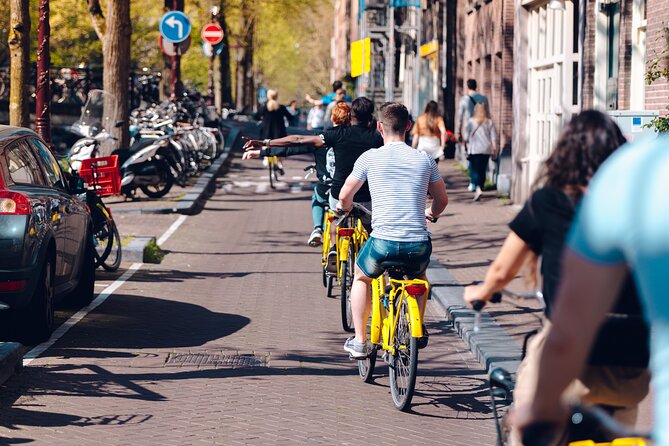
Plan for the longest stop here, about 30 minutes. The National Holocaust Names Monument commemorates the Jewish, Sinti, and Roma people murdered during the Second World War.
The time is used to walk around, listen, and take in the monument. Its purpose is personal and direct: names are recorded rather than left as an anonymous number. That changes the mood of the tour.
This is likely the most emotionally demanding part of the route. The monument requires attention and respect, and the guide’s tone matters. The strongest comments about this experience praise guides who explain the period with care while making the story understandable.
You should not expect a light sightseeing stop. The rest of the ride includes beautiful city views and interesting places, but this section asks you to slow down and remember people who were murdered. If you are booking mainly for scenery, this tour may feel heavier than expected. If you want historical context, it is central to the experience.
Leendert Pop and wartime Amsterdam
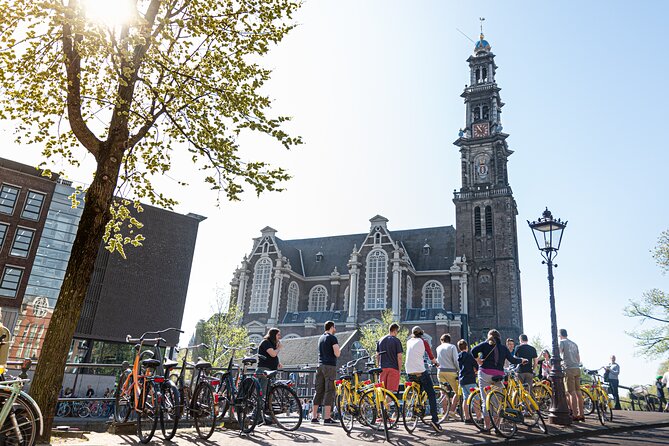
The next stop introduces the story of Leendert Pop, an elderly Jewish Amsterdammer during the Second World War. The stop takes about 10 minutes.
This kind of personal account helps prevent the tour from becoming a list of dates and monuments. The story gives you another way to picture Jewish life in Amsterdam during the war, alongside Anne Frank’s better-known experience.
The exact presentation can depend on the guide. Willem, Lucas, Ruben, and Wilhelm have all been praised for explaining the history in a way that is easy to follow. Lucas, in particular, is described as giving people time for questions, which is useful on a subject with difficult details.
Berlagebrug and the route south
At Berlagebrug, you hear about the bridge’s history during the Second World War. The stop is about 10 minutes.
A bridge may seem like an unusual wartime site, but that is part of the route’s appeal. You are shown how ordinary infrastructure can carry historical meaning. The tour does not only visit formal museums or memorials. It uses streets and crossings to show how the city functioned during the war.
This is also where the e-bike earns its keep. The route is not confined to the compact Jewish Quarter. You continue toward the neighborhood where Anne Frank lived before going into hiding, seeing parts of Amsterdam you might not choose on a short city break.
The bookstore where Anne Frank bought her diary
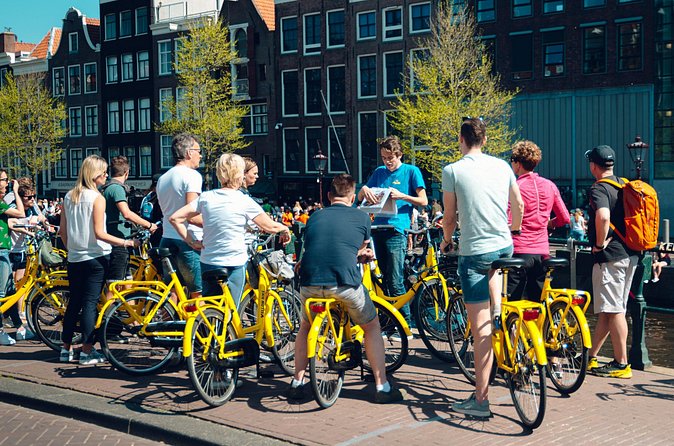
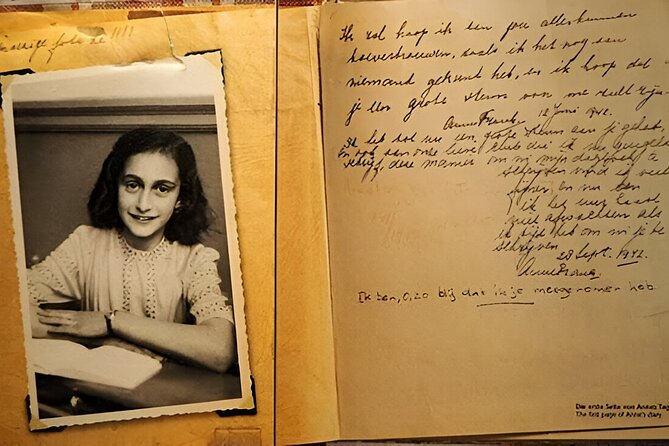
The tour stops at Bookstore Jimmink, identified as the place where Anne Frank bought her famous diary. The visit lasts about 10 minutes.
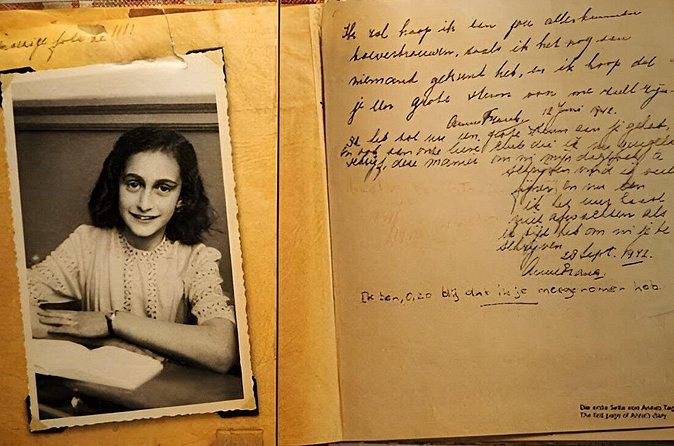
The stop is modest in physical size, but it carries unusual power. The diary is often treated as a symbol, yet this location brings it back to a simple event: a young girl bought a book that later became one of the best-known personal accounts of the Second World War.
Do not expect a museum display or included shopping visit. The value is in the explanation and the connection to Anne’s daily life before the hiding period.
Anne Frank’s sculpture and Merwedeplein
The sculpture of Anne Frank is on the square where she grew up as a Jewish girl before and during part of the war. You spend about 10 minutes there.
This stop helps you picture Anne as a child and teenager, not only as the author whose diary was published after her death. The public sculpture gives the guide a clear place to talk about her early years and the changes forced on Jewish families.
At Merwedeplein, you walk around and view the house where Anne lived before going into hiding. This is one of the most useful parts of the tour for anyone who wants to understand her life in Amsterdam before the annex.
The home’s exterior does not replace an interior visit, but it adds a neighborhood setting. You see where she lived, went to school, and moved through ordinary life before the war narrowed her world.
Anne Frank’s school and the Anne Frank House exterior
The route continues to the sixth Montessori school Anne Frank attended. The stop lasts about 10 minutes.
A school may seem less dramatic than a memorial, but it shows another side of Anne’s life. She was a student in a real neighborhood, with routines and classmates, before the restrictions and hiding changed everything.
The final historical stop is the Anne Frank House. You learn about Anne and her family in hiding beside the original house, with about 20 minutes at the location.
The key limitation is clear: admission is not included, and the tour does not take you inside. If you want to enter, you need a separate ticket. This matters because the Anne Frank House is often booked well ahead, and the bike tour cannot be treated as an entry reservation.
Still, seeing the building with a guide provides useful context before or after an interior visit. You hear the story in relation to the rest of the city, rather than treating the canal house as an isolated point on a map.
What the $63.22 price gets you
At $63.22 per person, the cost is reasonable if you value a guide, an e-bike, and a route linking many separate locations. You are paying for about three hours of transport, interpretation, and organized access to places that would take effort to connect independently.
The value is less clear if you already know Amsterdam well, plan to rent a bike, and prefer reading at your own pace. Several stops are short, and the main entrance fees are extra.
Food and drinks are also not included. Since the tour starts at 2 pm and returns to the starting point, plan your meal around it rather than expecting a food break as part of the ride.
I would compare the price with the cost of a bike rental plus a self-guided route. The tour adds the historical explanation, but it does not include museum entry. For many people, that trade-off is worthwhile, especially on a first visit or when you want the difficult wartime story handled by a guide.
Who will get the most from this tour
I would recommend it to you if you want to combine cycling with serious historical context. Families with older children and teenagers may find the movement easier than a long museum visit, while the stops give the subject enough weight.
It also suits people who want to see beyond the canal center. The route reaches Nieuwmarkt, the Jewish Cultural District, Waterlooplein, Berlagebrug, and Merwedeplein, so you gain a wider sense of Amsterdam.
The tour is especially useful if you have already booked the Anne Frank House separately. In that case, the bike ride fills in the surrounding story without pretending to replace the house visit.
I would be more cautious if you need a very small group, dislike cycling in cities, or want substantial time inside museums. The listed maximum is 99 people, although the actual group may be smaller. Since the experience is offered in English, you should also be comfortable following historical explanations in English.
Guides vary, but the names attached to the strongest praise include Willem, Lucas, Ruben, and Wilhelm. The comments highlight enthusiasm, humor, clear communication, flexibility, and time for questions. You cannot select a particular guide from the information provided, so book for the tour’s format rather than for a guaranteed individual.
Practical details that matter
You meet at Nieuwezijds Kolk 29 at 2 pm. The activity returns to the same meeting point, which makes it easier to plan dinner or another evening activity.
Confirmation is provided at booking, and the meeting point is near public transportation. Free cancellation is available until 24 hours before the start time. After that cutoff, the amount paid is not refunded, and changes are not accepted.
The tour requires a minimum number of participants. If that minimum is not met, you are offered another date or experience, or a full refund.
Bring an attitude suited to both cycling and remembrance. You will spend time outdoors, move between districts, and pause at places connected with persecution and murder. The e-bike is included, but food and drinks are not.
Should you book the Anne Frank and Jewish History E-Bike Tour?
Book it if you want a guided route that links Anne Frank’s childhood, Amsterdam’s Jewish Quarter, wartime resistance, and the Holocaust memorials. The combination of cycling and storytelling is the real strength, and guides such as Willem, Lucas, Ruben, and Wilhelm appear to bring warmth and clarity to a difficult subject.
Skip it if your main goal is to enter the Anne Frank House or Portuguese Synagogue. Those tickets are not part of the price, and the Anne Frank House is viewed from outside.
For most first-time visitors who can ride a bike and want more than a single famous address, I think the $63.22 fee is fair. It gives you a thoughtful three-hour route, a useful city overview, and the human stories needed to understand why these Amsterdam sites matter.
FAQ
How long is the Anne Frank and Jewish History E-Bike Tour?
The tour lasts approximately three hours.
Where does the tour start?
You meet at Nieuwezijds Kolk 29, 1012 PV Amsterdam, Netherlands.
What time does the tour begin?
The listed start time is 2 pm.
Where does the tour finish?
The tour returns to the meeting point at Nieuwezijds Kolk.
Is an e-bike included?
Yes. Use of an e-bike is included in the tour price.
Is admission to the Anne Frank House included?
No. The tour visits the Anne Frank House from outside, and admission is not included.
Is admission to the Portuguese Synagogue included?
No. The Portuguese Synagogue is admired from the outside, and its entrance fee is not included.
What language is the tour offered in?
The tour is offered in English.
Can I cancel for a full refund?
Yes, if you cancel at least 24 hours before the scheduled start time. Cancellations made less than 24 hours before the start time are not refunded.
Newest rides we have reviewed in Amsterdam
- Daily group bike tour in Spanish.★ 5.0 · 60 reviews
- Bill’s Bike Tour Amsterdam – Culture, Liberalism & Tolerance★ 5.0 · 28 reviews
- Amsterdam E Bike Tour to the Windmills of Zaanse Schans★ 5.0 · 65 reviews
- Amsterdam 3 hrs Bike Tour – live guide En/Fr/De/Nl/Sp★ 4.5 · 138 reviews
- Zaanse Schans Windmills E Bike Day Trip from Amsterdam★ 5.0 · 15 reviews
- Bike tour in Amsterdam with an Italian guide★ 5.0 · 15 reviews
- Private Amsterdam City Highlights Bike Tour (PRIVATE GUIDE)★ 5.0 · 28 reviews
- Amsterdam’s Hidden Gems and Street Art Bike Tour★ 5.0 · 65 reviews
E-Bike Tours, compared.
3-Hour Porto Highlights on a Electric Bike Guided Tour
Read our review →
Hills, Alfama, and Mouraria Tour by Electric Bike
Read our review →
Athens Scenic Electric Bike Tour with optional Acropolis visit
Read our review →
City Highlights 3-Hour Guided Electric Bike Tour
Read our review →
Rome EBike Tour: Appian Way, Catacombs & Roman Aqueducts
Read our review →
Top Highlights & Hidden Gems Tour by Cannondale E-Bike
Read our review →Other lists this ride turns up in