
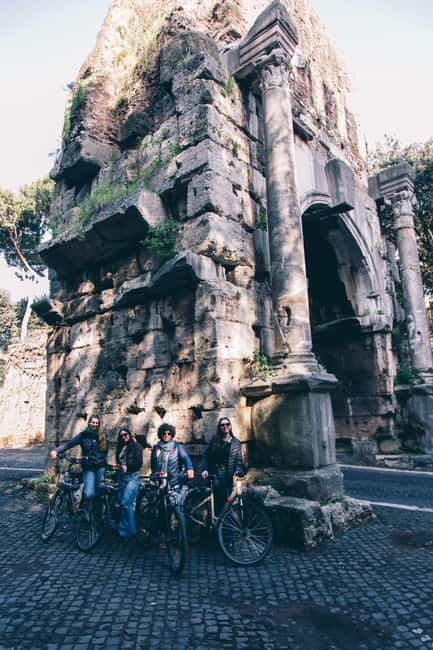
REVIEW · E-BIKE TOURS IN ROME
Rome: E-Bike Tour of Appia Antica, Aqueducts, and Caffarella
Rome’s best ancient sights are not all in the historic center. This four-hour e-bike tour carries you from Circus Maximus along the Appian Way, through the Aqueducts Park, and into the open fields of Caffarella Valley, where sheep, horses, and Roman ruins share the same view. I like the quiet countryside feel so close to central Rome, and I like that the electric bikes take the sting out of hills and rough Roman paving.
I also like the small groups of up to eight, which give guides such as Monica, Adriana, and Federico room to explain what you are seeing and keep an eye on traffic. The main caution is simple: this is still a bicycle tour. Some Appian Way sections are bumpy, traffic appears on parts of the route, and the ride goes ahead rain or shine.
Key points to know before you book
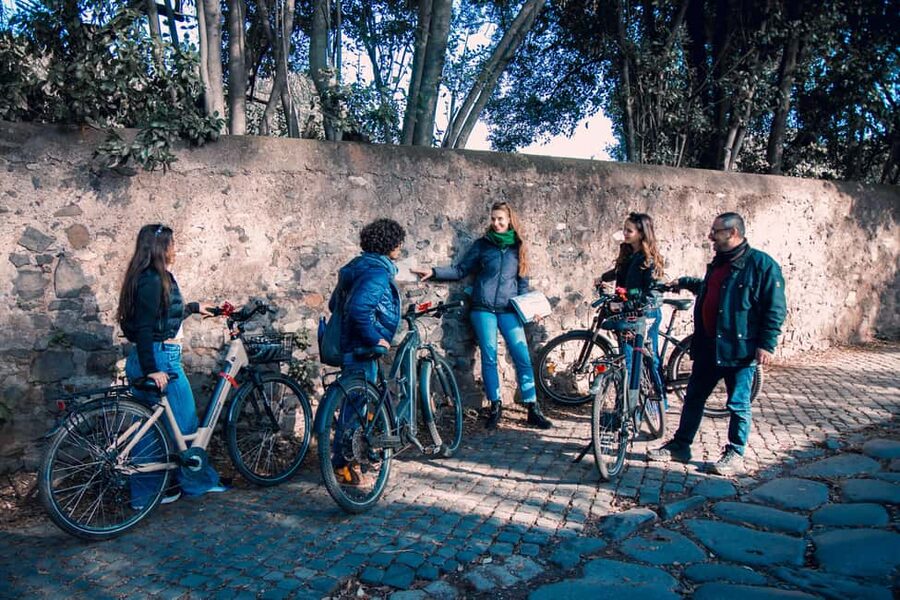
- Ride the original Appian Way: See Roman roads, tombs, villas, and the Tomb of Cecilia Metella without spending the whole day on foot.
- Reach the Aqueducts Park by e-bike: The huge arches are far easier to appreciate from a bicycle than from a city bus.
- Escape into Caffarella Valley: Farms, animals, the Almone River, and the Nymphaeum of Egeria create a rural pause inside Rome.
- Expect careful guiding: Monica, Monika, Adriana, Alannah, Martin, and Federico have been praised for their history knowledge, calm pacing, and attention to safety.
- Pack for real riding: Wear closed-toe shoes and clothes that can get dusty. You must already know how to ride a bicycle.
- Good value for a half-day: At $88 per person, the price includes the guide and e-bike, with a coffee or snack stop along the way.
Why the Appian Way feels different from central Rome
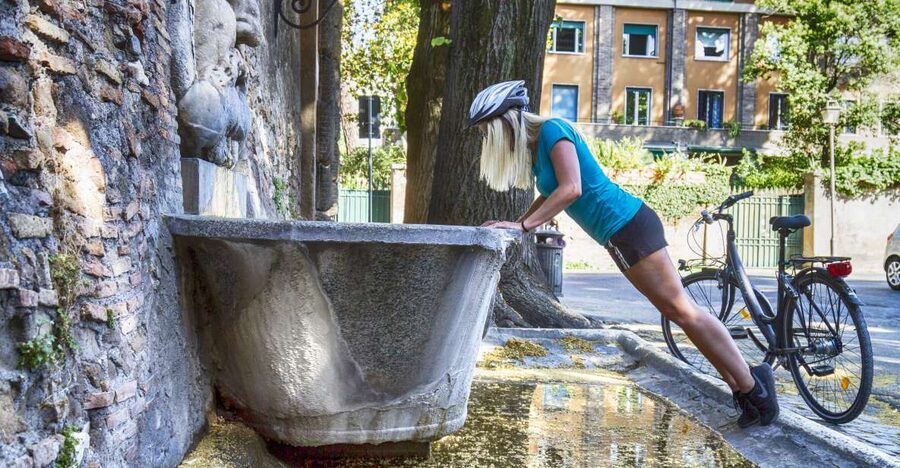
The Appian Way, or Via Appia Antica, was begun in 312 BC under the Roman censor Appius Claudius Caecus. It linked Rome with Brindisi in southern Italy and became one of the Roman world’s great roads. The Latin name, Regina Viarum, means Queen of Roads, a grand title that still feels fitting when you are rolling past worn paving stones, tombs, and fields.
The road’s survival was not guaranteed. During Italy’s postwar building boom, expanding housing threatened the countryside around Rome. Archaeologist, journalist, urban planner, and politician Antonio Cederna fought hard to protect the Appian Way from uncontrolled construction. The archaeological park is dedicated to him, and that background gives the ride an added point: you are not only looking at ancient Rome, you are seeing land that was saved from modern development.
I find this setting more revealing than another hour inside a crowded museum. The ruins are spread out, and the countryside gives them room. You can picture the road as a working route rather than a collection of isolated stones behind glass.
The e-bike matters here. The old road can be uneven, and the route includes parks, slopes, and stretches away from smooth city pavement. The electric motor does not remove the need to pedal, but it makes the ride more manageable and leaves you with enough energy to listen, look around, and stop for photographs.
More E-Bike Tours in Italy
- Rome EBike Tour: Appian Way, Catacombs & Roman Aqueducts
★ 5.0 · 1,766 reviews - Rome: Top Highlights & Hidden Gems Tour by Cannondale E-Bike
★ 4.9 · 1,760 reviews - Rome: Appian Way & Aqueducts E-Bike Tour (Catacombs & Food)
★ 4.9 · 1,498 reviews
Starting at Circus Maximus and the Baths of Caracalla
The tour begins at Rome in a Day Tours, near Circus Maximus. Arrive 15 minutes early so you can meet the staff, complete the paperwork, and get familiar with the bike. The starting point is useful because it puts you near major Roman sights without first forcing you into the busiest central streets.
Circus Maximus gets a short photo stop. This enormous stadium once held chariot races and could accommodate up to 300,000 spectators. From a bicycle, you can take in its scale quickly before moving toward the Baths of Caracalla.
The Baths of Caracalla provide an excellent introduction to Rome’s water system. These were not simply bathing rooms. Roman bath complexes served as places for exercise, socializing, and public life, all made possible by huge amounts of water carried into the city by aqueducts.
You do not get an extended indoor visit here, so set your expectations correctly. The stop is for photographs and explanation, not a full archaeological-site tour. Its value is the connection it creates between the monumental baths you see early on and the aqueducts you reach later.
Passing through Porta San Sebastiano and Domine Quo Vadis
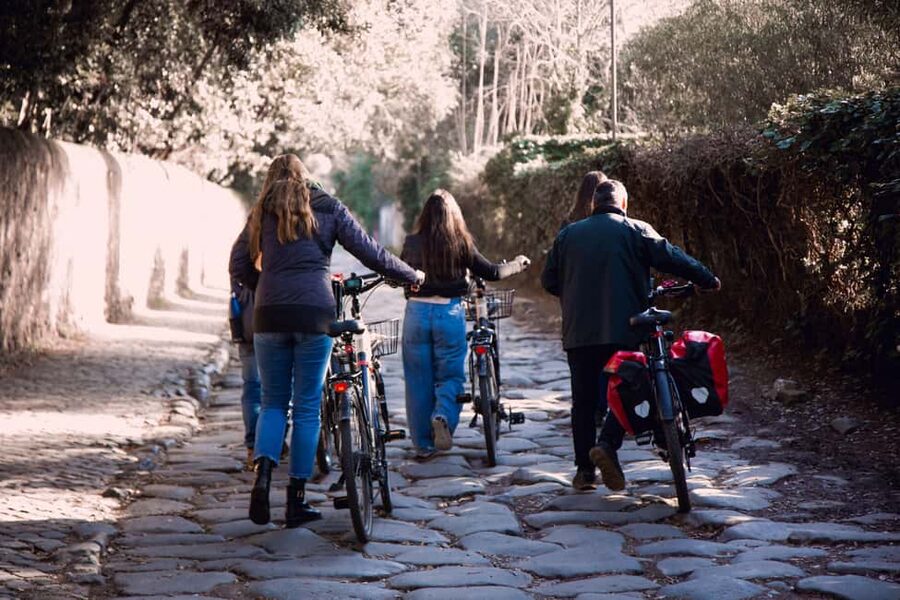
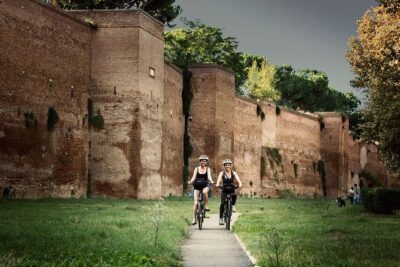
Porta San Sebastiano is one of the major gateways in the Aurelian Walls. The stop helps you understand how Rome defended itself as the city grew more vulnerable in late antiquity. The walls are not just a backdrop for a photograph. They mark the point where the urban center gives way to the Appian Way and its open archaeological setting.
At the Church of Domine Quo Vadis, you have a 20-minute visit. The church is linked to the Christian story of Saint Peter meeting Christ on the road as he fled Rome. The name refers to the question, Where are you going? Your guide can place the church in both its religious setting and its position along one of Rome’s oldest roads.
The route then passes by the Catacombs of Saint Callixtus and other Roman catacombs. This portion is a pass-by stop rather than an underground visit, so do not book this ride expecting a catacomb tour. Still, the location helps you see how the road became associated with Christian burial outside the ancient city walls.
Villas and tombs along the ancient road
The first miles of the Appian Way pack in a remarkable range of sites. You pass the Villa of Maxentius, connected with the emperor Maxentius, and stop near the Tomb of Cecilia Metella, one of the most recognizable monuments on the road.
The Tomb of Cecilia Metella is a large cylindrical mausoleum built for a woman from a powerful Roman family. Its size says plenty about status in ancient Rome. It also shows how the Appian Way became lined with memorials, villas, and estates, turning a major transport route into a grand display of wealth.
You also encounter the Tumulus of the Curiazi and Villa dei Quintili. These sites are part of the wider archaeological story rather than long indoor visits during this tour. Your guide’s explanation is important because the ruins can otherwise look like scattered walls and earthworks.
I would pay close attention during these stops. The best part of the route is not simply taking photographs of old stone. It is learning how roads, burial customs, imperial power, villas, and water supply fit together across the same stretch of countryside.
More E-Bike Tours in Rome
- Rome: Appian Way, Catacombs, & Roman Aqueducts E-bike Tour
★ 4.9 · 1,421 reviews - Rome City Small Group Bike Tour with quality Cannondale EBike
★ 5.0 · 1,380 reviews - Rome by Night – Ebike Small Group Tour – Food and Wine (Option)
★ 5.0 · 1,275 reviews - Rome by Night: E-bike Small Group Tour -Food & Wine (Option)
★ 4.9 · 1,233 reviews
A useful coffee break halfway through
The itinerary includes about 20 minutes at a local bar. This is a small but welcome feature. Four hours on an e-bike, especially in summer, calls for a pause to drink something, use the facilities if available, and reset before the parks.
The break is also a chance to judge the pace. This is not a race to tick off monuments. Guides have been praised for stopping in shade during hot weather and allowing time for questions and photographs. If you want a fast ride with few explanations, this may feel too slow. If you want context, the pauses are part of the value.
Bring water and dress for the forecast, even though the e-bike reduces the physical strain. The tour operates rain or shine, and the operator specifically asks you to wear clothes that can get dirty. That is sensible advice for a ride over old paving and park paths.
The Aqueducts Park: Rome’s great waterworks in open country
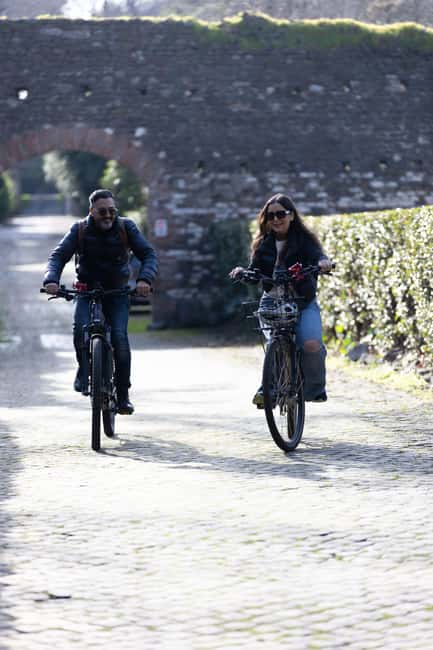
The Aqueducts Park is the visual high point for many people. Here, the remains of ancient Roman aqueducts cross wide open ground, creating long rows of arches that are easy to miss if you stay in the city center.
The park shows the scale of Roman engineering better than a single fragment in a museum. Aqueducts carried water over long distances to supply baths, fountains, and homes. After hearing about the Baths of Caracalla, you now see part of the system that made that urban life possible.
A bicycle is especially useful here because the ruins are spread out. You can cover more ground than on foot and stop at different viewpoints without dealing with a coach. The setting also gives you a break from Rome’s traffic and stone streets.
Do not expect every section to feel polished. This is a cross-country archaeological ride, not a paved promenade. Some paths may be uneven, and the experience depends partly on weather and ground conditions. The e-bike helps, but you still need basic cycling control.
Caffarella Valley and the Nymphaeum of Egeria
From the aqueducts, the route continues toward Caffarella Valley, following the Almone River. This is where the tour changes character. Instead of monumental ruins alone, you get fields, farm animals, waterways, and a surprising sense of open space close to Rome.
You might see horses, sheep, goats, and pigs in the valley. That mix of working countryside and ancient remains is one of the tour’s most appealing features. You are not viewing Rome as a sealed archaeological exhibit. You are seeing old sites in a living setting.
The Nymphaeum of Egeria is another memorable stop. It is thought to have belonged to the villa of Herodes Atticus, and its graceful form gives the valley a more intimate archaeological moment after the massive aqueducts.
Caffarella Park is a strong reason to choose this tour over a standard city sightseeing ride. The route gives you nature without requiring a separate trip out of Rome. It also shows how much open land remains within reach of the center.
Safety, bikes, and the real riding conditions
The bikes are described as modern, well maintained, fully charged, and high quality. That matters because the route combines regular roads with rougher historic surfaces. Several riders found the electric assistance especially useful on hills and the old Appian paving.
Part of the ride takes place on roads, so you cannot treat this as a fully traffic-free cycle path. Guides have been praised for choosing quieter streets, using crossings, stopping traffic when needed, and keeping the group together. That is reassuring, though no bicycle tour in Rome is entirely free of road awareness.
You need to know how to ride a bicycle before joining. The tour is not suitable for children under 12, pregnant women, people with mobility impairments, or anyone who cannot ride. Children aged 14 and 16 have completed the route with proficient cycling skills, but the key factor is confidence, not simply age.
Bike fit deserves attention. One rider who was very small found that the available bike was not quite the right size. Tell the shop your height when you arrive and take time to adjust the saddle and controls before leaving.
Guides who add real value
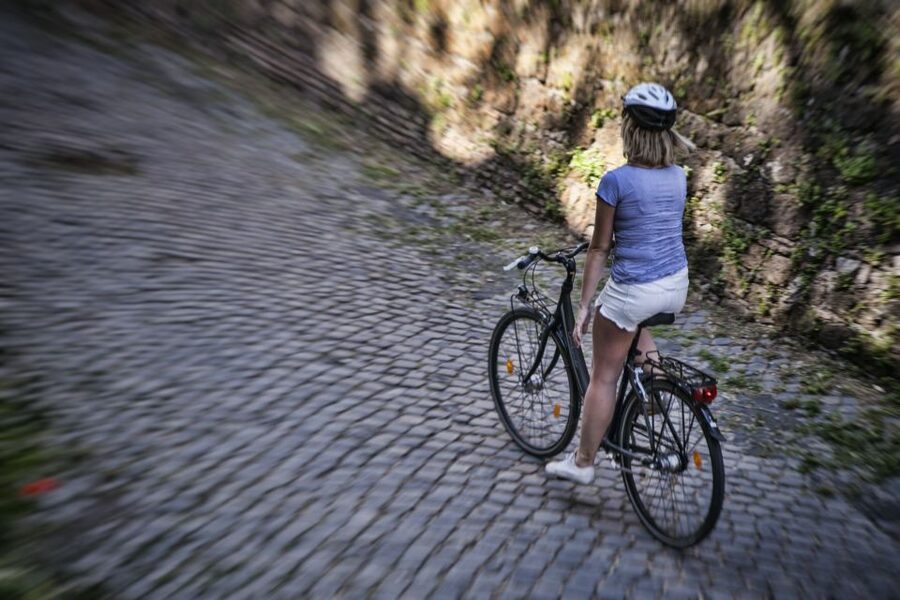
The guide can make or break a history tour, and this route benefits from strong guiding. Monica and Monika have been praised for clear English, Roman history, patience, and careful handling of road crossings. Adriana has been described as warm, alert to safety, and willing to extend the route when a fast cycling group finished early.
Other praised guides include Alannah, Federico, Fredrico, and Martin. Their backgrounds and styles may differ, but the useful pattern is clear: you are not simply following a guide who points at ruins. You are likely to get explanations at repeated stops, answers to questions, and help with the practical side of riding.
The group limit is eight people. That is small enough for a guide to see how everyone is managing and to keep explanations audible. Private groups can occur if your party fills the available places, but you should not assume that when booking.
The listed guiding languages are English and Dutch. Check the available start time and language when you reserve.
Is $88 a fair price for four hours?
At $88 per person, this is not the cheapest way to see Rome’s outskirts. The price includes a guide and e-bike, though not a listed entrance ticket to the catacombs or other archaeological interiors. You are paying for equipment, route planning, historical explanation, and access to a large area that would be awkward to cover on foot.
I consider it good value if you want active sightseeing and dislike spending a half-day in queues. The route links Circus Maximus, the Baths of Caracalla, the Appian Way, the aqueducts, and Caffarella Valley in one outing. A taxi or bus might get you near some of these places, but not with the same continuous view of the road and countryside.
The value is weaker if you want long interior visits at each monument. This is an outdoor ride with photo stops, not a full tour of every site along the Appian Way. You should also budget energy for cycling and wear clothes suited to dust, sun, or rain.
Free cancellation up to 24 hours before the start and the option to reserve without paying immediately make the booking less rigid. Check the current start times before committing.
Who should book this Appian Way ride?
I would choose this tour if you have already seen some of central Rome and want a change of pace. It works especially well for people who like archaeology, open-air sites, local history, and light physical activity.
It is also a smart choice for families with older children who ride confidently. The 14 and 16 year olds in one family handled it well, but rural cycling experience helps when city traffic and rough paving enter the picture.
You should think twice if you dislike uneven surfaces, cannot ride a bicycle, or need a fully accessible route. Pregnant participants and children under 12 cannot join. Hot weather can also make the four hours feel longer, although the electric assistance, shaded pauses, and coffee stop help.
FAQ
How long is the e-bike tour?
The tour lasts four hours, including the ride, stops, explanations, and a break at a local bar.
What is included in the price?
The $88 price includes an experienced tour guide and an e-bike.
Where does the tour begin?
It begins at Rome in a Day Tours, Electric Bike and Vespa Excursions, near Circus Maximus.
How early should I arrive?
Arrive 15 minutes before departure to become familiar with the bike and complete the required paperwork.
Which languages are available?
Live guiding is available in English and Dutch.
How many people are in the group?
The group is limited to eight participants.
Do I need cycling experience?
Yes. You need to know how to ride a bicycle to join the tour.
What should I wear and bring?
Wear comfortable clothes that can get dirty and closed-toe shoes. The tour operates rain or shine, so dress for the weather.
Should you book it?
Book this tour if you want to see Rome beyond its central monuments and you are comfortable on a bicycle. The combination of ancient roads, tombs, aqueducts, river valley, and farm animals gives you a side of Rome that a standard walking tour cannot reach.
Skip it if you need extensive indoor sightseeing or a completely smooth, traffic-free ride. For everyone else, the small group, strong guiding, quality e-bikes, and $88 half-day format make this one of the better ways to trade queues and crowded streets for Roman ruins and open country.
Newest rides we have reviewed in Rome
- Rome: Guided eBike Evening Tour with italian Aperitif★ 5.0 · 16 reviews
- Rome: Villa Borghese E-Bike Tour (Small Group or Private)★ 4.9 · 92 reviews
- Rome: Taste of Rome by quality Cannondale E-Bike★ 5.0 · 12 reviews
- Rome: Appian Way, Aqueducts, & Catacombs E-Bike Guided Tour★ 4.9 · 54 reviews
- Rome: Villa Borghese, Villa Ada, and Coppedè E-Bike Tour★ 4.8 · 78 reviews
- Rome: Panoramic Off-the-beaten-track Cannondale E-Bike tour★ 5.0 · 71 reviews
- Sunrise in Rome: Small Group E-Bike Tour & Italian breakfast★ 4.9 · 177 reviews
- Rome: Top 10 Highlights Guided Tour by Bike or E-Bike★ 4.4 · 15 reviews
E-Bike Tours, compared.
3-Hour Porto Highlights on a Electric Bike Guided Tour
Read our review →
Hills, Alfama, and Mouraria Tour by Electric Bike
Read our review →
Athens Scenic Electric Bike Tour with optional Acropolis visit
Read our review →
City Highlights 3-Hour Guided Electric Bike Tour
Read our review →
Rome EBike Tour: Appian Way, Catacombs & Roman Aqueducts
Read our review →
Top Highlights & Hidden Gems Tour by Cannondale E-Bike
Read our review →Other lists this ride turns up in