
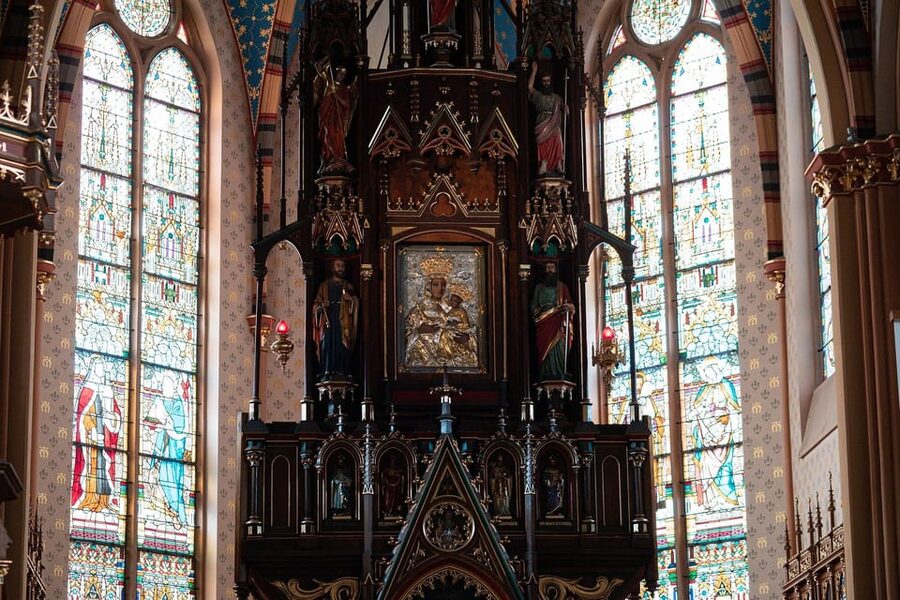
REVIEW · POLAND
Katowice and Nikiszowiec: bicycle tour with guide
Katowice reveals itself best on two wheels. This three-hour ride links the futuristic Spodek arena, old Bogucice, green recreation areas, and the brick workers’ district of Nikiszowiec, giving you a much broader view than a short walk through the center. The route covers about 18 kilometers and includes a few small hills.
I especially like the way the tour connects Katowice’s industrial past with its present-day cultural life. I also like the chance to see Nikiszowiec and Bogucice in one outing, while a local guide such as Witold or Witek explains the architecture and Silesian history along the way. The main consideration is the standard city bike: it is suitable for most riders, but it has fewer gears than a good touring bike, and an electric bike costs extra.
Key points
- An 18-kilometer route: Ride from the Market Square through central Katowice, Bogucice, the Three Ponds Valley, and Nikiszowiec.
- A strong local focus: Guides including Witold and Witek explain Katowice’s architecture, industrial past, and changing neighborhoods.
- Nikiszowiec is the main prize: Explore one of the city’s most distinctive early 20th-century housing districts.
- City bike included: Your rental comes from the public bike network, with an electric bike available for an additional charge.
- More than a city-center tour: You see churches, housing estates, a cathedral, a former railway building, public monuments, and recreation grounds.
- Flexible booking: You can cancel up to 24 hours before departure for a full refund and reserve without paying immediately.
From Market Square to Katowice’s modern icons
The ride begins at the entrance to the Tourist Information Point on Katowice’s Market Square. Before setting off, you receive a safety briefing and get oriented with the bike. This opening takes about 10 minutes, so it is a useful chance to check your saddle, brakes, and gears before the route lengthens.
The first stops bring you through central Katowice and its public spaces. You pass the Pomnik Harcerzy Września, a monument connected with the September Scouts, then stop at the Silesian Insurgents’ Monument. The latter is one of the city’s important public memorials, honoring the Silesian Uprisings and giving your guide a natural point to explain the region’s political and social story.
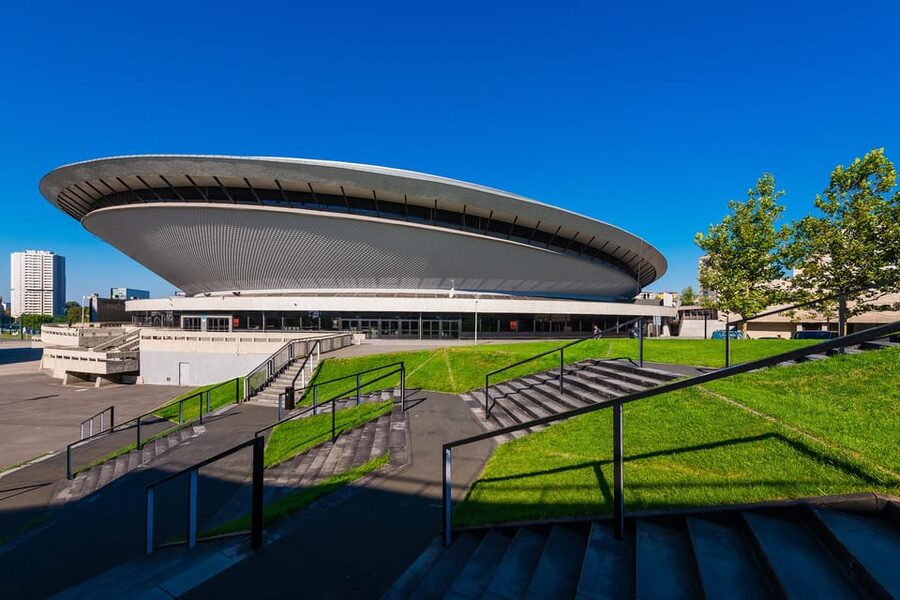
Soon comes Spodek, the saucer-shaped arena that has become Katowice’s most recognizable building. You stop for photographs rather than entering, but its shape makes it easy to understand why this structure is such a strong symbol of the city. The ride then continues into the Katowice Culture Zone, where former industrial land has been given a new cultural role.
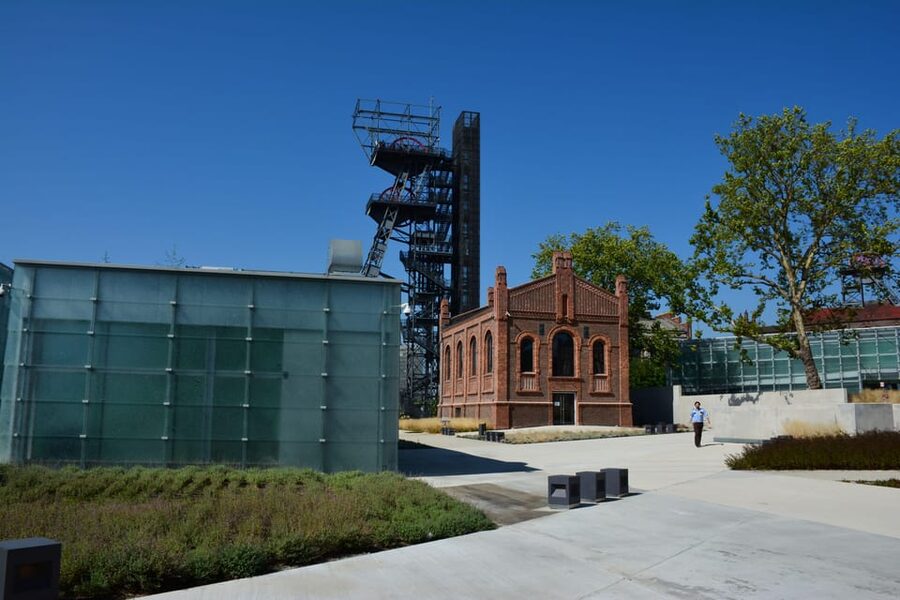
You spend around 20 minutes in the Culture Zone. This is one of the tour’s useful contrasts: Katowice is not only a city of old factories and workers’ housing. It has also invested in new public and cultural spaces, and your guide can place that change within the city’s wider development.
More Guided Rides in the world:
- 3-Hour Porto Highlights on a Electric Bike Guided Tour
★ 5.0 · 4,392 reviews - Small Group Guided Bike Tour of Amsterdam’s Hidden Gems
★ 5.0 · 3,936 reviews - Porto: City Highlights 3-Hour Guided Electric Bike Tour
★ 4.8 · 3,092 reviews
Bogucice, the city’s oldest district
From the Culture Zone, the route heads toward Bogucice, described as the oldest district of Katowice. This shift is important. Instead of seeing Katowice as a single modern center, you begin to notice how several older communities were later brought into one city.
The Basilica of Saint Stephen and Our Lady of Bogucice is a key stop. You have time for photographs and sightseeing, and the church gives the route a strong local and religious dimension. This is not simply a ride past famous buildings. It shows how neighborhoods developed around parish life and close-knit communities.
Another memorable detail is the mural devoted to Jerzy Kukuczka, one of the great names in Himalayan mountaineering. The mural adds a more personal, modern note to the district. It also gives you a chance to see how public art in Katowice connects local identity with a figure known far beyond Silesia.
You pass the University of Economics on the way toward the next section of the route. The changing surroundings make this ride more interesting than a simple list of monuments. You move from public squares to university buildings, then toward open water and greenery, with the guide helping you follow the changes.
A quieter stretch through the Three Ponds Valley
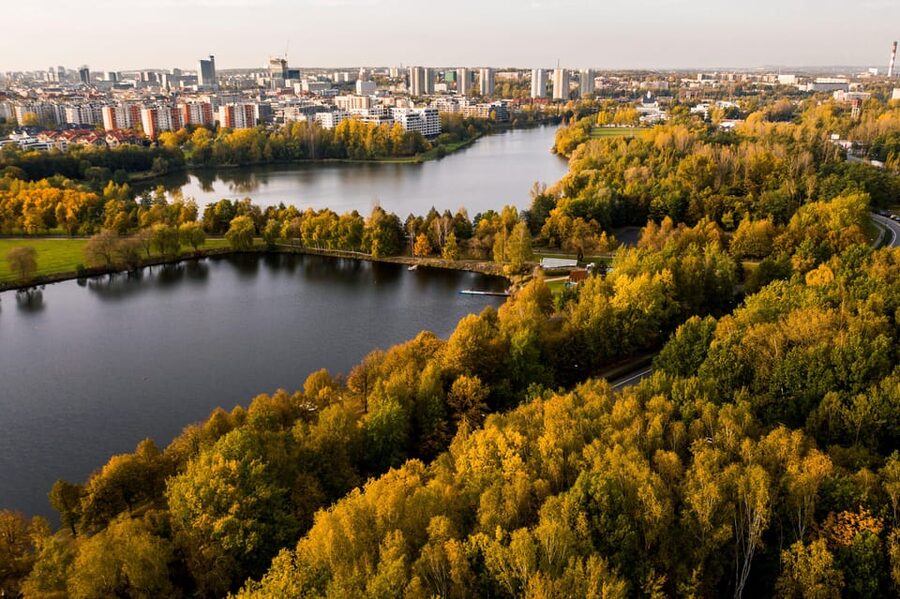
The Valley of the Three Ponds is the route’s main break from buildings and monuments. It is a popular recreation area, and the ride here should feel calmer than the central streets. You stop for photographs, then pass through the area again on the way back from Nikiszowiec.
This section matters because it shows another side of Katowice. The city is often associated with mining, heavy industry, and dense housing, but the Three Ponds Valley provides open space for leisure. You get a more rounded picture of daily life in the city, not just its historical sites.
The route is around 18 kilometers in total, with some small hills. The Valley of the Three Ponds is not presented as a major hiking stop, but you should still treat the ride as active sightseeing rather than a gentle cycle around a flat old town. If you regularly ride a bicycle, the standard city bike will usually be enough. If you are less comfortable with hills or want an easier pace, consider paying extra for an electric bike.
Nikiszowiec and the Silesian family home
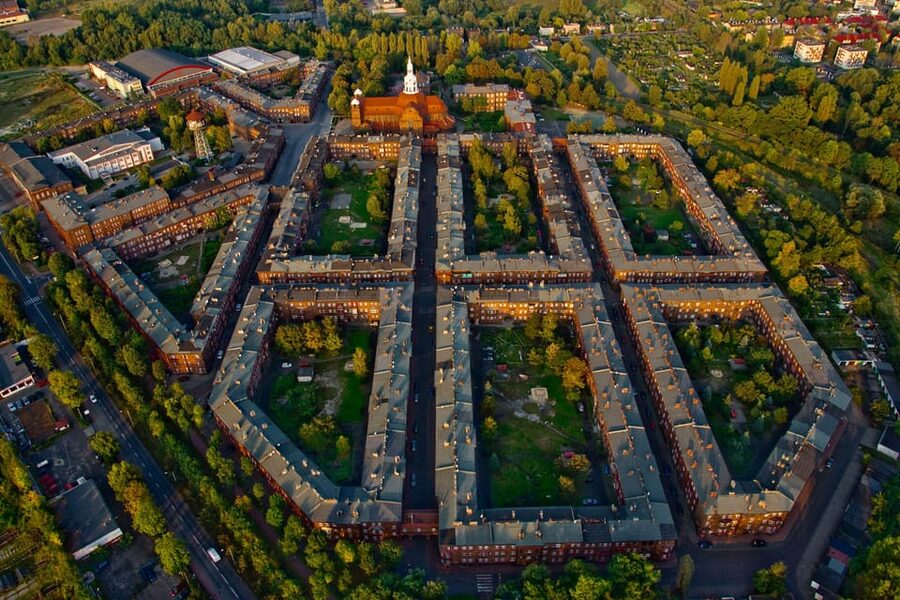
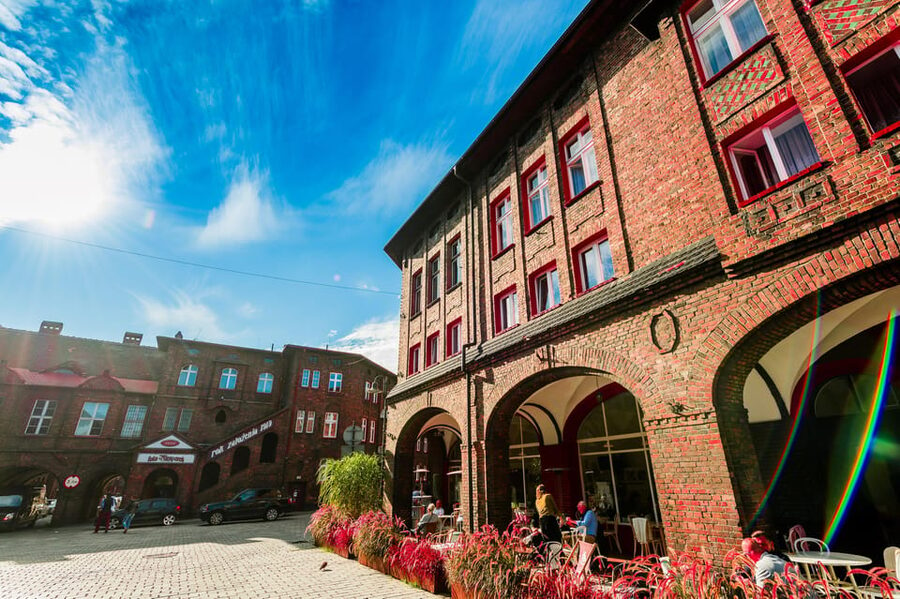
Nikiszowiec is the heart of the experience. You spend about 30 minutes sightseeing in this early 20th-century district, which was built around the lives of industrial workers and their families. Its brick buildings and planned layout offer a clear sense of the typical Silesian family home, known locally as a familok.
The value of reaching Nikiszowiec by bicycle is that the district becomes part of a larger story. You do not simply arrive by taxi, look around, and leave. You have already passed modern Katowice, Bogucice, the Culture Zone, and the Three Ponds Valley. Nikiszowiec then appears as one chapter in the city’s long shift from industrial settlement to modern urban center.
The district is also one of the most photogenic parts of the ride. You can expect strong brick architecture, repeated building forms, and a feeling quite different from the center. The route description allows roughly 30 minutes here, enough for an introduction and photographs, though not enough for a long museum visit or an extended meal.
That time limit is worth keeping in mind. If Nikiszowiec is your main reason for coming to Katowice, you may want to return later on your own. The bicycle tour gives you a useful first look and the context to understand it, but it is not designed as a full afternoon in the district.
More Cycling Trips in the world:
- Lion City Bike Tour of Singapore
★ 5.0 · 6,211 reviews - Big Bike tour Amsterdam – See all in 3 unforgettable hours
★ 4.7 · 4,929 reviews - Ninh Binh Full-Day Tour from Hanoi to Hoa Lu, Tam Coc & Mua Cave Via Boat & Bike
★ 5.0 · 4,384 reviews - 3-hour Complete Prague Bike Tour
★ 5.0 · 3,674 reviews
Returning through housing estates and public institutions
The ride returns through the Three Ponds Valley before heading toward the Paderewski Housing Estate. This part of the route brings you back into the story of modern residential Katowice. You see how the city expanded beyond its older districts and how different kinds of housing sit within a fairly compact urban area.
A photo stop at the Silesian regional authority gives you another look at the city’s civic architecture. The route then continues to Silesian Parliament Square, an important public setting where your guide can help explain the region’s administrative identity.
The Archcathedral of Christ the King is one of the final major stops. You have about 15 minutes to visit and take in the building. Its scale gives the last part of the ride a grander feel, and the connection with Pope John Paul II adds to its importance for Polish visitors and Catholic history.
This stop also balances the smaller-scale character of Nikiszowiec. There, the focus is on workers’ homes and neighborhood life. Here, the focus is on a major religious building and the public identity of the region. That variety is one of the tour’s strongest features.
Old railway buildings, churches, and the city center
On the way back, you pass Stary Dworzec, an older railway building now identified as building C1. You do not spend a long period inside, but it adds another layer to the city’s transport and urban history.
The route then reaches the Church of the Immaculate Conception of the Blessed Virgin Mary. This is a photo stop rather than a long interior visit. It gives the ride one more view of Katowice’s church architecture before you return to the center.
The final stretch takes you through Dworcowa and Mariacka streets. These are among the livelier central streets, so the atmosphere changes again as you approach the finish. After the quiet of the valley and the residential character of Nikiszowiec, the return to central streets feels like a clear close to the circuit.
You finish at the Tourist Information Center, where the tour began. Since the route is circular, you do not need to arrange a separate return transfer from Nikiszowiec or the outer districts.
What the guide adds to the ride
The guide is central to the experience. Without one, you could cycle to Spodek, Nikiszowiec, and the Three Ponds Valley, but you would miss much of the connection between them. The best part of this route is not simply reaching each stop. It is understanding why these places belong in the same story.
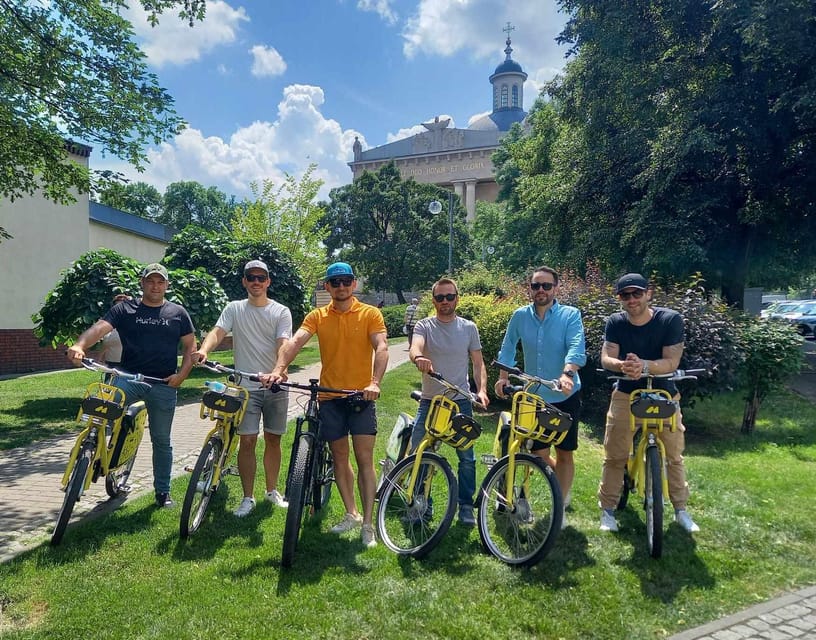
Witold, also referred to as Witek, has guided several outings in English and is especially good at explaining Katowice’s architecture and industrial past. He has also helped riders by adjusting the equipment when someone struggled with the standard public bike. That kind of practical attention matters on an 18-kilometer route.
Guiding is offered in English, German, Polish, Russian, and Spanish. You should confirm the language available for your chosen departure. The quality of the experience will depend partly on how well the guide matches your interests. One isolated booking found the guide less responsive to the group’s wishes, so it is sensible to explain at the start if you want more history, more architecture, a slower pace, or extra photo time.
Is the city bike good enough?
A standard bicycle from the city network is included in the price. This keeps the tour convenient and avoids a separate rental arrangement, but public bikes are practical rather than sporty. One rider found the bike perfectly manageable but noted that a model with more gears would have made the ride easier.
That is the clearest practical point to consider. The route is not described as difficult, but it is long enough for the bike to matter. Most reasonably active riders should manage it, particularly since the tour lasts three hours and includes several stops. If you do not feel confident with hills, choose the electric bike option and pay the additional fee.
Wear clothing suited to cycling and shoes that are comfortable for regular stops. Food and drinks are not included, so plan accordingly. The supplied details do not specify refreshment stops, and the tour’s timetable is built around sightseeing rather than a meal break.
Does $97 offer good value?
At $97 per person, this is not the cheapest way to see Katowice. The value depends on how much explanation and route planning you want.
You are paying for a three-hour guided experience, a bicycle rental, and a route that covers several districts rather than only the compact center. You also avoid having to plan how to connect Spodek, Bogucice, the Three Ponds Valley, Nikiszowiec, the cathedral, and the central streets yourself.
The price makes the most sense for a first visit, especially if you want an introduction to Katowice’s architecture and industrial story in one morning or afternoon. It is less compelling if you already know the city well, prefer to cycle slowly, or want to spend a long time inside each church and district.
The 4.3 rating from 14 verified bookings suggests a generally strong experience with some variation. The most consistent praise centers on the guides’ history and architecture explanations, especially the work of Witold or Witek. The only clear caution is that individual guide style and group preferences can affect the mood of the ride.
Who should book this ride?
I would choose this tour if you want to cover a lot of Katowice in a short visit and enjoy learning while moving. It suits people who like urban history, public architecture, industrial towns, photography, and active sightseeing.
It is also a good option for solo visitors. One solo rider received a private outing when nobody else joined, and the guide helped with navigation and local history. That arrangement may depend on the booking, but it shows how the tour can work for an individual rather than only for a large group.
Families and mixed-ability groups should think carefully about the standard bikes and the 18-kilometer distance. The electric bike option may make the ride more comfortable, but it costs extra. Anyone looking for a slow café-and-museum day should choose a walking tour instead.
Should you book the Katowice and Nikiszowiec bike tour?
Book it if you want a broad, active introduction to Katowice and you are comfortable cycling for 18 kilometers. The route has real variety: a famous arena, memorials, modern culture spaces, an old district, a recreation valley, workers’ housing, a cathedral, and central streets.
The strongest reason to go is the combination of Nikiszowiec and local historical explanation. The best guide will turn a collection of buildings into a story about Silesian work, religion, housing, politics, and urban change.
Skip it if you dislike public rental bikes, need a very gentle pace, or want extended time at each site. If you do book, consider the electric bike, tell the guide what interests you, and arrive ready for an active half day rather than a casual spin around the old town.
FAQ
Where does the bicycle tour begin?
The tour begins at the entrance to the Tourist Information Point on Katowice’s Market Square.
Where does the tour finish?
The ride returns to the Tourist Information Center in Katowice, the same general starting point.
How long is the experience?
The tour lasts three hours.
How far do you cycle?
The route is about 18 kilometers long.
Is a bicycle included in the price?
Yes. A regular bicycle rented from the city network is included.
Can I use an electric bike?
Yes, an electric bike is available for an additional charge. It is not included in the standard price.
Is the route difficult?
The route includes some small hills. A regular city bike is usually enough, but an electric bike may be more comfortable if you do not feel ready for the hills.
Which languages are available?
The live guide may lead the tour in English, German, Polish, Russian, or Spanish.
Are food and drinks included?
No. Food and drinks are not included in the price.
Can I cancel the booking?
Yes. You can cancel up to 24 hours before the tour for a full refund. You can also reserve now and pay later.
Newest rides we have reviewed in the world
- Ljubljana by E-Bike: Guided City Highlights Tour★ 4.8 · 28 reviews
- London Christmas Lights Bike Tour★ 4.5 · 70 reviews
- Lisbon: Portuguese Petiscos Tasting Tour by E-Bike★ 5.0 · 16 reviews
- Liverpool: The Beatles Tour on Electric Pedal-Assist Ebikes★ 5.0 · 17 reviews
- Lisbon Bike Tour: Langs de rivier van Belém naar Lissabon★ 4.7 · 59 reviews
- Lisbon: E-Bike Adventure Through the City of Seven Hills★ 5.0 · 28 reviews
- Lisbon: 7 Hills Panoramic Guided Tour by E-Bike★ 4.8 · 50 reviews
- Lisbon: Guided E-Bike Tour to Belém★ 4.8 · 115 reviews
Poland Cycling Tours, compared.
Complete Cracow Bike Tour (small group of maximum 15 people!)
Read our review →
Bike Tour of Old Town, Jewish Quarter and the Ghetto
Read our review →
Full Bike Tour – the Old Town, Jewish Qtr & the Ghetto NEW BIKES
Read our review →
Other lists this ride turns up in