
REVIEW · KRAKOW
Hidden Krakow Bike Tour
Krakow’s most meaningful wartime sites sit beyond the postcard center, and this bike tour links them in one steady ride. You move from Kazimierz, the former Jewish district, into Podgórze, where the route focuses on the Jewish ghetto and the people caught in World War II.
I like the small group limit of 15 and the way the tour gives most of its time to Podgórze rather than rushing through a long list of sights. I also like that guides such as Bram Hoffman and Nikki bring a human voice to subjects including World War II and communism. The main consideration is simple: this is a serious history tour, not a light sightseeing spin, and the three-hour ride may feel long if you are not comfortable on a bicycle.
Key points to know before you book
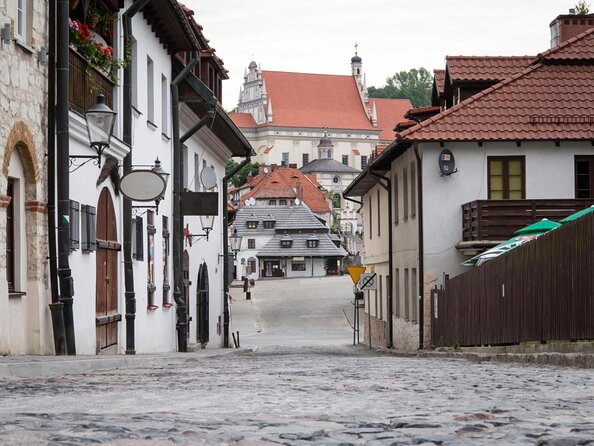
- Two historic districts in three hours: Ride from Kazimierz to Podgórze, with most of the time spent at wartime locations.
- A small group capped at 15 people: The guide can explain the sites without managing a huge cycling pack.
- A clear World War II focus: See Ghetto Heroes Square, part of the former ghetto wall, and a former resistance headquarters.
- A short Schindler’s List connection: In Kazimierz, you receive an introduction to the film and visit Skałka Basilica.
- English-language guiding: The experience is offered in English and starts at 2:00 pm.
- Good value at $39.32: You get about three hours of guided sightseeing, with admission free at the listed stops.
Why this route reaches beyond Krakow’s Old Town
Krakow is easy to admire from its Main Square, but the city’s 20th-century story becomes clearer when you cross the Vistula and enter Podgórze. This tour connects two districts that are close together geographically but carry very different memories.
Kazimierz was the former Jewish district and remains an important place for understanding Krakow’s Jewish past. Podgórze was the site of the Jewish ghetto during World War II. Moving between the two by bicycle gives you a useful sense of the city’s layout instead of presenting each place as an isolated stop.
I like this format because the bike is doing practical work. You cover more ground than you would on foot, but you still move slowly enough to pause at streets, squares, buildings, and surviving traces. This is not a racing tour. The route is built around explanation and place.
The price is $39.32 per person. For roughly three hours with an English-speaking guide, that is a fair rate, especially since you are getting a focused route rather than a generic city loop. The real value comes from the guide’s interpretation. A wall fragment or public square can look ordinary if you do not know what happened there.
More Cycling Trips in Krakow:
- Complete Cracow Bike Tour (small group of maximum 15 people!)
★ 5.0 · 1,322 reviews - Krakow: Bike Tour of Old Town, Jewish Quarter and the Ghetto
★ 4.9 · 1,155 reviews - Highlights of Krakow Bike Tour – Small group
★ 5.0 · 662 reviews
Beginning in Kazimierz at Skałka Basilica
The tour begins at Józefa Dietla 59 at 2:00 pm. From there, the route heads toward Kazimierz, where the first featured stop is Skałka Basilica.
The visit here is brief, about 15 minutes, and admission is free. That short timing matters. You should think of Skałka Basilica as an opening chapter, not a long church tour. The guide uses the stop to place you in Kazimierz and explain why this district matters before the route shifts toward wartime history.
You also receive a short introduction to Schindler’s List. The film has shaped many people’s understanding of Krakow during the Nazi occupation, and this context can help separate cinema from the actual places and events connected with the city. The film reference is useful, but it does not turn the tour into a movie-location hunt.
Kazimierz is also a good place to begin because it shows that the district’s story is larger than World War II alone. The tour’s description focuses on the former Jewish district, then uses the film connection as a bridge into the wartime section. If you want an extended account of Jewish religious life, architecture, and prewar society, you may need a separate visit. Here, the emphasis is on setting the scene for Podgórze.
The opening stop is also a gentle test of the pace. You are not thrown straight into a long lecture. You get a short introduction, then continue by bike. Guides named Bram Hoffman and Nikki have led similar Krakow cycling outings, but the assigned guide can vary.
Crossing into Podgórze and the former ghetto
The bulk of the tour, about two hours and 45 minutes, takes place in Podgórze. This is where the experience earns its name and its price.
Podgórze was the location of Krakow’s Jewish ghetto during World War II. The tour visits several places linked to that period, including Ghetto Heroes Square, a remaining section of the ghetto wall, and a former headquarters of the resistance.
These are not interchangeable stops. Ghetto Heroes Square gives the route a public, civic setting. The surviving wall provides a physical reminder of confinement and separation. The former resistance headquarters connects the story to people who organized and acted under extreme conditions. Taken together, the sites help you see the ghetto not as an abstract chapter in a textbook, but as a system imposed across real streets and homes.
I appreciate that most of the time is reserved for this district. A quick pass through wartime Krakow can leave you with a few names and photographs but little sense of place. Nearly three hours in Podgórze allows the guide to explain how the locations relate to one another.
At the same time, you should prepare for a reflective outing. The subject is persecution, resistance, and the destruction of a community. The route may be emotionally heavy, and the bike format does not make the material casual. The benefit is that the movement between sites gives you time to absorb each explanation before the next stop.
Ghetto Heroes Square and the power of place
Ghetto Heroes Square is one of the route’s key locations. The name itself points to the people who lived through, resisted, and suffered during the ghetto period.
A square can seem open and ordinary when you first arrive. A guide helps you read it as part of a wider story. You can connect the public space to the surrounding streets and to the other stops on the route. That link is important. The tour is not just showing you a single memorial point, it is building a chain of locations.
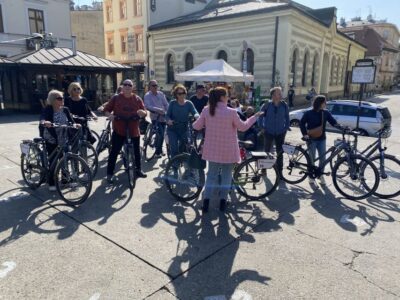
This is where the small group helps. With no more than 15 people, you should be able to hear the guide without the loose, noisy feel of a large cycling crowd. You can also ask a question without needing to interrupt a long line of bikes.
The stop is free, as are the listed visits throughout the route. That keeps the tour focused on the guide and the places themselves. You are not paying extra at each stop, and you are not losing time to ticket lines.
Same roads, a different saddle:
- Full Bike Tour – the Old Town, Jewish Qtr & the Ghetto NEW BIKES
★ 5.0 · 437 reviews - Krakow: Highlights of Krakow Bike Tour – Small Group
★ 4.9 · 421 reviews - Private Bike Tour in Krakow
★ 5.0 · 152 reviews - Krakow: 3-Hour Small Group Tour on E-Bike
★ 4.8 · 135 reviews
The surviving wall and the resistance headquarters
The remnant of the ghetto wall is a small but powerful physical trace. It shows how a boundary once operated in the city. You do not need a large museum display to understand that a wall changes daily life. Its very presence gives the guide something concrete to point toward.
The former resistance headquarters adds another layer. It reminds you that people inside this story were not only victims of events. Some organized, communicated, and resisted. The tour’s value lies in presenting these sites together, so you can see both the machinery of oppression and the human choices made within it.
The supplied details do not specify how much time is spent at each individual location, so the guide will shape the pace. The total Podgórze portion lasts about two hours and 45 minutes, which is enough for a substantial explanation but not a full museum program at every stop.
If you prefer private interiors, exhibits, and long periods of quiet viewing, this may not be the right standalone history experience. It is an outdoor route, and its strength is the connection between streets and sites. You might want to pair it with a separate museum visit if you want more objects, documents, or extended historical displays.
What the bicycle adds to the experience
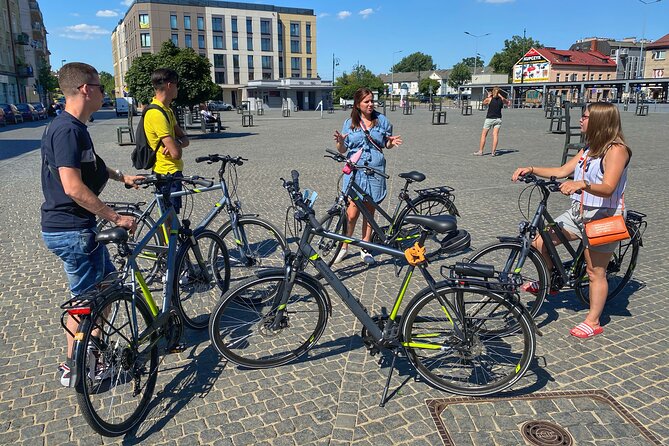
The bicycle is more than a way to get from one stop to another. It lets you connect Kazimierz and Podgórze in a single outing without committing to a full-day tour.
One past participant described the bikes as comfortable, easy to ride, and safe. That is useful practical information, but comfort is personal. You should still consider your own cycling ability before booking. The tour lasts about three hours, and much of that time is spent moving between historic locations.
The route is not presented as a demanding athletic ride. Its purpose is sightseeing and history. Still, cycling requires more attention than walking, especially when you are listening to a guide and moving as a group. If you want a completely relaxed experience with no physical element, a walking tour may suit you better.
The bike also keeps the afternoon active. You are not sitting in a vehicle while the city passes by. You are close to the streets, and the journey itself becomes part of your understanding of Krakow. One past outing was praised for including surprisingly green parts of the city and less obvious places, which suggests the ride can show you more than the main tourist corridor.
Group size, guide style, and language
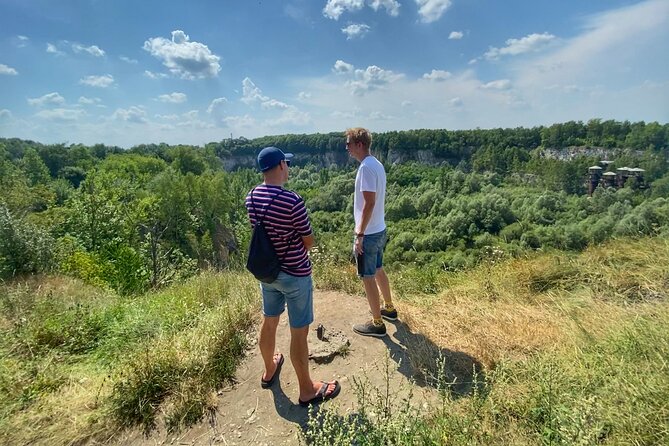
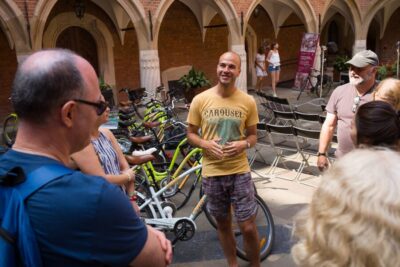
The tour is offered in English and has a maximum of 15 people. That is a useful middle ground. You get the social feel of a group outing without the scale of a large coach tour.
Guide quality matters especially here because much of the experience depends on spoken explanation. Bram Hoffman and Nikki are names associated with previous Krakow cycling outings. One account specifically praised Bram for being informative and fun, while another described Nikki’s explanations of World War II and communism as an important part of the afternoon. You should not assume either guide will lead your departure, but the comments suggest the provider uses guides who can combine local sightseeing with serious historical context.
The best guide for this route will do more than recite dates. You want someone who explains why Kazimierz and Podgórze matter, how the sites fit together, and what changed across the city during the war. The tour’s subject also reaches into communism, according to the experience feedback, which can help connect the wartime story to Krakow’s later 20th-century history.
Because the tour is in English, you should be comfortable following an extended spoken explanation. The listing does not offer other language choices.
Timing, meeting point, and practical value
The tour starts at 2:00 pm and returns to the same meeting point at Józefa Dietla 59. A start and finish in one place makes planning easier. You do not need to arrange a separate ride back from Podgórze.
The meeting point is near public transportation, which is helpful if you are staying elsewhere in Krakow. Confirmation is sent when you book, and the activity can accommodate most people according to the supplied participation details.
The three-hour length works well for an afternoon. You can spend the morning on another Krakow sight, take lunch before the start, and still have the evening free. The tradeoff is that the tour leaves little room for a leisurely stop at every site. It is a guided overview with meaningful detail, not a slow day spent in one district.
Free cancellation is available if you cancel at least 24 hours before the 2:00 pm start time. Changes or cancellations inside that window are not accepted for a refund. The tour also requires a minimum number of bookings, so if the provider cancels for that reason, you are offered another date or experience, or a full refund.
Who will get the most from this Krakow ride
I would choose this tour if you want to understand Krakow through specific places rather than simply photograph its prettiest streets. It suits first-time visitors who want a strong introduction to Kazimierz and Podgórze, as well as returning visitors who have already seen the Main Square.
It is especially useful for:
- People interested in World War II and the Jewish ghetto in Krakow
- Visitors who want a guided introduction to the sites connected with Schindler’s List
- Anyone who prefers outdoor sightseeing to a long indoor tour
- Couples, friends, and families comfortable with a three-hour bike outing
- Visitors who value a small group and an English-speaking guide
You may want another plan if you dislike cycling, need a fully private experience, or want extensive time inside museums and churches. The route is focused, and the subject is serious. Its appeal is not luxury or entertainment. Its appeal is seeing the city’s history where it happened.
Should you book the Hidden Krakow Bike Tour?
Book it if you want a practical, moving introduction to Krakow’s Jewish district and wartime ghetto. The combination of Kazimierz, Skałka Basilica, Ghetto Heroes Square, the surviving wall, and the resistance site gives you a clear three-hour route through difficult but essential history.
At $39.32, the value is strongest for visitors who would otherwise struggle to connect these districts on their own. The small group, free admission at the stops, English guiding, and return to the starting point all keep the outing straightforward.
Skip it if you want a gentle sightseeing ride with little serious discussion. For everyone else, this is a well-focused choice, especially if you have only one afternoon and want Krakow to make sense beyond its grand center.
FAQ
Where does the Hidden Krakow Bike Tour start?
The tour starts at Józefa Dietla 59, 31-054 Kraków, Poland.
What time does the tour begin?
The scheduled start time is 2:00 pm.
How long does the bike tour last?
The experience lasts approximately three hours.
Where does the tour finish?
The tour ends back at the starting meeting point.
What language is the tour offered in?
The tour is offered in English.
How many people can join the tour?
The activity has a maximum group size of 15 people.
What places does the tour visit?
The route includes Kazimierz, Skałka Basilica, and Podgórze. In Podgórze, it visits Ghetto Heroes Square, a remaining section of the ghetto wall, and a former resistance headquarters.
How much does the tour cost?
The listed price is $39.32 per person.
Can I cancel for a full refund?
Yes. You can cancel at least 24 hours before the local start time for a full refund. Cancellations or changes made less than 24 hours before the start are not refunded or accepted.
Newest rides we have reviewed in Krakow
- Polish Countryside and Tyniec Abbey Bike Tour from Krakow★ 5.0 · 37 reviews
- Discover Kraków by Bike with a Dutch guide★ 5.0 · 16 reviews
- Private Bike Tour in Krakow★ 5.0 · 152 reviews
- 3-Hour E-Bike Tour In Krakow★ 5.0 · 79 reviews
- 2 Hours Old Town Guided Bike Tour in Krakow★ 4.5 · 15 reviews
- Krakow: Complete Bike tour with all the highlights★ 4.9 · 90 reviews
- Krakow: 3-Hour Small Group Tour on E-Bike★ 4.8 · 135 reviews
- Krakow: Old Town Bike Tour with a Guide★ 4.5 · 54 reviews
Krakow Cycling Tours, compared.
Complete Cracow Bike Tour (small group of maximum 15 people!)
Read our review →
Bike Tour of Old Town, Jewish Quarter and the Ghetto
Read our review →
Full Bike Tour – the Old Town, Jewish Qtr & the Ghetto NEW BIKES
Read our review →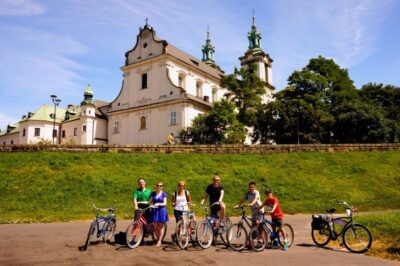
Other lists this ride turns up in