
REVIEW · SOUTH AFRICA
Soweto: Guided Bicycle Tour with Lunch
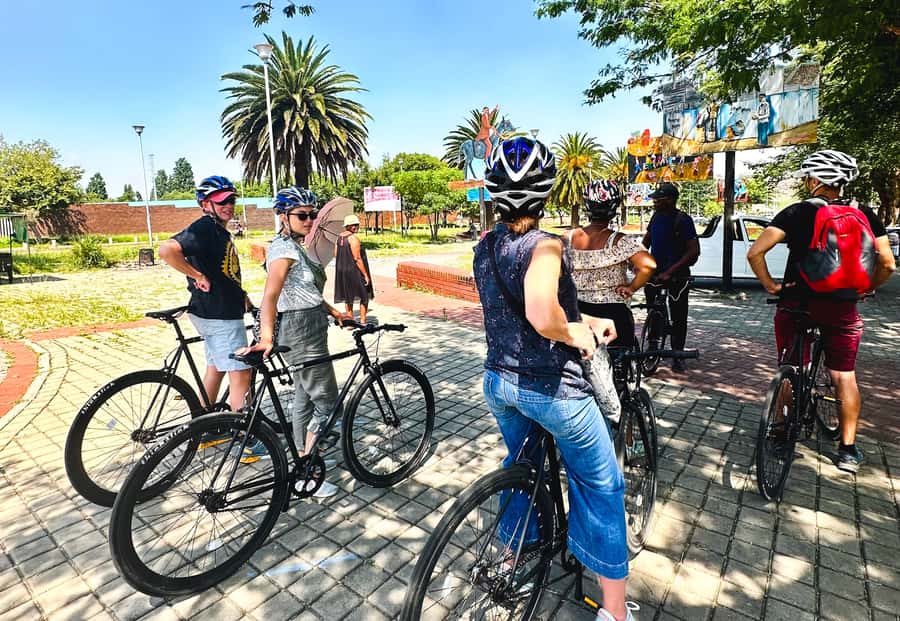
Soweto makes most sense when you see more than its famous addresses. This bicycle tour takes you from Hector Pieterson Museum and Mandela House through residential areas, community sites, stadium precincts, and informal settlements. I like the mix of serious history and everyday township life, plus the chance to cover roughly 11 kilometers without sitting in a vehicle.
I especially like the guides, including Thabo, Teboho, and Themba, who explain both apartheid-era events and present-day Soweto. I also like the kota lunch, a hearty South African sandwich served locally. The main drawback is physical: some hills are noticeable, bikes may not have gears, and you need to be comfortable cycling on city roads.
Key points to know before you book
- Hector Pieterson Museum gives the tour its historical center, with time to discuss the 1976 Soweto uprising.
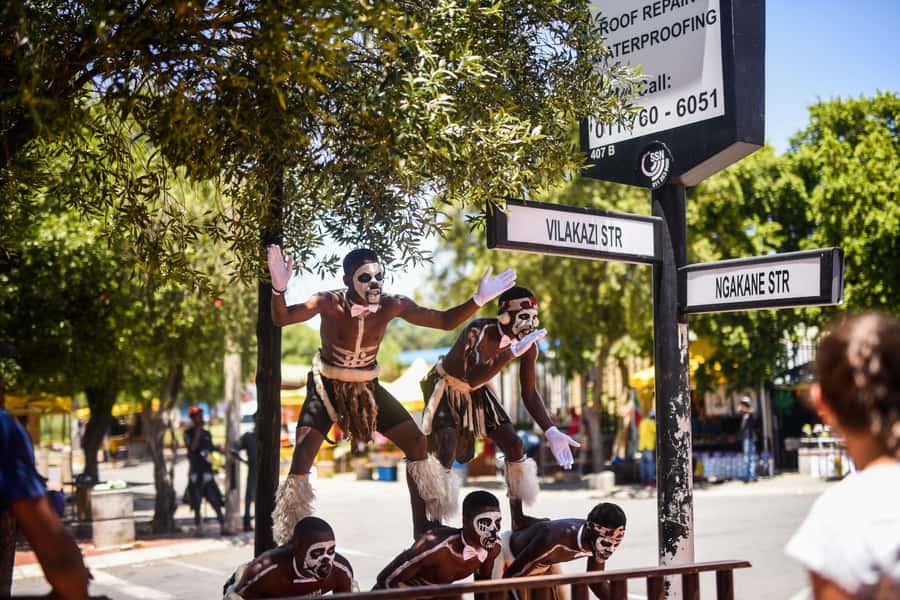
- Vilakazi Street links two Nobel laureates, with stops at Nelson Mandela’s former home and Tutu House.
- The bicycle route covers several sides of Soweto, not only the polished visitor strip around Mandela House.
- Thabo is a frequently named guide, praised for clear explanations, humor, safety, and a strong grasp of local history.
- Lunch is a kota, a filling township sandwich that turns a sightseeing stop into a local food experience.
- You need moderate fitness, especially for uphill stretches and a ride that can reach about 11 kilometers.
Why a bicycle is a good way to see Soweto
Soweto is too large to understand from one street corner. A car can move you between major sights, but it can also make the township feel like a series of windows and photo stops. On a bicycle, you travel at a slower pace and pass through several kinds of neighborhood.
That is the main strength of this four-hour tour. You ride through Orlando West, Orlando East, Mzimhlophe, and other parts of the township while your guide explains how the areas fit together. The route includes political history, sports, community life, local housing, and contemporary Soweto.
The cycling is not an extreme athletic challenge, but it is not a flat promenade either. Several people found the ride reasonably easy, while others specifically warned about uphill sections and bikes without gears. One reported distance is about 11 kilometers, so I would call this a moderate urban ride.
You do not need to be a serious cyclist. You do need to know how to ride confidently, manage some slopes, and keep going for several hours with stops along the way. If you are fit enough for an easy half-day bike outing, you should be in the right range. If you dislike hills, ask about the bicycle setup before booking.
More Rides with Lunch in South Africa:
- Franschhoek: E-bike Tour with Wine Tasting and Lunch
★ 4.8 · 30 reviews - Electric Cycling Tour of Ubud with Free Hotel Transfer and Lunch
★ 5.0 · 1,397 reviews - Bangkok: Bike and Canal Boat Tour with Lunch
★ 4.9 · 1,350 reviews
Meeting at Vilakazi Espresso in Orlando West
The tour begins and ends at Vilakazi Espresso. This is practical because the meeting point sits close to the best-known attractions on Vilakazi Street, including Mandela House and Tutu House.
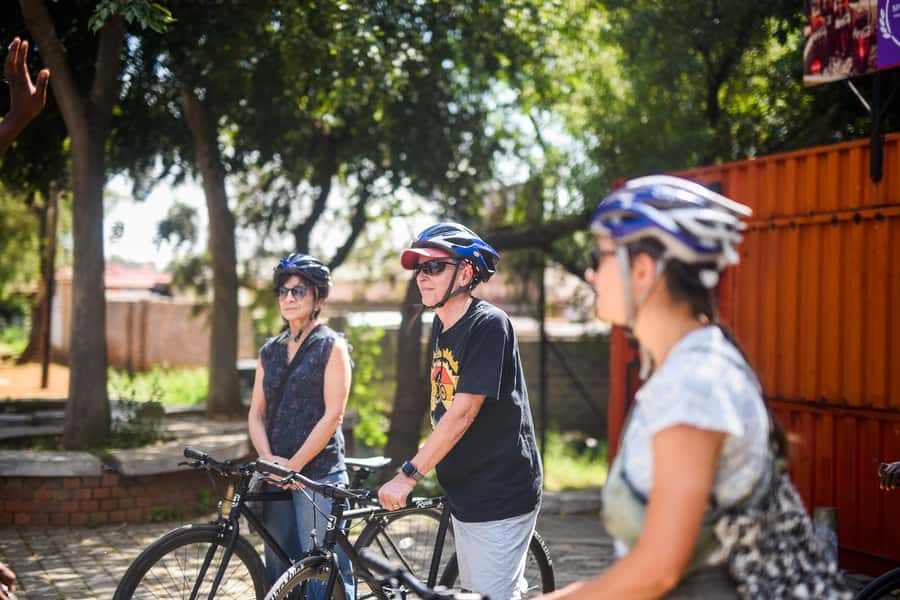
Your guide gets you settled on the bicycle before the route begins. Safety and basic group instruction are part of the opening routine, and the guides are repeatedly praised for keeping the ride comfortable and well managed. That matters in a place where you are sharing roads and neighborhood streets rather than following a closed cycle path.
The exact guide can vary. Thabo, also referred to as Teboho in some feedback, receives especially strong praise for his storytelling, humor, and attention to safety. Themba is also named as a friendly and capable guide who could explain both the past and the current shape of Soweto. A private departure is possible if you are the only person booked, though that depends on the day.
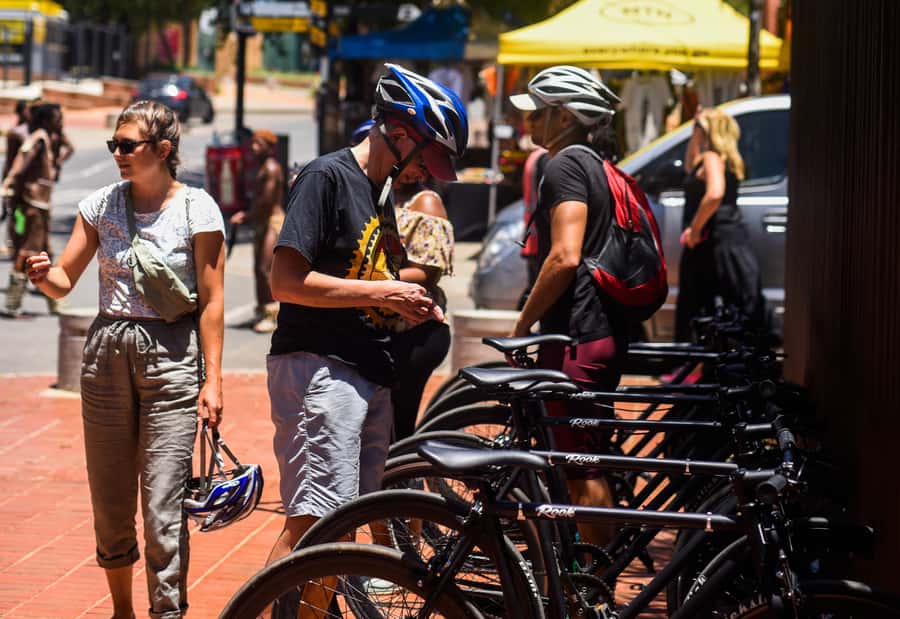
The bikes are generally described as being in good condition and comfortable. Still, not every bike appears to have gears, and one practical suggestion was to provide water. Bring your own bottle, especially in warm weather.
Mzimhlophe and the story of township neighborhoods
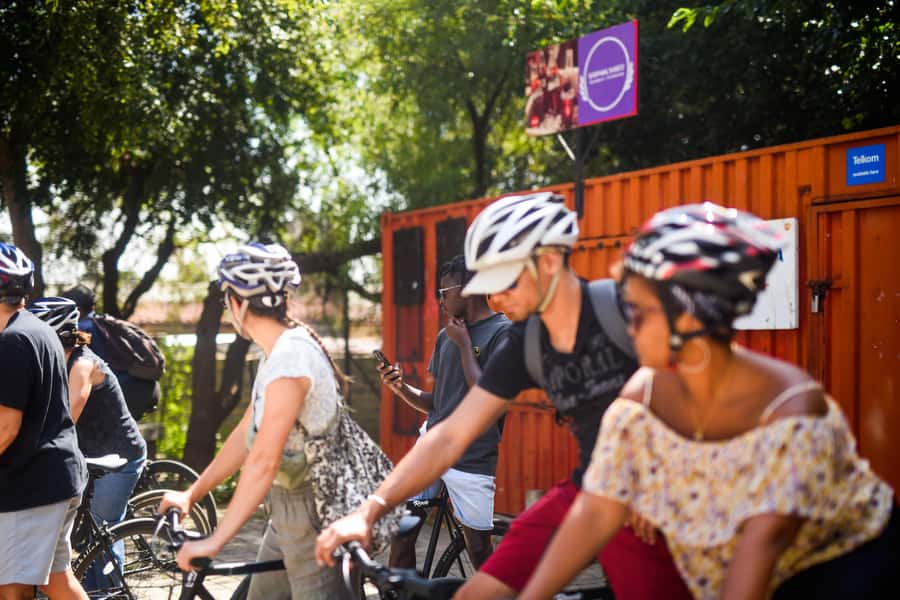
The route moves beyond the most familiar tourist addresses toward Mzimhlophe. A stop near the Mzimhlophe Women’s Hostel offers a chance to discuss how people lived under apartheid and how township neighborhoods were organized.
This section helps correct a common mistake. Soweto is not one uniform place. It contains areas with different housing types, income levels, histories, and daily routines. A guide who grew up locally can explain those contrasts far better than a short museum label.
The tour also passes an internet cafe and makes stops around Orlando East. These are brief visits, around 15 minutes at the internet cafe and about five minutes in Orlando East, but they help you see the township as a living place rather than only a historical site.
At times, the route may include an informal settlement visit with a local guide. The activity information suggests a discretionary gratuity of R20 to R50, or more, if you wish to offer one. Carry some cash for this and for small personal purchases. The contribution is not included in the tour price.
Orlando Stadium and the community center
Orlando Stadium is one of the route’s shorter stops. You may not spend long there, but it adds an important public and sporting landmark to the day.
The nearby Orlando Community Centre receives a longer visit. Together, these stops show how public spaces support township life. The tour does not stay locked in the apartheid past. Your guide connects older political events with the places people use now.
That balance is one of the better features of the route. The strongest guiding is not just a list of dates. Thabo and the other local guides are praised for answering questions about politics, social conditions, history, and daily life. You can ask about what you see instead of simply waiting for the next scheduled stop.
The experience also avoids reducing Soweto to hardship. You see poorer areas, but you also pass ordinary neighborhoods and established public sites. That gives you a more respectful picture than a tour focused only on poverty or dramatic photo opportunities.
More Guided Rides in South Africa:
- Cape Town: Guided Bike Tour
★ 4.9 · 193 reviews - Franschhoek: E-Bike Guided Winery Tour
★ 4.6 · 96 reviews - Stellenbosch: Wine Farm E-Bike Guided Tour
★ 4.6 · 88 reviews - Cape Town: Guided eBike Tour with Signal Hill and Clifton …
★ 4.9 · 71 reviews
Hector Pieterson Museum and the Soweto uprising
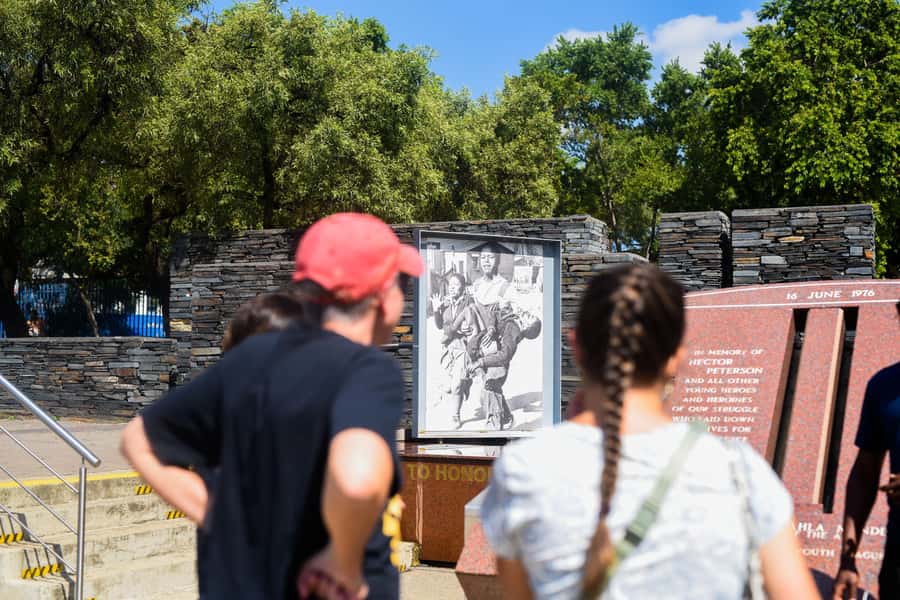
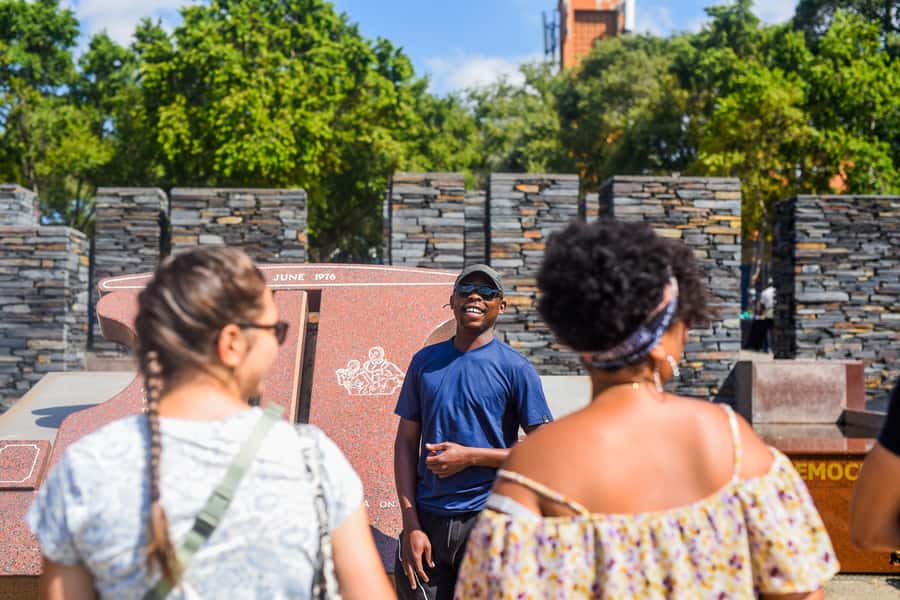
The Hector Pieterson Museum is the emotional center of the tour. You spend about 20 minutes here, including a guided visit, walking, sightseeing, and cycling around the area.
The museum and memorial mark the 1976 Soweto uprising, when students protested against the apartheid government’s policy of imposing Afrikaans in schools. The death of Hector Pieterson became one of the defining images of the struggle against apartheid.
Your guide adds context around the museum and the surrounding square. This is where the bicycle ride pauses and the historical focus sharpens. Give yourself time to listen, ask questions, and take in the setting. The stop can feel brief if you rush through it.
The tour description emphasizes the uprising as a turning point, and that is why this stop matters even if you have already read about apartheid. You are not just seeing a museum in isolation. You have cycled through neighborhoods shaped by the same political system, so the story connects to the streets around you.
Photography is part of the stop, but use good judgment. This is a memorial and a place tied to painful events. The guide can help you understand what is appropriate.
Mandela House and Tutu House on Vilakazi Street
Vilakazi Street is famous for having been home to two Nobel Peace Prize winners, Nelson Mandela and Archbishop Desmond Tutu. The tour returns to this street for lunch and for its best-known historical addresses.
Mandela House marks the home where Nelson Mandela lived from 1946 to 1962. The stop includes guided commentary and a photo opportunity. The activity information does not clearly promise a full interior museum visit, so check the day’s arrangement if entering the house is important to you.
The value here is the connection between a private home and a national story. Mandela was not always a distant figure in a capital city. He lived in this street while working against apartheid, and the house gives that part of his life a physical setting.
Tutu House is a brief stop, listed at about five minutes. Archbishop Desmond Tutu and his family once lived there, and your guide explains his role in challenging apartheid. Seeing both homes on one street makes Vilakazi more than a famous address. It shows how political history was rooted in an ordinary residential neighborhood.
The route also includes a reference to olive trees planted in memory of Hector Pieterson by Mandela, Tutu, and Bill Clinton. If your guide points these out, they add a small but meaningful detail to the visit.
A kota lunch on Vilakazi Street
Lunch is included, along with food and drinks. The meal is a kota, a South African township sandwich. It is usually filling and informal, which suits the bicycle tour better than a long restaurant meal.
The food stop lasts about 25 minutes, so expect a quick local lunch rather than a leisurely dining session. The kota is a highlight for many people because it gives you something distinctly tied to township food culture.
I like this arrangement for two reasons. First, the price includes more than transport and guiding. Second, you eat in the same area you have been exploring instead of stopping at a generic tourist restaurant.
Do not expect a delicate meal. A kota is substantial street-style food, and you may want to pace yourself before getting back on the bicycle. If you have dietary restrictions, ask ahead because the supplied information does not list the ingredients or alternatives.
The lunch stop also gives you time to speak with your guide away from the bicycle. This is often when broader questions about Soweto and South Africa come up naturally.
How hard is the cycling?
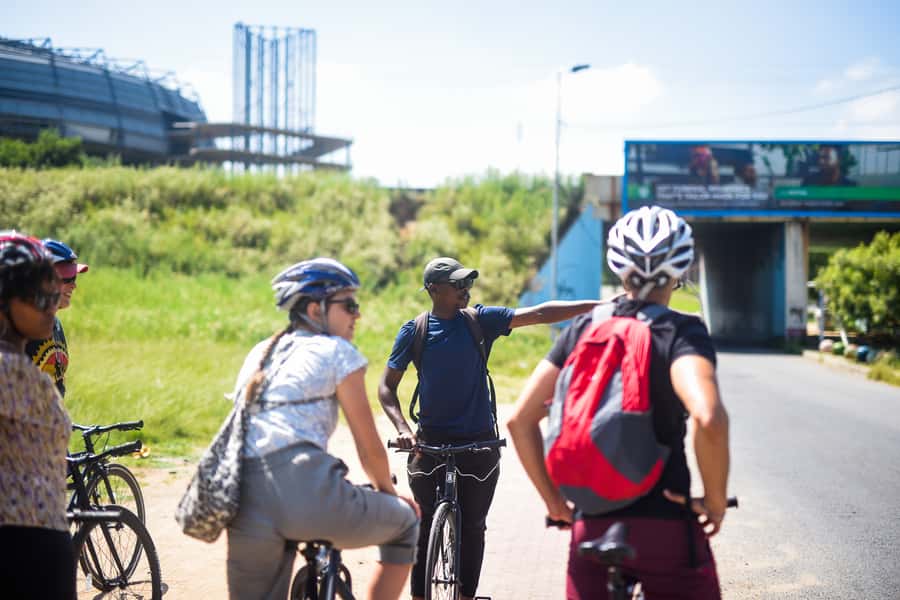
The biggest practical question is fitness. The route has uphill sections, and some bicycles may have no gears. One participant specifically advised booking only if you are used to riding uphill on such a bike.
At the same time, several people in their 50s, 60s, and 70s completed the ride, and one group with different fitness levels found that the guide handled the pace well. That suggests the tour is flexible, but it does not remove the physical demands.
I would book this if you can comfortably cycle for a few hours with regular stops. I would not book it if you cannot ride a bicycle, are pregnant, or need wheelchair access. Those groups are specifically excluded from the activity.
Wear practical clothing and shoes. Bring sunscreen, rain gear, and cash. The weather can change, and you may appreciate a light waterproof layer even if the morning begins clear. Water is worth carrying because it is not listed among the personal items supplied.
What you get for $52
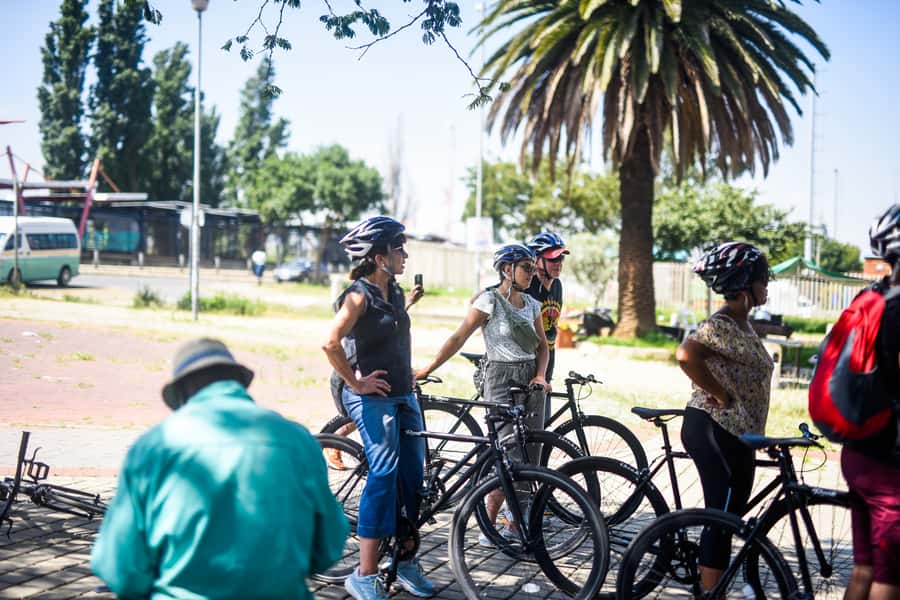
At $52 per person, the tour is priced above a simple bicycle rental but includes a lot more than wheels. You receive a local English-speaking guide, the bicycle, food and drinks, and four hours of structured sightseeing.
The value depends on what you want from Soweto. If you only want a quick photo at Mandela House, this may feel like too much time and activity. If you want the political background, local neighborhoods, major landmarks, and a meal in one outing, the price is reasonable.
You also avoid having to plan a route across a large township yourself. The guide links sites that would be difficult to understand as separate taxi stops. The personal stories and local context are a major part of what you are paying for.
Hotel pickup and drop-off are not included. You must make your own way to Vilakazi Espresso, so add that cost and time when comparing this with a vehicle-based Soweto tour.
Free cancellation is available up to 24 hours before the activity, and you can reserve without paying immediately. Those policies make the booking less risky, but the main decision remains your ability and willingness to cycle.
The guide makes the difference
This tour depends heavily on the person leading it. The route itself is useful, but the quality comes from the explanations between stops.
Thabo is repeatedly singled out for making the history clear, keeping groups safe, and adding humor. He is also described as a young Soweto guide with ambitions to study law and play a role in South Africa’s future. That personal connection can give the tour an extra layer, though guide assignments are not guaranteed.
Themba is also praised for repairing a flat tire quickly and adapting explanations to different questions. Other guides may lead the tour, but the repeated emphasis on local knowledge, warmth, and clear storytelling is a good sign.
For me, the best kind of guide here is one who can explain both apartheid and present-day Soweto without turning either into a lecture. The supplied guiding style appears to aim for that balance. You should still arrive ready to ask questions. The more you engage, the more useful the ride is likely to be.
Who should book this Soweto bicycle tour?
Book it if you want to:
- See several parts of Soweto in one morning or afternoon
- Combine political history with ordinary local life
- Visit Hector Pieterson Museum, Mandela House, and Tutu House
- Eat a kota in a local setting
- Prefer an active tour to a vehicle ride
- Travel with a guide who can answer questions in English
- Support a locally led experience
Think twice if you want a slow museum day, dislike hills, or expect a polished sightseeing bus with hotel pickup. The ride is active, the route includes residential areas, and the lunch is informal.
Should you book it?
Yes, if you are a reasonably fit cyclist and want a fuller picture of Soweto than Vilakazi Street alone can provide. The combination of Hector Pieterson Museum, Mandela House, Tutu House, Orlando Stadium, Mzimhlophe, community sites, and a kota lunch gives you a useful four-hour introduction.
Book with realistic expectations. This is not a flat leisure ride, not a private car tour, and not simply a checklist of famous homes. It is best for you if you want to move through the township at street level, listen to a local guide, and accept a few uphill stretches in exchange for seeing more of Soweto.
FAQ
Where does the Soweto bicycle tour start?
The tour starts at Vilakazi Espresso.
How long does the tour last?
The experience lasts four hours.
What language is the tour conducted in?
The live tour guide speaks English.
What sights are included?
The route includes Hector Pieterson Museum, Mzimhlophe, Orlando East, Orlando Stadium, Orlando Community Centre, Vilakazi Street, Tutu House, and Mandela House.
Is lunch included?
Yes. Food and drinks are included, with lunch featuring a kota, a South African township sandwich.
Is a bicycle provided?
Yes. A bicycle and a local guide are included.
Does the tour include hotel pickup and drop-off?
No. Hotel pickup and drop-off are not included. You must meet at Vilakazi Espresso.
Is the ride suitable for everyone?
No. It is not suitable for pregnant women, people who cannot ride a bicycle, or wheelchair users. The route also includes uphill sections, so reasonable cycling fitness is important.
What should I bring?
Bring sunscreen, rain gear, and cash. If an informal settlement visit takes place, you may wish to offer a discretionary gratuity of R20 to R50 or more.
Newest rides we have reviewed in South Africa
- Johannesburg: Inner City Guided Cycling Tour★ 4.6 · 15 reviews
- Half-Day Winelands E-Bike Tour with Wine Tasting★ 4.2 · 13 reviews
- Franschhoek E-Bike & Wine Tour★ 5.0 · 18 reviews
- E-Bike & Hike Jonkershoek★ 5.0 · 12 reviews
- Cape Town: E-Bike Cape Peninsula Tour★ 4.7 · 54 reviews
- Cape Town: Cultural Cycling Tour★ 4.8 · 19 reviews
- Cape Town: Peninsula Road Bike Tour★ 5.0 · 23 reviews
- Cape Town: Half-Day e-Bike City Tour★ 4.4 · 35 reviews
South Africa Cycling Tours, compared.
Stellenbosch: Historical Bike Tour & Wine Tasting
Read our review →
Guided eBike Tour with Signal Hill and Clifton …
Read our review →
Other lists this ride turns up in