
REVIEW · E-BIKE TOURS IN INDONESIA
Bali: Jatiluwih Rice Terraces 1 Hour Electric Bike Tour
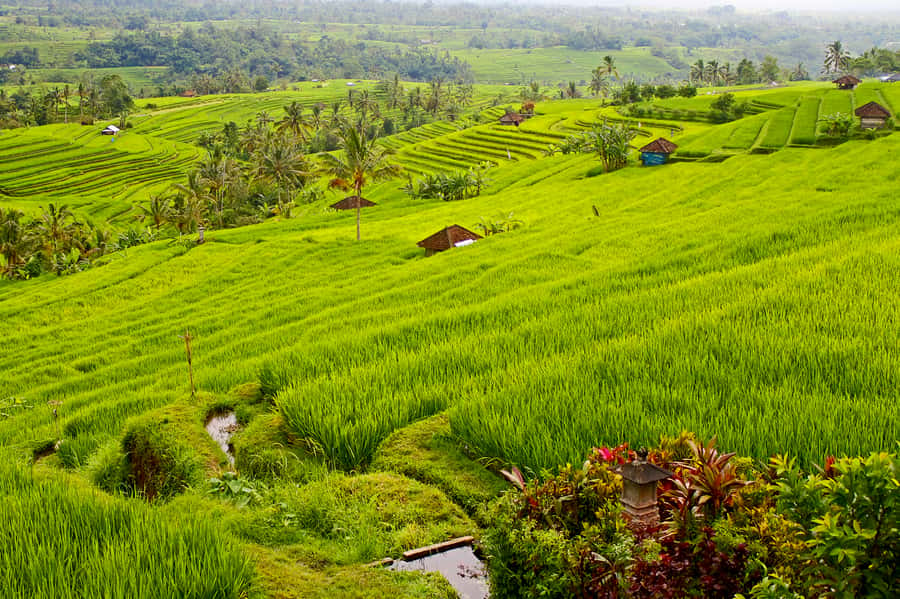
Jatiluwih’s rice terraces are best understood from a moving bicycle. The electric bike lets you cover more ground than walking, while still keeping you close to irrigation channels, bamboo, villages, and the working countryside. I like the chance to see this UNESCO-listed area from several angles, and I like that a local guide can explain how the terraces fit into daily life. The main catch is time: one hour is enough for an introduction, not a full exploration.
I also like that the motor takes the sting out of Jatiluwih’s hills. A normal bicycle could make the route hard work, but the electric assistance helps you save energy for the views. The tour includes a helmet, water, raincoat if needed, insurance, and an English-speaking guide. Bring a little patience for the extra entrance fee, and remember that you must already know how to ride a bike.
Key points at a glance
- UNESCO-listed rice terraces: See Jatiluwih’s traditional irrigation system and carefully shaped fields from the saddle.
- Electric help on the hills: The motor makes uphill sections much easier than they would be on a standard bicycle.
- Bamboo, villages, and wide valleys: The route brings together natural scenery and ordinary rural life.
- A one-hour sampler: This is a compact way to experience Jatiluwih, though not a long cycling expedition.
- Local English-speaking guidance: Ask questions about rice farming, culture, and the surrounding area as you ride.
Why Jatiluwih works so well by electric bike
Jatiluwih is not just a viewpoint beside a road. Its appeal comes from the way the rice fields spread across slopes and folds in the ground. From an electric bike, you can move between viewpoints and see how the terraces change as the road rises and falls.
That movement matters. A photo stop gives you one framed scene. Cycling gives you a string of scenes: a wall of rice fields, a patch of dense vegetation, a bamboo stand, a village lane, and then a broad valley opening below you. In a single hour, you get a better sense of how the area fits together.
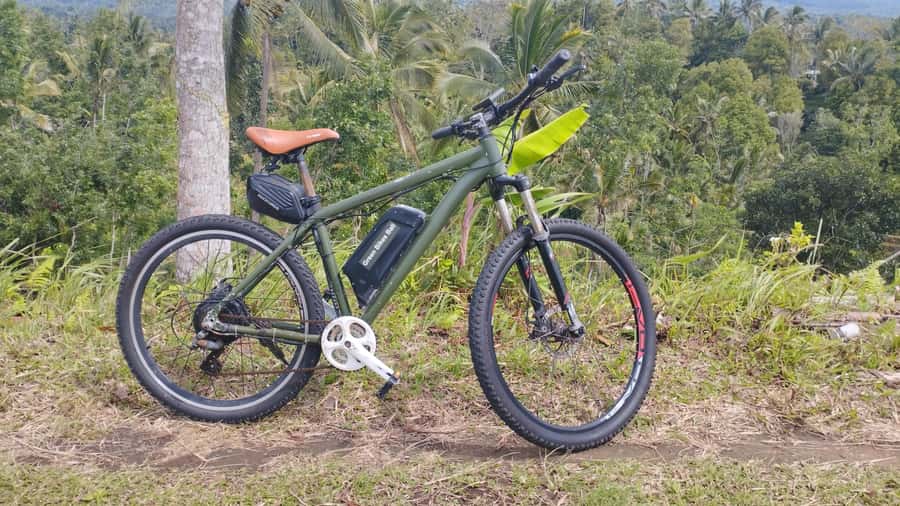
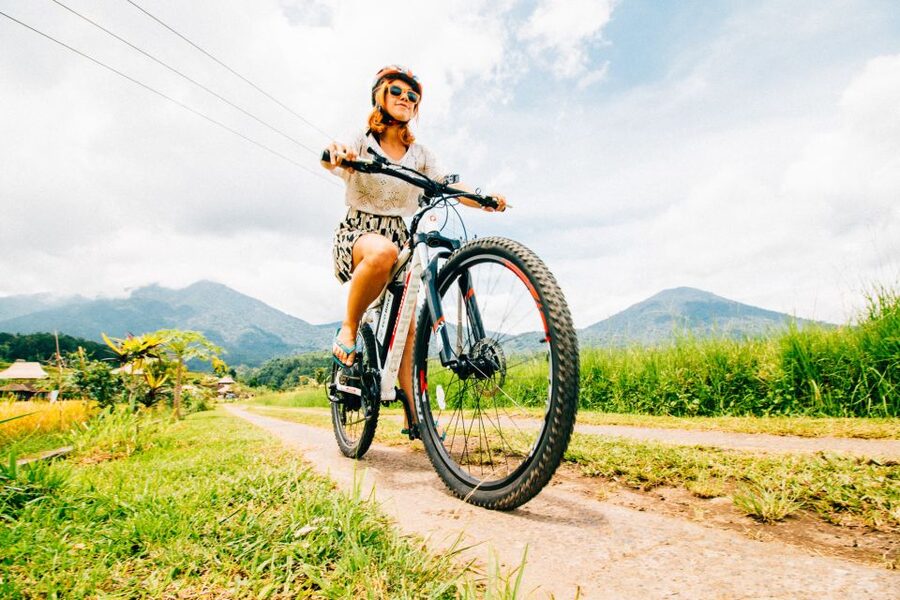
The electric motor is the practical reason to choose this tour. Jatiluwih is set in a valley between four extinct volcanoes, and the route includes uphill stretches. You still pedal, but the motor handles much of the hard work. I would consider this a good choice for anyone who enjoys cycling but does not want a steep ride to become the main event.
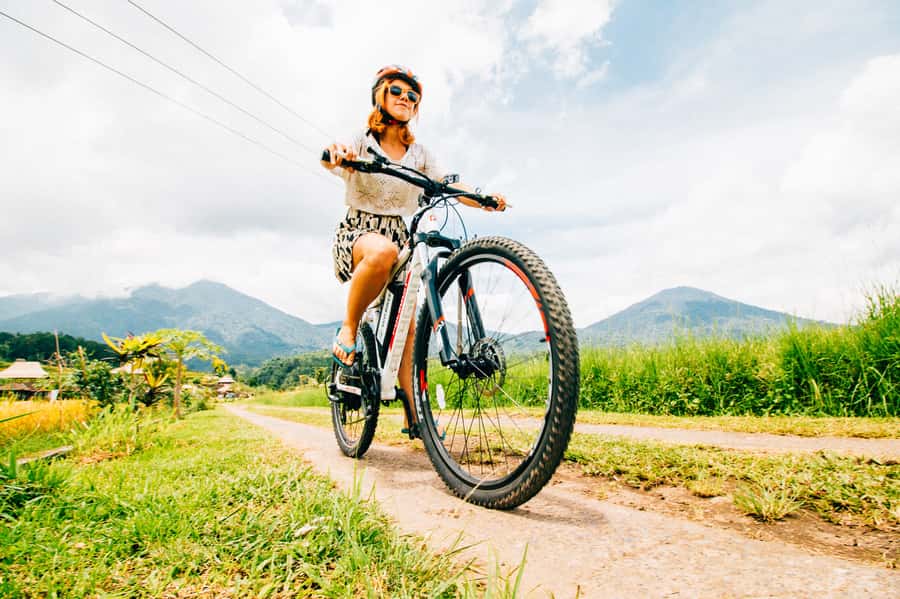
You should not expect a high-speed bike tour. The point is to look around, listen to the guide, and stop for views. The ride offers a more active experience than a car tour, but it remains accessible to people with ordinary fitness if they are comfortable on a bicycle.
More E-Bike Tours in Indonesia
- Ubud: Rice Terraces & Villages Half-Day Fat Tire E-Bike Tour
★ 4.9 · 602 reviews - Ubud eBikes Tour to Tegallalang Rice Terrace
★ 5.0 · 507 reviews - Electric Bike Tour in Ubud
★ 5.0 · 281 reviews
Meeting the guide in central Jatiluwih
The meeting point is at Banjar Gunungsari, Desa Jatiluwih, Bali 8215. To reach the local supplier’s office, enter the small street in central Jatiluwih directly opposite Warung Krishna. The office is clearly marked, which should make the final approach easier than searching through a large complex.
Plan enough time to find the meeting point before the start. A one-hour activity has little spare time, and arriving late could cut into the ride. The provided directions are simple, but the setting is a small local street rather than a major tourist attraction entrance.
Your guide speaks English and leads the ride through the surrounding area. The guide’s role is more than steering you along a route. You can ask about local culture, rice growing, the terraces, and everyday life in the region. This personal explanation is one of the main reasons to choose a guided ride instead of simply renting a bicycle.
The experience can work nicely for a small group. A group of six has been used successfully, giving riders room to enjoy the route without feeling lost in a large procession. Group size can affect the pace, so keep in mind that a compact tour usually feels more personal than a crowded cycling excursion.
What you see during the one-hour route
The exact order of the sights can vary, but the ride focuses on the main character of Jatiluwih rather than a list of formal stops. You’ll cycle through the rice terraces, pass dense vegetation, and reach views across the valley.
The rice terraces
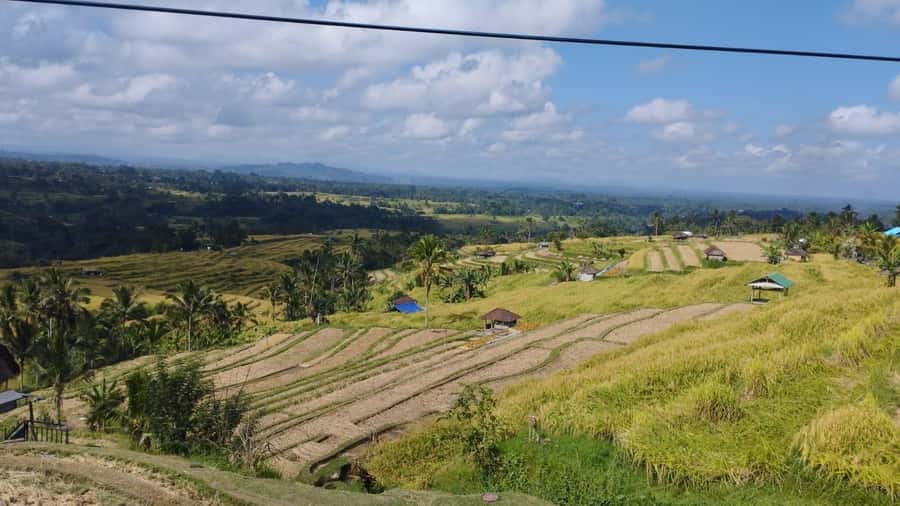
The terraces are the star of the ride. Their curved lines follow the slopes, creating a scene that looks carefully designed because it is. They are also working agricultural fields, shaped and watered through traditional irrigation methods.
From the bike, you can appreciate details that are easy to miss from a vehicle. The fields are not simply a flat green carpet. They rise, turn, and drop across the land, with paths and water channels helping connect one section to another.
The tour gives you a chance to learn why the terraces matter culturally as well as visually. Your guide can explain the role of traditional irrigation and answer questions as you travel. That context helps turn a pretty view into a clearer picture of how local farming and community life are linked.
Same roads, a different saddle:
- Electric Cycling Tour of Ubud with Free Hotel Transfer and Lunch
★ 5.0 · 1,397 reviews - From Ubud: Downhill Bike Tour with Rice Terraces and Meal
★ 4.9 · 664 reviews - Menoreh Village Cycling
★ 5.0 · 611 reviews - Ubud: Downhill Cycling with Volcano, Rice Terraces and Meal
★ 5.0 · 536 reviews
Giant bamboo forests
The bamboo sections add a welcome change from open fields. Instead of broad views, you get a more enclosed, leafy setting. Giant bamboo gives the ride a different rhythm and shows how much plant life surrounds the cultivated terraces.
These areas are a good reminder that Jatiluwih is not only about rice. The region includes thick vegetation and natural growth around the agricultural land. If you enjoy variety, the shift from open valley to bamboo-lined surroundings helps keep the short route interesting.
Local villages and daily life
The ride also passes local villages, bringing you closer to the ordinary side of the area. You are not only looking at an attraction from a distant viewpoint. You are moving through a lived-in region where farming and village life continue alongside tourism.
The guide can help explain what you are seeing. That may include local customs, the role of the fields, or details about the surrounding community. The information supplied for the tour does not promise specific buildings, ceremonies, or farm activities, so you should treat the villages as part of the route rather than expect a scheduled village visit.
Valley views and the four volcanoes
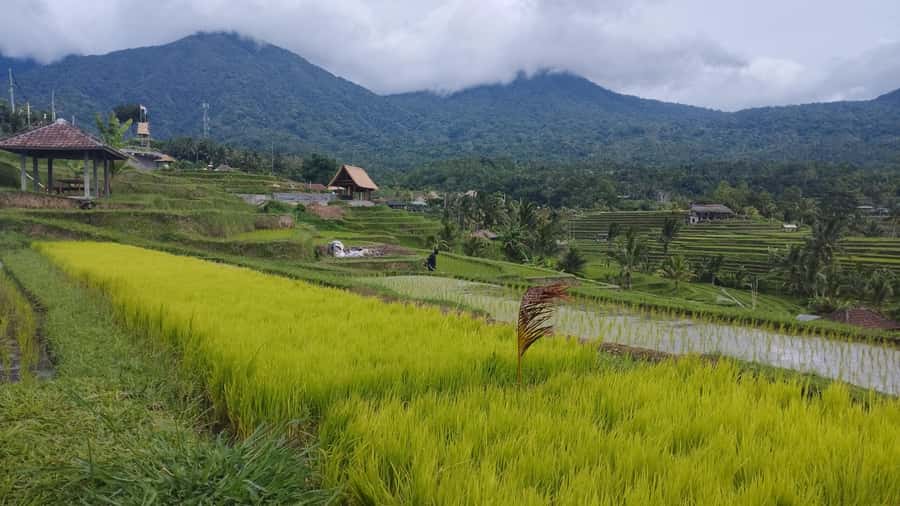
Jatiluwih sits in a valley between four extinct volcanoes. That setting gives the rice fields their broad scale and helps explain why the views feel much bigger than a single collection of paddies.
The route offers wide valley views as well as close looks at the terraces. Weather will affect visibility, so the volcano setting may be clearer on some days than others. Even when distant peaks are less distinct, the valleys and fields still provide the main visual reward.
Why the electric bike makes a difference
The strongest practical feature is the motor. One rider specifically found the electric assistance valuable because some parts of the ride can be demanding on a regular bicycle. That is useful advice: do not assume a short route is automatically flat.
You still need to handle a bicycle, steer, brake, and follow the guide. The electric bike does not remove the need for balance or basic road awareness. It simply makes climbs less tiring and helps you stay focused on the scenery rather than counting every pedal stroke.
The activity is suitable for riders of many fitness levels, but there are firm limits. You must be able to ride a bike, be at least 145 centimeters tall, and weigh no more than 120 kilograms, or 264 pounds. People who cannot ride should choose a different way to see Jatiluwih.
The tour provides a helmet, and you should wear it throughout the ride. Water is included, which is useful in Bali’s warm conditions. A raincoat is available if needed, a sensible addition in a region where weather can change quickly.
The one-hour tradeoff
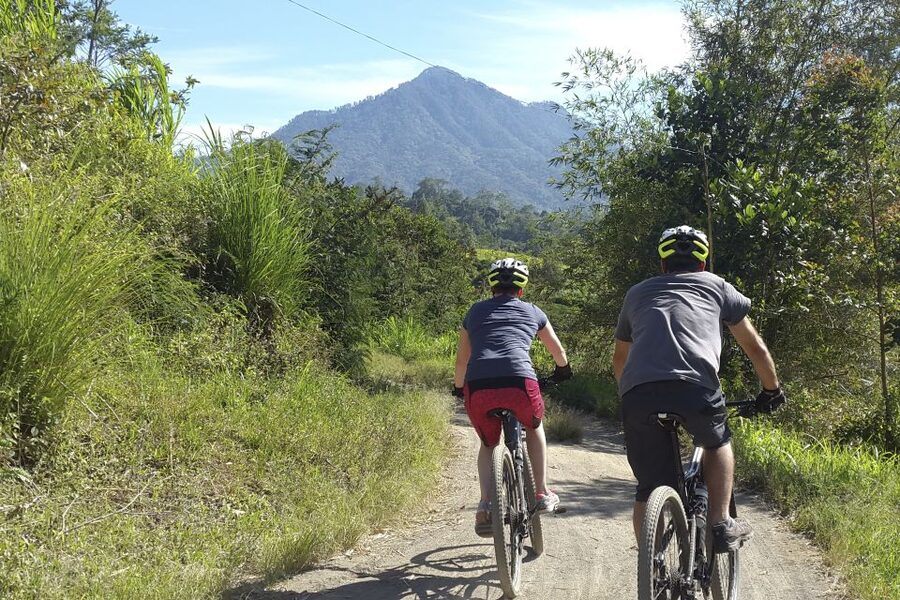
One hour is both the strength and the weakness of this experience. It is easy to fit into a day that also includes other sights, and it gives you a clear taste of Jatiluwih without asking for a major time commitment.
On the other hand, you will not have time to cover every lane or linger at every view. The ride is best treated as a focused introduction. If your aim is to spend half a day exploring rural roads, stopping often, and taking long breaks, this outing will feel brief.
The short length also makes the guide’s pacing important. You may make several scenic stops, but the tour must keep moving to return on time. If photography is a priority, tell the guide early so you can make the most of the available stops. A participant on a recent outing appreciated the guide taking excellent photos, but photo assistance should be viewed as a helpful possibility rather than a guaranteed service.
For many people, the compact format is exactly right. You can see the area from a bicycle, learn the basics of the terraces, and still have time for the rest of your Bali plans. I would book it as a sampler, not as the only activity of the day.
What the $22 price really covers
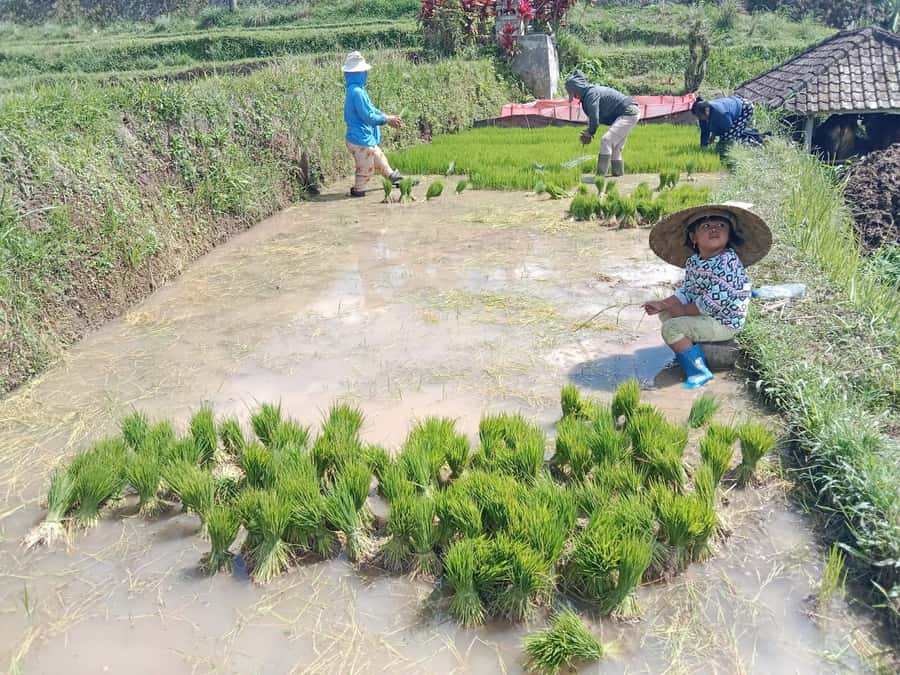
At $22 per person, the tour offers solid value if you want the convenience of an electric bike and a guide. The price includes the bicycle, helmet, guide, insurance, water, and a raincoat when needed. You are paying for equipment, assistance, and a structured route rather than simply access to the fields.
The important extra cost is the Jatiluwih Rice Terrace entrance fee. It is not included, so budget for it separately. The tour price may look especially attractive at first glance, but your total cost will be the $22 activity fee plus admission to the rice terrace area.
I see the value in the guided format. Renting a bicycle on your own might cost less in some situations, but you would need to find a suitable route, manage the hills, and work out what you are looking at. Here, the local guide adds orientation and cultural explanation, while the electric motor reduces the physical challenge.
If you are already planning to visit Jatiluwih, adding the ride can make the entrance fee feel more worthwhile because you are not limited to a quick roadside viewpoint. If you only want a short photo stop, the extra activity may be more than you need.
Who should book this ride
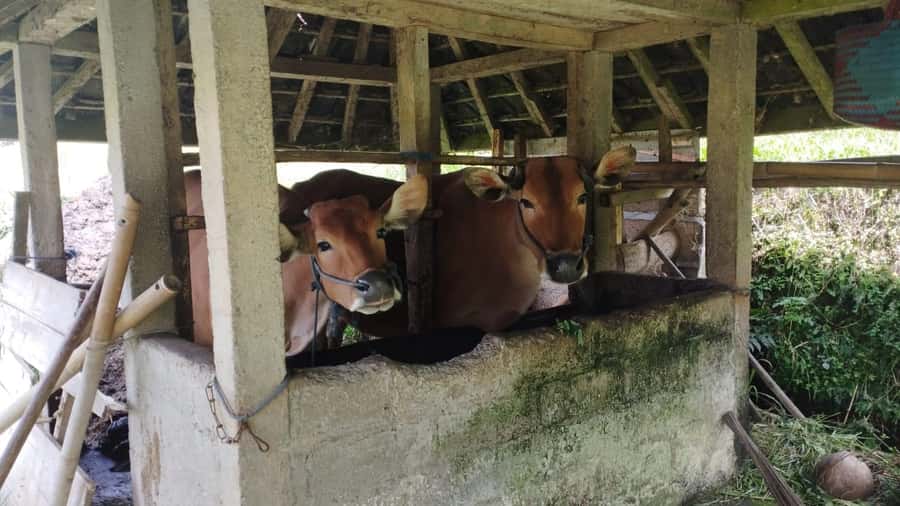
I would recommend it to confident bicycle riders who want an active view of Bali’s countryside without a demanding workout. It suits couples, families with eligible older children, and small groups looking for a scenic break from car-based sightseeing.
It is also a good match for people who care about local life. The ride connects the famous rice fields with villages, bamboo, vegetation, and the working environment around them. The guide’s explanations add useful context without turning the hour into a formal classroom.
You may want to skip it if you cannot ride a bicycle, fall below the 145-centimeter height requirement, or weigh more than 120 kilograms. You should also think twice if you dislike hills, even with electric assistance, or if you want a long, relaxed cycling day.
The route is not presented as a technical mountain-bike ride. Still, a bicycle tour requires balance, attention, and comfort on changing surfaces. If you are unsure about your cycling ability, an ordinary sightseeing visit may be a better fit.
Practical advice before you go
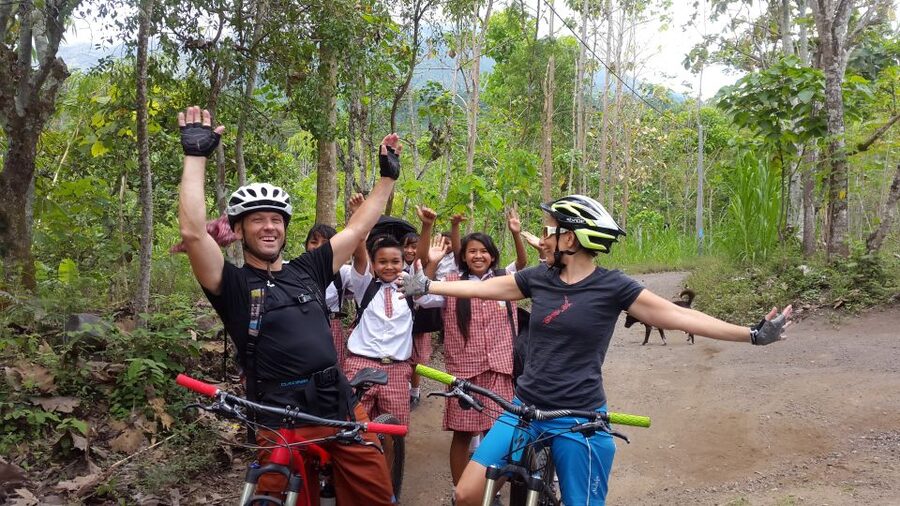
Wear comfortable clothing that lets you move freely. Closed shoes are a sensible choice for a bicycle ride, though the tour information does not specify a required type of footwear.
Bring your phone or camera, but keep the short duration in mind. You will have scenic opportunities, yet stopping for every possible photograph could leave less time for riding and explanation. The guide can help identify worthwhile viewpoints and may be able to take photos for you.
Check the weather before setting out. A raincoat is supplied if needed, but wet conditions can still affect visibility and comfort. The valley views and distant volcanoes are weather-dependent, so a cloudy day may change what you can see.
Allow for the entrance fee and confirm the starting time when booking. The tour runs for one hour, but available start times can vary. Free cancellation is available up to 24 hours before the activity for a full refund, and you can reserve now and pay later if you want to keep your plans flexible.
Should you book the Jatiluwih electric bike tour?
Book it if you want an easy, guided introduction to one of Bali’s most striking agricultural areas. The combination of electric assistance, local explanation, bamboo, villages, and valley views gives you more than a quick roadside look. At $22, it is a fair deal once you understand that the entrance fee is extra.
Skip it if you want a long ride, cannot ride a bicycle, or prefer to spend hours at each viewpoint. For everyone else, this is a practical way to experience Jatiluwih without turning Bali’s hills into a fitness test. The one-hour format is short, but it uses that hour well.
FAQ
How long does the Jatiluwih electric bike tour last?
The tour lasts one hour. Starting times vary, so you should check availability for your preferred date.
What is included in the price?
The price includes an electric bike, helmet, English-speaking guide, insurance, water, and a raincoat if needed.
Is the Jatiluwih entrance fee included?
No. The entrance fee for Jatiluwih Rice Terrace is not included in the tour price.
Where is the meeting point?
The meeting point is Banjar Gunungsari, Desa Jatiluwih, Bali 8215. Enter the small street in central Jatiluwih directly opposite Warung Krishna. The local supplier’s office is clearly marked.
What language does the guide speak?
The live tour guide speaks English.
Who cannot take this activity?
The tour is not suitable for people who cannot ride a bicycle, people under 145 centimeters tall, or people weighing more than 120 kilograms, or 264 pounds.
Can I cancel or pay later?
You can cancel up to 24 hours in advance for a full refund. You can also reserve your place and pay later, which keeps your plans flexible.
More One-Hour Experiences in Indonesia
- Paris Evening Bike Tour with 1-hour Seine River Cruise
★ 4.5 · 210 reviews - Lisbon: 1-Hour Beer, Sangria or Wine Bike Sightseeing Tour
★ 4.3 · 110 reviews - Basel: Fancy a bike tour through 3 countries in 60 minutes?
★ 5.0 · 22 reviews
Newest rides we have reviewed in Indonesia
- Kuta: Kintamani Culture and Nature Guided Cycling Tour★ 5.0 · 14 reviews
- Jatiluwih (UNESCO Site) 2-Hour E-Bike Cycling Tour★ 4.3 · 49 reviews
- E-Bike: Ubud Rice Terraces & Traditional Villages Cycling★ 4.6 · 37 reviews
- Jogja Hidden Gems – Cycling Tour★ 5.0 · 12 reviews
- Bali Downhill Cultural Cycling Tour★ 4.8 · 42 reviews
- Bali: Kintamani Downhill Bike Tour, Jungle and Waterfalls★ 4.9 · 20 reviews
- Ubud: Downhill Cycling with Volcano, Rice Terraces, and Meal★ 4.9 · 189 reviews
- Kotagede Royal Route – Cycling Tour★ 5.0 · 207 reviews
E-Bike Tours, compared.
3-Hour Porto Highlights on a Electric Bike Guided Tour
Read our review →
Hills, Alfama, and Mouraria Tour by Electric Bike
Read our review →
Athens Scenic Electric Bike Tour with optional Acropolis visit
Read our review →
City Highlights 3-Hour Guided Electric Bike Tour
Read our review →
Rome EBike Tour: Appian Way, Catacombs & Roman Aqueducts
Read our review →
Top Highlights & Hidden Gems Tour by Cannondale E-Bike
Read our review →Other lists this ride turns up in