
REVIEW · VIENNA
Vienna by Bike 3-Hour All-In-One City Bike Tour in English
Vienna’s grand center can feel spread out on foot. This 3-hour bike tour links the Ringstrasse, Karlskirche, Hundertwasserhaus, Prater Park, and the Danube Canal in one easy ride. You get the sweep of imperial Vienna without spending the day on public transport.
I like the mix of famous monuments and less formal city views, especially the ride past Hundertwasserhaus and along the canal. I also like the steady pattern of riding, stopping, listening, and taking photos. The main consideration is that this is a Ringstrasse and outer-center tour, not a close look inside Vienna’s oldest lanes or major museums.
Key points at a glance
- A wide city circuit in three hours: Cover more ground than you could comfortably walk, including the Ringstrasse, Prater, and Danube Canal.
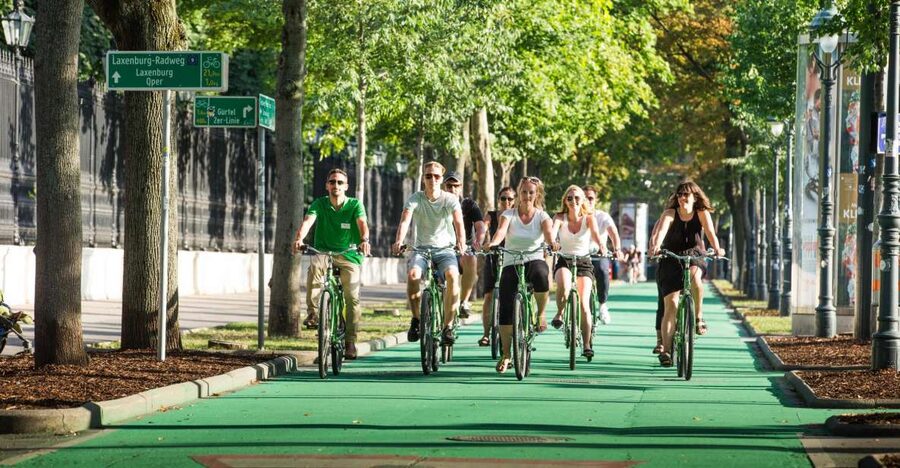
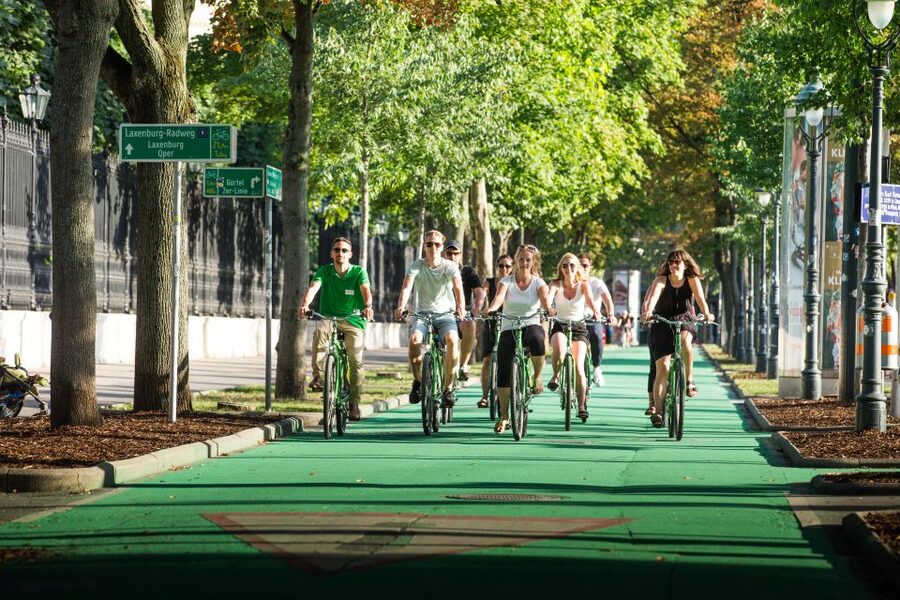
- Easy, mostly gentle cycling: The route uses safe, well-surfaced paths and is described as largely flat.
- Strong guide-led history: Guides including Lisa, Marco, Horst, Jan, Robert, and Karl have brought humor, local detail, and clear explanations to the ride.
- A good first-day introduction: The stops give you a useful map of Vienna before you choose where to spend more time.
- Comfortable equipment: Modern city bikes and helmets are provided, with e-bikes available on some departures.
- Rain is not an automatic deal breaker: The tour operates in wet weather, and ponchos are supplied.
Why a bike is a smart way to see Vienna
Vienna’s central sights are not packed into one tiny square. The Ringstrasse forms a broad arc around the old city, while Prater Park and Hundertwasserhaus sit farther east. A guided bike gives you a practical way to connect these places without making every stop a separate transit trip.
You also get a better sense of the city’s scale. From a bike lane, you can see how the monumental buildings relate to one another, then move on before your three-hour outing turns into a long architecture lecture. The guide stops at key points, so you have time to look up, take pictures, and ask questions.
The route is designed for sightseeing, not racing. Previous rides have covered more than 10 kilometers, yet the pace has been described as safe and leisurely. You should still be comfortable riding in a city and following a guide through intersections.
More Three-Hour Experiences in the world:
- 3-Hour Porto Highlights on a Electric Bike Guided Tour
★ 5.0 · 4,392 reviews - 3-hour Complete Prague Bike Tour
★ 5.0 · 3,674 reviews - Porto: City Highlights 3-Hour Guided Electric Bike Tour
★ 4.8 · 3,092 reviews
Starting at Franz Josefs Kai
The meeting point is at Franz Josefs Kai, 45, in Vienna’s 1010 district. The nearest subway station is Schottenring, served by U2 and U4. Plan to arrive early enough to find the departure point, choose a bike, and listen to the safety instructions without rushing.
The bikes are modern city models built for easy riding. Helmets are available, and the equipment has earned repeated praise for comfortable seats and smooth handling. If you have a sore foot or would rather use less effort, some departures offer e-bikes, though you should check availability when booking.
The tour company is Vienna Explorer. Guides speak English, and the stated language for this departure is English. Some staff and guides also speak German, but you should book this particular outing expecting the main commentary in English.
Riding the imperial Ringstrasse
The Ringstrasse is the core of the tour. This broad boulevard replaced Vienna’s old fortifications in the 19th century and became a showcase for the Habsburg Empire. The buildings along it were meant to project confidence, culture, law, and imperial power.
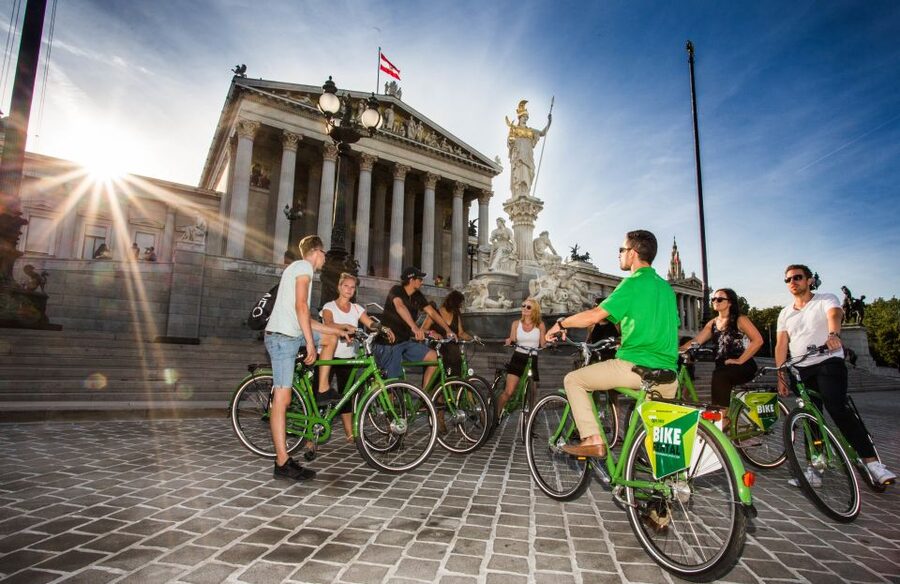
You’ll pass the Vienna Opera House, with its Neo-Renaissance design, then continue toward the Parliament buildings, Vienna University, the Imperial Palace, and City Hall. These are not quick photo props. The guide helps explain why they were built, what roles they served, and how the boulevard shaped modern Vienna.
At the Rathaus, you can admire the Gothic façade and its tall central tower. Parliament brings a different visual language, with 19th-century classical forms linked to the political structure of the Austro-Hungarian period. The contrast is part of the fun: Vienna’s public buildings often look like a history lesson written in stone.
Expect several stops rather than a nonstop commentary while you pedal. That is a real strength. You can listen while standing beside the bike, then ride in relative quiet until the next point of interest.
Heroes’ Square and Vienna’s difficult past
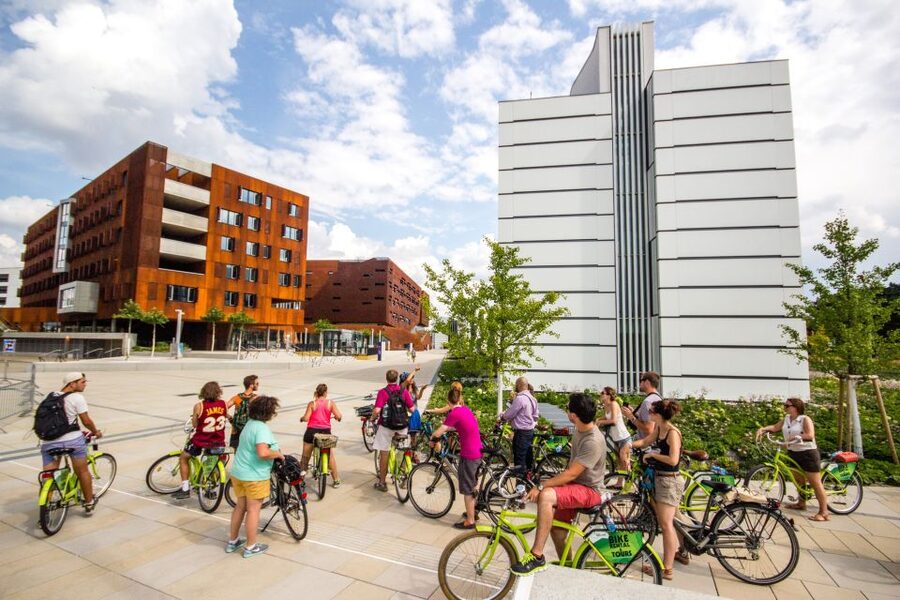
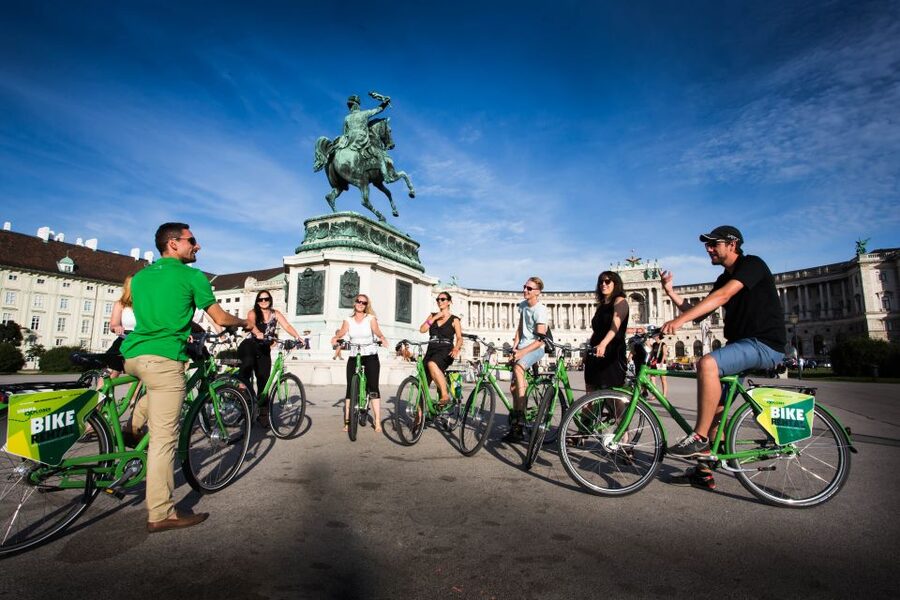
The route includes Heroes’ Square, or Heldenplatz, beside the Hofburg. It is one of Vienna’s most grand public spaces, framed by the palace complex and monumental buildings. The square also carries a darker political memory.
In 1938, Adolf Hitler delivered his Anschluss speech here after Nazi Germany annexed Austria. A good guide treats this part of Vienna’s past with care rather than reducing it to a quick dramatic fact. Guides such as Robert and Marco have been praised for handling Austrian and European political history in a detailed, thoughtful way.
This stop adds weight to an otherwise upbeat city ride. You are not just looking at ornate façades. You are also seeing places where power was displayed, celebrated, and abused.
More Cycling Trips in the world:
- Lion City Bike Tour of Singapore
★ 5.0 · 6,211 reviews - Big Bike tour Amsterdam – See all in 3 unforgettable hours
★ 4.7 · 4,929 reviews - Ninh Binh Full-Day Tour from Hanoi to Hoa Lu, Tam Coc & Mua Cave Via Boat & Bike
★ 5.0 · 4,384 reviews - Small Group Guided Bike Tour of Amsterdam’s Hidden Gems
★ 5.0 · 3,936 reviews
Karlskirche and the view across Karlsplatz
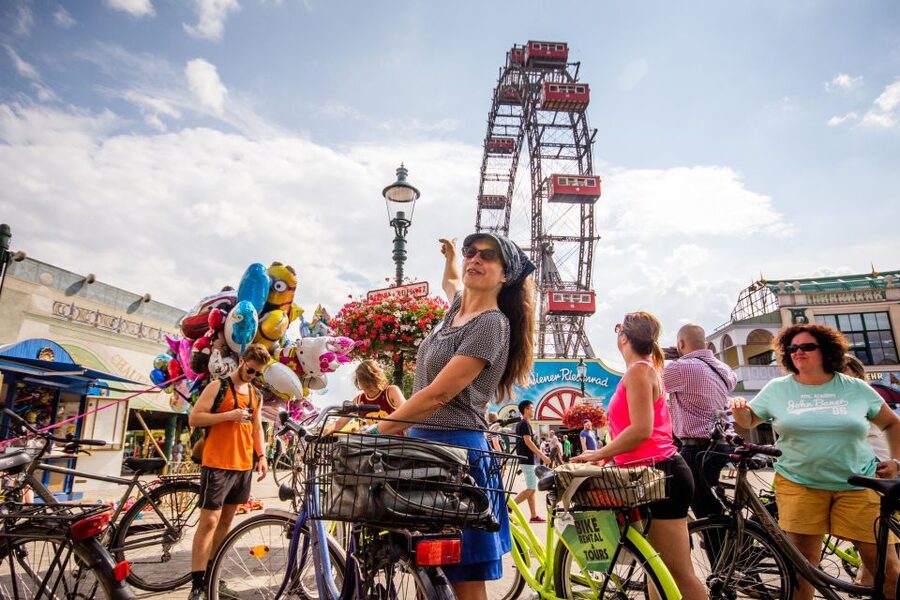
Karlskirche, at Karlsplatz, is one of Vienna’s most striking churches. Its large dome and twin columns give it a very different look from the Gothic Rathaus. The church was commissioned after a plague epidemic and dedicated to Saint Charles Borromeo, though the tour’s exact stop time can vary.
The practical value of seeing it by bike is simple: you can reach Karlsplatz without making it the sole focus of your afternoon. You’ll get the outside view and the guide’s explanation, then continue toward other parts of the city.
If you want to enter every church or spend time studying architectural details, three hours will feel short. This tour is best for orientation and comparison. It shows you enough to decide which places deserve a return visit.
The colorful turn at Hundertwasserhaus
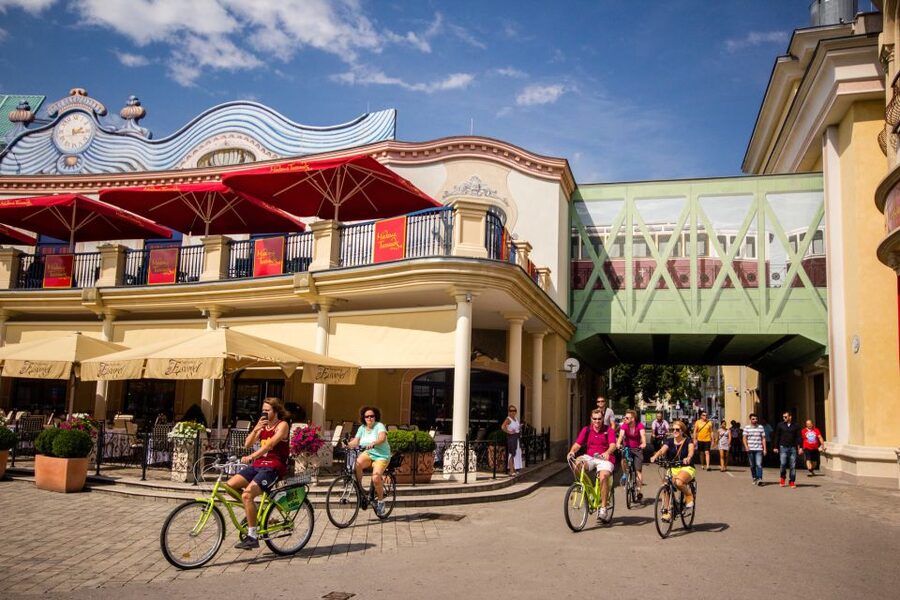
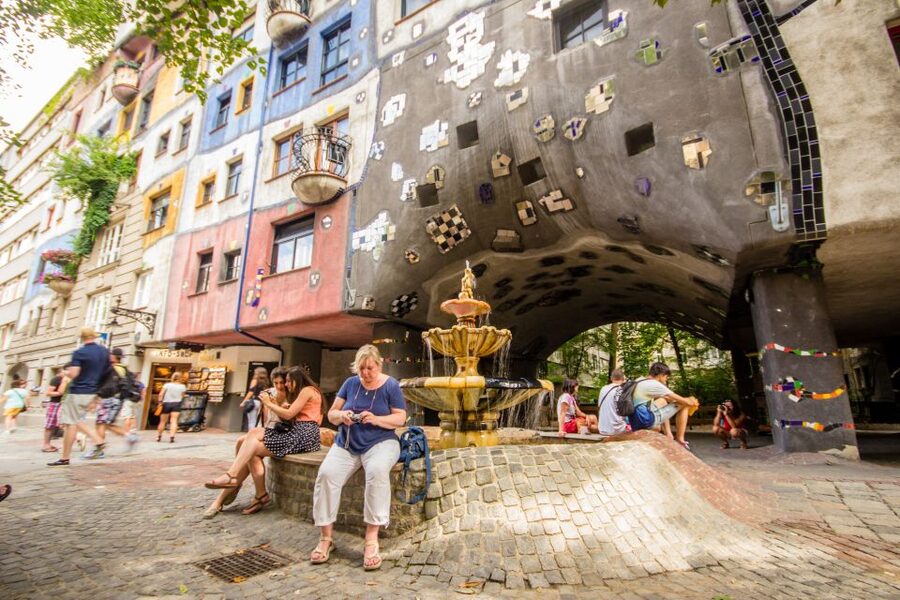
Hundertwasserhaus breaks the formal rhythm of imperial Vienna. The apartment complex is famous for uneven lines, bright colors, irregular windows, planted areas, and a playful approach to design. It looks like an architect gave the straightedge a holiday.
This is one of the most memorable stops because it shows another side of Vienna. The city is not only palaces, domes, and government buildings. It also has bold modern work that challenges the orderly appearance of the Ringstrasse.
The stop is especially useful for photographs. You should have time to get close, look at the façade, and hear why the building matters. Do not expect a museum visit or a long interior tour. The appeal here is the outside design and the change of mood.
Prater Park and the giant Ferris wheel
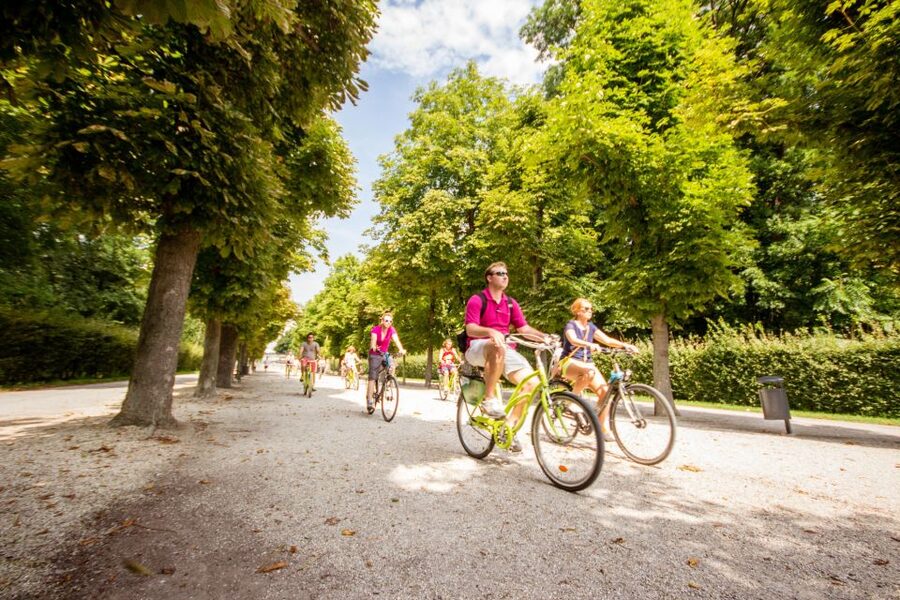
The ride continues to Prater Park, home to Vienna’s famous giant Ferris wheel. The wheel is one of the city’s best-known symbols, and its scale makes a strong final landmark before the ride back.
Prater also gives the route breathing room after the formal center. The park’s history includes a notable detail about its planting: one guide explained why the park has trees but no bushes. Small observations like this can make a familiar sight more memorable than a list of dates.
You will not spend the whole afternoon at the amusement park. This is a sightseeing stop, not a ride-ticket package. If you want to go up on the Ferris wheel, plan a separate visit.
Along the Danube Canal
The return section follows the banks of a sidearm of the Danube, commonly called the Danube Canal. This part of the route changes the view again. Instead of palace fronts and ceremonial squares, you see water, paths, bridges, and a more everyday side of Vienna.
The canal ride is also one reason the tour feels varied. You move from imperial architecture to contemporary housing, then to a park and a waterfront corridor. The city begins to feel like a living place rather than a collection of monuments.
The route is designed around cycling paths and well-surfaced streets, but city riding still requires attention. Stay with the group, watch intersections, and leave wheelies for somewhere else. One family was grateful that the guide patiently managed an energetic 12-year-old, but a basic comfort level on a bike remains important.
The guide makes the difference
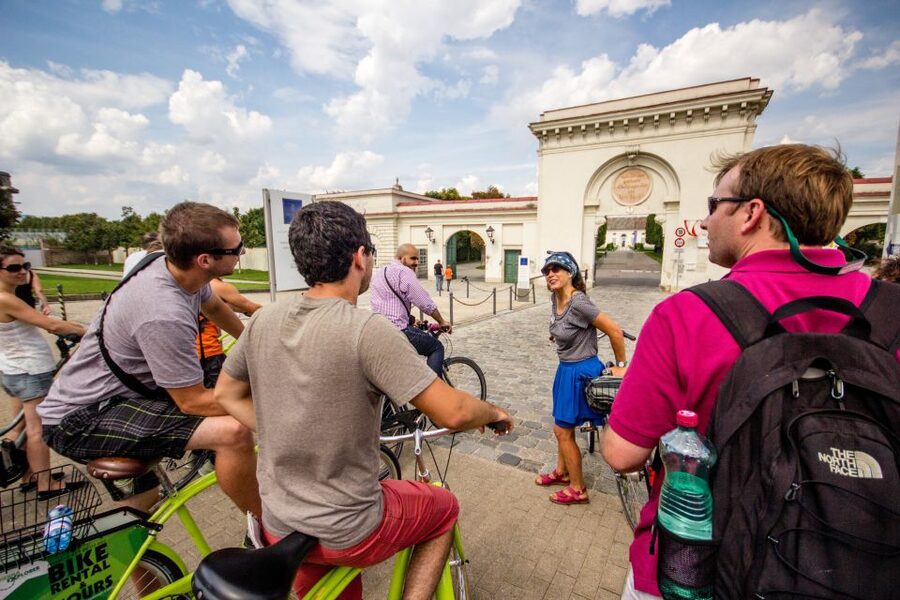
The most important part of a guided city ride is not the bicycle. It is the person leading it. The strongest guides on this tour have included Lisa, Marco, Horst, Jan, Robert, Karl, and others who combine facts with humor and practical care.
Jan has been praised for looking after both older and younger riders at traffic crossings. Horst is known for funny stories and a lively pace. Marco has handled questions ranging from Austrian history to details noticed along the road. Lisa has been described as energetic and especially good at keeping the ride enjoyable in poor weather.
Guide quality can vary from one departure to another, as it does on any group tour. Still, the pattern here is clear: expect more than a memorized speech. You’ll hear about imperial politics, the Ringstrasse, wartime history, local life, architecture, and sometimes small details you would miss on your own.
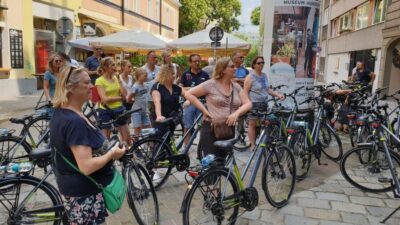
Group size matters. One departure had 14 people, which is manageable but not intimate. A larger group can make questions harder to ask and can slow the start if people arrive late. The guide’s ability to keep the group together matters more than the exact headcount.
Pace, weather, and what to wear
The ride is intended to be active but not punishing. Past departures have been described as safe, easy, and leisurely, with plenty of stops. You will get exercise, but this is not a serious cycling workout.
Wear comfortable clothing that lets you pedal freely. Good shoes matter more than stylish clothes. Bring a light layer if the day may cool down, and consider water for your own comfort, though the supplied information does not specify refreshment stops.
The tour runs in all weather. Rain ponchos are provided when conditions are wet, and they have helped keep the outing going during sudden showers. You may look less glamorous in a yellow poncho, but you will be far happier than riding soaked.
One practical point: a three-hour ride can feel long without a comfort stop. At least one rider wished for another break. If you need regular bathroom stops, ask the guide at the start what the plan is.
Is $55 a fair price?
At $55 per person, this tour is not the cheapest way to see Vienna. You are paying for the bike, helmet, guide, route planning, safety support, and the ability to cover a broad area in one outing.
I think the price makes sense if you have only a few days in Vienna, enjoy active sightseeing, or want a useful first look at the city. The tour can help you decide how to spend the next two days. You see where the Opera House, Karlskirche, Prater, Hundertwasserhaus, and canal fit on the map.
The value is weaker if you only want the old town’s narrow streets, interior visits, or long stops at museums. You will mostly see sights from outside, and the tour does not promise admission to the Opera House, churches, Parliament, or Ferris wheel.
Free cancellation up to 24 hours before departure and reserve-now, pay-later booking make it easier to fit the ride into a changing schedule. Starting times vary, so check the available departure when you book.
Who should book this ride?
I would choose this tour for a first day in Vienna, especially if you want history with movement rather than three hours indoors. It suits couples, families with confident young riders, and anyone who finds walking tours too slow for a large city.
It is also a good fit for history fans. The route connects imperial construction, political power, Nazi-era memory, modern design, and public parks in one circuit.
You may want a different plan if you dislike cycling in traffic, need frequent breaks, or want detailed time inside buildings. The ride is safe and mostly easy, but it is still a bike tour. You need to pedal, steer, and stay alert.
Should you book the Vienna city bike tour?
Book it if you want a broad, active introduction to Vienna and like having a local guide turn buildings into stories. The route is varied, the bikes are comfortable, and the pace leaves room for photographs and questions.
Skip it if your main goal is the historic center’s interiors or a slow, highly focused architecture tour. For most first-time visitors with three hours to spare, though, this is a smart way to get oriented, burn off a pastry or two, and see how Vienna’s imperial center connects with its more playful and modern sides.
FAQ
How long is the Vienna bike tour?
The tour lasts three hours.
What language is the tour conducted in?
The live tour is conducted in English. The guide may also speak German.
Where does the tour meet?
Meet at Franz Josefs Kai, 45, 1010 Vienna.
Which subway station is closest to the meeting point?
Schottenring is the nearest subway station, with access to U2 and U4.
Are bikes provided?
Yes. Comfortable, modern city bikes are included.
Are helmets available?
Yes. Safety helmets are available for the ride.
Does the route include the Ringstrasse?
Yes. The tour follows the Ringstrasse and passes major buildings including the Opera House, Rathaus, Parliament, Vienna University, and the Imperial Palace.
Does the tour visit Hundertwasserhaus and Prater Park?
Yes. The route includes a stop at Hundertwasserhaus and continues to Prater Park and its giant Ferris wheel.
What happens if it rains?
The tour operates in all weather conditions, and rain ponchos are provided in wet weather.
Can I cancel the booking?
You can cancel up to 24 hours in advance for a full refund. You can also reserve now and pay later.
Newest rides we have reviewed in the world
- Ljubljana by E-Bike: Guided City Highlights Tour★ 4.8 · 28 reviews
- London Christmas Lights Bike Tour★ 4.5 · 70 reviews
- Lisbon: Portuguese Petiscos Tasting Tour by E-Bike★ 5.0 · 16 reviews
- Liverpool: The Beatles Tour on Electric Pedal-Assist Ebikes★ 5.0 · 17 reviews
- Lisbon Bike Tour: Langs de rivier van Belém naar Lissabon★ 4.7 · 59 reviews
- Lisbon: E-Bike Adventure Through the City of Seven Hills★ 5.0 · 28 reviews
- Lisbon: 7 Hills Panoramic Guided Tour by E-Bike★ 4.8 · 50 reviews
- Lisbon: Guided E-Bike Tour to Belém★ 4.8 · 115 reviews
Vienna Cycling Tours, compared.
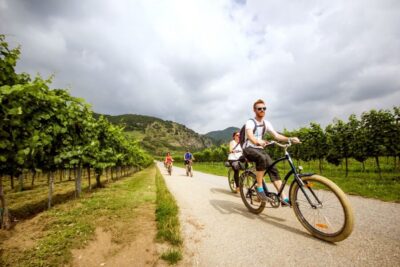
Wachau Valley Wine Tasting Bike Tour from Vienna
Read our review →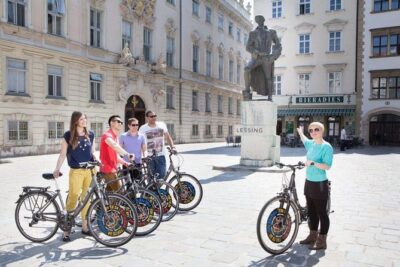
Grape Grazing: Wachau Valley Winery Biking Tour
Read our review →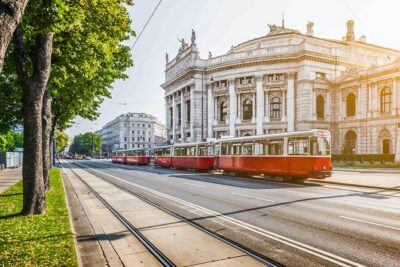
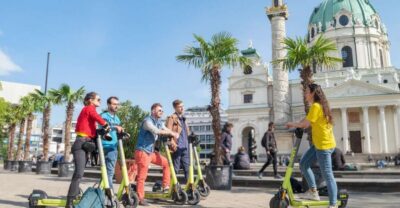
Guided Tour by Kick Bike or E-Scooter with a Local
Read our review →Other lists this ride turns up in