REVIEW · PRIVATE CYCLING TOURS IN ROME
Rome E-Bike Small Group Tour of the Appian Way with Private Option
Rome’s ancient Appian Way is the star here: a rough, remarkably old road leading away from the city walls into quieter surroundings. You begin at Circus Maximus, with the Palatine Hill behind you, then pedal past imperial ruins, catacombs, churches, and Roman countryside on a route first built in 312 BC.
I like the six-person limit, which gives your guide room to stop, explain, and adjust the pace. I also like the e-bikes, especially for the old cobbles and the ride out of central Rome. The main drawback is that this is still an active bike ride, not a sightseeing bus. Traffic appears on parts of the route, and the original stones can be bumpy.
Key points to know before you book
- The Appian Way is the main event: You ride a sizable stretch of one of Rome’s most important ancient roads.
- The group never exceeds six people: That makes it easier to ask questions and get help with the bike.
- You see Rome beyond the center: The route trades crowded streets for ruins, parks, old churches, and quieter stretches.
- The e-bike helps, but does not do the work for you: Moderate fitness is still recommended.
- Several guides receive special praise: Enrico, Massimo, Alice, Andy, and Brando are all named as attentive and engaging guides.
- Catacombs are explained from above ground: The tour does not include an underground catacomb visit.
Why the Appian Way is worth three hours
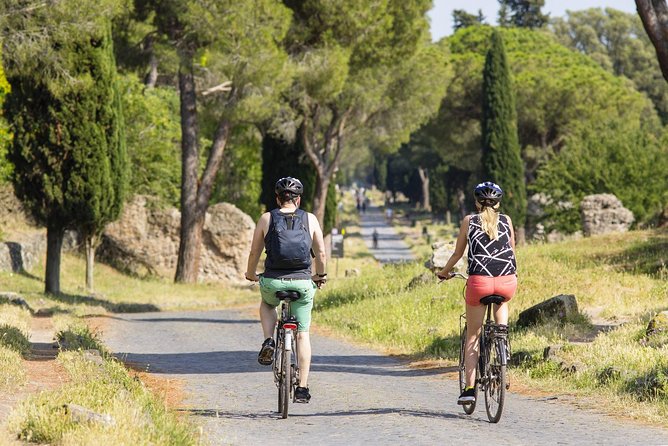
Rome can become a parade of famous squares and packed archaeological sites. The Appian Way gives you a different view of the city. Instead of moving from one central monument to the next, you follow an old Roman road out toward open ground, where the remains feel less hemmed in by modern buildings.
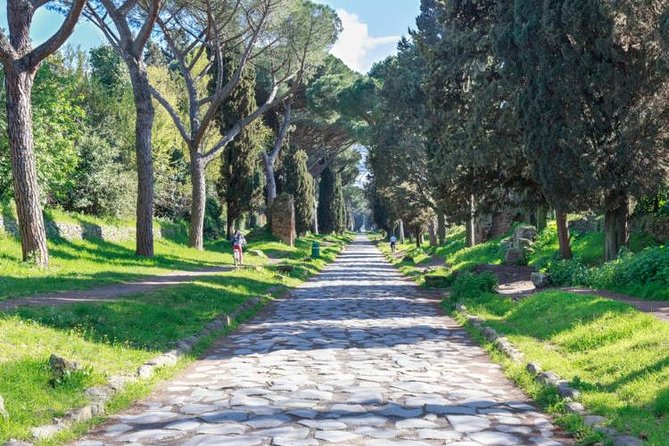
This road was built as far back as 312 BC and became a key route for the Roman Empire. That date is hard to grasp until you are actually riding over parts of the route. The stones are not polished like a museum floor. They are uneven, practical, and still connected to the road’s original purpose.
I like the way a bike makes the route feel continuous. On foot, you would cover less ground in three hours. By vehicle, you would lose the texture of the road and the small changes between city streets, ancient gateways, church grounds, and Roman ruins. The e-bike gives you range without turning the trip into a strenuous cycling test.
The ride is also a useful break from central Rome. Alice is praised for being patient and professional, while Massimo is described as careful with bike adjustments and safety. Enrico is repeatedly singled out for his warmth, historical explanations, and willingness to keep the pace comfortable. Your guide may be someone else, but the experience depends heavily on that person’s ability to manage both traffic and history.
More E-Bike Tours in Italy
- Rome EBike Tour: Appian Way, Catacombs & Roman Aqueducts
★ 5.0 · 1,766 reviews - Rome: Top Highlights & Hidden Gems Tour by Cannondale E-Bike
★ 4.9 · 1,760 reviews - Rome: Appian Way & Aqueducts E-Bike Tour (Catacombs & Food)
★ 4.9 · 1,498 reviews
Starting at Circus Maximus and the Palatine Hill
The meeting point is at Via dei Cerchi, 59, close to Circus Maximus. This is a strong starting place because the first view immediately connects you with Rome’s imperial past. The ancient stadium once held enormous public events, while the Palatine Hill rises nearby with its imperial villas.
You do not begin with a long walk through the Colosseum or a formal museum visit. Instead, you get your bike and set off from one of Rome’s biggest ancient spaces. The route lets you see the Colosseum area and the Palatine without making them the entire focus of the tour.
That difference matters. If you have already visited the Colosseum, this ride adds context rather than repeating the same indoor experience. If you have not, you will still see major ancient landmarks, but you should not book this as a substitute for a full Colosseum visit.
The early part of the ride includes city streets, so you need to pay attention and follow the guide’s instructions. One guide, Massimo, is praised for explaining how drivers might react and for making the route feel manageable. That sort of practical leadership matters more here than a polished speech.
The Baths of Caracalla and Rome’s imperial scale
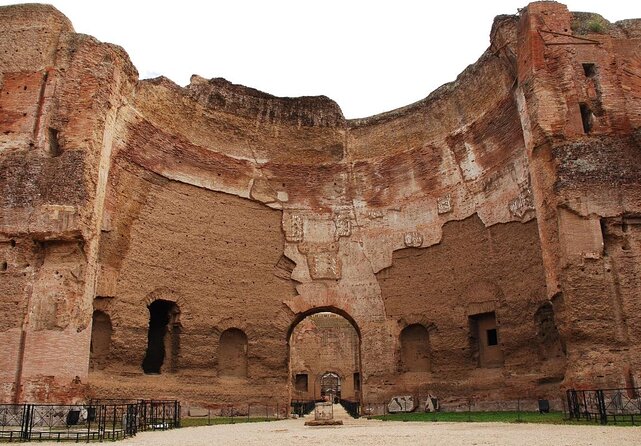
The ride passes the Baths of Caracalla, described as the second largest thermal bath complex in Rome. Even from outside, the scale of the surviving walls gives you a useful sense of how much space Roman public life could occupy.
The baths were not simply places for washing. They were enormous social and civic centers, and the remains help show how the empire spent resources on public facilities. Your guide explains the site as part of the wider story of Roman power, rather than treating it as an isolated pile of ruins.
This is one of the tour’s better early stops because it adds variety. You have the stadium at Circus Maximus, the hilltop imperial residences, and now a huge bath complex. You are not just ticking off similar-looking stones.
The stop is a ride-by and explanation rather than a separate, extended interior visit. If you want time inside every site, three hours will feel short. If you want to connect several major places by bicycle, the pace works well.
Porta San Sebastiano and the old city boundary
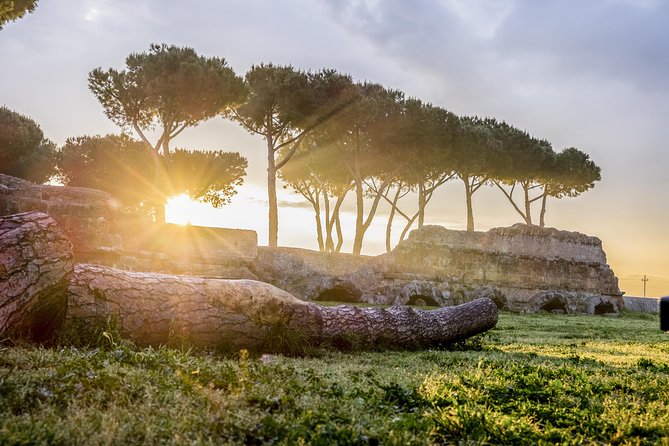
As you continue, Porta San Sebastiano helps mark the transition from Rome’s central streets toward the Appian Way. The gate is part of the old defensive edge of the city, and it gives the route a clear sense of moving beyond Rome’s historic core.
This is where the tour begins to feel less like a standard city sightseeing ride. You are still close to important monuments, but the flow changes. The old road points outward, and the built-up center gradually gives way to longer stretches of parkland and ancient remains.
The route is not entirely free of modern traffic. One direct account of the ride notes that traffic appears at times, while the guide made the plan clear and helped the group feel safe. That is useful information for anyone who has not cycled in Rome before.
You should be comfortable following a guide through shared roads. The small group helps, but it does not remove the need to watch the road, control your speed, and listen carefully at crossings.
More E-Bike Tours in Rome
- Rome: Appian Way, Catacombs, & Roman Aqueducts E-bike Tour
★ 4.9 · 1,421 reviews - Rome City Small Group Bike Tour with quality Cannondale EBike
★ 5.0 · 1,380 reviews - Rome by Night – Ebike Small Group Tour – Food and Wine (Option)
★ 5.0 · 1,275 reviews - Rome by Night: E-bike Small Group Tour -Food & Wine (Option)
★ 4.9 · 1,233 reviews
Riding over the Appian Way’s rough stones
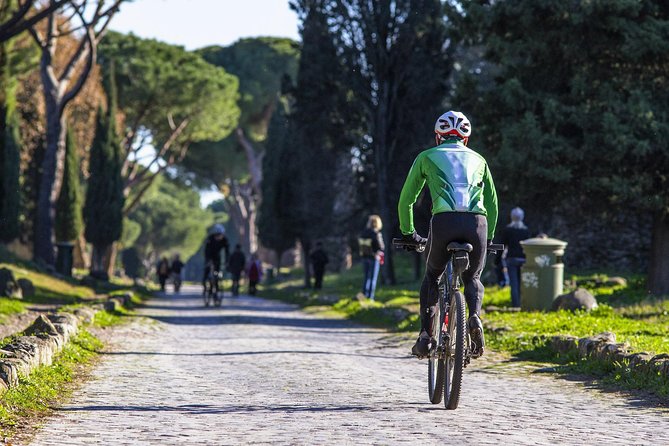
The Appian Way is not a smooth cycle path. Some sections use large cobbles, and the old surface can make the ride feel physical even with electric assistance. One rider specifically found the e-bike easy to use over the original stones, while another noted tougher sections with large cobbles.
This is the point where the electric bike earns its place. It assists your pedaling on uneven ground and helps reduce the effort needed to cover a long route. Still, the motor does not turn the ride into a passive experience. You need moderate physical fitness, and you should expect vibration through the bike.
Your guide should prepare you for the rougher stretches and help you choose a sensible line. Massimo is praised for showing the group how to handle difficult sections, and Enrico is praised for setting a comfortable pace and stopping often.
If you have not ridden a bike in years, this may not be the right first cycling experience. If you regularly use a bicycle and can manage three hours with breaks, the e-bike should make the route much more approachable.
A regular mountain bike can also be requested or chosen in some cases. One rider selected a standard mountain bike specifically for more exercise and found the added effort worthwhile. That option suits active cyclists, but most visitors will probably appreciate the electric assistance.
Mausoleums, Villa di Massenzio, and ancient ruins
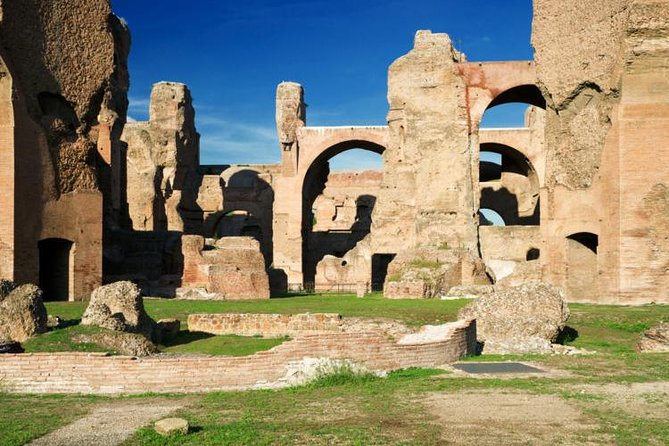
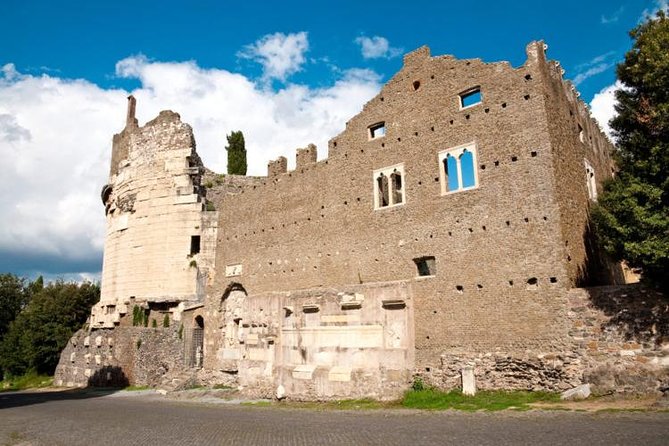
The ride includes one of Rome’s oldest and most important mausoleums, along with Villa di Massenzio, the Temple of Romulus, and Villa dei Quintilii among the listed sights. These places broaden the story beyond the most famous monuments in the center.
Villa di Massenzio is especially useful for understanding how powerful Roman families and rulers occupied space outside the packed heart of the city. The Temple of Romulus adds another layer, showing how ancient religious and imperial remains appear along the same route.
Villa dei Quintilii is another significant Roman site associated with a large country residence. From a bicycle, you gain a sense of how these sites relate to one another geographically. The Appian Way is not just a road passing random ruins. It links a chain of places that once supported movement, wealth, religion, and political power.
Do not expect a full archaeological excavation visit at every stop. The tour’s value comes from the overall route and the guide’s explanations. You see more in three hours than you could comfortably reach on foot, but each place receives a focused stop rather than a long lecture.
San Callisto, San Sebastiano, and the catacombs
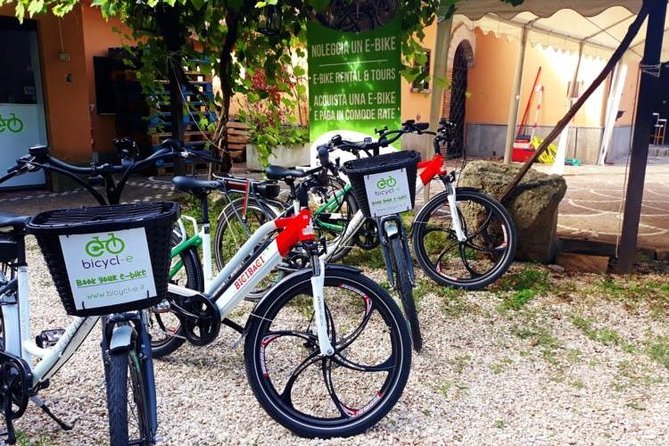
The route passes the private park of the Church of San Callisto and the Church of San Sebastiano. These churches sit amid one of Rome’s most important areas for underground burial sites.
Your guide explains the miles of catacombs beneath the ground, but this activity does not include a guided catacomb visit. That distinction is important. You can learn where the catacombs are and how they fit into the Appian Way, then return on your own if you want an underground tour.
I see this as a sensible choice for a three-hour bike outing. Adding an official catacomb visit would require more time and would change the rhythm of the ride. Still, if the catacombs are your main reason for coming to this part of Rome, plan a separate visit rather than assuming you will go underground during the bike tour.
The churches and surrounding parks also provide a quieter change from the central monuments. This is one of the strongest parts of the route for anyone who wants a calmer side of Rome without giving up serious ancient sites.
What the small group changes
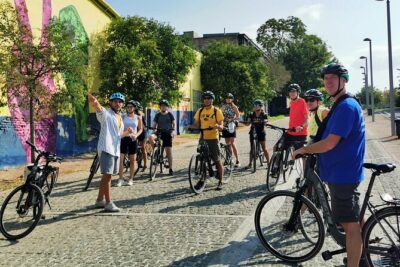
The maximum group size is six people. That is a meaningful feature, not just a line in the booking details. A guide can stop often, answer individual questions, check that everyone is comfortable, and help with bikes without managing a large cluster.
The small size also helps on the narrow or rough parts of the Appian Way. You are less likely to feel like part of a large moving procession. The guide can keep the group together more easily and make small pace changes when needed.
A private option is available if you want the ride adjusted to your group. The private format is intended to move at your own pace, which could be useful for families, mixed fitness levels, or anyone who wants more time for questions and photographs.
Children are welcome, but you should provide their ages when booking so the operator can arrange suitable bikes. The tour is family-friendly, though the cobbles, traffic, and three-hour duration still call for children who can follow cycling instructions.
Guides who shape the experience
The listed guides include Enrico, Massimo, Alice, Andy, and Brando. Enrico is repeatedly praised for clear explanations, good humor, patience, and a real affection for Rome. Massimo is noted for both historical detail and practical bike support, including adjustments and safety advice.
Alice is described as patient and professional, with a strong connection to her home city. Andy brings humor and historical detail to the ride, while Brando is described as attentive and pleasant. These names matter because a bike tour can succeed or fail on the guide’s judgment, not just on the route.
You should expect regular explanations rather than one continuous speech. The best moments come when the guide stops at a ruin, points out something easy to miss, and connects it to the wider Roman story.
The tour is offered in English, French, Spanish, Portuguese, and Italian. If you need a language other than English, add that request in the booking notes.
Price, timing, and practical value
At $192.29 per person, this is not a budget activity. You are paying for a three-hour guided ride, the bicycle, a local expert guide, the small group format, and access to a route that would be awkward to cover independently in the same time.
The price makes the most sense if you value efficiency and interpretation. You see Circus Maximus, the Baths of Caracalla, Porta San Sebastiano, the Appian Way, Roman villas, mausoleums, churches, and catacomb areas without arranging several separate trips.
It is less compelling if you already know the Appian Way well, prefer to cycle alone, or want long visits inside individual archaeological sites. The route is broad rather than slow and museum-like.
The activity lasts about three hours and returns to the meeting point. It is near public transportation, and most people can participate if they have moderate fitness. Gratuities are optional. Free cancellation is available up to 24 hours before the start time, which gives you some flexibility if your Rome plans change.
Who should book this Appian Way ride?
Book it if you want to see an older, quieter side of Rome and like the idea of linking major ruins by bicycle. It suits visitors who have already seen the central highlights, as well as first-time visitors who want a wider view of the ancient city.
It is also a good match for families with children who can ride safely, active couples, and small groups that prefer personal attention. The private option is worth considering if your party has different cycling speeds or wants a more flexible pace.
Think twice if you dislike uneven roads, feel uneasy around city traffic, or want a purely passive sightseeing experience. The e-bike reduces effort, but you still pedal, steer, and manage the rough stones.
I would book this tour for the route, the small group, and the chance to hear Rome explained while moving through it. Just bring sensible expectations: this is an active archaeological outing, not a soft ride past smooth monuments.
FAQ
Where does the Rome Appian Way e-bike tour start?
The tour starts at Via dei Cerchi, 59, 00186 Rome, Italy, near Circus Maximus.
Where does the tour end?
The activity ends back at the meeting point.
How long does the tour last?
The tour lasts approximately three hours.
What is the maximum group size?
The group is limited to six people. A private tour option is also available.
Are catacomb visits included?
No. The guide explains the catacombs around San Callisto and San Sebastiano, but the tour does not include guided visits inside them.
Is the tour available in languages other than English?
Yes. It is offered in English, French, Spanish, Portuguese, and Italian. You should request a language other than English in the additional notes when booking.
Can children join the tour?
Yes. Children are welcome, and you should provide the ages of your party members so suitable bikes can be arranged.
More Small-Group Bike Tours in Italy
- Appian Way & Aqueducts small group e-bike tour(catacombs & food)
★ 5.0 · 531 reviews - Rome Highlights by E-Bicycle Small group
★ 5.0 · 486 reviews - Florence Vintage Bike Tour–guided, small group or private option
★ 4.5 · 524 reviews - Florence: Guided Bike Tour in Small Group
★ 4.6 · 432 reviews
More Private Cycling Tours in Rome
- Rome’s Best by E-bike: Guided City Tour (Small Group or Private)
★ 5.0 · 207 reviews - Private Rome City Bike Tour with quality Cannondale EBike
★ 5.0 · 176 reviews - Rome: Appian Way, Aqueducts & Catacombs (Small Group or Private)
★ 5.0 · 103 reviews
Newest rides we have reviewed in Rome
- Rome E-Bike Tour: Ultimate Street Food and Market Feast★ 4.9 · 50 reviews
- Rome: Appian Way, Aqueducts & Catacombs (Small Group or Private)★ 5.0 · 103 reviews
- Private Rome City Bike Tour with quality Cannondale EBike★ 5.0 · 176 reviews
- Rome’s Best by E-bike: Guided City Tour (Small Group or Private)★ 5.0 · 207 reviews
- Rome: Cannondale E-Bike Evening Tour with Optional Dinner★ 4.9 · 251 reviews
- Rome: Electric Bike Rental★ 4.6 · 99 reviews
- Bike Rental inside Appian Way Regional Park★ 4.5 · 104 reviews
- Highlights & Hidden Gems Tour with Top E-bike★ 5.0 · 300 reviews
Small-Group Bike Tours, compared.
Small Group Guided Bike Tour of Amsterdam’s Hidden Gems
Read our review →
Rome City Small Group Bike Tour with quality Cannondale EBike
Read our review →
Complete Cracow Bike Tour (small group of maximum 15 people!)
Read our review →
Rome by Night – Ebike Small Group Tour – Food and Wine (Option)
Read our review →
Rome by Night: E-bike Small Group Tour -Food & Wine (Option)
Read our review →