
REVIEW · LOS ANGELES
Los Angeles: Arts District Bike Tour & Urban Adventure
Los Angeles hides some of its best art behind warehouse walls, in narrow alleys, and beneath the noise of downtown traffic. This small-group Arts District bike tour gets you to those places, with guide Jen adding the local stories that turn a wall of paint into a record of crews, artists, studios, and changing neighborhoods. You ride about 6 miles, mostly on flat streets, with stops at the Sixth Street Bridge, Little Tokyo, The Container Yard, and Hauser & Wirth.
I like two things here. First, the route reaches corners you would be unlikely to find on your own, including tucked-away alley art and a less polished side of East Los Angeles. Second, the careful pace and amplified guide make it easier to follow the story while riding, and Jen has been praised for helping the group handle crossings safely. The main drawback is that you must be comfortable riding beside cars, and Los Angeles sun can make the trip hot.
Key details before you book
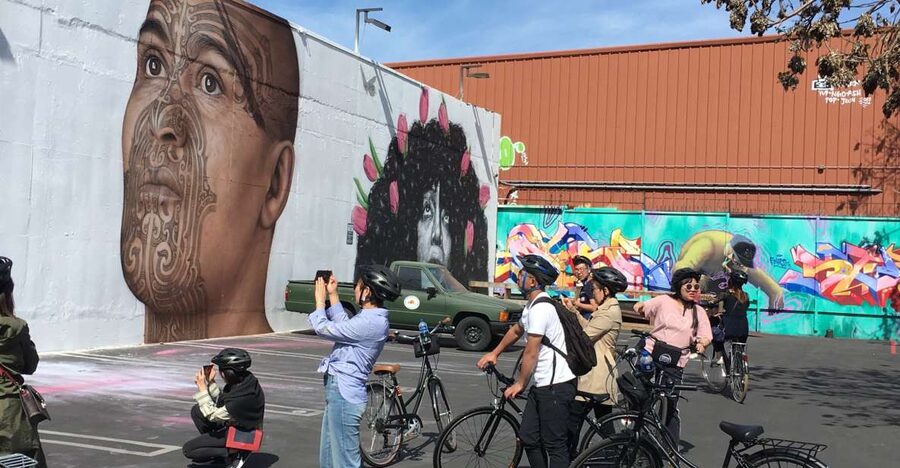
- Six miles of art and city history: The route links Grand Central Market, Little Tokyo, the Arts District, East Los Angeles, and the Sixth Street Viaduct.
- A group capped at eight: The small size leaves room for questions and makes alley stops less awkward.
- Jen’s careful guiding style: Her use of an amplified speaker helps you hear explanations while the group is moving.
- A 15-minute Hauser & Wirth stop: You can view fine art in a former flour mill or buy a drink or snack nearby.
- Mostly flat but traffic-aware riding: You need basic road confidence, traffic-rule awareness, water, and sunscreen.
- A useful $80 value: Bike, helmet, guide, and gallery admission are covered, while food and drinks cost extra.
Starting at Grand Central Market on Hill Street
Meet on the Hill Street side of Grand Central Market, at 312 South Hill Street. Look for the Tour Meets Here sign on the sidewalk and arrive 15 minutes early. You do not need to print a voucher, since the operator has the guest list ready.
The tour begins with a 10-minute safety briefing. This is more than a formality. You will be riding near cars, so the guide needs to cover basic road rules and the way the group will move through crossings. If you arrive late, the bikes may already be in the first-floor parking garage, and the tour cannot wait past its start time.
Grand Central Market is also a smart meeting place. You can arrive early for food or return afterward to choose from more than 40 eateries. The market gives the outing a practical start and finish, rather than leaving you beside an anonymous downtown curb.
More Cycling Trips in Los Angeles:
- The Ultimate LA Tour: Full Day Sightseeing Tour On Electric Bike
★ 5.0 · 478 reviews - Small-Group Electric Bike Tour of Santa Monica and Venice
★ 5.0 · 458 reviews - Beverly Hills Tour: Movie Star Homes and LA Sightseeing by E-Bike
★ 5.0 · 191 reviews
Pedaling through Little Tokyo toward the Arts District
The route first passes through Little Tokyo, one of the most recognizable neighborhoods in downtown Los Angeles. You get a short look at its streets on the way out, then return through the area later, with time set aside for sightseeing and photos.
This section helps frame the Arts District. You are not simply riding from mural to mural. You are moving between neighborhoods with distinct identities, food traditions, and building styles. On the way back, First Street is known for ramen and noodle houses, and the smells may give you a reason to plan lunch at Grand Central Market after the ride.
The route is about 6 miles in total, although one rider recorded roughly 10 kilometers. That small difference is normal for a city route and stops. The pace is described as easy, but easy does not mean passive. You still need to start, stop, steer, and watch traffic.
How the Arts District changed from storage yards to art center
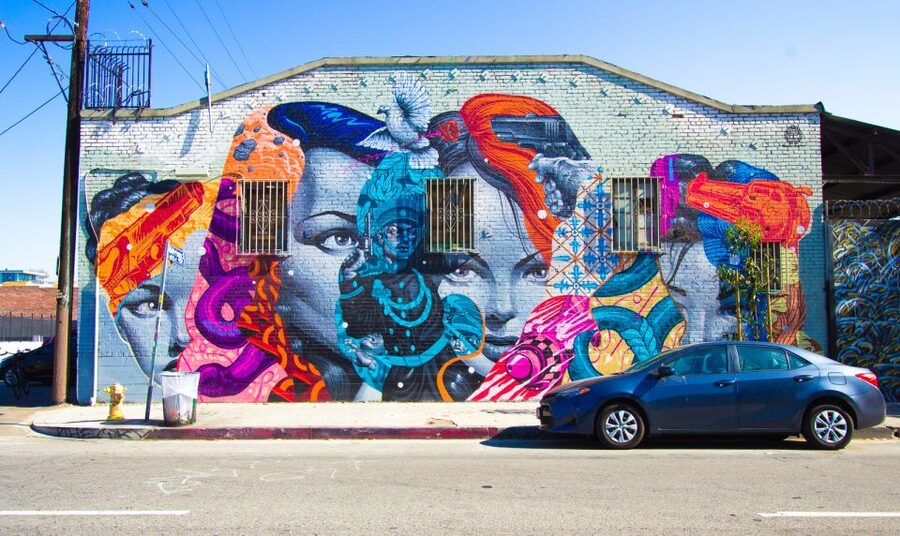
The Arts District grew around the train station and once served as cold storage for the farms and ranches that supplied Los Angeles. That earlier role explains the industrial buildings, warehouses, and broad walls that now provide space for large murals.
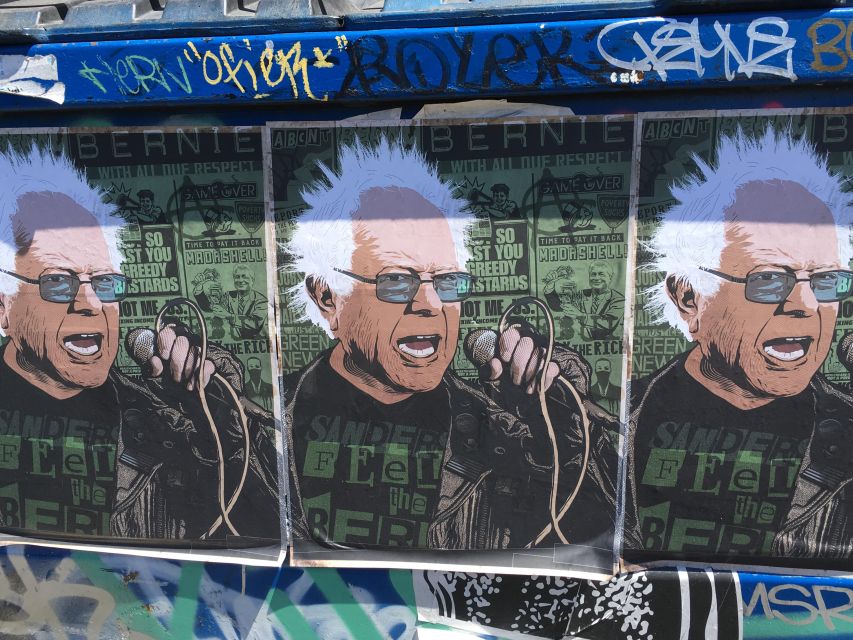
The neighborhood shifted toward an underground artist community in the early 1980s. The tour explains how street artists and graffiti crews claimed walls, developed recognizable styles, and helped put the area on the city’s cultural map. Some artists later moved into galleries and fine art, while others kept working in street settings.
That story matters because the murals are not just decoration. They reflect who had access to walls, how artists organized themselves, and how an industrial district could become a place that attracted new money. The tour also covers future development, including the arrival of celebrity chefs, entertainment businesses, and technology companies.
You will see a neighborhood in motion. New loft apartments, breweries, restaurants, movie studios, and large-format paintings now share space with older industrial buildings. The contrast is part of the point, although anyone hoping for a frozen, untouched art quarter should know that the area is changing quickly.
Angel City Brewery and the first Arts District stops
Angel City Brewery is a brief photo stop, only about two minutes. It is not a tasting session, and food or drinks are not included. Think of it as a quick landmark within the district rather than a full brewery visit.
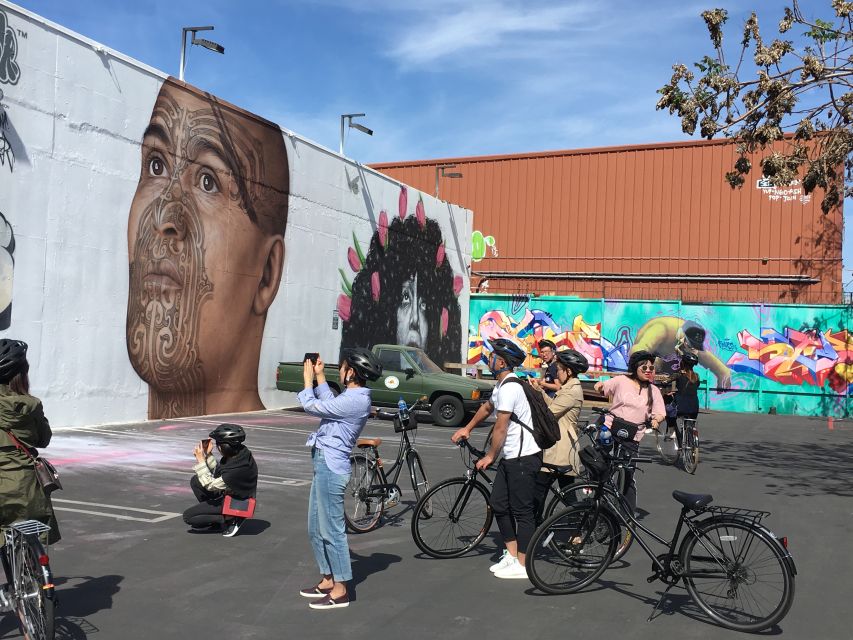
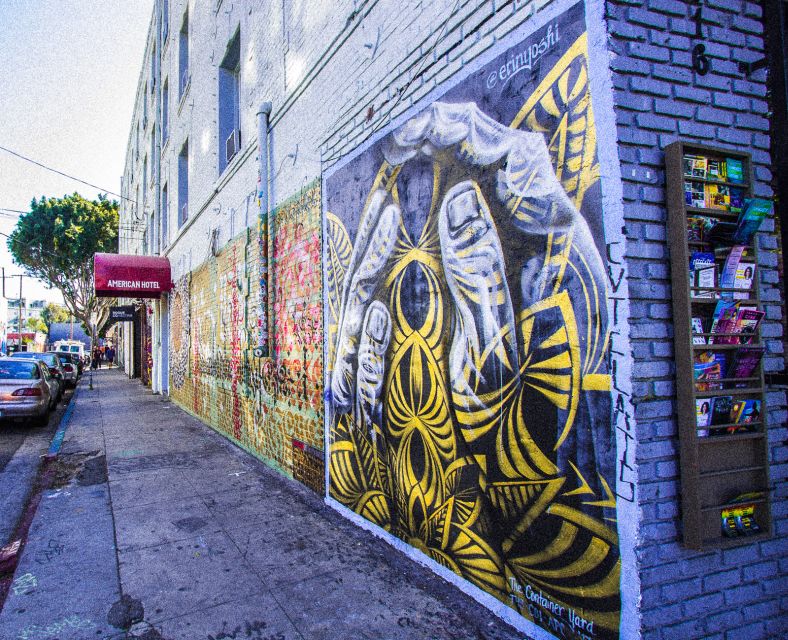
The next stops include Arts District Co-op and The Container Yard. At the co-op, you have a few minutes to visit and take pictures. The Container Yard offers another five-minute photo stop, with the kind of large wall work that makes this route especially useful for anyone interested in urban art photography.
The timing is short, so keep your phone ready. You may not get a long, quiet inspection of each painting. The benefit is variety: several compact stops let you see how different walls, alleys, and buildings carry different kinds of work.
The guide also points out the crews connected with the art. These groups claim alley walls and build colorful, layered pieces over time. You may hear about artists who are familiar to the local scene, and possibly see some of them, though no particular artist appearance is promised.
Same roads, a different saddle:
- Los Angeles: Hollywood Sign Electric Bike Tour
★ 5.0 · 166 reviews - Los Angeles: Santa Monica and Venice eBike Tour
★ 4.9 · 139 reviews - Santa Monica: Bike and eBike Rentals with Map
★ 4.8 · 128 reviews - Hollywood Sign: Scott E-Bike Tours Los Angeles Private Tour
★ 5.0 · 83 reviews
Secret alleys and the art you would miss alone
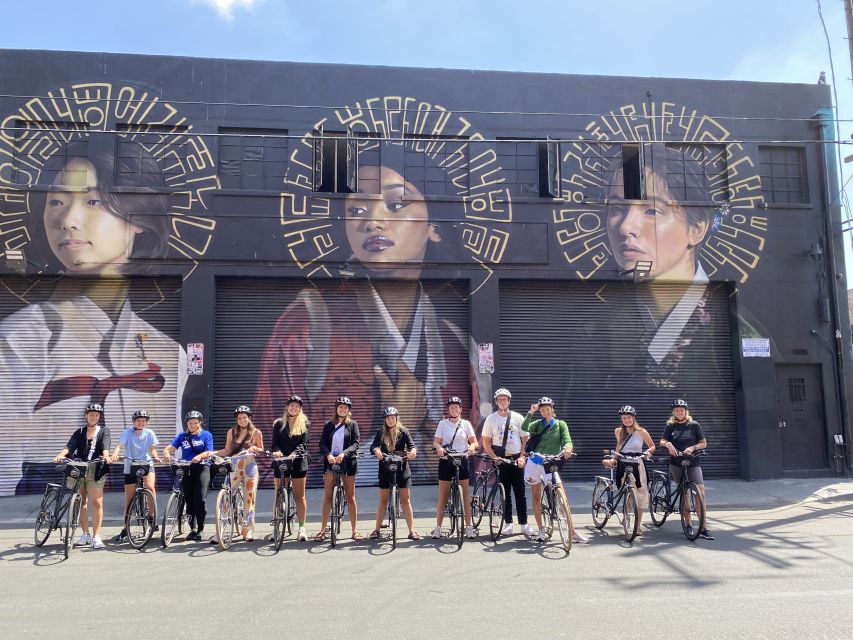
The strongest part of the ride is its use of small passages and less obvious walls. Handlebar Bike Tours began this Arts District route in 2017 and continues to search for alleys and passages known to artists and people who work in the area.
That local knowledge changes the value of the tour. You can find famous murals online, but finding an alley that is easy to miss from a car is harder. A bike also lets the group move between several pockets of art without spending the whole outing walking along hot streets.
You should still expect the artwork to change. Street art can be painted over, altered, or replaced. That impermanence is part of the experience, but it also means the exact walls you see can differ from one visit to the next. Rebecca’s note about seeing art that may not be there again captures a real feature of this kind of tour: the route records a moment in a neighborhood that keeps rewriting itself.
The Sixth Street Viaduct and the ride into East Los Angeles
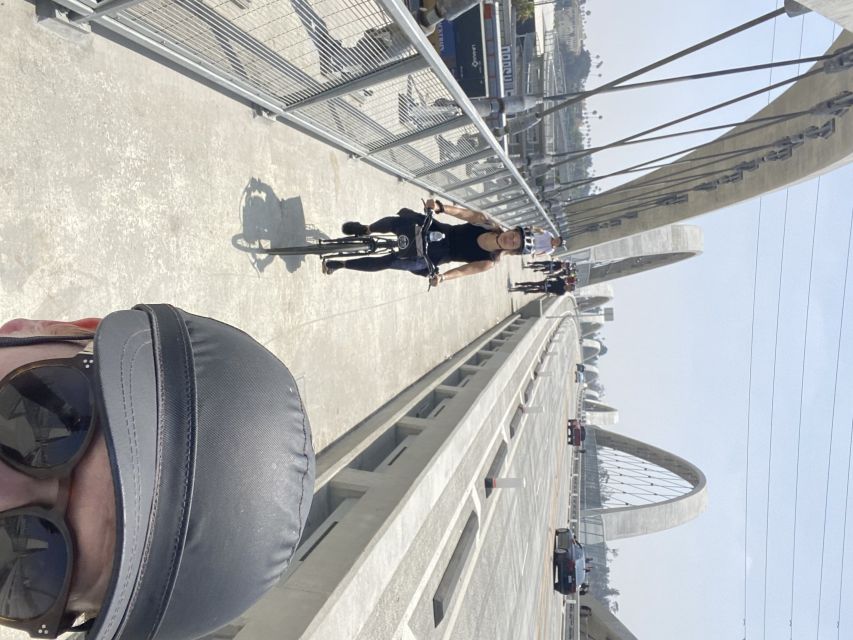
The Sixth Street Viaduct is one of the trip’s most memorable visual stops. Its dramatic arches give you a strong city backdrop and a chance to photograph the structure from the bike route. The stop is listed at about five minutes, so you will have time for pictures but not a long architectural visit.
From there, the route dips into East Los Angeles for street art that the usual social-media circuits may miss. This is a useful distinction. The tour is not built only around the most photographed walls. It aims to show work in places that are less obvious, which gives the outing a more local and exploratory feel.
This section also reinforces the need for cycling confidence. The route is mostly flat, but flat terrain does not remove traffic, intersections, or the need to follow road rules. If you are uneasy riding beside cars, this may not be the right way to see the district. If you ride regularly in cities, the route should feel more manageable.
A thoughtful pause at Hauser & Wirth
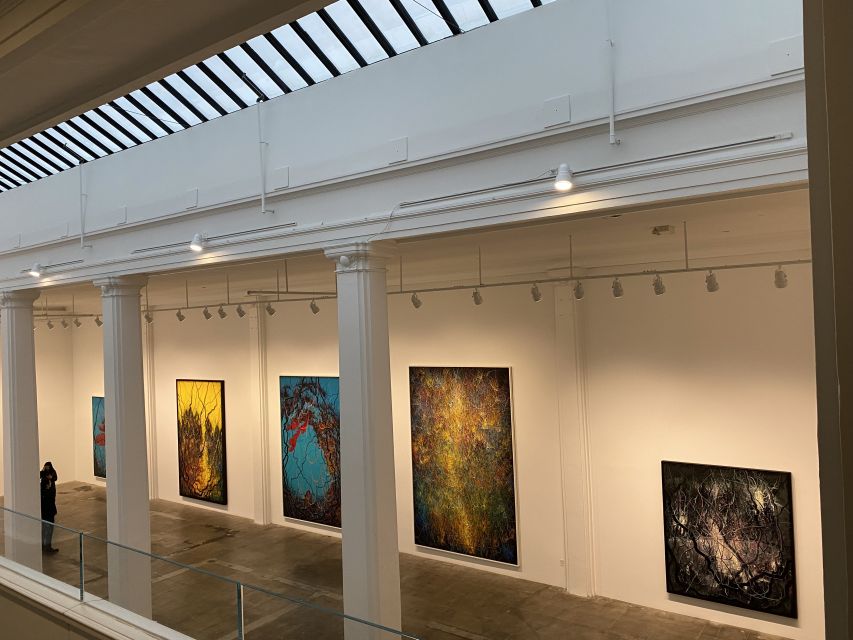
The 15-minute stop at Hauser & Wirth offers a change of pace. The gallery occupies a converted former flour mill and presents fine art in a museum-caliber setting. After a series of outdoor walls and fast-moving street scenes, the indoor gallery gives your eyes a quieter place to rest.
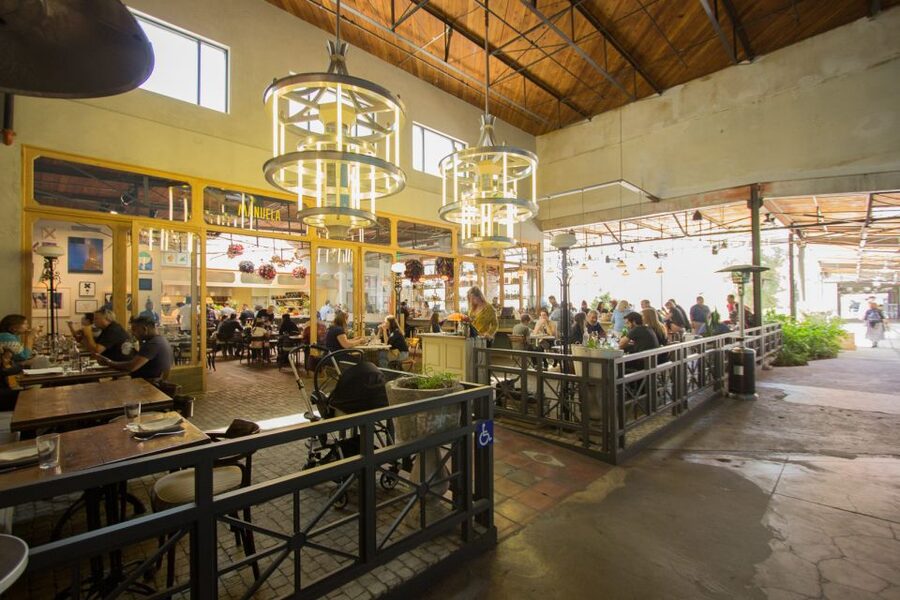
Gallery admission is included. You can browse the art, get a drink at Manuela, or buy ice cream or coffee at nearby cafes. Food and drink are not part of the $80 price, so budget extra if this break sounds appealing.
This stop also helps connect the tour’s two art worlds. Earlier, you hear about street artists who moved toward gallery work. Here, you see the sort of formal art setting that contrasts with alley walls and crew-painted surfaces. The visit is short, but it adds useful context rather than feeling like a random indoor stop.
Returning through Little Tokyo to Grand Central Market
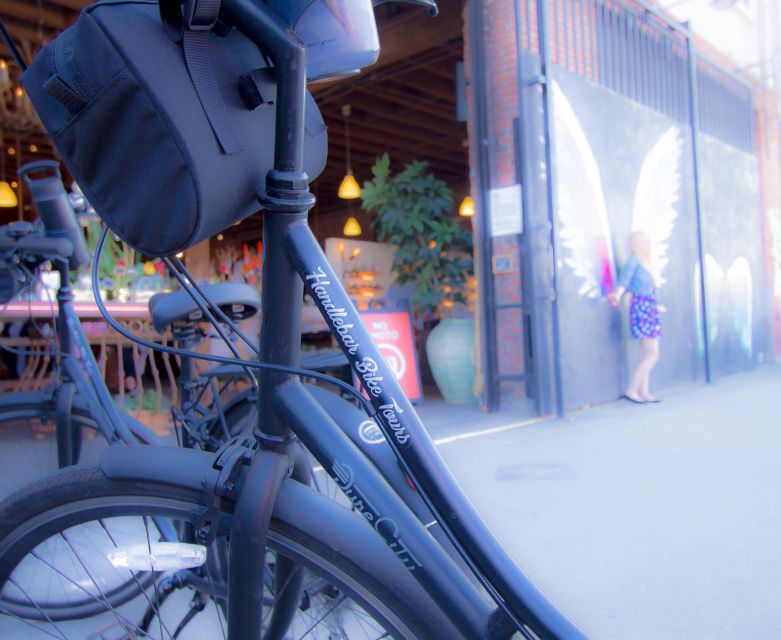
The return route goes through Little Tokyo via First Street. You get about 20 minutes for photos and sightseeing, which is longer than most of the quick mural stops. That gives you a little more time to notice the neighborhood instead of simply passing through it.
By the end, you may be ready for food. The ride finishes at Grand Central Market, where more than 40 eateries offer a wide range of choices. The guide also provides a printed list of local recommendations visited during the tour, a helpful extra if you want to keep exploring downtown after the bikes are returned.
The full experience lasts 150 minutes, or two and a half hours. The schedule includes riding, short photo stops, the safety briefing, gallery time, and Little Tokyo sightseeing. It is long enough to give you a clear sense of the area without taking up a full day.
What the $80 price includes
At $80 per person, this is not the cheapest way to look at downtown Los Angeles. The price includes the bike, helmet, amplified live guide, and entrance to Hauser & Wirth. It also pays for route planning and access to streets and alleys that are harder to locate without local help.
I see the best value for visitors who want more than a standard downtown overview. You are getting neighborhood history, street-art context, a small group limited to eight, and several stops across a broad area. The guide’s careful pacing matters here. One past participant specifically praised Jen for using a speaker so explanations remained clear while the group rode.
The value is weaker if you mainly want a relaxed meal, a brewery visit, or a long time at each mural. Angel City Brewery is only a photo stop, and several art stops last about five minutes. This is a moving city tour with frequent short pauses, not a slow gallery walk.
Free cancellation is available up to 24 hours before departure, and you can reserve now and pay later. Those terms help if your Los Angeles schedule is still shifting.
Weather, fitness, and what to bring
Bring water and sunscreen. The route is described as very sunny, and summer heat can be excessive. A hat may also be useful, although the stated essentials are sunscreen and water.
You need to know how to ride a bike and feel comfortable beside cars. The tour is not suitable for someone who cannot ride or for wheelchair users. The route is mostly flat, and the pace is easy, but you still need enough control to manage streets and crossings.
The small group makes the ride more personal, especially when asking about a mural or neighborhood change. It also means the guide cannot hide a large range of cycling abilities. Arrive ready to ride rather than expecting a sightseeing vehicle with occasional photo stops.
Who should book this Arts District bike tour?
I would choose this tour early in a Los Angeles stay. It gives you a strong sense of downtown neighborhoods, points out places you might otherwise miss, and leaves you with a list of local recommendations for later. One participant specifically suggested taking it early, and that is good advice if you want to use the tour as a city orientation.
It suits art lovers, confident casual cyclists, photographers, and repeat visitors who have already seen the standard Hollywood and downtown sights. It also works for anyone curious about how street art, old industrial buildings, new businesses, and property development meet in one compact part of the city.
I would skip it if you dislike urban cycling, struggle in heat, need wheelchair access, or want long stops at every attraction. The route is active, the streets are shared with cars, and the best art may be temporary or tucked away.
Should you book it?
Book this tour if you want an active, small-scale look at Los Angeles that goes beyond movie locations and famous viewpoints. The strongest reasons are the hard-to-find alley art, the short but useful gallery visit, and Jen’s careful, clear guiding style.
At $80, it earns its price through the bike, equipment, local route knowledge, small group, and included gallery entry. Bring water, wear sunscreen, arrive early, and expect a sunny ride rather than a climate-controlled sightseeing trip. For the right cyclist, this is one of the more distinctive ways to understand downtown Los Angeles.
FAQ
Where does the Arts District bike tour meet?
Meet on the Hill Street side of Grand Central Market at 312 South Hill Street. Look for the Tour Meets Here sign on the sidewalk.
How early should I arrive?
Arrive 15 minutes before the tour begins. The operator cannot hold the tour past its start time.
How long does the tour last?
The tour lasts 150 minutes, or two and a half hours.
How far do you ride?
The route is about 6 miles. One participant recorded roughly 10 kilometers, which is close to that distance.
How many people are in the group?
The group is limited to eight participants.
Is the route difficult?
The route is mostly flat and described as an easy bike ride. You still need to feel comfortable riding beside cars and know the traffic rules of the road.
What equipment is included?
A bike, helmet, and amplified live tour guide are included.
Is food or drink included?
No. Food and drinks are not included, but you can buy snacks, coffee, ice cream, or a drink during the gallery break. Grand Central Market also has more than 40 eateries after the tour.
What language is the tour offered in?
The live tour is offered in English.
Can I cancel the booking?
You can cancel up to 24 hours in advance for a full refund. You can also reserve now and pay later.
Newest rides we have reviewed in Los Angeles
- Venice and Santa Monica French Bicycle Tour★ 5.0 · 13 reviews
- Private EBike Tour of Santa Monica and Venice Beaches★ 5.0 · 64 reviews
- Santa Monica Premium Electric Mountain Bike Tour★ 5.0 · 12 reviews
- Los Angeles Arts District Bike Tour★ 5.0 · 48 reviews
- Los Angeles Bike Rental or Bike Hire: Pedal or Electric Options★ 4.5 · 22 reviews
- Beverly Hills: Scott E-Bike Tours Hollywood LA Private Tour★ 5.0 · 28 reviews
- Famous Hollywood Sign Electric Mountain Bike Tour★ 5.0 · 18 reviews
- Griffith Observatory: Scott E-Bike Tours LA Private Tour★ 5.0 · 32 reviews
Los Angeles Cycling Tours, compared.
The Ultimate LA Tour: Full Day Sightseeing Tour On Electric Bike
Read our review →
Small-Group Electric Bike Tour of Santa Monica and Venice
Read our review →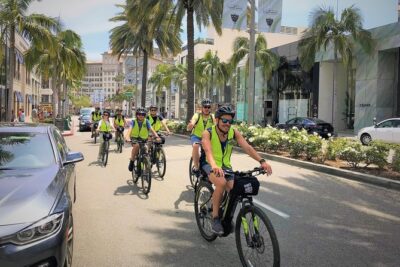
Beverly Hills Tour: Movie Star Homes and LA Sightseeing by E-Bike
Read our review →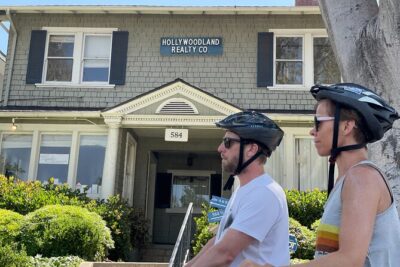
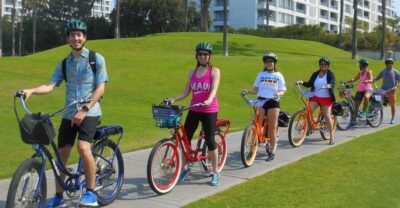
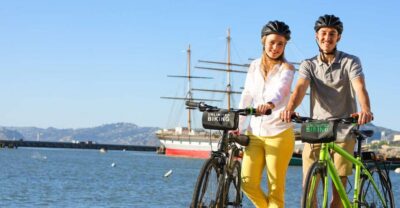
Hollywood Sign: Scott E-Bike Tours Los Angeles Private Tour
Read our review →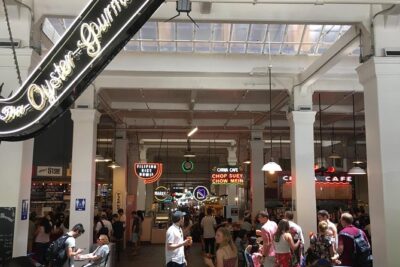
Other lists this ride turns up in