REVIEW · COUNTRYSIDE CYCLING TOURS IN HOI AN
Hoi An: Morning Countryside Tour by Bike
The best part of this ride is how quickly Hoi An’s lantern-lined streets give way to rice paddies, canals, and quiet village lanes. You cross from town into the southern villages of Quang Nam Province, where people still build boats, weave sleeping mats, make rice paper, and produce rice wine at home.
I like the small size, limited to eight people, and the easy pace. Guides such as Tam, Mike, Huan, and Ky have earned strong praise for clear English, good local stories, and careful bike handling. I also like that the visits feel connected to working families rather than a string of sales stops. The main drawback is the ride through Hoi An’s busier roads at the beginning, plus some reports of hard bike seats.
Key points
- About 20 kilometers on mostly flat roads: The ride suits people with moderate fitness and includes only a few very short inclines.
- Small groups of eight or fewer: Two guides may ride at the front and back, helping keep the group together.
- Real village workshops: See rice paper, sleeping mats, noodles, boats, and other local crafts being made.
- Food and drink tastings: Try bánh bèo rice cakes and sample traditional rice wine, including stronger herb-infused versions.
- Cultural stops beyond the bike ride: Visit a family home and learn about Hoi An’s heritage chapels.
- Morning timing: You return around midday, leaving the rest of the day for Hoi An’s Old Town.
Leaving Hoi An by Bike
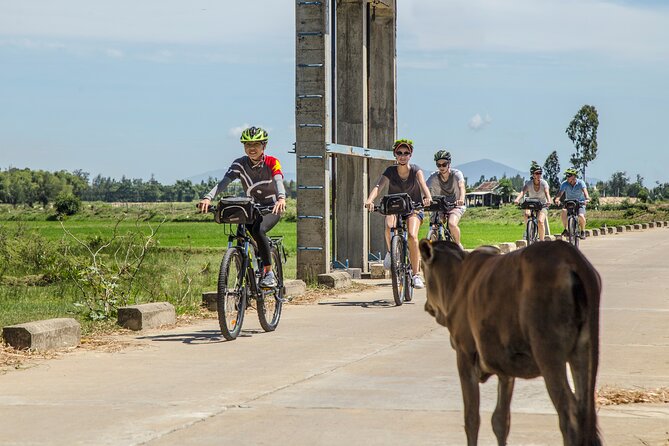
The tour begins at the Discova Day Tour Shop at 25 Dinh Tien Hoang. Look for the white house at the intersection. You get a short bike fitting and safety briefing before setting off with a licensed English-speaking guide.
The bikes are described as well-maintained mountain bikes, and helmets are included. Height information is requested at booking so the shop can arrange the right size. That small step matters, since a poor fit becomes irritating after several hours in the saddle.
The first stretch takes you through Hoi An’s streets and across the bridge toward the southern villages. This is the least peaceful part of the ride. Vietnam’s roads can be busy, and you need to stay alert until the route reaches the quieter countryside. One useful feature is that two guides may position themselves at the front and back, so nobody is easily lost in town traffic.
Once you leave the main streets, the ride settles into a slower rhythm. You pass vegetable gardens, coconut palms, narrow canals, and rice fields. Local people travel to their work by bicycle, and your guide explains how village life is changing as tourism spreads through the area.
I would not book this tour expecting a long, athletic cycling challenge. The route is almost entirely flat, with only two or three very short inclines reported by riders. It is more about seeing daily life at ground level than covering serious distance.
More Countryside Cycling Tours in Hoi An
- Hoi An Countryside: Guided Morning or Afternoon Bicycle Tour
★ 4.9 · 686 reviews - Hoi An Countryside Bike Cycling Tour with Basket Boat and lunch
★ 5.0 · 325 reviews - Hoi An Morning Countryside Tour by Bike
★ 5.0 · 282 reviews
Bánh Bèo and the First Taste of Village Life
One of the first food stops is a small family kitchen preparing bánh bèo. These steamed rice cakes are a common Vietnamese snack, and seeing them made in a home setting gives the dish more meaning than ordering it from a restaurant menu.
The stop is simple. You watch the traditional preparation, taste the cakes, and get a glimpse of how breakfast food is made outside Hoi An’s tourist center. You may also encounter other local food-making activities on the route, including rice paper, noodles, or coffee, depending on the day and the families available.
This flexibility is part of the appeal, but it also means the exact order and mix of stops may vary. The published route highlights bánh bèo, boat building, family chapels, mat weaving, and rice wine. Recent outings have also included rice paper making, noodle making, basket work, and coffee.
The food is not the reason to choose the tour, but it gives the morning a useful local focus. You are not just looking at fields from a bike. You are stopping to see what people eat, make, and sell.
Cẩm Kim and the Heritage Chapel Tradition
The route includes time in Cẩm Kim, one of the most appealing areas for seeing Hoi An beyond the old center. Here, you stop at a family home and learn about the tradition of family chapels.
These small chapels are tied to family memory and ancestor worship. The visit helps explain a part of Vietnamese home life that can be easy to miss if you spend all your time among Hoi An’s historic houses and pagodas. Your guide provides the context, while the home visit keeps the lesson grounded in an actual family setting.
I especially like this stop because it is not just a photo opportunity. You get a chance to sit, ask questions, and hear how local families maintain traditions over time. The quality of the visit will depend partly on your guide. Tam, Mike, Huan, Thom, Ky, and other guides have been singled out for their English and their ability to explain local customs clearly.
The home visit also sets the tone for the rest of the morning. You are meeting people who work and live in the villages, not moving from one polished attraction to another.
Canals, Coconut Palms, and Duy Vinh
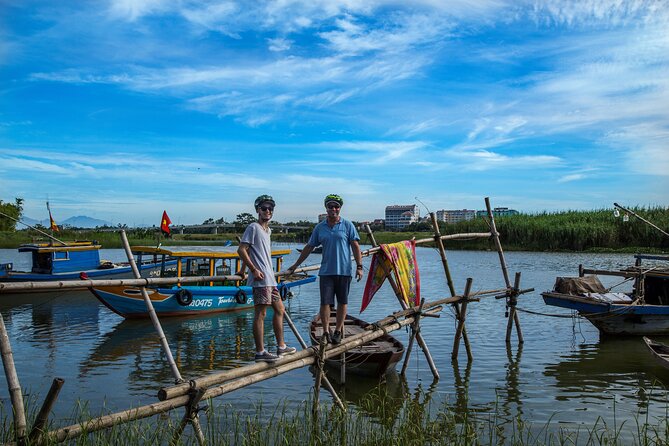
From the family home, the route follows smaller waterways toward Duy Vinh. This is where the ride feels most removed from Hoi An’s center. You pedal beside canals and through open rice-growing areas, with coconut palms and vegetable plots replacing shopfronts.
The scenery is gentle rather than dramatic. That is exactly the point. You see the flat farmland and waterways that support life around Hoi An, along with the narrow roads used by locals on bicycles and motorbikes.
The guide makes a difference here. Without local explanation, a ride through fields can become pleasant but vague. With a good guide, you learn what the crops are, how village communities use the waterways, and how fishing and farming fit together.
Bring water and use the stops as breaks, especially during hot months. Water is supplied in bike bottles, but the combination of sun, humidity, and steady pedaling can still make the morning tiring. Wear comfortable shoes and clothing that allows you to ride easily.
More Countryside Cycling Tours in Vietnam
- Hoi An Countryside Biking Tour(Vegetable village -basket boat – fishing village)
★ 5.0 · 216 reviews - Hoi An: Rural Cycling Tour to Village with Basket Boat Ride
★ 5.0 · 174 reviews - HOI AN Biking River Islands, Villages, Local Crafts PRIVATE TOUR
★ 5.0 · 77 reviews - Hoi An: Countryside by Cycling, Buffalo Riding & Do Farming
★ 4.9 · 36 reviews
Boat Builders and Fishing Life
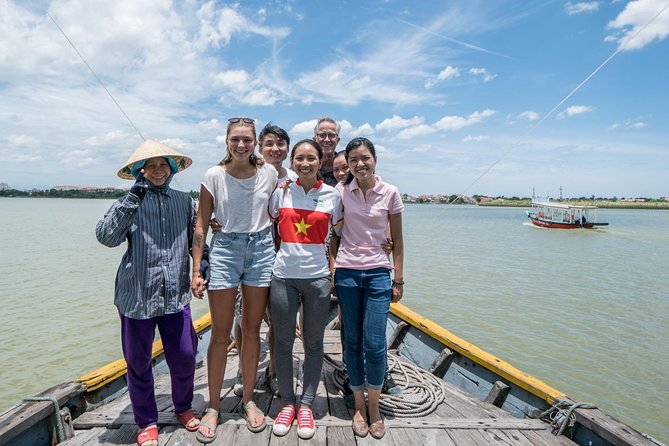
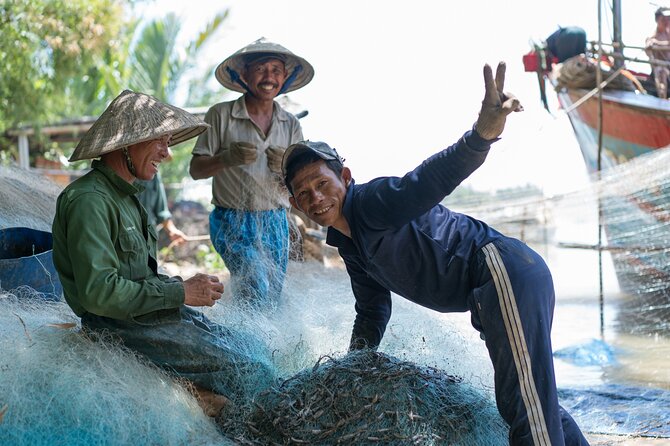
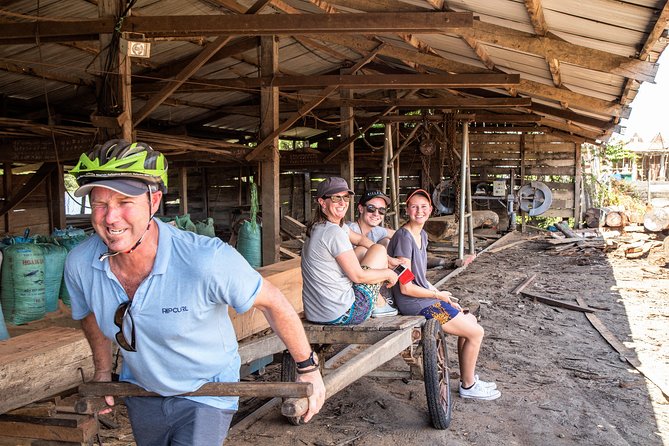
A wooden boat-building site is one of the most memorable stops. Fishing remains important in the province, and you can watch craftsmen shape hulls by hand.
This is the kind of place that is easy to miss on your own. It is not a major sight with signs and exhibits. It is a working site, and activity may depend on what is happening that day. You might see people building boats, repairing equipment, or cleaning fishing nets near the shore.
For photographers, the rough wood, tools, and large unfinished hulls make a strong subject. For everyone else, the stop shows how much practical skill goes into the boats that support local fishing families.
Do not expect a formal demonstration with every stage explained in perfect order. The value is in seeing the work up close and hearing your guide connect it to the coastal economy. It is a brief window into a trade that has continued through generations.
Sleeping Mats, Rice Paper, and Family Workshops
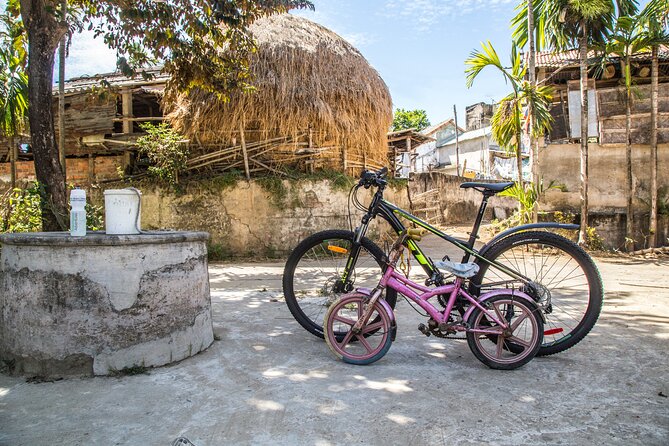
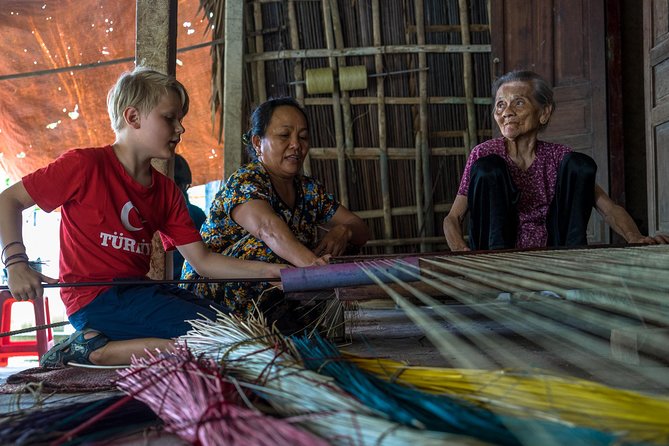
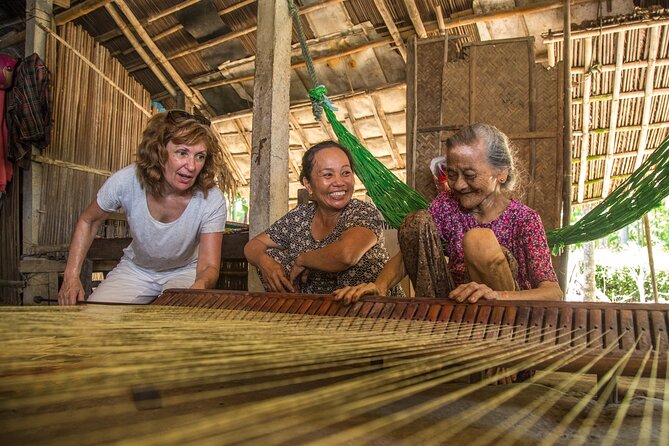
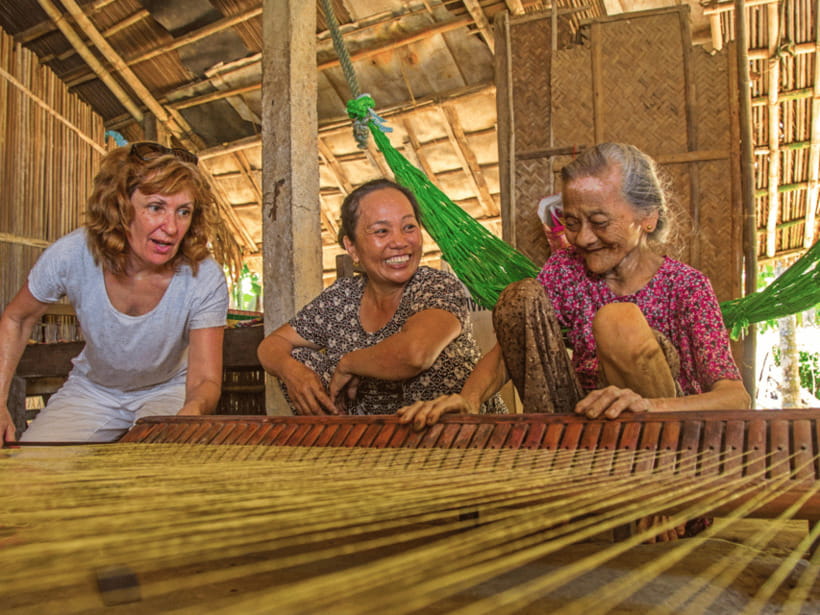
The exact craft visits can change, but traditional production is a major part of the ride. You may see families making rice paper or weaving sleeping mats from rice straw. Some groups have also made the products themselves, giving the stop a hands-on touch.
The mat weaving is especially interesting because it shows how a modest household item can carry a long local tradition. The work is repetitive and precise, and it gives you a better sense of the time required to make something that might look simple in a shop.
Rice paper production offers a different kind of insight. You see how a staple material is prepared and may get to try part of the process. The activities are not staged as a large tourist show, and that can make them feel more personal. At the same time, conditions are basic, so do not expect a museum-style presentation.
This is also where the tour earns much of its price. A self-guided bike ride through the same area would show you the roads and scenery, but probably not the homes and workshops behind them. The guide connects the people, products, and place.
Rice Wine at the Final Stop
The final major stop is a family-run rice wine distillery. Rice wine is made in the traditional way, and you can see part of the production process before tasting it.
You can keep your tasting modest or try the stronger local version infused with herbs. Some visits have included unusual tasting items, including scorpion whiskey, so ask what is being offered before accepting a sample. You do not have to try anything you do not want.
This is a lively finish to the ride, but it is worth keeping the morning’s cycling in mind. You still need to ride back to Hoi An, so moderation is sensible. The tasting is best treated as a cultural introduction, not a drinking session.
The distillery stop works because it is connected to a family business. You learn how the drink is produced, why it remains part of local life, and how small household enterprises continue to operate. There is no pressure to buy products, which is an important difference from tours built around compulsory shopping stops.
What the 20-Kilometer Ride Feels Like
The route covers around 20 kilometers, though some outings have been closer to 18 kilometers and may run for about five hours instead of the listed four. The difference depends on the pace, number of stops, and time spent talking with families.
For most people with moderate fitness, the cycling is manageable. The road is mostly flat, and the frequent stops break up the distance. Still, you should be comfortable riding on public roads and handling a bike for several hours.
The ride begins in busier urban traffic before reaching quieter roads. That transition may feel stressful if you rarely cycle in Vietnam. Listen closely to the safety briefing, follow the guide’s position, and avoid treating the ride as a race.
Bike seats are the one practical complaint worth taking seriously. One rider found the seat uncomfortable, so padded shorts or a small seat cover could make the morning better. The bikes themselves are generally described as good models in strong condition, and guides check rider height before departure.
Children can join, with discounts available for children age 12 and under using kids’ bikes. A child seat can be arranged on request for a child weighing up to 14 kilograms. Share heights and dietary requirements when booking.
Is the $29 Price Fair?
At $29 per person, this is not the cheapest way to see rural Hoi An. You could rent a bicycle for much less and explore the flat roads independently.
I still think the price is fair for what is included. You receive a good bike, helmet, guide, entrance fees, snacks, tastings, and several introductions to local families. The small group is important too. A maximum of eight makes it easier to hear the guide and keeps the visits from feeling like a bus excursion.
The value is strongest if you want context and personal contact. If you only want a scenic morning ride, the price may feel high. If you want to understand how rice paper, mats, boats, and rice wine fit into village life, the guide and arranged visits justify the extra cost.
The tour also avoids the common frustration of being steered toward aggressive shopping. You may see products made by the families, but the focus is on the work and the people rather than forcing purchases.
Who Should Book This Hoi An Bike Tour?
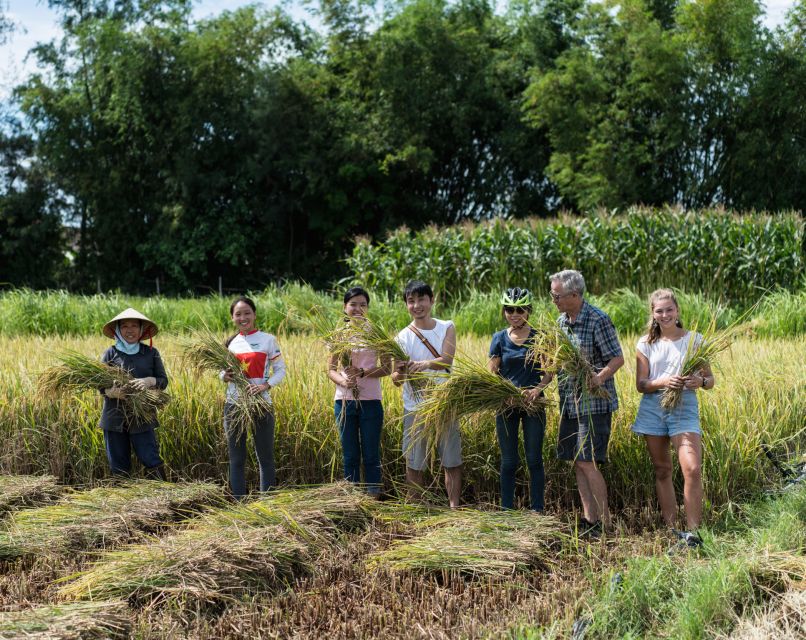
I would choose this tour if you want a gentle introduction to rural Vietnam and enjoy meeting people through their work. It suits couples, families with older children, and solo visitors who prefer a small group to exploring alone.
It is also a smart choice early in a Hoi An stay. The ride gives you a useful picture of the area before you spend more time in the Old Town. Since you return around midday, you still have the afternoon for the Japanese Covered Bridge, riverside cafés, markets, or a tailor appointment.
I would think twice if you dislike cycling in traffic, have trouble sitting on a bike for several hours, or want a tightly fixed schedule. The tour is relaxed and may include different craft stops depending on the day. It is not a hard ride, but it is still an active morning in warm weather.
You can request a private outing or a small-group trip. An English-speaking guide is included, and guides such as Tam, Mike, Huan, and Ky have received especially strong praise for their humor, clear explanations, and care with the group.
Final Verdict: A Strong Morning Outside the Old Town
I would book the Hoi An Morning Countryside Tour by Bike if you want more than rice fields viewed from a vehicle. The combination of quiet roads, working family workshops, a heritage chapel, local snacks, and rice wine gives the ride real variety.
The busy opening roads and hard seats are fair warnings, not deal breakers. Wear comfortable clothes, ask for the correct bike size, bring sun protection, and consider padded cycling shorts. At $29, the tour offers good value for an active morning that shows you how people live and work beyond Hoi An’s polished center.
FAQ
How long is the Hoi An countryside bike tour?
The advertised duration is four hours. The route covers about 20 kilometers, although some outings can take closer to five hours depending on the pace and time spent at the stops.
How difficult is the cycling?
The route is mostly flat and suitable for people with moderate fitness. There may be two or three very short inclines, but the ride is designed as an easygoing countryside tour.
How large is the group?
The standard small-group tour has no more than eight guests. Private trips and other small-group arrangements are also available.
What is included in the tour price?
The price includes a bicycle, helmet, licensed English-speaking guide, snacks, entrance fees, activities, and accidental insurance coverage.
Can children join the tour?
Yes. Discounts are available for children age 12 and under using kids’ bikes. A child seat can be requested for a child weighing up to 14 kilograms.
What should I bring?
Wear comfortable shoes and clothing suitable for cycling. Tell the operator each person’s height so the correct bike can be arranged, and share any dietary requirements when booking.
Newest rides we have reviewed in Hoi An
- Da Nang or Hoi An: Countryside Bike & Basket Boat Tour★ 5.0 · 13 reviews
- Hoi An: Bike Tour to Countryside and Food Tour★ 5.0 · 21 reviews
- Hoi An: Private Villages Biking Tour with Meal★ 5.0 · 22 reviews
- Hoi An: Countryside by Cycling, Buffalo Riding & Do Farming★ 4.9 · 36 reviews
- BUFFALO RIDING -BASKET BOAT & BIKE TOUR-HOI AN★ 4.7 · 124 reviews
- Hoi An Countryside Bike Tour- Tra Que Village & Basket Boat★ 4.9 · 13 reviews
- 3 Hours Hoi An Countryside Bicycle Tour★ 4.9 · 13 reviews
- Private Hoi An Bike, Thu Bon River Cruise & Dinner Experience★ 4.5 · 50 reviews
Countryside Cycling Tours, compared.
Windmill, Cheese, and Countryside E-Bike Tour
Read our review →
Siem Reap Countryside Bike Tour / E-Bike or Tuk Tuk
Read our review →
Mekong Day Trip Explore Village Bicycle CookingClass Group 12 Pax
Read our review →
Hoi An Countryside: Guided Morning or Afternoon Bicycle Tour
Read our review →

Rice Terraces & Villages Half-Day Fat Tire E-Bike Tour
Read our review →