

REVIEW · PORTLAND
Bike Around Portland Oregon: Art, Culture, Bridges, Poetry
Portland reveals itself best from a bike seat, not behind a tour-bus window. This slow-paced ride links rose gardens, street art, bridges, river paths, poetry, and ordinary neighborhoods into one useful introduction to the city.
I like the mix of local details and big city views, especially the stop at Poet’s Beach and the ride across Tilikum Crossing. I also like that the pace leaves room for photos, questions, and the occasional doughnut or ice cream stop. The main consideration is weather: you will be outside for about three hours, and one bridge climb may feel more demanding if you are not used to cycling.
Key points to know
- Ladd’s Addition starts the ride with roses and unusual city planning, in a neighborhood built around diagonal streets and a distinctive central garden.
- Tilikum Crossing gives you a memorable bridge ride, with views toward the Willamette River and a cyclist-counting device along the way.
- Poet’s Beach adds a quiet, human touch, with student poetry written along the shore.
- The route is mostly flat and relaxed, making it suitable for families, casual riders, and people who do not bike often.
- Guides such as Kelly, Sara, Edwin, Carrie, and Angela bring different local angles, from city infrastructure to food, music, neighborhoods, and public art.
- The $47 price includes the bike, helmet, and bottled water, but snacks, doughnuts, ice cream, and gratuity cost extra.
Why a bike is a smart way to meet Portland
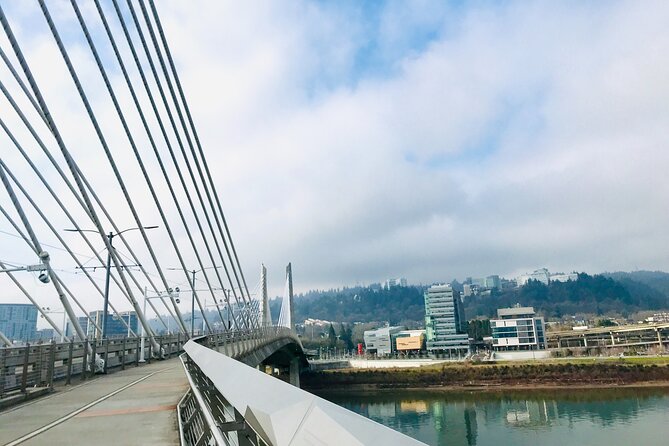
Portland is not mainly a city of grand monuments. Its character sits in neighborhoods, bike paths, murals, small gardens, bridges, old streetcar routes, and public spaces beside the river. This tour understands that.
You cover several parts of Portland in about three hours, but the ride does not feel like a race between photo stops. The guide pauses often, giving you time to look around and hear why a place matters. That makes the route more useful than a simple list of sights.
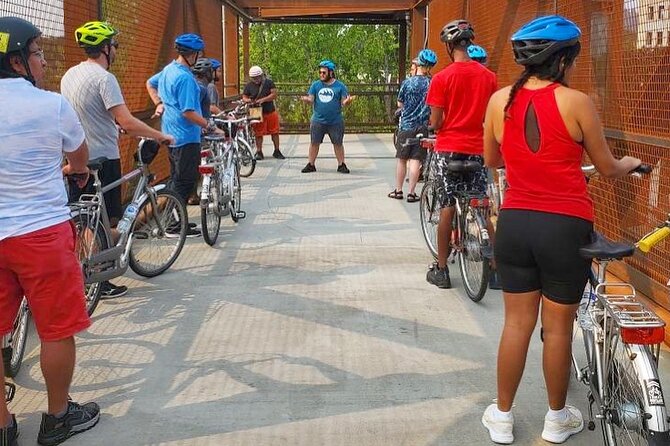
The experience begins at Around Portland Tours, at 833 SE Main Street. You get fitted for a bicycle and helmet, receive bottled water, and head into the inner Southeast neighborhoods. The ride then reaches the Hawthorne District, passes food cart pods, and continues through places that show how Portland works as a city.
The group size is advertised as capped at 15 for a personal feel, although the additional tour information gives a maximum of 20. I would confirm the expected group size when booking if that matters to you. Either way, this is intended to be a small guided ride rather than a large procession.
More Cycling Trips in the USA:
- Guided Bike Tour of Old Town Key West
★ 5.0 · 2,611 reviews - NYC: Central Park Bike Rentals
★ 4.2 · 2,528 reviews - Red Rock Canyon eBike Half-Day Tour
★ 5.0 · 1,870 reviews
Ladd’s Addition and the first taste of Portland’s odd side
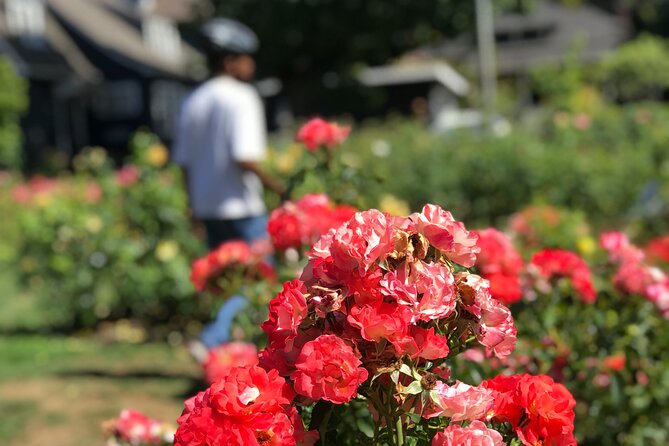
Ladd’s Addition is a strong opening stop because it gives you something more interesting than a standard downtown view. The neighborhood was designed with diagonal streets in a labyrinth-style pattern, unlike Portland’s usual grid.
You stop at one of its rose gardens for about 10 minutes. It is an easy place to get oriented, take pictures, and see how Portland mixes planned urban design with gardens and quiet residential streets. The stop also sets the tone for the morning: this tour is interested in how people live, not just in famous buildings.
The rose garden is particularly good for families and casual cyclists because it offers a calm start before the route reaches more active streets. If you are visiting in warm weather, the roses add color and scent to the ride. If you are visiting outside peak bloom, the neighborhood’s layout remains the main attraction.
Hawthorne, food carts, and the Clinton Street Theater
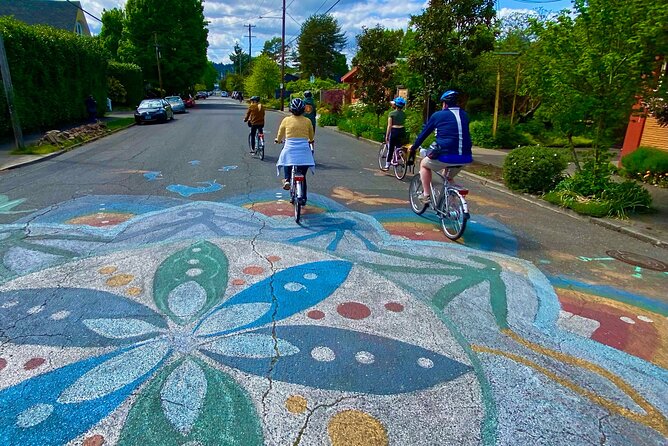
The ride continues toward Hawthorne and passes one of Portland’s original food cart pods as well as one of the newer pods. That gives you a quick look at a food culture that is part of the city’s daily rhythm.
The tour does not turn this into a full food crawl. You are moving through the area by bike, with the focus on place and atmosphere. Still, it is worth noting restaurant and food-cart recommendations as you go, especially if this is your first day in Portland.
On Clinton Street, the group uses the greenway and pauses at an original streetcar stop. You also see the Clinton Street Theater, a long-running venue associated with unusual, artsy, and cult films when it is open.
The stop lasts only about five minutes, so do not expect a theater visit or film screening. Its value is in the story of the street and the kind of independent culture Portland has supported over time.
Art along the Orange Line and the Solterra Building
One of the more unusual sections follows a bike path beside the Orange Line of the MAX light rail. Public art appears in several forms, including wordplay on concrete barriers and in the sidewalks.
This is the kind of detail that is easy to miss when walking or driving. A guide helps you notice the small pieces instead of simply passing them on the way to a larger attraction.
The route also includes a mural by Irish street artist Fin DAC near the Solterra Building. You stop for about five minutes, which is enough for a look and a few pictures. The mural is best appreciated in person, where its scale and setting are easier to take in than they are on a phone screen.
The art portion is a good fit if you like public design, murals, and the way a city uses ordinary infrastructure as a canvas. It is less suited to anyone expecting a formal gallery tour. This is street-level art, encountered along the route.
Same roads, a different saddle:
- NYC: Central Park Bike Rental
★ 4.1 · 1,651 reviews - Central Park Bike Rental
★ 4.7 · 1,509 reviews - Austin Biker Gang E-Bike Tour
★ 5.0 · 1,399 reviews - Asheville Historic Downtown Guided Electric Bike Tour with Scenic Views
★ 5.0 · 1,234 reviews
Tilikum Crossing, one of the tour’s best moments
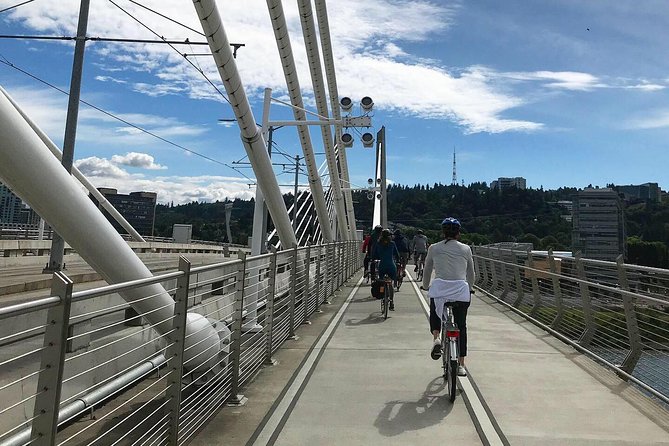
Tilikum Crossing is the visual centerpiece of the ride. It is a bridge across the Willamette River designed for public transit, pedestrians, and cyclists, rather than regular private car traffic. The tour takes a slower approach to the bridge, giving you time to settle into the crossing.
You are counted by a device that tracks the number of cyclists crossing each day and each year. That small detail turns a bridge ride into a reminder of how Portland measures and encourages bike use.
The group stops for photos and a short explanation of the bridge. You can look out over the river, watch boats and kayaks, and see Portland from a different angle. One past rider described a bridge climb as the only notably hard part of the route, so do not assume the entire ride is perfectly level. The climb is short, and the sightseeing pace helps.
This is also one of the places where your clothing matters. Wear practical cycling clothes and shoes, bring sunglasses if the day is bright, and dress for the forecast. The ride is easy for many people, but it is still a three-hour outdoor activity.
South Waterfront and the Aerial Tram
After Tilikum Crossing, the route heads into the South Waterfront neighborhood. You pass the lower terminal of Portland’s Aerial Tram and learn why the city built the bullet-shaped system and what it cost.
That stop gives you a useful look at Portland’s approach to transportation. The tour is not just pointing out a futuristic vehicle. It connects the tram to the city’s planning choices and the way Portland links neighborhoods across the river and up toward the hills.
The stop is brief, about five minutes. You will not ride the tram as part of this activity. Instead, you get the context and continue on the bicycle route.
A snack stop that keeps the ride human
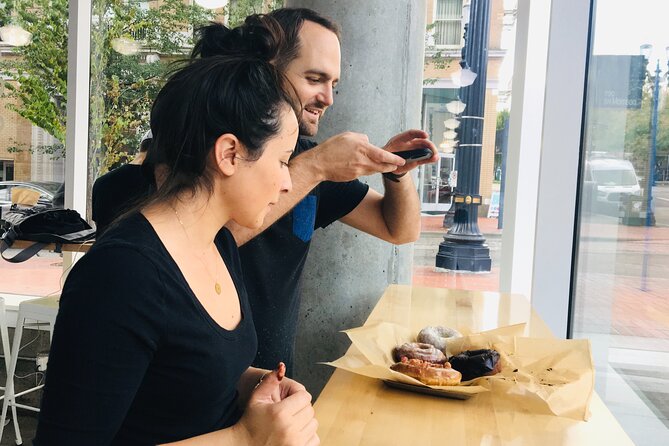
The route includes a stop at Blue Star Donuts when its hours allow. Blue Star is currently open on limited days and hours, so the guide may substitute another doughnut shop, pastry shop, or ice cream stop.
This is an important practical detail. The snack is not included in the $47 price, and the exact shop may change. Bring a little spending money if a doughnut, pastry, or ice cream sounds appealing.
Past versions of the route have included Blue Star, Voodoo Donuts, Mikiko, and 50 Licks ice cream. Treat those names as examples rather than promises. The food stop is meant to add a local flavor break, not serve as the main attraction.
It also provides a useful pause for restrooms and a chance to recharge, especially for families with teenagers. The stop can be one of the most enjoyable parts of the outing, but you should not book this tour solely for a particular doughnut shop.
South Waterfront Greenway and Poet’s Beach

The South Waterfront Greenway is one of the quieter sections of the ride. You follow a riverfront space that forms part of Portland’s wider effort to give people access to the Willamette.
Then comes Poet’s Beach, a small sandy river spot created by the Human Access Project. The project aims to bring people closer to the river so they feel more connected to it and more responsible for its care.
The beach’s poems, written by local students, give the stop its character. You can read the words along the shore and consider the river through a child’s or teenager’s eyes. It is a short stop, about five minutes, but it gives the tour a personal note that a standard city route often lacks.
Poet’s Beach is not a major swimming beach or a long rest stop. Think of it as a small place for reflection, photos, and a closer look at the river edge. The point is the connection between public access, community work, and the water.
Riverplace and Tom McCall Waterfront Park
The ride continues along the Willamette toward Riverplace, an interesting housing and retail development from the 1980s. The guide explains how the project tried to influence urban design and reshape the way people used the riverfront.
This stop is valuable because it adds a layer of city planning to the route. You are not only seeing buildings. You are looking at an experiment in combining homes, shops, and public access near the water.
From there, you ride through Tom McCall Waterfront Park. The guide explains what the area used to be and how changes in the early 1970s transformed Portland. A former governor, described on the tour as a reluctant hippie, helped change the city’s direction.
The park is often active on weekends, with people enjoying events, open space, and the riverfront. You may see more activity here than in the quieter sections of the tour. The stop lasts about 10 minutes, giving you enough time to hear the story and take in the setting.
You also ride under the Hawthorne Bridge and learn why the structure can rise and lower even when no large ship appears to be passing. It is a practical bit of bridge engineering that adds another layer to Portland’s relationship with the river.
How difficult is the ride?
The route is described as relaxed and mostly flat, with frequent stops. That makes it a reasonable option for people who ride occasionally rather than every week.
You should still be comfortable riding a bicycle on city streets and paths for about three hours. The route crosses bridges and moves through several neighborhoods, so this is not a short park outing. One bridge approach may require extra effort.
Families have used the tour successfully, including families with teenagers and children who felt nervous at the start. Guides such as Kelly have been praised for keeping a careful pace and helping less confident riders feel safe. That said, children and adults should be able to manage a bicycle independently unless the tour operator confirms another arrangement.
Wear clothing suited to the weather. Bike pants and sunglasses may help, but ordinary comfortable clothes are fine if they allow you to pedal easily. Portland weather can shift, so a light layer is sensible. The operator supplies the bicycle, helmet, and water.
The guides and the value of local explanation
The guide shapes this experience more than any single stop. Guides named in the feedback include Kelly, Carrie, Edwin, Sara, Sarah, Angela, and Kathy. You may not receive a particular guide, but the repeated strength of the tour is the human explanation along the way.
Kelly is known for an easy pace, city stories, food suggestions, and patience with nervous riders. Edwin has been associated with neighborhood backstories and suggestions for restaurants, breweries, distilleries, and music venues. Other guides have been praised for sharing practical details, bringing wet wipes, and helping families stay comfortable.
The best use of the guide is to ask questions. If you are staying in Portland for only two days, ask about places to eat, local music, breweries, or areas worth visiting after the ride. This is one reason to schedule the tour early in your stay. You can use the advice for the rest of your visit.
Is $47 a good price?
At $47 per person, the price is reasonable for a three-hour guided city ride. A bicycle and helmet rental are included, as is bottled water. You are also paying for route planning, local interpretation, bridge crossings, and the ability to cover several parts of Portland without arranging your own bike rental or navigation.
The snack stop costs extra, as does a tip. Plan for that if you want a doughnut, pastry, or ice cream. Gratuities are appreciated for the guides, especially when they help with pacing, family needs, and route safety.
The value is strongest for first-time visitors who want a broad sense of Portland quickly. It is also useful for people who live nearby but do not know where to ride. If you already have a bike and know the city well, you may find the price less compelling, since many of the route’s public places can be visited independently.
The experience is rated 4.9 from 302 ratings, with 97 percent recommending it. That points to a consistently strong outing, but the practical factors still matter: weather, cycling comfort, group size, and the possibility of a changed snack stop.
Who should book this Portland ride?
I would choose this tour if you want to:
- See several neighborhoods rather than only downtown attractions
- Learn about Portland’s bridges, public art, transit, and river access
- Ride at a sightseeing pace with frequent stops
- Bring teenagers or family members who need an engaging but manageable activity
- Get restaurant, music, brewery, and neighborhood suggestions from a local guide
- Find a pleasant first-day activity that helps you understand the city
I would think twice if you dislike outdoor activities, are uncomfortable on a bicycle, or want a formal museum or food tour. The route includes city streets, bridge approaches, and changing weather. It is relaxed, but it is still a real bike ride.
Book at least a day ahead if your schedule is tight. This activity often fills about 16 days before departure, and it requires a minimum number of participants. You can cancel for a full refund up to 24 hours before the start time. Cancellations or changes within 24 hours are not refunded.
Should you book it?
Yes, if you want a friendly, active introduction to Portland that favors neighborhoods, public art, bridges, and river access over a checklist of monuments. The most memorable parts are likely to be the rose garden in Ladd’s Addition, the crossing of Tilikum Crossing, and the student poetry at Poet’s Beach.
The tour is especially good early in a Portland visit. You will leave with a clearer sense of how the city fits together and a list of places to return to on foot, by transit, or by bike. Just dress for the weather, budget for your own snack, and expect a few minutes of extra effort on the bridges.
FAQ
Where does the bike tour begin?
It begins at Around Portland Tours, 833 SE Main Street, Portland, Oregon 97214.
Where does the tour end?
The ride ends back at the same meeting point on SE Main Street.
How long does the experience last?
The tour lasts approximately three hours.
What is included in the price?
The price includes use of a bicycle, a helmet, and bottled water.
Are snacks included?
No. Doughnuts, pastries, ice cream, and other snacks are paid for separately.
Is Blue Star Donuts always part of the route?
No. Blue Star is currently open limited days and hours. If it is closed, the guide will stop at another doughnut shop, pastry shop, or ice cream shop.
How large is the group?
The tour is described as capped at 15 for a personal experience. The additional activity information lists a maximum of 20, so confirm the expected group size if this is important to you.
Is the ride suitable for families?
Yes. Most people can participate, and the route is described as relaxed and mostly flat. Families with teenagers and less confident riders have taken part successfully.
Are bicycles and helmets provided?
Yes. Both bicycle and helmet rental are included.
What happens if I need to cancel?
You receive a full refund if you cancel at least 24 hours before the start time. Cancellations or changes made less than 24 hours before the start time are not refunded.
Are service animals allowed?
Yes. Service animals are allowed, and the meeting point is near public transportation.
Newest rides we have reviewed in the USA
- Las Vegas: Red Rock Canyon Sunrise Self-Guided E–Bike Tour★ 5.0 · 14 reviews
- Las Vegas 3-Hour Red Rock Canyon Electric Bike Tour★ 4.9 · 28 reviews
- From Las Vegas: Red Rock Canyon Electric Bike Hire★ 5.0 · 92 reviews
- Lake Tahoe Lakeside Electric Bike Rental★ 4.5 · 19 reviews
- LA: Santa Monica & Venice Beach Bike Adventure★ 4.9 · 23 reviews
- Key West: Guided Bicycle Tour with Key Lime Pie★ 4.8 · 176 reviews
- Oahu: Diamond Head E-bike Scenic Ride★ 4.7 · 22 reviews
- Miami Beach: City Highlights Guided Bike or eBike Tour★ 4.8 · 46 reviews
USA Cycling Tours, compared.



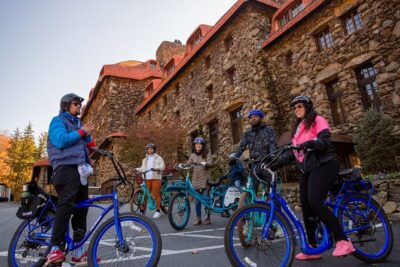
Asheville Historic Downtown Guided Electric Bike Tour with Scenic Views
Read our review →
Other lists this ride turns up in