
REVIEW · ALICANTE
Alicante City & Beach Bike Tour
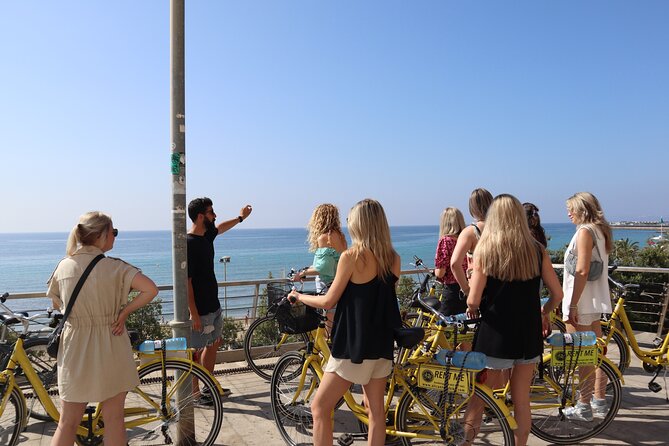
Alicante makes sense from a bicycle seat. In about two and a half hours, you move from the steep lanes below Santa Bárbara Castle to the beach, marina, old town, market, and grand central avenues. The ride gives you a useful first look at the city without trapping you inside a bus or tying you to one neighborhood.
I like the mix of coastline and city history, and I like that the pace is gentle enough for mixed ages and cycling abilities. Guides such as Fernando, Chris, Anke, Rose, and Chadi have been praised for clear explanations and practical tips. The main drawback is the ride through central streets, which can feel hectic at times, especially if you are not fully comfortable cycling in traffic.
Key things to know before you book
- The route links Alicante’s main districts: Expect the old quarter, historic center, beach, marina, market area, and seafront in one morning.
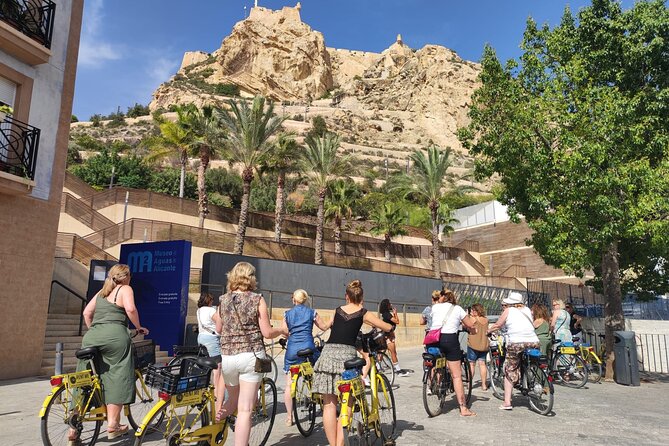
- Santa Bárbara Castle is a visual companion: You ride beneath and beside the castle rather than taking a castle tour, with striking views of its Moor Face profile from Postiguet Beach.
- The ride is generally easy: The pace is described as leisurely, but town streets can be busy and you should already feel comfortable on a bicycle.
- E-bikes can make hot days easier: Several guides have arranged electric bikes for a small extra charge. Ask about availability when booking.
- Small local touches add value: Some guides include treats or food samples and suggest places to eat and sights to visit afterward.
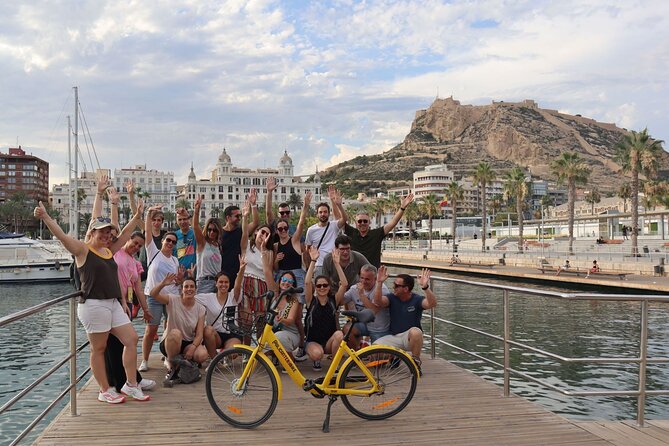
- It is a compact small-group outing: The maximum group size is 15, and bottled water and bicycle rental are included.
Seeing Alicante from two wheels
At $36.28 per person, this is a fair price for a guided introduction to Alicante. You are paying for the bicycle, a professional guide, water, and a route that covers far more ground than a walking tour in the same time.
The value is strongest at the start of your stay. You get a quick sense of how the old quarter connects to the beach, port, market, and newer city. Afterward, you can return to the places that caught your attention instead of guessing where to spend your limited time.
The tour begins at 10:15 a.m. on C. Cienfuegos, 1, close to Alicante’s old quarter and public transportation. It ends back at the same meeting point. Confirmation is provided when you book, and the activity is offered in English.
A group of up to 15 is small enough for a guide to manage stops and questions, though it is not the same as a private ride. Some departures may feel larger than expected. Guides have handled mixed abilities well, but you should allow extra care when riding through busier parts of town.
More Coastal and Island Bike Tours in Spain:
- Valencia Bike Tour from the City to the Beach, plus Bike Guy App!
★ 5.0 · 1,187 reviews - Malaga Bike Tour – Old Town, Marina & Beach
★ 4.7 · 1,150 reviews - Alicante: City and Beach Bike Tour
★ 4.8 · 587 reviews
Santa Cruz Hermitage and the slopes of the old quarter
The first part of the route reaches the area beside the wall descending from Santa Bárbara Castle. Santa Cruz Hermitage sits on the slopes of Mount Benacantil, giving you an early taste of Alicante’s vertical old quarter.
This is a useful stop because it shows how closely the city, fortifications, and hillside neighborhoods fit together. The setting is more atmospheric than grand. You should expect a historic corner rather than a long indoor visit.
The route does not appear designed for extended time at each sight. Instead, the guide gives short explanations, then gets you moving again. That rhythm works well on a bicycle, especially in warm weather, but you should not expect a full guided visit inside every church or landmark.
Two churches, two chapters of Alicante
The Co-cathedral of Saint Nicholas began construction in the 17th century in the Herrerian style. Its design is marked by sober lines and limited decoration, a contrast to more heavily ornamented Spanish churches.
The Basilica of Santa María began life as a Muslim mosque and became a Christian church after the Christian conquest. The current building is Gothic, and its survival through bombardment gives it a particular place in Alicante’s story.
Together, these stops give the tour more substance than a simple ride along the waterfront. You see how religious buildings reflect the city’s changing rulers and eras. The guide’s job here is to keep the history clear and brief, and that has been a strong point with Fernando, Chris, Anke, Rose, and Chadi all praised for friendly, well-paced explanations.
If you want to study the architecture in detail, return on foot later. The bike tour gives you context and orientation, not a scholarly building tour.
Postiguet Beach and the Moor Face of the castle
Alicante’s urban beach is one of the route’s visual highlights. From the sand, you can look up toward Santa Bárbara Castle and its distinctive Moor Face profile on Mount Benacantil.
This is the point where the city’s geography clicks into place. The castle is not some distant hilltop attraction. It rises directly behind the old neighborhoods and beach, making it part of nearly every view across the bay.
The beach stop also offers a change of pace. You leave the old streets and get open space, sea air, and a clear view of the coast. On a hot day, the ride can be more pleasant with an e-bike, and several people have found the electric assistance worth the extra cost.
The tour does not include swimming time, so treat the beach as a scenic stop rather than a beach outing. Bring sun protection and dress for a morning outside.
More Cycling Trips in Spain:
- Highlights & Hidden Spots of Barcelona Bike Tour w/ Local Guide
★ 4.5 · 3,009 reviews - Valencia: City Highlights Guided Bike Tour
★ 4.7 · 2,373 reviews - Seville Highlights Bike Tour (English)
★ 5.0 · 2,225 reviews - Seville: Highlights City Bike Tour
★ 4.8 · 2,168 reviews
The Explanada’s red, cream, and black mosaic
The Explanada de España is Alicante’s famous waterfront promenade. Its current form dates from the 1960s, although an earlier seafront was built with rubble from the demolition of the city walls and was known as El Malecón.
The pavement uses about 6.6 million pieces in three colors. One shade is known as Alicante red, made from marble found in the region. The wave pattern is easy to appreciate at walking speed, but a bicycle gives you a practical way to cover the full waterfront without spending half your morning on foot.
This is also a good place to hear how Alicante changed from a fortified coastal town into a modern seaside city. The route uses the promenade as part of a larger story, not just as a photo stop.
You later return along the marina rather than retracing the Explanada. That small route change keeps the ride from feeling repetitive.
Squares, ficus trees, and the newer city
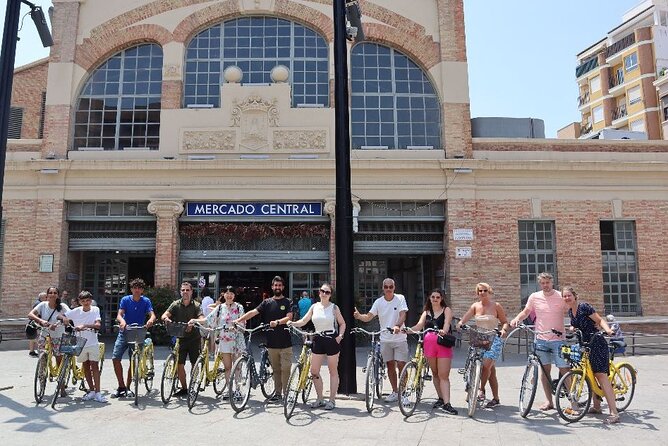
The tour continues into the part of Alicante shaped by 19th-century expansion. One square, once called Correos, reflects the tastes of the city’s rising bourgeois class and its interest in formal urban design.
You also reach a park shaded by several 100-year-old ficus trees. This matters more than it may sound. Alicante can be hot, and a shaded pause makes the ride more comfortable while giving the guide a natural place to explain how the city grew beyond its old walls.
The route then follows an avenue that marks the boundary between the old quarter and the historic center that developed later. It once served as a ditch at the foot of the wall, carrying rainwater away.
These stops help you read the city rather than simply pass through it. The old quarter is not an isolated museum district. It meets the newer streets in a visible line, and the guide points out how that transition happened.
Alicante Town Hall and the city’s wartime scars
Alicante’s present Town Hall was built at the beginning of the 18th century. The first town hall stood closer to the sea and was destroyed during bombardments in 1691, when this part of the city suffered major damage.
That detail gives the route some needed historical weight. Alicante’s buildings are not just decorative backdrops. They reflect warfare, rebuilding, trade, and the city’s changing relationship with the waterfront.
The explanation is likely to be brief, since the tour keeps moving. Still, the stop gives you a reason to look more closely at the streets and buildings you might otherwise photograph and forget.
The route also passes a 19th-century theater and the Central Market. The market was built at the start of the 20th century and later damaged during the Civil War, requiring sections to be rebuilt.
The market is one of the more useful stops for your own holiday planning. Guides have sometimes included small food treats or samples, and several have offered recommendations on where to eat. Those extras can vary by guide and departure, so do not treat them as a formal part of the advertised inclusions.
Along the marina and across the Volvo Ocean Race platform
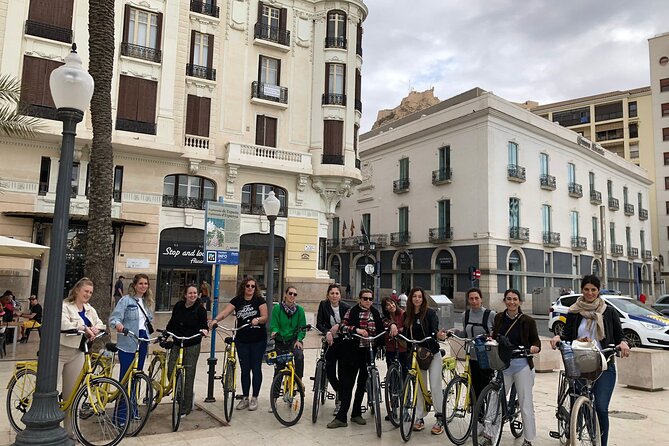
The marina section shifts the mood again. You ride beside the water, then reach a structure built in 2008 for the Volvo Ocean Race, which departed from Alicante.
The platform lets you enjoy the sea under your feet and provides another angle on the port. This is one of the tour’s strongest contrasts: within the same morning, you move from old churches and defensive walls to modern sporting infrastructure and yacht-filled waterfront space.
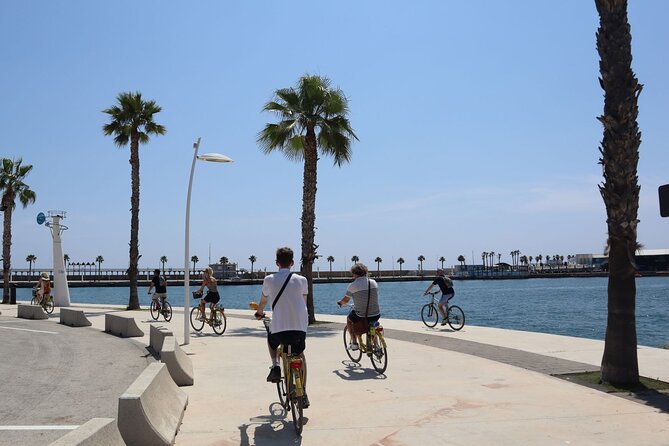
Some departures use a recently opened coastal path and cover roughly 10 kilometers round trip along the coast. The exact feel may depend on the group, the guide, and local conditions, but the coastal riding is generally described as easy and enjoyable.
I especially like this part for families and first-time visitors. It gives you a relaxed stretch after the tighter old-town streets, and teenagers often respond better to a ride by the water than to a long sequence of indoor monuments.
What the guides add to the ride
The guide makes a major difference here. Fernando has been praised for balancing friendliness, history, practical advice, and a relaxed manner. Chris has been described as patient with mixed abilities, while Anke has guided groups in English and French.
Rose and Chadi have also been praised for warmth, local suggestions, and clear explanations. Names and guides can change, of course, but the pattern is useful: this experience depends heavily on the person leading it.
The best guides do not bury you in dates. They explain why a building matters, point out where to eat, and suggest what to visit after the ride. Some have also offered extra water, small treats, or help planning another activity.
The tour suits you if you enjoy learning while moving. It is less suitable if you want long, quiet visits inside churches, a serious cycling workout, or complete control over the route.
Standard bikes, e-bikes, and the pace
Bicycle rental and bottled water are included. E-bikes are not clearly listed as a standard inclusion, but several people arranged them for a small additional charge, and the extra assistance was particularly useful in the heat.
You do not need to be a racing cyclist. The route has been described as gentle and suitable for mixed ages and abilities. Still, you should be comfortable stopping, starting, and riding through central streets.
One fair warning: the waterfront and coastal sections are calm, but the town portion can feel hectic. If you are nervous around traffic, ask about an e-bike and listen closely to the guide’s instructions. An e-bike helps with effort, not with road awareness.
The tour is also weather dependent. If poor weather forces cancellation, you will be offered another date or a full refund.
Who should book the Alicante City and Beach Bike Tour?
I would choose this tour early in an Alicante visit, especially if you want a broad orientation without spending hours on foot. It works well for families, couples, friends, and mixed-age groups who can ride at a relaxed pace.
It is a particularly good match if you want:
- A first look at Alicante’s old town and coast
- Short, clear history lessons rather than formal lectures
- A way to connect the castle, beach, marina, and center
- Advice on restaurants and additional sights
- An easy morning activity with the option of an e-bike
I would think twice if you want a private experience, dislike urban cycling, or plan to spend most of the morning swimming. The maximum group size is 15, and some streets are busier than the coastal path.
Cancellation is free up to 24 hours before the 10:15 a.m. start. Changes or cancellations made within 24 hours are not refunded or accepted, so check the weather and your plans before the cutoff.
Should you book it?
Yes, if you want a useful and active introduction to Alicante. The price is reasonable for the bicycle, guide, water, and wide route coverage, and the combination of castle views, churches, beach, market, marina, and city history gives you a strong first orientation.
Book an e-bike if you are visiting in hot weather or prefer an easier ride. If you are uneasy in traffic, tell the guide at the start and stay close during the town section. For most visitors who are comfortable on a bicycle, this is a fun way to understand Alicante before exploring its individual sights at your own pace.
FAQ
How long does the Alicante City and Beach Bike Tour last?
The tour lasts approximately 2 hours and 30 minutes.
How much does the tour cost?
The listed price is $36.28 per person.
Where does the tour start?
It starts at C. Cienfuegos, 1, 03002 Alicante, Spain.
What time does the tour begin?
The scheduled start time is 10:15 a.m.
Where does the tour finish?
The activity ends back at the original meeting point.
What is included in the price?
The tour includes bicycle rental, bottled water, and a professional guide.
Is the tour offered in English?
Yes. The activity is offered in English.
How many people can join the tour?
The maximum group size is 15 people.
Can I cancel for a full refund?
Yes. You can cancel at least 24 hours before the experience start time for a full refund. Cancellations made less than 24 hours in advance are not refunded. If poor weather causes the operator to cancel, you can choose another date or receive a full refund.
Newest rides we have reviewed in Spain
- Lanzarote E-Bike Tour: Volcano Craters & Scenic Vineyards★ 4.9 · 140 reviews
- Lanzarote: Advanced 5-Hour Fuerteventura E-Bike Tour★ 4.3 · 12 reviews
- La Graciosa: Rent your ELECTRIC BIKE and explore the island at your own pace.★ 3.9 · 89 reviews
- LA GRACIOSA: Bike rental MOUNTAIN BIKES★ 3.8 · 56 reviews
- Jávea: Electric Bike Adventure to Local Coastal Treasures★ 4.8 · 13 reviews
- Ibiza: E-Bike self-guided rental adventure★ 4.8 · 14 reviews
- Ibiza Town Private Guided Sightseeing Tour by Bike★ 4.3 · 53 reviews
- Barcelona: Guided Half-Day Wine and Electric Bike Tour★ 4.9 · 50 reviews
Coastal and Island Bike Tours, compared.
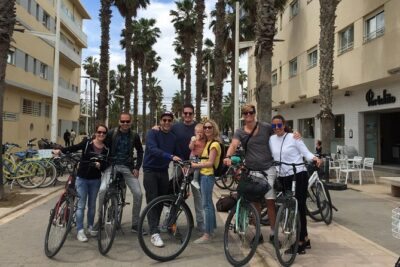
Valencia Bike Tour from the City to the Beach, plus Bike Guy App!
Read our review →
Electric Bike Beach Adventure with Tequila Tasting and Lunch
Read our review →

BLive Electric Bike Tours – Discovery of Divar Island
Read our review →
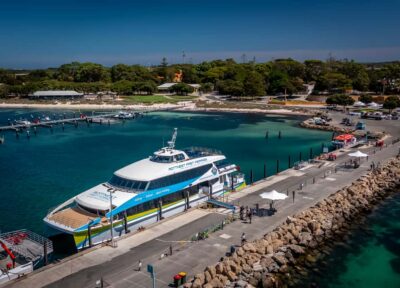
From Fremantle: Rottnest Island Ferry and Bike Day Tour
Read our review →
Nami Island, K-drama Garden & Rail Bike Day Tour
Read our review →
Varca Coastal E-Bike Tour: Scenic Beachside Adventure
Read our review →Other lists this ride turns up in