
REVIEW · UBUD
Electric Cycling Tour of Ubud with Free Hotel Transfer and Lunch
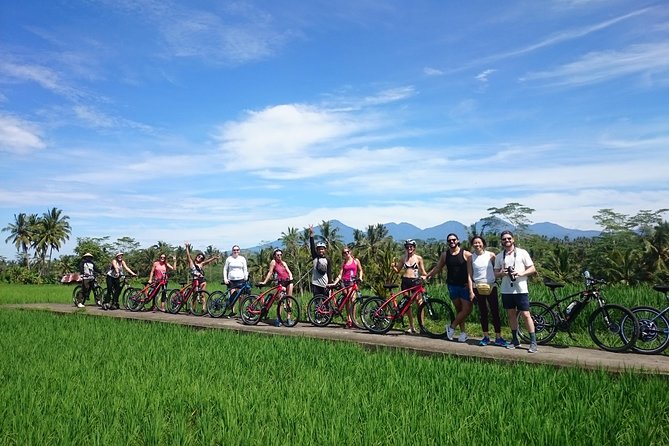
Ubud’s best countryside views are not on the main streets. This electric cycling tour gets you past temples, family compounds, rice paddies, and plantation roads without asking you to fight every hill by muscle alone. The e-bike lets you choose how hard to work, which matters in Bali’s heat.
I like the mix of scenery and local life, especially the stops at Tegalalang Rice Terrace and a Balinese temple or household compound. I also like the careful group handling, with guides riding ahead and behind and helping riders through traffic. The catch is simple: parts of the ride use busy roads, and the narrow paths beside the rice fields can be bumpy and demanding.
Key points to know before you book
- The ride reaches beyond central Ubud: Expect rice fields, village streets, temples, and plantation country rather than an urban sightseeing loop.
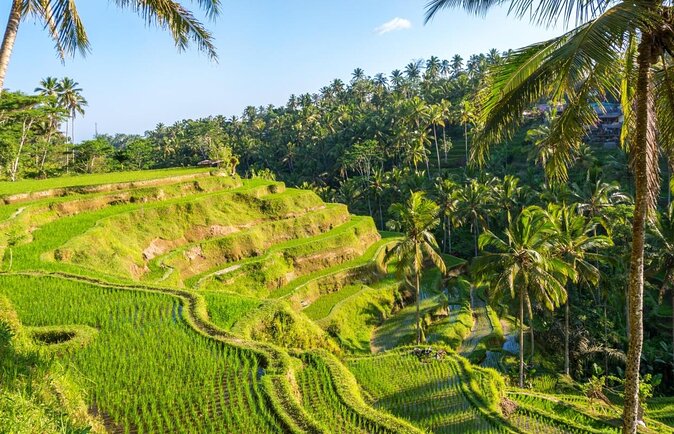
- Tegalalang is the visual highlight: You get time to stop for photos among one of Bali’s most famous rice-growing areas.
- The e-bike softens the hills: You still need to pedal and steer, but you can choose a relaxed level of effort.
- Traffic is part of the experience: Guides help at intersections, though you must already know how to ride a bicycle.
- The coffee stop needs thought: A plantation visit may include luwak coffee and caged civets, which raises animal welfare concerns.
- Lunch or dinner is included: Morning tours finish with lunch, while afternoon departures include dinner.
A practical way to see Ubud beyond the center
At about three hours of touring, this is a compact outing with a lot packed into it. You get hotel pickup and return transport in the Ubud area, use of an electric bicycle and helmet, bottled water, a local guide, and a meal.
The price is $41 per person. For Ubud, that is a fair deal if you want transport, equipment, guiding, and food bundled together. A self-guided ride would cost less in theory, but it would not give you the same help at busy junctions or the same explanation of Balinese temples, farming, and village customs.
The experience is also a good fit for your first or second day in Ubud. It gives you a quick sense of how the town spreads into farmland and small communities. Several riders found it a useful introduction because it combined countryside views with cultural stops, rather than offering only a scenic bike ride.
Do not mistake the three-hour length for three hours of easy, traffic-free pedaling. The outing can feel closer to a half-day once pickup, the vehicle transfer, food, and stops are counted. If you stay outside Ubud, the value changes quickly. A pickup from Nusa Dua, for example, can turn into a very long round trip and take much of the day.
More Rides with Lunch in Ubud:
- Bangkok: Bike and Canal Boat Tour with Lunch
★ 4.9 · 1,350 reviews - Cat Ba: Lan Ha, HaLong bay full day- biking, kayaking, lunch
★ 4.8 · 1,166 reviews - Electric Bike Beach Adventure with Tequila Tasting and Lunch
★ 5.0 · 1,162 reviews
Starting with an e-bike and a safety check
Pickup is offered from central Ubud hotels, with the activity beginning at the eBikes Bali meeting point on Jalan Tirta Tawar in Petulu. The operator provides the bicycle and helmet, and the guides explain how to use the electric assistance before you set off.
You need real bicycle experience. This is not a sit-back sightseeing vehicle, even though the motor makes the hills easier. You will still steer, brake, balance, pedal when needed, and watch the road around you.
The stated rider limits are a minimum height of 150 centimeters and a maximum weight of 120 kilograms, or 260 pounds. Children must be with an adult. Most people who can ride a bicycle should be able to take part, but anyone who is nervous on roads should think carefully before booking.
Wear covered shoes and use sunscreen. Bali’s sun can be strong, and the route includes rougher surfaces near the paddies. Bring a little patience for the initial adjustment period, especially if you have not used an e-bike before.
The bikes are generally described as easy to operate, including by people who had never ridden an e-bike. You can ask the motor to do more of the work, though the exact amount of pedaling will depend on the road and the bike setting.
Riding through traffic with Gusti, Gina, and the guide team
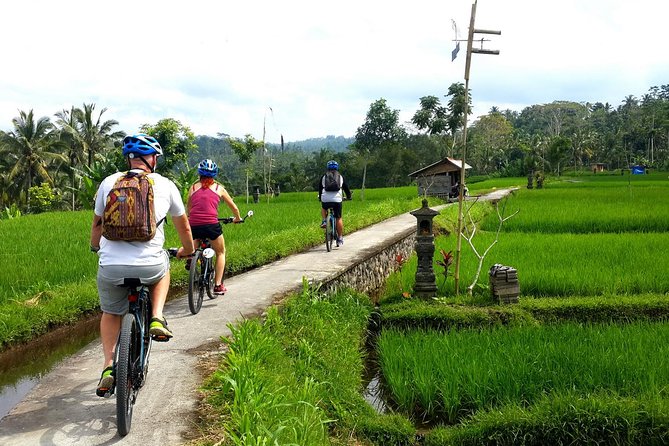
The road sections are the part you should understand clearly before you pay. Ubud’s outer roads can carry motorcycles, cars, pedestrians, and other bicycles. You are not riding on a closed route.
The guides help keep the group together and handle crossings. Guides named Gusti, Gina, Putu, Anilya, Wid, Ketuk, Saur, and others receive warm praise for explaining the route, answering questions, and watching the group. The setup commonly includes one guide at the front and another at the back, with traffic assistance at intersections.
That support makes a real difference, but it does not remove the need for road awareness. You should be comfortable braking and steering while other vehicles pass. One useful point from the ride experience is that the guides may offer a harder route in places. If you are not confident, choose the easier line rather than trying to prove something on a narrow path.
Some sections away from the main road are peaceful and pleasant. Others are uneven, narrow, or close to the edge of a rice paddy. A competent cyclist should manage them, but a casual rider who has not been on a bike for years may need time to settle in.
The route is best viewed as a guided ride through real Ubud, not a polished cycling track. That is part of its appeal. It is also why the safety briefing, front and rear guides, helmet, and group discipline matter.
Tegalalang Rice Terrace, the photo stop
Tegalalang Rice Terrace is the main visual prize. The stepped fields make an immediate impression, and the stop gives you time to look, take photographs, and hear about farming in the area.
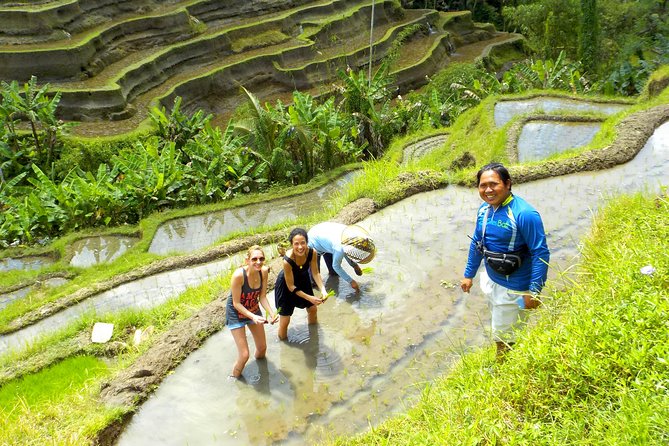
The ride gives the terraces more meaning than a quick roadside photo stop. You see the fields in relation to village roads, temples, and working farmland. Guides explain local agriculture and the way rice production fits into daily life.
The stop is listed at about 30 minutes. That is enough for views and pictures, but not enough for a long walk through every section of the terraces. If your priority is extensive hiking among the paddies, this tour is not designed for that. Its strength is combining a scenic stop with a wider ride.
The road and trail conditions can change the feel of this section. Some riders find the paths narrow and bumpy. Others enjoy the more adventurous part of steering between the paddies. I would rate it as manageable for a reasonably confident cyclist, but not ideal for someone who wants a completely smooth, effortless outing.
Bring your phone or camera, but keep it secure while riding. Stop fully before taking pictures. The best views are worth enjoying without trying to photograph while steering.
More Cycling Trips in Ubud:
- Ubud: Rice Terraces & Villages Half-Day Fat Tire E-Bike Tour
★ 4.9 · 602 reviews - Ubud: Downhill Cycling with Volcano, Rice Terraces and Meal
★ 5.0 · 536 reviews - Ubud eBikes Tour to Tegallalang Rice Terrace
★ 5.0 · 507 reviews - Half-Day Ubud Electric Cycling Tour to Tirta Empul Water Temple
★ 5.0 · 315 reviews
Temples, family compounds, and everyday Bali
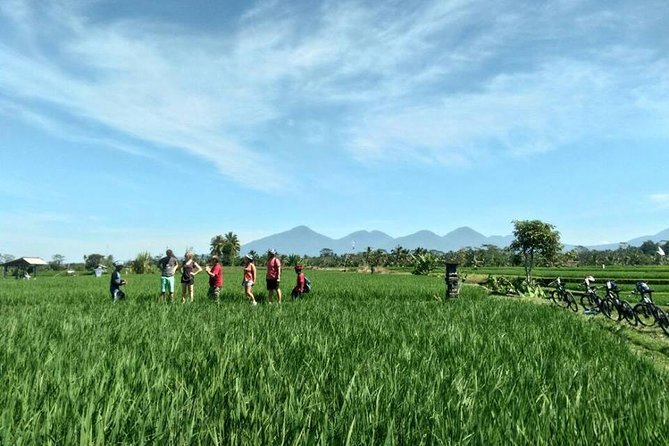
The tour is not only about taking pictures. Depending on the route and timing, you may stop at a temple, a traditional Balinese household compound, a community center, or another local site.
The temple visit can include an explanation of Balinese approaches to death, celebration, offerings, and community life. A family compound offers a look at how domestic space is organized, while the community areas show how village life extends beyond the tourist center.
These stops are valuable because they give context to what you see from the bike. You are not just passing a shrine or watching someone carry an offering. You can ask why the place matters and how it fits into local customs.
The exact combination of cultural stops may vary. The supplied route specifically lists Tegalalang and a jungle swing, while ride descriptions also refer to temples and traditional homes. Consider that a strength if you prefer a flexible local outing, but do not book it expecting a fixed museum-style program.
The guides are a major part of this section. People such as Gusti, Gina, and Anilya are praised for clear English, friendly conversation, and useful explanations of culture and farming. That personal exchange is more memorable than a string of formal facts.
Jungle swing and plantation stop
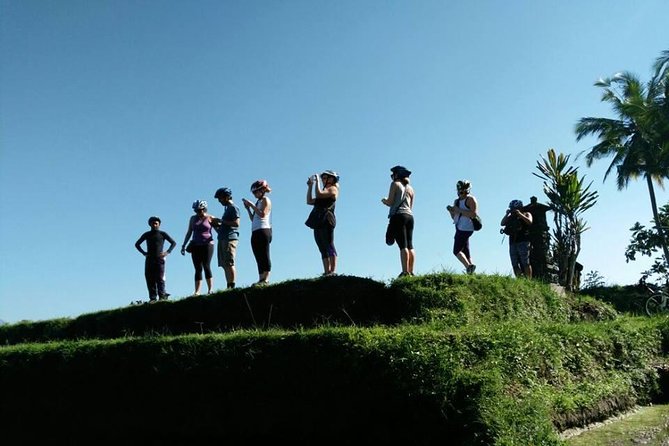
The jungle swing is another popular part of the outing. It is set near a local coffee plantation, and the stop generally lasts about 30 minutes. You can expect a large swing, photo opportunities, and a break from the saddle.
The swing is a good choice if you want a playful activity mixed into the ride. It also gives you a chance to rest and look out across the rice fields. If you dislike heights or staged photo stops, this may feel less important than the temple and village sections.
The coffee plantation can include coffee and tea tasting, including luwak coffee. Some people enjoy learning how the drinks are produced and sampling several varieties. The stop adds an agricultural angle to the route and gives you somewhere to pause.
Here is the important caution: one account raised serious concerns about the condition of civets kept at a luwak coffee site and described the plantation as heavily focused on selling coffee. If animal welfare matters to you, ask whether a traditional house or another cultural stop is available instead. The tour has included that choice, and it may be the better option for your values.
Do not assume every departure will follow exactly the same stop pattern. Ask at the start if you want to know whether your group is visiting the coffee plantation, the traditional home, or both.
Lunch after a morning ride, dinner after an afternoon ride
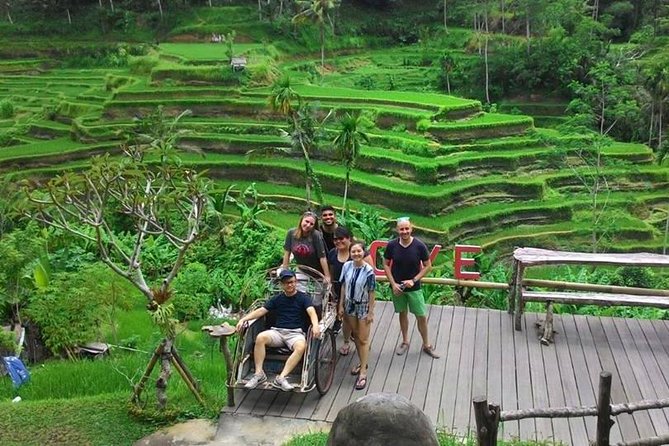
Food is included, which improves the value of the package. A morning departure finishes with lunch, while an afternoon tour includes dinner. The meal takes place after the cycling and gives you a comfortable end to the outing.
The food stop is described as a local restaurant or cafe with a range of choices. It is not presented as a formal Balinese cooking class or a special tasting menu. Think of it as a practical meal after a hot ride, with enough choice to suit different appetites.
This timing works well. You can ride without carrying a full meal, and the final stop gives you time to cool down before returning to your hotel. Bottled water is included, but I would still start well hydrated.
If you have dietary restrictions, the supplied information does not specify which options are available. You should ask the operator before booking or at pickup rather than assume the menu will meet your needs.
Hotel pickup and the real time commitment
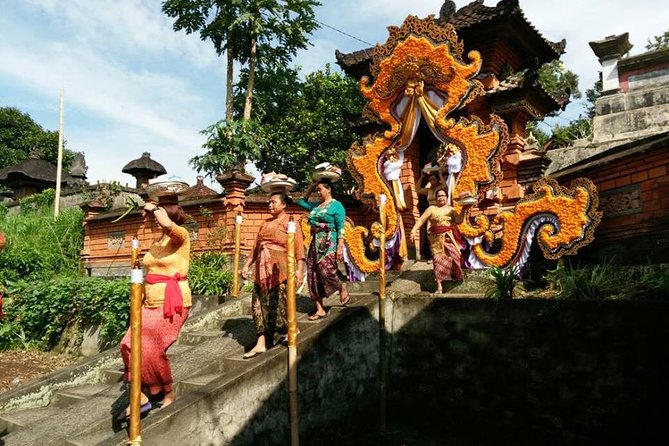
Pickup and drop-off are included for the Ubud area. The tour ends back at the meeting point in the stated activity details, while the package also describes return transport to a central Ubud hotel. Confirm the exact return arrangement for your hotel when booking.
The vehicle is an air-conditioned minivan. That is useful in Bali’s heat and makes the transfer much easier than arranging your own transport before and after the ride.
Central Ubud is the sensible base for this experience. If you are staying farther away, the transfer can become the least enjoyable part of the day. A long drive from Nusa Dua was enough to reduce the value of an otherwise good ride, so check the pickup boundary carefully.
The group can include up to 20 people. That is large enough for a proper group feel, though the actual number may be smaller. Solo participants may find themselves in a group or, on a quiet departure, with a much smaller party. The guides’ front-and-back positioning is especially useful when the group is spread along a narrow road.
Free cancellation is available up to 24 hours before the start time for a full refund. Changes or cancellations inside that window are not accepted for a refund. The tour depends on good weather, and a weather cancellation brings the choice of another date or a full refund.
Who will enjoy this ride most
I would choose this for an active couple, a family with older children, or anyone who wants to see more of Ubud than the market, palace, and restaurant streets. It works particularly well for families with tweens or teenagers who can already ride a bicycle.
It also suits you if you want cultural explanation without spending a full day in a vehicle. The balance of cycling, temple visits, rice farming, a swing, and food gives the outing variety.
You should reconsider it if you are uncomfortable in traffic, have not ridden a bicycle for a long time, or want a completely flat and smooth route. The electric motor helps with hills, but it does not solve balance, braking, or narrow-path riding.
You should also think about the coffee plantation option if luwak coffee and civet welfare concern you. Ask for the traditional house or another alternative if one is available.
Should you book the Ubud e-bike tour?
Yes, if you are a capable cyclist based in or near Ubud and want a practical mix of countryside, culture, and scenery. The $41 price is reasonable for an e-bike, helmet, guide, bottled water, transport, and lunch or dinner.
The strongest reasons to book are the guides’ careful handling of traffic, the easy-to-use bikes, and the chance to reach rice fields and village roads that are awkward to visit by car. Tegalalang provides the big view, while the temple and household stops add local context.
Book with realistic expectations. This is not a traffic-free bike path, a full-day rice-terrace hike, or a luxury food tour. It is a lively, sometimes bumpy ride through real Ubud, with some busy roads and a flexible mix of cultural stops.
If that sounds like your kind of Bali morning or afternoon, it is a strong choice. Wear proper shoes, bring sunscreen, confirm the pickup area, and ask about the plantation stop before setting off.
FAQ
How long does the electric cycling tour last?
The cycling experience lasts approximately three hours. Pickup, transport, meal timing, and stops can make the total outing longer.
How much does the tour cost?
The listed price is $41 per person.
Is hotel pickup included?
Yes. Pickup and drop-off are offered for hotels in the Ubud area, with transport by air-conditioned minivan.
What is included in the tour?
The package includes an electric bicycle, helmet, local guide, bottled water, hotel transport in the Ubud area, and lunch after a morning tour or dinner after an afternoon tour.
Do I need to know how to ride a bicycle?
Yes. Bicycle riding experience is required. The e-bike reduces the effort needed for hills, but you still need to balance, steer, brake, and ride on roads.
Is there a rider height or weight limit?
The minimum height is 150 centimeters. The maximum rider weight is 120 kilograms, or 260 pounds.
What happens at Tegalalang Rice Terrace?
You stop at the rice terraces for about 30 minutes. This is the main photo stop and includes views of the stepped fields.
Does the tour visit a coffee plantation?
The route includes a local coffee plantation and giant swing stop, and some departures offer a choice between a traditional Balinese house and a coffee plantation. Ask your guide which option applies to your departure.
Are children allowed?
Yes. Children must be accompanied by an adult.
What happens if the weather is poor?
The experience requires good weather. If the operator cancels because of poor conditions, you can choose another date or receive a full refund. You can cancel for a full refund up to 24 hours before the start time.
Newest rides we have reviewed in Ubud
- E-Bike: Ubud Rice Terraces & Traditional Villages Cycling★ 4.6 · 37 reviews
- Ubud: Downhill Cycling with Volcano, Rice Terraces, and Meal★ 4.9 · 189 reviews
- Private Fat Tire E-Bike Tour in Ubud★ 5.0 · 25 reviews
- Ubud: Zipline, Bali Swing, and Sky Bike in a Private Rice Terrace★ 4.5 · 60 reviews
- Ubud: E-Bike Tour with Rice Terrace and Village Visit★ 4.9 · 71 reviews
- Electric Bike Tour in Ubud★ 5.0 · 281 reviews
- Bali Countryside Cycling Adventure★ 4.5 · 112 reviews
- Ubud : PRIVATE Bike Tour inside Rice Field Ubud Countryside★ 4.9 · 118 reviews
Ubud Cycling Tours, compared.
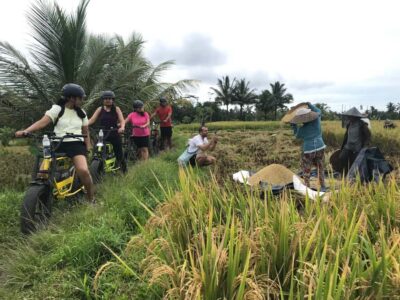
Rice Terraces & Villages Half-Day Fat Tire E-Bike Tour
Read our review →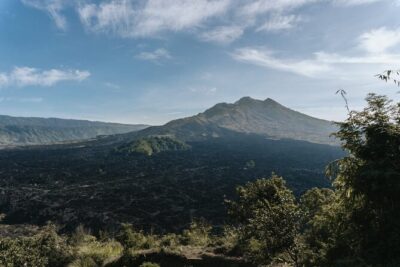
Downhill Cycling with Volcano, Rice Terraces and Meal
Read our review →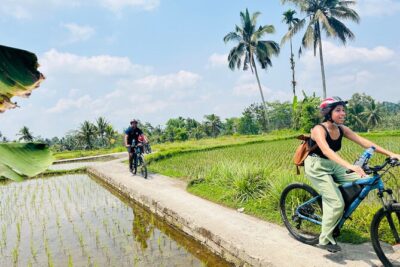
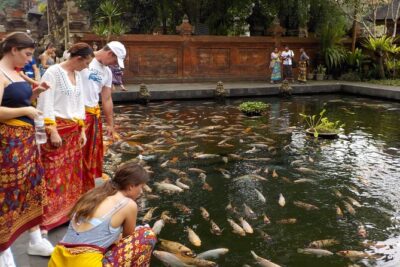
Half-Day Ubud Electric Cycling Tour to Tirta Empul Water Temple
Read our review →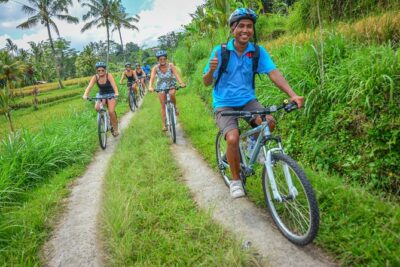
Downhill Cycling with Volcano, Rice Terraces, and Meal
Read our review →
PRIVATE Bike Tour inside Rice Field Ubud Countryside
Read our review →Other lists this ride turns up in