
REVIEW · MILAN
Miles and smiles /// Milan’s ride
Milan is big, spread out, and easy to underestimate. This four-hour bike tour solves that problem by linking modern districts, grand monuments, parks, canals, and local streets in one long ride. You get the broad view quickly, then can return later to the places that catch your eye.
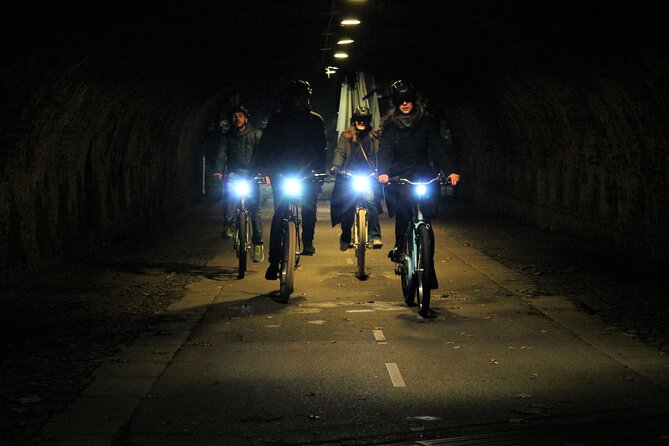
I like the small group size, which lets guides such as Giacomo, Stefano, and Andrea adjust the pace and answer questions without shouting. I also like the practical setup: a new Rossignoli bike, helmet, and bottled water are included, and the route reaches far more of Milan than a walking tour can manage.
The catch is city cycling. You need reasonable confidence around cars, pedestrians, narrow roads, and busy streets. The ride is not described as strenuous, but four hours in the saddle takes some stamina, especially in hot weather or poor conditions.
Key points to know before you book
- A full-city route: Cover Brera, Piazza Gae Aulenti, Sforza Castle, Navigli, the Duomo, La Scala, Central Station, and more in one outing.
- Small groups matter: The tour is listed with a maximum of eight people, with other details describing a cap of 10.
- Good bikes are provided: You ride a brand-new Rossignoli bike, with a helmet and bottled water included.
- Guides shape the experience: Giacomo is often praised for his local insight and easygoing manner, while Stefano and Andrea have also led highly rated rides.
- Urban riding is part of the deal: You will use streets shared with cars and pedestrians, not just protected cycle paths.
- Best as an early Milan activity: The route gives you a useful map of the city and ideas for what to visit afterward.
Why a bike makes sense in Milan
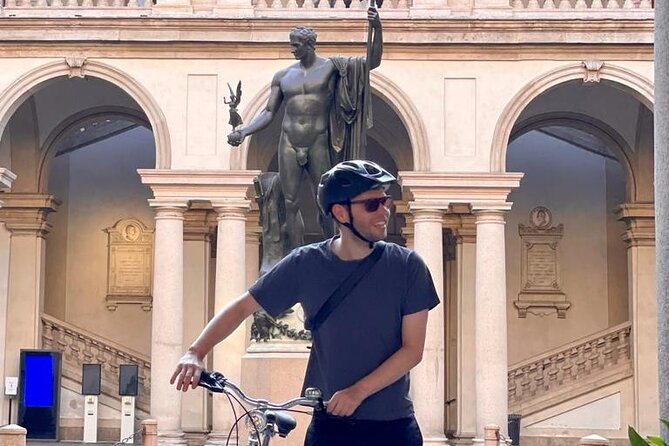
Milan rewards a wide-angle first look. The Duomo and La Scala are essential, but they tell only part of the story. The city also has sleek new towers, quiet courtyards, canals, leafy parks, design districts, and neighborhoods that are easy to miss on foot.
A bike connects these pieces with little wasted time. You are not trapped inside a bus, and you are not spending most of the afternoon walking between distant sights. You can move from the modern skyline at Piazza Gae Aulenti to the older streets of Brera, then continue to Sforza Castle and the Navigli canals.
I would place this tour early in a Milan visit. It helps you understand the city’s shape, and guides often point out places worth returning to for dinner, museums, shopping, or a slower walk. The route is broad rather than deeply focused, so think of it as a moving introduction to Milan rather than a replacement for museum visits.
The tour lasts about three to four hours, with the published route set at four hours. Stops for sights and water keep it from feeling like a race, but you are still riding for much of the afternoon. Milan is relatively flat, which helps, but the distance and city traffic still call for moderate fitness.
Other rides people book around Milan:
- Milan: Hidden Gems Guided Bike Tour
★ 4.8 · 1,334 reviews - Milan’s Hidden Gems: Unique Bike Tour (ENG, NL)
★ 5.0 · 970 reviews - Milan: Highlights and Hidden Gems E-Bike Tour
★ 4.7 · 558 reviews
Starting in Moscova and reaching modern Milan
The ride begins at Via della Moscova, 26, in the Moscova area. This is near public transportation, which makes the start practical, though the meeting point can be confusing if you expect a large shop or obvious tourist office. It may be an empty playground or open area, so check the exact address and arrive with a little spare time.
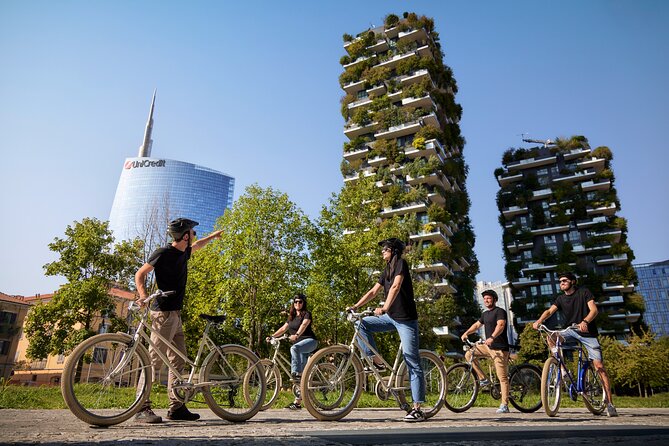
From Moscova, the route heads toward Piazza Gae Aulenti, Milan’s sharp-edged modern showcase. Glass towers and public spaces here present a very different face of the city from the marble Duomo. The nearby Bosco Verticale, or Vertical Forest, adds another distinctive sight: apartment towers covered with trees and plants.
This opening section gives you an immediate sense of Milan’s contrasts. In a short ride, you move from traditional streets to ambitious contemporary architecture. The guide can also help place these buildings within the city’s recent growth, rather than leaving you to see them as isolated photo stops.
Brera brings the ride back to old Milan
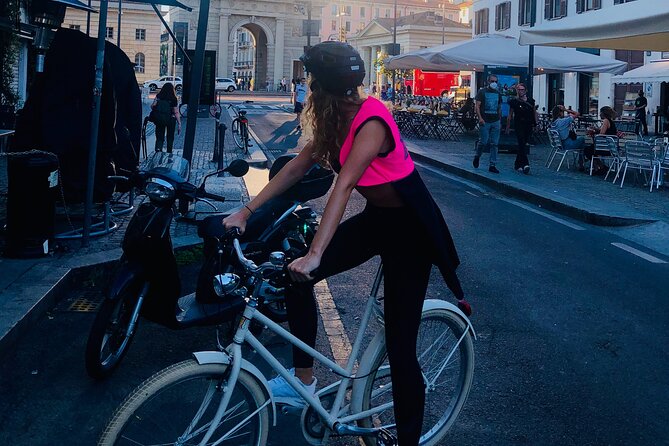
The route continues into Brera, one of the city’s most attractive central districts. Its streets feel more intimate than the broad avenues around the newer towers, and the area has a strong connection to art, galleries, cafes, and Milanese daily life.
A bike is useful here because you can skim the district without giving up the chance to stop. At the same time, you need to stay alert. Brera includes narrow streets, pedestrians, and busy corners, so the pace may slow and the guide’s safety instructions matter.
From Brera, the ride reaches Piazza dei Mercanti and Piazza della Borsa. These spaces help explain Milan’s older civic and commercial identity. They are not simply photo backgrounds. They show how the city moved from medieval public life to modern business power.
The advantage of seeing them by bike is the sequence. Instead of studying one monument in isolation, you watch Milan change block by block. The drawback is that the stops are brief compared with a dedicated walking tour. If a particular square catches your attention, mark it for a return visit.
Sforza Castle and Sempione Park
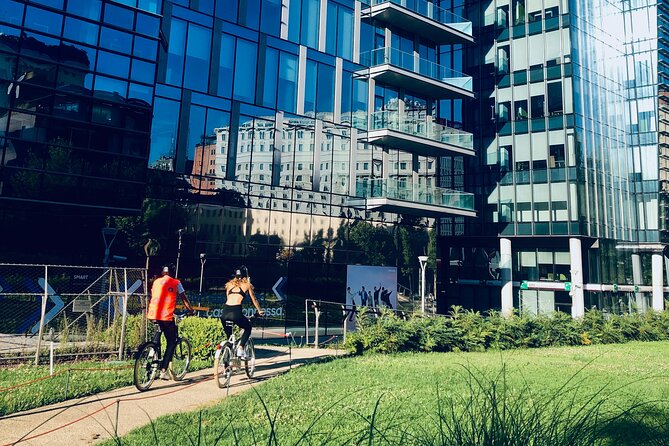
Sforza Castle is one of the major sights on the route. Its broad walls and towers provide a strong contrast with the glass architecture seen earlier. The castle also works well as a geographic anchor, linking central Milan with the large green space of Sempione Park.
You will not receive a full museum visit as part of this ride, and admission is not charged for the tour itself. That is a benefit if you want a quick outside view, but it also means you should not expect time to explore the castle collections.
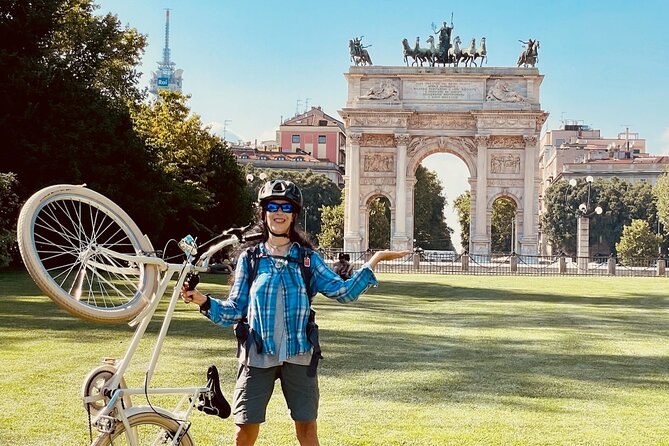
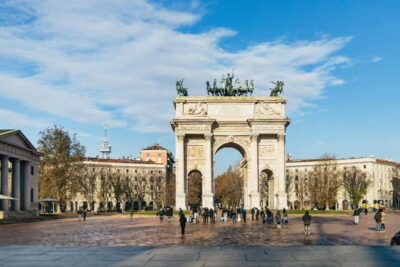
Sempione Park offers a welcome change of pace. After city streets and traffic, the ride becomes greener and more relaxed. The guide can point out the relationship between the castle, the park, and the Arch of Peace at the far end.
The Arch of Peace gives the stop a clear finish. It is one of those places where the scale of Milan becomes easier to read. You get a major monument, open space, and a chance to pause before returning to denser streets.
Same roads, a different saddle:
- Milan: Highlights and Hidden Gems Guided Bike Tour
★ 4.7 · 498 reviews - Highlights and hidden gems of Milan Bike Tour
★ 5.0 · 491 reviews - Milan: Guided Bike Tour
★ 4.8 · 256 reviews - Small-group Milan Highlights e-Bike Tour
★ 5.0 · 113 reviews
Cadorna, Sant’Ambrogio, and a less polished side of Milan
The route then passes through Cadorna and continues toward Sant’Ambrogio. These areas add texture to the ride because they are not limited to the postcard version of Milan.
Sant’Ambrogio is particularly useful for understanding the city beyond its best-known central sights. The tour’s appeal is not only the number of famous stops. It is also the movement between housing areas, shopping streets, parks, tourist zones, and smaller roads.
That variety is where the local guide earns the fee. Giacomo is repeatedly praised for knowing the city well, explaining its past in his own way, and making the ride feel personal. He is also described as flexible and attentive to individual needs. Stefano has been singled out for patience with late arrivals and for stopping to offer water during hot weather.
The guide’s care is important here because urban riding can feel uncertain if you are not used to it. You will share parts of the route with cars and pedestrians. The best approach is to follow instructions closely, keep your attention on the road, and avoid treating the ride like a casual park cycle.
Navigli and Darsena after the city center
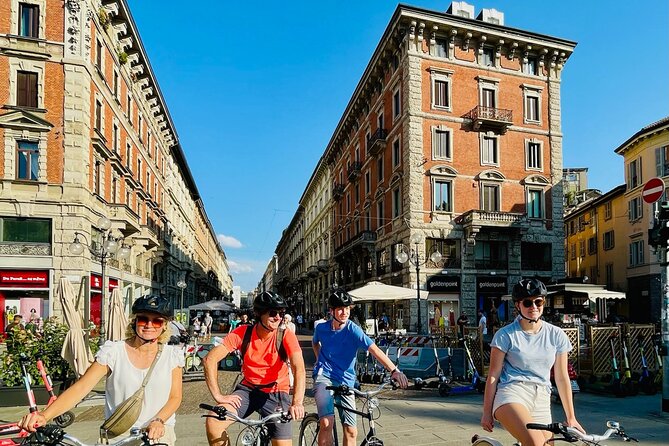
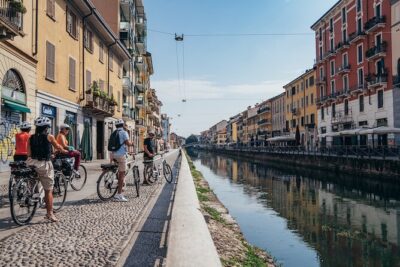
The ride reaches Darsena and the Navigli area, one of Milan’s most recognizable water-side districts. The canals provide a strong change from the stone squares and formal avenues earlier in the route.
Darsena is especially useful as a break in the rhythm. You have room to take in the setting, and the canal area gives you another side of Milan’s social life. The tour does not turn into a food or nightlife outing, but your guide may offer suggestions for places to eat or return later.
This is also one of the best sections for understanding why the route works as a city overview. You see Milan’s modern towers, old center, monumental castle, leafy park, residential streets, and canals in a single circuit. A walking tour could cover these areas only with much more time and effort.
The trade-off is that cycling near popular pedestrian areas calls for patience. You may need to slow down or walk the bike briefly in crowded spots. That is not a flaw in the route so much as a normal part of seeing a large Italian city on two wheels.
San Lorenzo, the Duomo, and Milan’s grand center
After Navigli, the route passes the Columns of San Lorenzo and heads toward the Duomo. The columns offer a glimpse of Milan’s Roman past, while the Duomo represents the city’s most famous public face.
Arriving at the Duomo by bike is a satisfying payoff. You have already seen the city in pieces, and now the grand central square brings those pieces together. The tour focuses on the outside setting, not a cathedral entry, so plan a separate visit if you want to see the interior or climb to the rooftop.
The route also includes Piazza San Fedele and La Scala. Piazza San Fedele is quieter and more compact than the Duomo area, while La Scala brings you into Milan’s world of opera and high culture. Via Manzoni then carries the ride through one of the city’s elegant central corridors.
These stops are close enough to connect naturally, but you should expect a steady sightseeing rhythm rather than long lectures at every location. The guides have been praised for giving history in an informal, entertaining way. That suits this format: you get context while keeping the wheels moving.
Palestro, Repubblica, and the final sweep
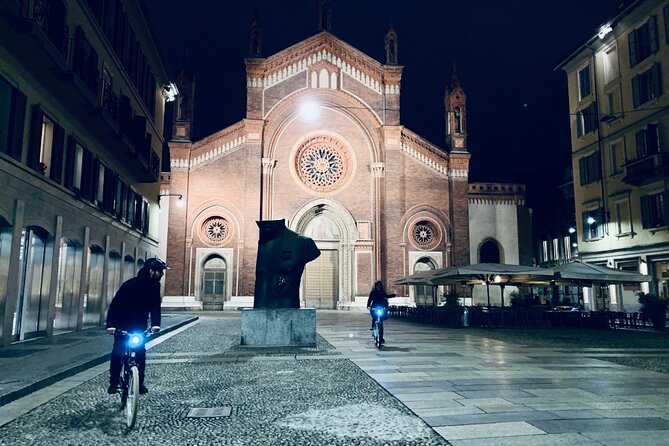
The final part of the ride continues through Palestro and Repubblica before reaching Milan Central Station and the Pirellone. This ending shifts the focus again, from historic center to grand avenues and postwar modern architecture.
Central Station is one of Milan’s most imposing transport buildings. Seeing it near the end of a long city circuit helps show how the city connects to the rest of Italy and Europe. The Pirellone, a landmark office tower, adds another view of Milan’s modern identity.
By this point, you will have covered a remarkable amount of ground. The benefit is clear: you can finish the tour with a mental map that would take several days to build on foot. The limitation is that the route may feel fast if you want to study every location in detail.
The tour ends back at the starting point on Via della Moscova. That makes the ride easier to plan around, since you do not need to arrange transport from a distant final stop.
Guides, bikes, and group size
The strongest part of this experience is the human scale. Giacomo is the guide most often associated with the ride, and the descriptions of his style are consistent: friendly, flexible, humorous, passionate about Milan, and careful about safety. Stefano and Andrea have also led well-regarded outings, and another guide named Jacob has handled difficult weather with a cheerful attitude.
The group is intended to be small. The information gives a maximum of eight people, while another feature says the cap is 10. Either way, this is much more personal than a large sightseeing coach. Small groups also make it easier for the guide to watch the road, adjust the pace, and stop when someone needs water.
A new Rossignol bike is provided, along with a helmet and bottled water. That removes the need to arrange equipment before arrival. You should still wear comfortable shoes and clothing suited to the weather.
The ride is offered in English, though a multilingual guide may operate the tour. Children must be accompanied by an adult. Most people can participate, but the stated requirement for moderate physical fitness is worth taking seriously.
Price, weather, and who gets good value
At $59.13 per person, this is a fair price for a four-hour guided ride with a bike, helmet, water, and a small group. The value improves if you have limited time in Milan and want to cover distant districts without paying for several separate sightseeing activities.
You are also paying for judgment. A local guide chooses the order, handles the streets, gives context, and points out places you might not find alone. The tour can save you time later by helping you decide which neighborhoods deserve a second look.
The price is less attractive if you dislike cycling in traffic, want detailed interior visits, or prefer to linger at each monument. In that case, a walking tour or self-guided museum day may suit you better.
The experience depends on decent weather. If poor weather forces cancellation, you can choose another date or receive a full refund. You can cancel for a full refund up to 24 hours before the start time, but late cancellations and late changes are not refunded or accepted.
Should you book Milan’s ride?
Book this tour if you want a broad, active introduction to Milan and feel comfortable riding in an urban setting. It is especially useful at the start of a stay, when you want to learn the city’s layout and collect ideas for later.
I would be more cautious if you are nervous on a bike, tire easily, or want a slow, highly detailed tour of each monument. Hot weather can add strain, although guides have shown care with water breaks and pacing.
For confident cyclists, couples, solo visitors, and small groups, this is a strong way to see Milan from several angles in one afternoon. The combination of famous sights, less obvious neighborhoods, good equipment, and guides who care about the city makes the $59.13 fee reasonable.
FAQ
Where does the Milan bike tour start?
The tour starts at Via della Moscova, 26, 20121 Milano MI, Italy.
Where does the tour finish?
The ride ends back at the meeting point on Via della Moscova.
How long does the tour last?
The tour lasts approximately three to four hours. The published itinerary gives the ride a duration of four hours.
What sights are included?
The route includes Piazza Gae Aulenti, Bosco Verticale, Brera, Piazza dei Mercanti, Piazza della Borsa, Sforza Castle, Sempione Park, the Arch of Peace, Cadorna, Sant’Ambrogio, Darsena, Navigli, the Columns of San Lorenzo, the Duomo, Piazza San Fedele, La Scala, Via Manzoni, Palestro, Repubblica, Central Station, and the Pirellone.
Is the tour offered in English?
Yes. The tour is offered in English, though it may be operated by a multilingual guide.
What kind of bike is provided?
A brand-new Rossignol bike is provided for the tour.
Is a helmet included?
Yes. A cycle helmet and complimentary bottled water are included.
How large is the group?
The additional information gives a maximum of eight people. Another tour detail describes the group as capped at 10, so expect a small group.
Do I need to be physically fit?
You should have a moderate level of physical fitness. The route is mostly flat, but it lasts up to four hours and includes cycling on city streets.
Can children join the tour?
Yes, children can participate, but they must be accompanied by an adult.
What happens if the weather is poor?
The experience requires good weather. If it is canceled because of poor conditions, you can choose another date or receive a full refund.
Newest rides we have reviewed in Milan
- Small-group Milan Highlights e-Bike Tour★ 5.0 · 113 reviews
- The Milan you don’t expect, bike tour with picnic on the lake★ 5.0 · 63 reviews
- Highlights of Milan Bike Tour★ 5.0 · 31 reviews
- Private Milan Bike Tour★ 5.0 · 72 reviews
- Milan: Bicycle Tour Live Tourist Guide 3 hours and half★ 5.0 · 42 reviews
- Milan: Bike Tour with Picnic on the turtle lake★ 4.9 · 40 reviews
- Private Highlights of Milan Bike Tour★ 4.8 · 59 reviews
- Milan: ELECTRIC-Bicycle Tour Live Tour Guide 3 hours & half★ 4.9 · 53 reviews
Milan Cycling Tours, compared.
Milan’s Hidden Gems: Unique Bike Tour (ENG, NL)
Read our review →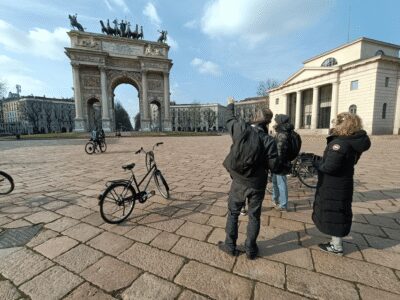
The Milan you don’t expect, bike tour with picnic on the lake
Read our review →
Other lists this ride turns up in