
REVIEW · MEXICO CITY
Mexico City; ART NACO : Murals & Street Art Bike Tour
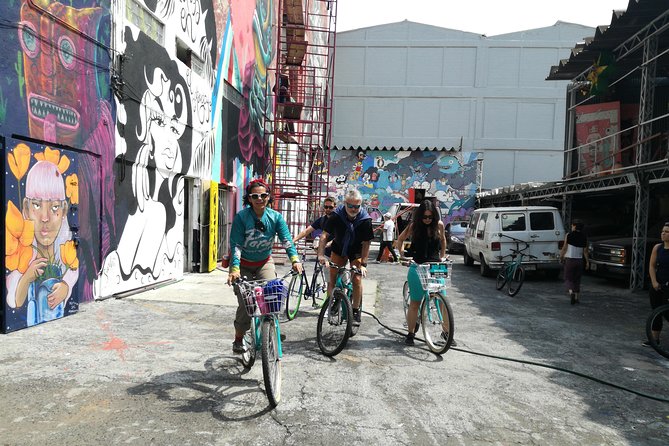
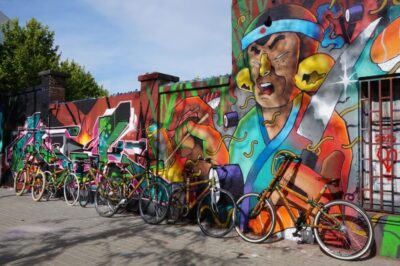
Mexico City’s best street art is not confined to a museum. This three-hour ride takes you through Guerrero, Obrera, Doctores, Juárez, and Cuauhtémoc, pairing murals with the neighborhoods that give them meaning. You’ll see works by local and international artists, ride roads most visitors miss, and stop for tacos or another street-food treat.
I like the small groups, limited to 10, and the extra guides who help riders cross busy streets. I also like the choice of a northern or southern route, plus the chance to try food such as blue-corn tacos, tlacoyos, gorditas, or chilaquiles. The main caution is equipment: some bicycles have had weak brakes or unreliable gears, and English ability can vary by guide.
Key points to know before you book
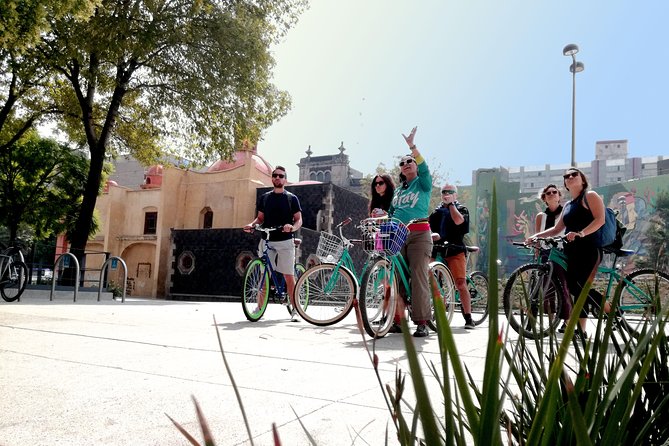
- Three hours through several real Mexico City neighborhoods: The route moves well beyond the usual historic-center sights.
- Two route choices: Ask about the northern or southern option, since they emphasize different areas and stories.
- Small groups capped at 10 riders: Some departures include two or three guides, which helps with street crossings and traffic.
- Street food is part of the experience: Tacos, quekas, tlacoyos, gorditas, chilaquiles, and other options are included, with attention to dietary needs.
- Guides make the difference: Iván, Alberto, Gaby, Eduardo, César, and Timón are among the guides praised for their care, art stories, and local connections.
- Bike condition deserves a quick check: Test your brakes and gears before leaving the meeting point.
Why this ride shows you a different Mexico City
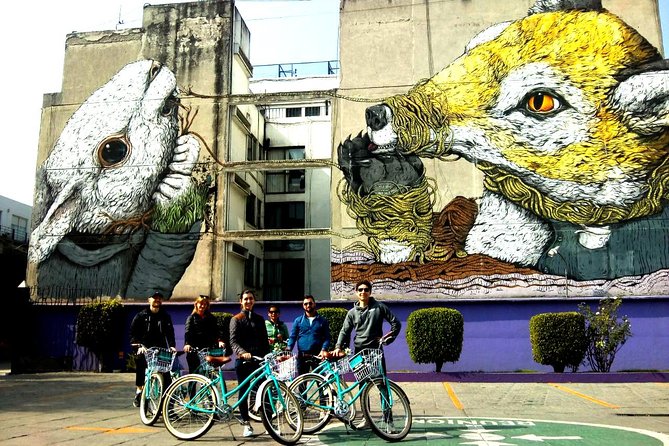
This is not a quick lap around a few famous murals. The route uses the bicycle to connect parts of the city that are hard to cover on foot, including Colonia Guerrero, Lagunilla, Obrera, Doctores, Juárez, and Cuauhtémoc.
That matters because street art makes more sense when you see it in its own setting. You are not simply looking at painted walls in a gallery. You are riding past neighborhoods, public spaces, shops, gardens, museums, and working streets while your guide explains the artists and the local setting.
I like the balance between movement and stops. You cover a good amount of ground, but the pace is described as slow, and there are pauses to look carefully at the artwork. This is not a fitness ride. Still, you should feel comfortable riding in city traffic and managing a bicycle for about three hours.
The tour has earned a 4.9 rating from 284 ratings, with 96 percent recommending it. The strongest praise centers on three things: guides who explain the art and local history well, careful support in traffic, and the food stop at the end.
More Street Art Bike Tours in Mexico:
- London Bike Tour: Landmarks, Secret Gems, Pub Stop & Street Art
★ 5.0 · 943 reviews - Barcelona Street Art and Graffitti Bicycle Tour
★ 5.0 · 361 reviews - London: Landmarks & Secrets Bike Tour with Pub & Street Art
★ 4.9 · 314 reviews
Starting at Reforma and heading into the city
The meeting point is at Avenida Paseo de la Reforma 24-1 in Colonia Centro, near public transportation. The start time is 10:00 a.m., and the ride ends at the same place.
A local guide fits you with a bicycle, provides bottled water, and explains the ride. Before setting off, check the brakes, gears, and saddle position. One rider reported weak brakes, while another found that gears shifted without warning. Those problems did not ruin the experience, but a two-minute check is sensible.
The operator is Poray, and the guide may be multilingual. English is offered, but the quality of spoken English can vary. Guides such as Iván and Gaby received especially strong praise for explaining the art and keeping groups together. Alberto was repeatedly appreciated for patience and care, while Eduardo was praised for combining art with Mexican history.
The safety setup is one of the best parts of this outing. Depending on group size, you may have additional staff riding with you. They help position the group, stop traffic when needed, and guide riders across intersections. That does not make Mexico City traffic disappear, but it can make a first city ride feel far less stressful.
Guerrero, Lagunilla, and the less polished center
The first section heads toward Colonia Guerrero, Lagunilla, and parts of the center that sit away from the standard sightseeing circuit. This is where the tour begins to earn its price.
You see Mexico City as a lived-in place rather than a collection of postcard stops. The art appears on ordinary streets and buildings, and the setting becomes part of the explanation. If your idea of Mexico City is limited to the Zócalo, Palacio de Bellas Artes, and major museums, this section gives you a useful counterpoint.
The route is not presented as a grand architectural tour. Its appeal is the mix of street scenes, neighborhood details, and painted walls. You may also hear about how local communities protect and promote new work. That community angle is important, since street art changes over time and belongs to the places where it is made.
The ride can feel informal. One weaker experience involved a guide who wandered off topic and was sometimes difficult to understand. If you want a tightly scripted art lecture, this may not fit. If you prefer a flexible guide who can answer questions and point out details as you go, it is a better match.
Obrera and Doctores, where the art has a local setting
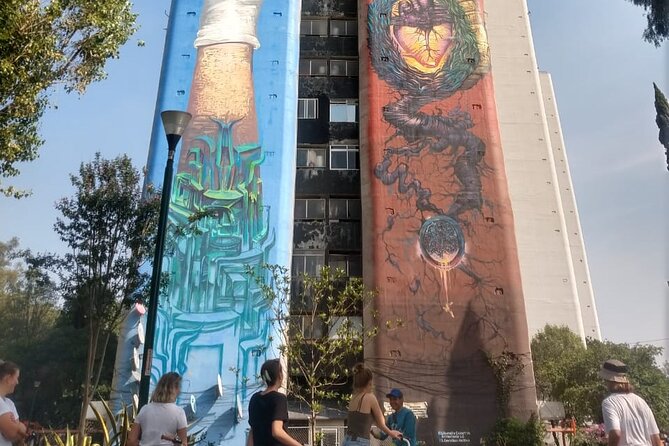
The route continues into Obrera and Doctores, two neighborhoods that many short-term visitors never reach. Here, the art is connected to local streets rather than isolated as a single attraction.
A key stop is the Antique Toy Museum, associated with the first Street Art Festival in 2011. The festival helped give the area a place in Mexico City’s street-art story, and the museum remains part of that connection. This stop offers a useful bridge between older objects, popular culture, and newer public art.
Your guide may explain artists, techniques, and the reasons certain walls became canvases. Iván was praised for doing extensive research and for adding art context beyond a quick name-and-date explanation. He also made local connections with a print shop and museum, which can add a personal touch to the route.
The best part is the scale. You are not rushing through a giant museum with dozens of rooms. You stop at selected works, hear why they matter, then get back on the bicycle and see how the next neighborhood changes the mood.
More Cycling Trips in Mexico:
- Electric Bike Beach Adventure with Tequila Tasting and Lunch
★ 5.0 · 1,162 reviews - Frida Kahlo VIP [Museum Tickets Included] Bike, Markets & Churros
★ 5.0 · 1,072 reviews - Mexico City: 19 City Highlights Bicycle Tour
★ 5.0 · 425 reviews - Mexico bike tour
★ 5.0 · 407 reviews
A pause at Pushkin Garden and a look at Roma Norte
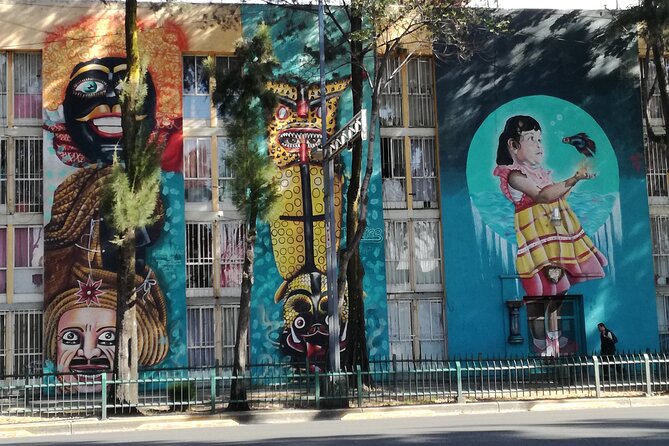
The itinerary includes a break at Pushkin Garden, giving you time to rest and get your bearings before continuing toward Roma Norte. This pause is practical as well as pleasant. Three hours on a bicycle in city traffic is easier when the ride includes a proper stop.
The Roma section helps show how close different sides of Mexico City can be. You move from streets that feel less familiar to many visitors toward an area often associated with cafés, restaurants, design, and older urban details. The route does not turn into a standard Roma walking tour, but the change in surroundings adds range to the outing.
This is also a good moment to ask your guide about the two route choices. The northern and southern routes are not identical, and the exact experience depends on which one you select. One couple chose the northern option and found it focused more on the city’s history. Ask at the start if you have a preference.
Juárez, Cuauhtémoc, Alameda, and Diego Rivera
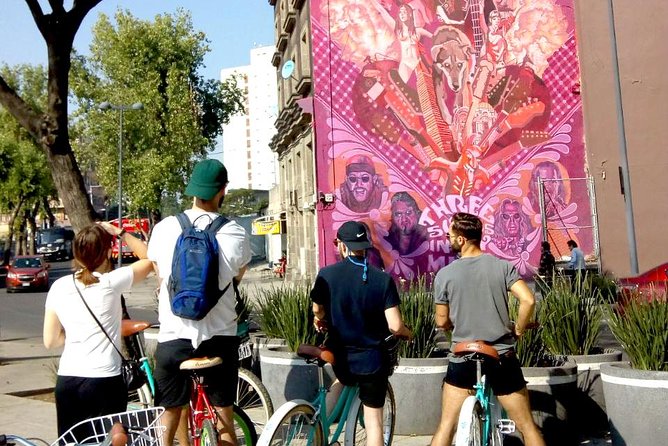
The ride then crosses Juárez and Cuauhtémoc, where you can see large murals made with different techniques. The itinerary also brings you toward Alameda and a Diego Rivera mural.
This part may appeal most to visitors who want both public art and major cultural landmarks. The route lets you compare newer street pieces with work connected to Mexico’s established mural tradition. Your guide can help explain how those forms relate, though the depth of interpretation depends on who leads the group.
The murals are only half of the experience. The bicycle lets you connect these areas without arranging separate taxis or spending much of the morning walking between distant stops. In three hours, you see a broad slice of central Mexico City and still have time for food.
That efficiency is a real value. At $60.56 per person, the tour is not the cheapest way to see a mural, especially if you are comfortable navigating the city by yourself. But the fee includes the bicycle, guide, water, small-group support, art interpretation, and food. For a first visit, that combination can cost less than piecing together transport, meals, and independent research.
The street-food stop is more than a snack
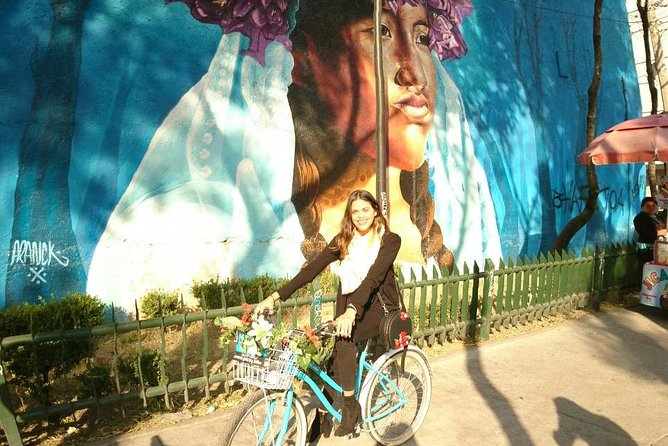
Food is included, and the choices can include tacos, quekas, tlacoyos, gorditas, chilaquiles, and other Mexican street foods. Dietary restrictions are taken into account, and one rider specifically enjoyed a vegan option.
A stop for blue-corn tacos was singled out as a highlight. Other riders described the final meal as some of the best food they had during their stay. The exact stand and menu can vary, so do not book this expecting a fixed restaurant meal. Think of it as a chance to eat where the guide has a local connection.
I like this part because it keeps the tour grounded. You are not only looking at art made for public space. You are also eating ordinary food in the city you have just ridden through. If you have a sensitive stomach or strict dietary needs, tell the operator in advance and confirm your options at the start.
Safety, pace, and the reality of city cycling
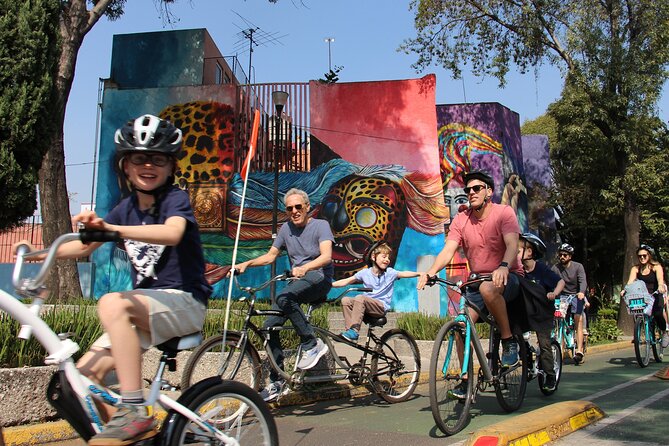
The safety record is a major reason to choose this tour. Several guides have been praised for blocking traffic, organizing crossings, and keeping the group together. Groups may have two or three guides, especially when the party is larger.
Still, this is a bicycle tour in Mexico City, not a closed-road ride. You will be sharing streets with traffic. The pace is described as slow, and most participants can take part, but you should be comfortable balancing, stopping, and riding in an urban setting.
Families with teenagers have enjoyed the outing, and children must be accompanied by an adult. The child rate applies only when the child shares with two paying adults. The group limit is 10 people, although smaller departures may have only two riders and one guide.
The small size improves the experience. You can ask questions without shouting across a large group, and the guide can adjust the pace. It also means the tour may be affected by a late arrival. One departure ran about 50 minutes over schedule after waiting for a late guest and photographer. Leave room in your plans after the ride.
Guide quality and bicycle quality
The guide is central here. A strong guide turns a pleasant ride into an art tour. Iván has been praised for explaining artists, history, and customs while answering questions easily. Alberto is appreciated for patience and neighborhood knowledge. Gaby and César have been recognized for clear explanations and safe group handling. Timón has been praised for serving as an effective traffic blocker.
The range of guide ability is worth noting. One participant found the guide’s English hard to follow, while another said the group had little useful information about the art. These are exceptions among many positive experiences, but they are fair reasons to keep expectations realistic.
The bicycles are serviceable rather than luxury equipment. Most riders have enjoyed them, and one person described the bikes as comfortable. Yet reports of weak brakes and faulty gears mean you should inspect yours before departure. Ask for another bicycle immediately if something feels wrong. The operator can solve a small equipment issue more easily at the start than halfway across town.
Who will get the most from this tour
I would choose this for a first or second visit to Mexico City when I wanted to see beyond the headline sights. It suits you if you like street art, local food, neighborhood riding, and stories about how public art fits into city life.
It is also a good option if traffic makes you nervous but you still want to ride. The extra guides and small group offer more support than renting a bicycle alone.
You may want another activity if you need a polished museum-style lecture, top-end bicycles, or a precise finish time. It is also not ideal if you dislike city cycling or want hotel pickup. You must reach the Reforma meeting point yourself, and the tour ends there.
The free cancellation policy allows a full refund if you cancel at least 24 hours before the 10:00 a.m. start. Changes or cancellations inside that window are not accepted.
Should you book ART NACO?
Yes, if you want a human-scale look at Mexico City through murals, neighborhoods, and food rather than only famous landmarks. The strongest reasons to book are the small group, careful traffic support, two route choices, and guides such as Iván, Alberto, and Gaby who can connect the art to local history.
Book with two small cautions in mind: check the bicycle before leaving, and keep your schedule flexible after the ride. At $60.56, the value is good when you want transportation, a guide, food, and access to areas you might not reach on foot. For a self-sufficient cyclist with a strict budget, it may feel expensive. For most first-time visitors looking for an unusual three-hour introduction to Mexico City, it is a worthwhile choice.
FAQ
How long is the ART NACO bike tour?
The tour lasts about three hours.
What time does the tour start?
The tour starts at 10:00 a.m.
Where does the tour begin?
It begins at Avenida Paseo de la Reforma 24-1, Colonia Centro, Cuauhtémoc, Mexico City.
Where does the tour end?
The activity ends back at the meeting point.
How many people can join the tour?
The maximum is 10 people per booking, and the tour has a maximum of 10 travelers.
Is the bicycle included?
Yes. The tour includes a bicycle fitted to you.
Is food included?
Yes. Included food can include tacos, quekas, tlacoyos, gorditas, chilaquiles, and other street-food choices. Options are available for different dietary restrictions.
Is bottled water included?
Yes. Bottled water is included.
Is hotel pickup available?
No. Hotel pickup and drop-off are not included.
Can children join the tour?
Yes. Children must be accompanied by an adult. The child rate applies only when sharing with two paying adults.
Can I cancel for a full refund?
Yes. You can cancel at least 24 hours before the start time for a full refund. Cancellations or changes made less than 24 hours before the start are not accepted.
Newest rides we have reviewed in Mexico
- From Mexico City: Teotihuacan Pyramids and Bike Tour★ 4.7 · 20 reviews
- Tulum: Cenote Trail Bike Tour★ 4.8 · 142 reviews
- Private Tour: Coba Ruins by Bike, Tulum Ruins by Boat and Swim in a Cenote★ 5.0 · 85 reviews
- Private Tour in El Malecon Boardwalk Bike Ride★ 5.0 · 69 reviews
- Private Historical Tour in the Sierra Santa Rosa by Bicycle★ 5.0 · 28 reviews
- Neon Bike Party – Private Bike Tour★ 4.5 · 34 reviews
- Electric Bike and Beach Camel Ride with Mexican Buffet Lunch★ 5.0 · 92 reviews
- Beach Camel Ride and Sky Bike in Cabo★ 4.5 · 143 reviews
Street Art Bike Tours, compared.
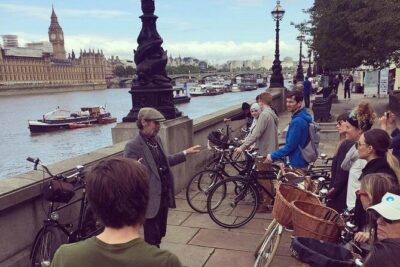
London Bike Tour: Landmarks, Secret Gems, Pub Stop & Street Art
Read our review →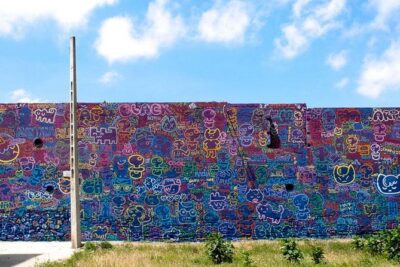
Barcelona Street Art and Graffitti Bicycle Tour
Read our review →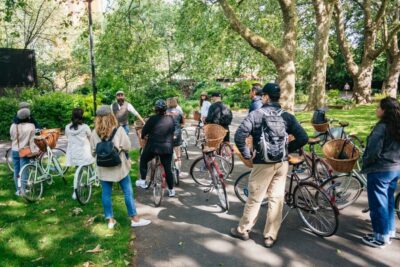
Landmarks & Secrets Bike Tour with Pub & Street Art
Read our review →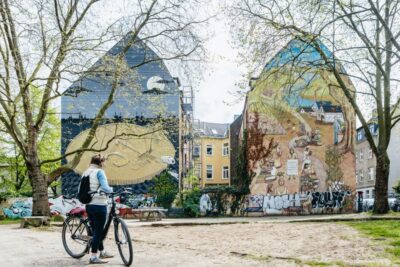

Other lists this ride turns up in