
REVIEW · MIAMI
Art Deco, History and Crime Bike Tour with Design Enthusiast
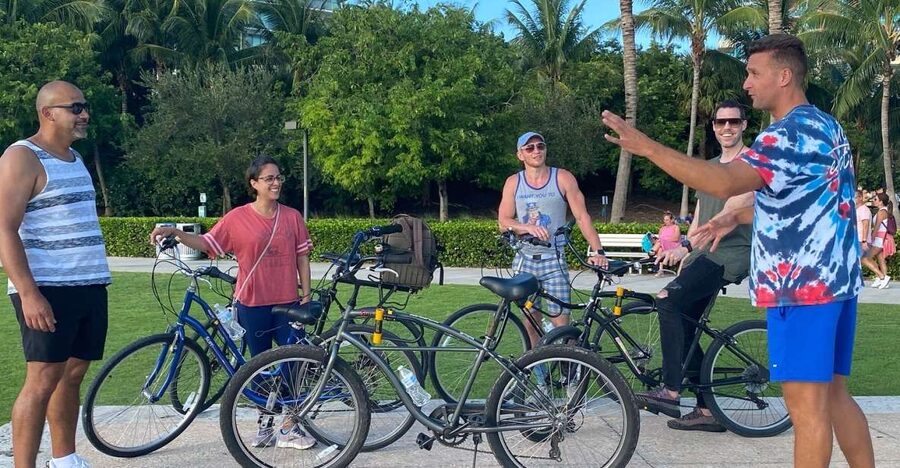
Miami Beach is mostly man-made, and that fact gives this bike tour a strong opening. You ride through a city built from swamp, speculation, glamour, scandal, and reinvention, while Damian connects its Art Deco buildings to the stranger parts of local history. This is not just a ride past pastel facades.
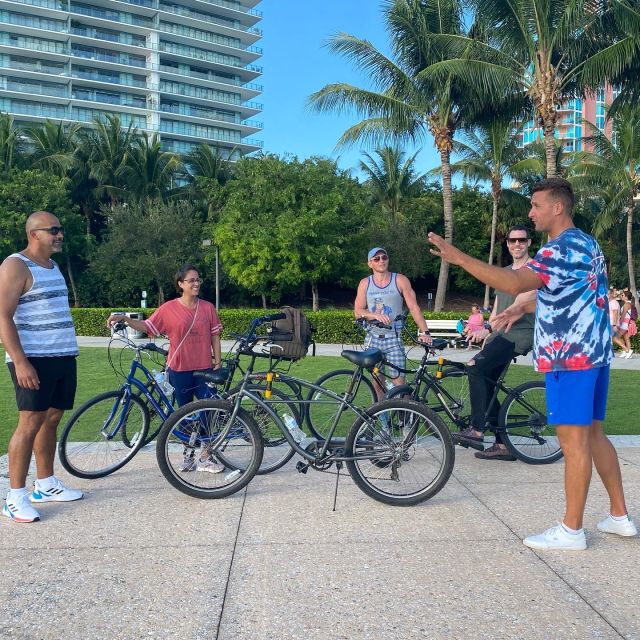
I like two things right away: you see far more ground than you would on foot, and you get a guide who is active in Art Deco preservation rather than simply reading dates from a script. The route also reaches Surfside and Bal Harbour, adding a wider view of the coast. The main drawback is distance: roughly 20 miles round trip requires steady cycling, even with regular scenic stops.
Key points
- A local guide with a preservation role: Damian is an active member of the Miami Design Preservation League and built this tour around Miami Beach history.
- A broad 20-mile route: The ride links South Beach with Surfside and Bal Harbour, not just the central Art Deco district.
- Architecture with context: You learn to tell Art Deco, Mediterranean Revival, and MiMo buildings apart.
- Miami’s darker chapters: The route covers segregation, Cuban migration, cocaine cowboys, Miami Vice, and the murder of Gianni Versace.
- A three-hour active outing: A bicycle, water bottle, and helmet when required are included.
- A useful first-day activity: The ride can help you spot restaurants and places to revisit later in your stay.
Why this bike tour tells a bigger Miami story
Many Miami Beach tours stop at the familiar postcard image: pastel hotels, palm trees, and the oceanfront promenade. This one uses those sights as the doorway to a much larger story.
You learn that Miami Beach is largely man-made and that Biscayne Bay was once shallow swamp. That alone changes how you read the city. The grand hotels and wide streets no longer look like an old coastal town that simply grew over time. They become part of a bold real estate project, shaped by money, migration, tourism, storms, segregation, and repeated reinvention.
Damian also brings in Muhammad Ali, who became world heavyweight boxing champion for the first time in Miami Beach. That detail helps place the city in the wider story of American entertainment and sport. The point is not to collect random facts. It is to see how Miami Beach became a stage for powerful people, famous events, and questionable dealings.
I like this approach because it avoids the polished tourist version of the city. You still get the architecture and coastal views, but you also hear about the forces that shaped who could live, work, and vacation here.
More Cycling Trips in the USA:
- Guided Bike Tour of Old Town Key West
★ 5.0 · 2,611 reviews - NYC: Central Park Bike Rentals
★ 4.2 · 2,528 reviews - Red Rock Canyon eBike Half-Day Tour
★ 5.0 · 1,870 reviews
South Beach streets and the Art Deco district
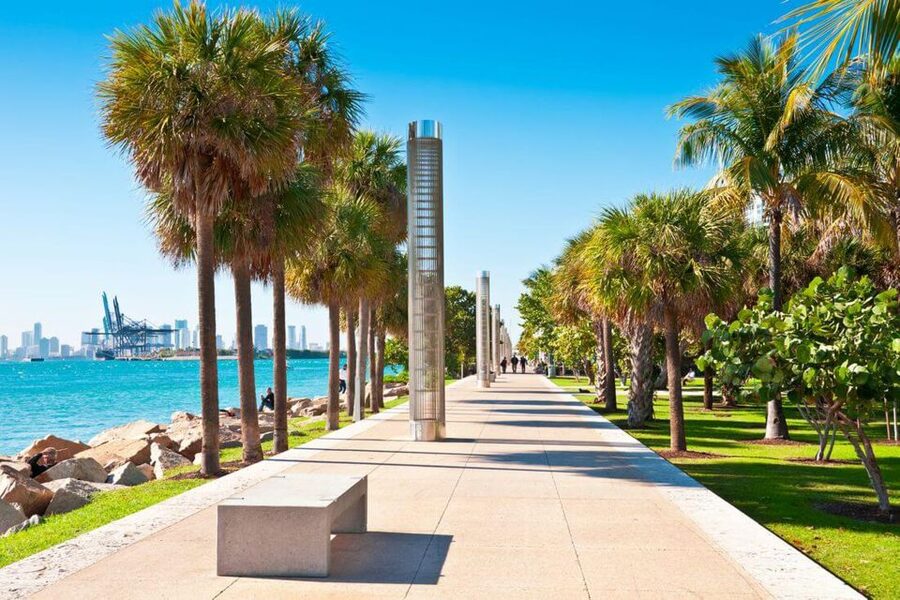
The ride begins at the bicycle rental shop and moves into the heart of Miami Beach. South Beach is the natural place to start because its streets hold one of the finest concentrations of Art Deco buildings in the country.
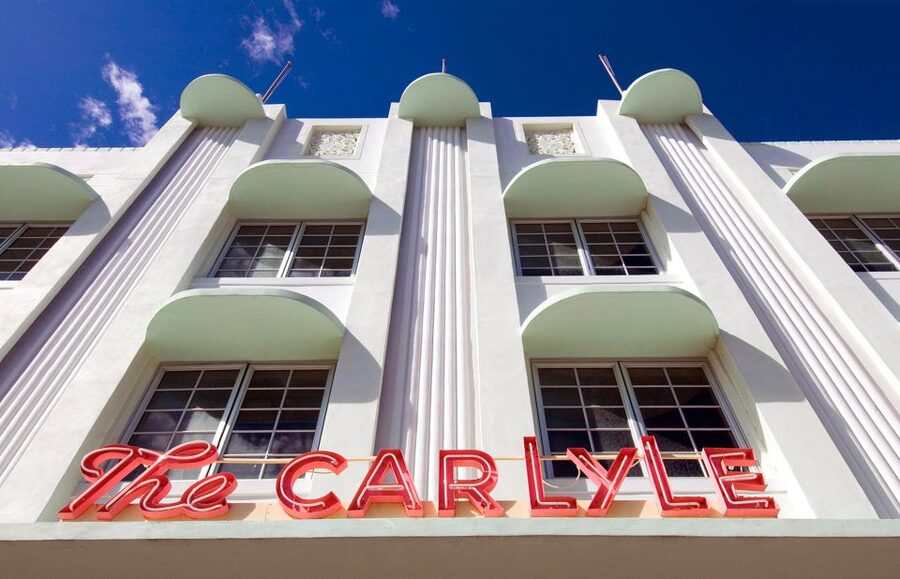
As you cycle, look for the style’s telltale signs: strong geometric forms, rounded corners, stepped shapes, porthole-like windows, and decorative details that suggest speed and modern machinery. Damian helps connect those visual clues to the period when Miami Beach was developing its identity as a resort town.
The tour also covers Mediterranean Revival architecture. Compared with Art Deco, it can feel more rooted in old European forms, with details that point toward Spanish and Mediterranean traditions. Seeing both styles close together makes the differences easier to understand than reading about them in a guidebook.
You also encounter MiMo, or Miami Modern, which belongs to a later period and shows another change in the city’s taste. A good architecture tour should teach you how to look, and this one gives you three clear categories to compare while you ride.
One especially useful feature is the chance to enter the lobbies of selected Art Deco hotels. Exterior facades tell only part of the story. Hotel interiors can show how designers used color, polished surfaces, curves, and decorative patterns to create a complete mood.
Do not expect every stop to be a formal museum visit. This is a moving tour, so the pleasure comes from seeing buildings in context and hearing why they matter as part of a street or district.
Parks, coast, Surfside, and Bal Harbour
A bicycle lets the tour stretch beyond the central South Beach sights. The route follows picturesque parts of Miami Beach and continues toward Surfside and Bal Harbour, two separate municipalities north of Miami Beach.
That wider route matters. It shows you that the Miami area is not one uniform resort strip. Each municipality has its own development story and visual character, even when the coastline appears continuous from a visitor’s point of view.
You get scenic pauses along the way, which help break up the distance and give you time to take in the coast. The ride is described as about 20 miles round trip, with enough stops that it should not feel like a race. Still, you need to be comfortable spending three hours on a bicycle.
I see this as one of the tour’s strongest features and its clearest limitation. If you want an easy introduction to the central Art Deco district, a shorter walking tour may suit you better. If you want to understand how Miami Beach connects with its northern neighbors, the added distance is worth the effort.
The route also gives you practical orientation. You may spot restaurants and places you want to return to later, which is particularly useful if you take the tour early in your visit.
History that includes segregation, Black life, and Jewish migration
Miami Beach history is not just a story of wealthy resort owners and famous hotels. The tour addresses adverse segregation, Black history, and Jewish history, bringing attention to communities and restrictions that are often left out of a glossy sightseeing circuit.
This is important because the city’s architecture can make its past look more comfortable than it was. A beautiful hotel does not explain who was welcome inside, who was excluded, or whose labor made the resort economy possible. By including segregation and Black history, the tour gives you a more honest way to read the streets.
Jewish history is another key part of Miami Beach’s development. Jewish migration helped shape the city’s businesses, neighborhoods, and social life. Including that subject alongside architecture helps you see the city as a place built by communities, not only by developers and hotel owners.
The tour also covers Cuban migration. Miami’s Cuban story is central to its modern identity, and it helps explain the city’s connections to the Caribbean and Latin America. You do not just hear about a distant past. You see how migration changed the people, culture, and economy of South Florida.
These subjects are best treated as part of the main story rather than as side notes. That is what makes this tour more useful than a simple building-spotting ride.
Same roads, a different saddle:
- NYC: Central Park Bike Rental
★ 4.1 · 1,651 reviews - Central Park Bike Rental
★ 4.7 · 1,509 reviews - Austin Biker Gang E-Bike Tour
★ 5.0 · 1,399 reviews - Asheville Historic Downtown Guided Electric Bike Tour with Scenic Views
★ 5.0 · 1,234 reviews
The crime stories behind the polished facades
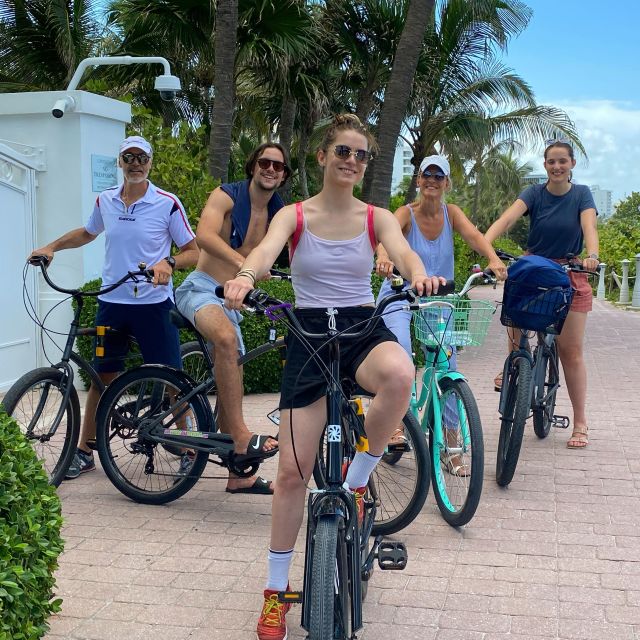
The tour takes a turn toward scandals and true crime, including the cocaine cowboys era, Miami Vice, and the murder of Gianni Versace.
The cocaine cowboys period is one of Miami’s most notorious chapters. It changed the city’s reputation, filled newspapers with stories of violence and money, and later shaped television and film. The Miami Vice connection shows how real events became part of the city’s popular image, sometimes making it difficult to separate fact from entertainment.
The Gianni Versace murder gives the subject a specific location and a human cost. You are not simply hearing that crime existed in Miami. You are connecting a famous case to the streets and buildings around you.
I like the balance here. The darker material adds energy and drama, but the tour also places crime within a longer history of growth, migration, architecture, and tourism. That helps keep the stories from becoming a string of sensational anecdotes.
Still, you should know what mood you are choosing. This is not a purely cheerful architecture outing. Some subjects involve violence, discrimination, and social hardship. If you prefer light sightseeing, the crime portion may feel heavier than expected. If you enjoy the less polished side of a city, it adds real character.
Why Damian matters to the experience
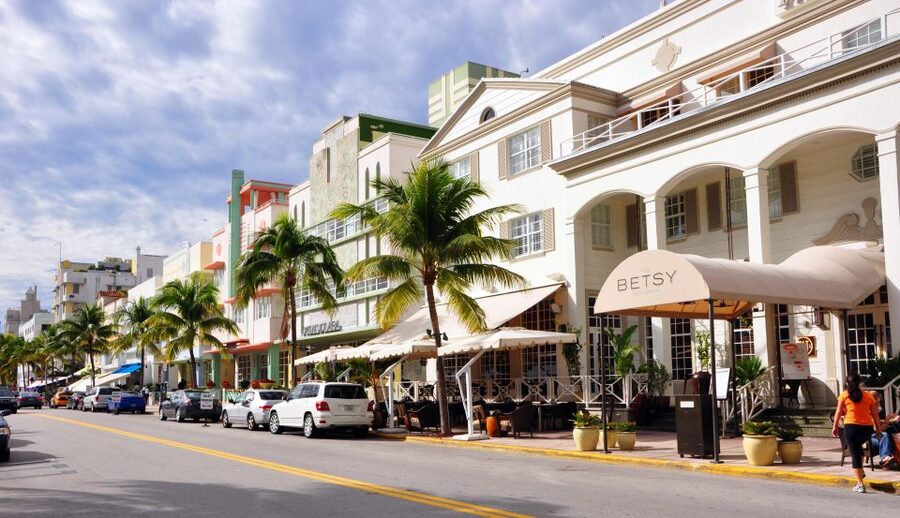
A guide can make or break a history tour, especially when the subject covers many periods and styles. Damian is presented as a local historian and an active member of the Miami Design Preservation League, with a direct role in Art Deco preservation.
That background matters because the tour is his own design. He knows the route in detail and can connect individual buildings to the city’s larger story. You are not simply following a standard path and stopping for a few memorized facts.
His role also gives the architecture a sense of purpose. Preservation is not just about pretty facades. It involves deciding what parts of a city deserve protection, how old buildings are understood, and how Miami Beach balances development with its past.
The experience is conducted in English, and the guide leads the ride live. If you want to ask questions about a building, neighborhood, or historical period as you go, that direct contact is more useful than an audio guide.
Price, equipment, and the real value
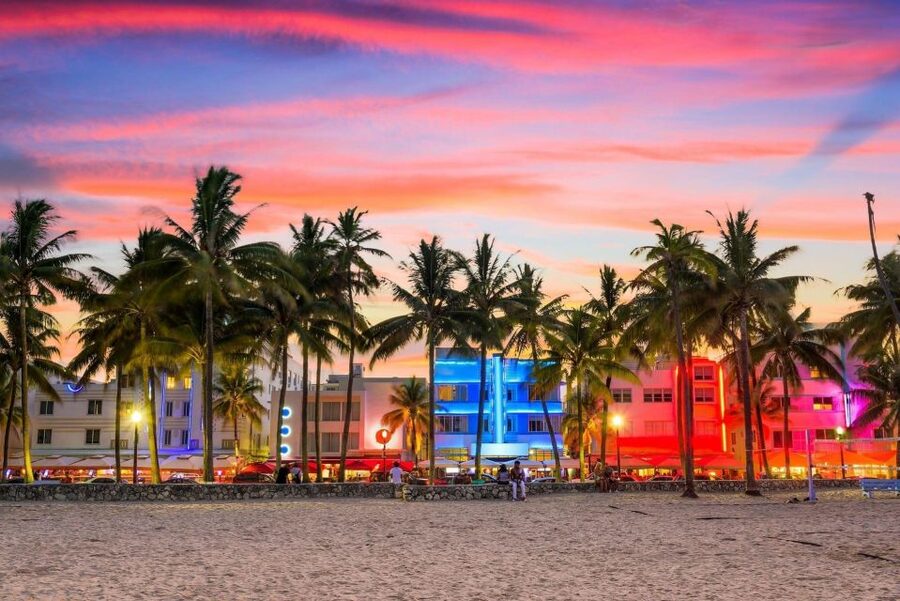
The price is $79 per person for three hours. That includes the guided tour, bicycle, water bottle, and helmet if required.
I consider that a fair price if you value both transport and interpretation. You are covering a lot of ground, reaching three municipalities, and getting a guide who brings architecture, local history, and crime stories into one route. Renting a bicycle separately and trying to follow the same path would give you the movement but not the context.
The value is weaker if you only want a short look at Ocean Drive. In that case, the three-hour commitment and longer route may be more than you need. The tour earns its price through range: you see architecture, coastal scenery, parks, and locations connected with major events.
A water bottle is included, which is useful on a warm Florida ride. A helmet is provided when required. The exact starting time depends on availability, so check the schedule before building the rest of your day around it.
The activity begins and ends at the bicycle rental shop. That makes planning simple, since you return to the same place rather than arranging a separate pickup.
Who should book this ride?
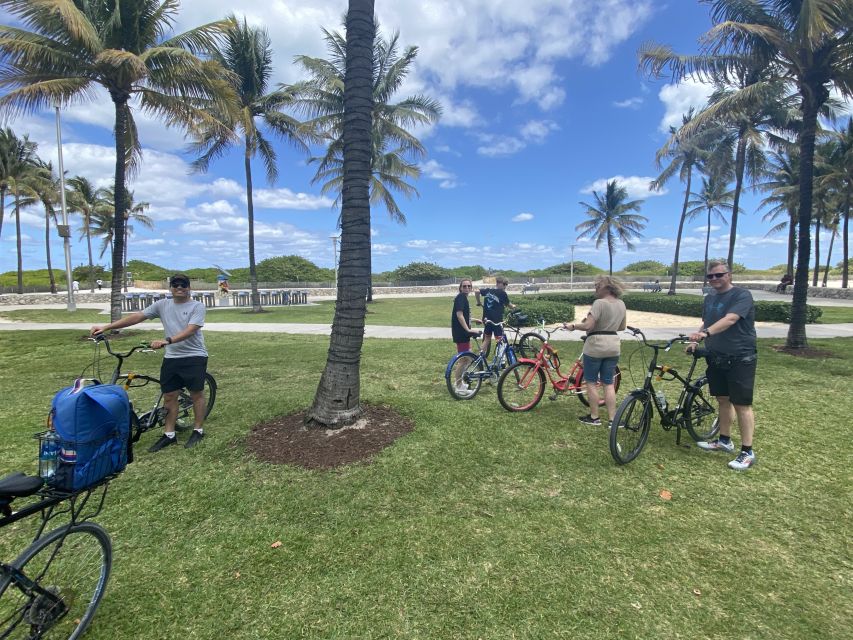
I would choose this tour if you want to understand Miami Beach rather than simply photograph it. It suits adults who enjoy local history, architecture, true crime, or stories about how cities change.
It also works well for families with older teenagers. A family group that included a 16-year-old and a 20-year-old enjoyed the mix of cycling and history, and the route can give younger visitors more to think about than a standard sightseeing loop.
You should be comfortable with a substantial ride. The distance is about 20 miles round trip, though the tour includes picturesque stops and does not aim to exhaust you for the rest of the day. If you rarely cycle or want a very relaxed outing, ask yourself if that distance fits your plans.
I also recommend taking it early in your Miami stay. You can use the ride to learn the layout, mark places for later, and get a clearer sense of how South Beach connects with Surfside and Bal Harbour.
Practical details before you reserve
The tour lasts three hours and is available at scheduled starting times. Check availability for the exact departure time.
You meet at the bicycle rental shop, and the activity returns there. The live tour is in English. You can cancel up to 24 hours in advance for a full refund, and the reserve-now, pay-later option lets you hold a place without paying immediately.
The central question is not simply if you can ride a bicycle. It is if you want a tour that combines physical activity with a wide range of subjects. You will hear about architecture, the Great Depression, segregation, Black and Jewish history, Cuban migration, organized crime, television, and a famous murder, all within one outing.
That range is a strength, but it also means no single subject receives the depth of a specialist museum visit. Think of the ride as a lively framework that helps you decide what you want to explore further.
Should you book the Art Deco, History and Crime Bike Tour?
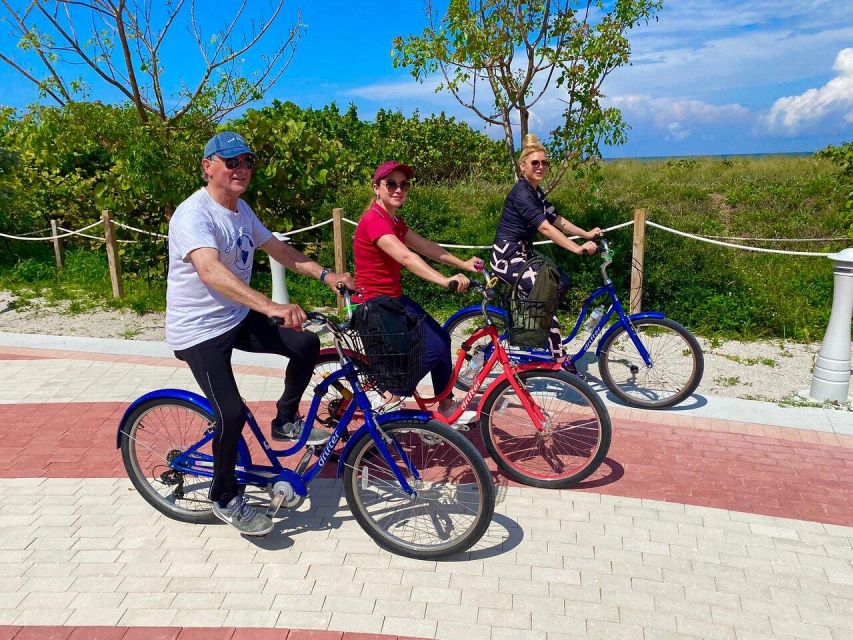
Book it if you want a personal introduction to Miami Beach that goes beyond hotels and beaches. Damian’s local background, the Art Deco preservation angle, and the route through Surfside and Bal Harbour give the tour a clear sense of place.
I would be especially inclined to book if you enjoy architecture but also want the uncomfortable parts of history included. The 20-mile route requires reasonable cycling stamina, so choose a shorter activity instead if comfort and convenience matter more than range.
At $79, the tour offers good value for an active three-hour introduction. You see more than you would on foot, learn how to read Miami’s major architectural styles, and leave with a sharper understanding of the city’s strange, troubled, and fascinating past.
FAQ
Where does the bike tour begin?
The tour begins at the bicycle rental shop.
Where does the bike tour end?
The activity ends back at the meeting point, at the bicycle rental shop.
How long does the tour last?
The guided bicycle tour lasts three hours.
How much does the tour cost?
The price is $79 per person.
Which areas does the route visit?
The route explores Miami Beach and also reaches Surfside and Bal Harbour.
How far does the bike ride go?
The ride is about 20 miles round trip, with picturesque stops along the way.
What architectural styles will I learn about?
The tour covers Art Deco, Mediterranean Revival, and MiMo architecture.
What history topics are included?
Topics include the early development of Miami Beach, the Great Depression, segregation, Black history, Jewish history, Cuban migration, the cocaine cowboys era, Miami Vice, and the murder of Gianni Versace.
Is bicycle equipment provided?
A bicycle and water bottle are included. A helmet is included if required.
What language is the tour conducted in?
The live guided tour is conducted in English.
Newest rides we have reviewed in the USA
- Las Vegas: Red Rock Canyon Sunrise Self-Guided E–Bike Tour★ 5.0 · 14 reviews
- Las Vegas 3-Hour Red Rock Canyon Electric Bike Tour★ 4.9 · 28 reviews
- From Las Vegas: Red Rock Canyon Electric Bike Hire★ 5.0 · 92 reviews
- Lake Tahoe Lakeside Electric Bike Rental★ 4.5 · 19 reviews
- LA: Santa Monica & Venice Beach Bike Adventure★ 4.9 · 23 reviews
- Key West: Guided Bicycle Tour with Key Lime Pie★ 4.8 · 176 reviews
- Oahu: Diamond Head E-bike Scenic Ride★ 4.7 · 22 reviews
- Miami Beach: City Highlights Guided Bike or eBike Tour★ 4.8 · 46 reviews
Miami Cycling Tours, compared.
Miami Beach Art Deco & History Bike Tour with Design Enthusiast
Read our review →



Miami Beach: City Highlights Guided Bike or eBike Tour
Read our review →Other lists this ride turns up in