
REVIEW · LECCE
Otranto and Surroundings Full-Day Bike Tour
The most unusual part of this full-day ride is the way it stitches together several thousand years of Salento in one outing. You pedal from a Byzantine crypt and prehistoric stones to a 19th-century lighthouse, with rural roads, a coastal stop, and a bauxite quarry in between.
I like the access to Le Costantine, where traditional weaving still has a working cultural setting rather than a quick souvenir-shop feel. I also like the generous food break at a stone-oven bakery, followed by time at Porto Badisco for a possible swim or canoe rental.
The catch is the effort. Eight hours on a bike, with dirt paths, heat, and a long return along the coast, calls for moderate fitness. If temperatures are high, an e-bike is a smart choice, a tip that guide Giulia has helped make clear to past participants.
Key points to know before you book
- A full day of cycling: The tour runs about eight hours, starting at 9:00 am and returning to the same meeting point.
- History with real variety: You’ll see a Byzantine crypt, megalithic monuments, a weaving center, a lighthouse, and a former bauxite quarry.
- A proper Salento food stop: Lunch includes typical products, cheese, wine, and a complimentary iced coffee.
- A chance to swim: Porto Badisco allows a long pause, and weather permitting, you can swim or rent a canoe.
- Small-group format: The maximum is 15 people, with a local guide and safety equipment supplied.
- Best for active visitors: The ride suits people with moderate physical fitness, though an e-bike may make hot-weather cycling easier.
Why this Otranto bike tour feels different
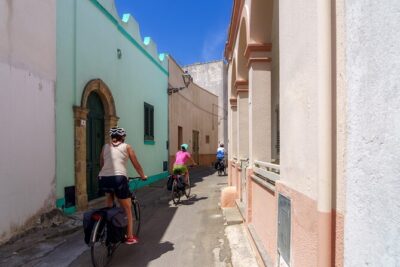
Many day trips around Otranto focus on the old town and a few scenic viewpoints. This ride gives you a broader picture of the Salento peninsula. You move through the Idro valley, village roads, farmland, historic sites, and the eastern coast instead of staying in one town.
That variety is the main reason I find the $163.85 price worth considering. The fee covers the bicycle, helmet, bags or pouches, a repair kit, a local guide, and lunch. You are not only paying for transport from point to point. You are paying for route planning, local access, equipment, and a full day of guided movement through places that can be awkward to connect on your own.
Still, it is not a cheap sightseeing ride. You need to be comfortable spending much of the day in the saddle. If you prefer short walks, long café stops, or an air-conditioned vehicle, this is not the right format.
The maximum group size is 15, which should keep the ride more personal than a large coach excursion. The guide may be multilingual, and the activity is offered in English. Guides such as Giulia can also help with the practical side, including choosing an e-bike when the heat makes a standard bicycle less appealing.
More Full-Day Rides in Italy:
- Appia Antica: Full Day Bike Rental with Customizable Routes
★ 4.6 · 419 reviews - Full-Day Tuscany and Chianti Hills Bike Tour With Lunch at Farm
★ 5.0 · 45 reviews - Rome: Full-Day Guided Tour by E-Bike with Lunch Included
★ 4.9 · 36 reviews
Starting at the Idro Valley and Sant’Angelo Crypt
The meeting point is Parcheggio Le Palme on Via Presbitero Pantaleone 18 in Otranto. You meet at 9:00 am, and the activity ends back there in the late afternoon. The parking area is near public transportation, but hotel pickup and drop-off are not included unless you select an option that provides it.
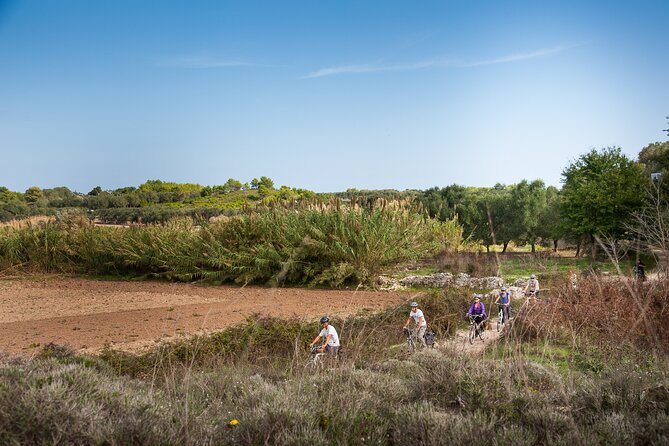
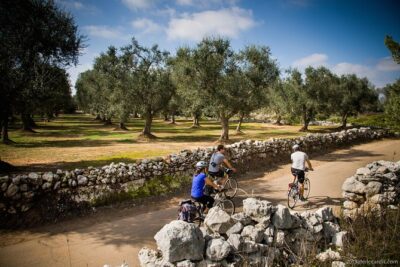
The first ride heads up the Idro valley along a pleasant dirt section. This is a useful early test of the day. You are not confined to smooth city pavement, so a little confidence on a bicycle helps.
The Sant’Angelo Byzantine crypt was cut into Salento’s soft rock. You have about 20 minutes at the site, enough to see the carved space and hear how it fits into the area’s religious past. Admission is not included, so check the entry arrangement with your guide on the day.
I like this opening because it sets the tone quickly. The tour is not just a coastal cruise. It begins with a small, unusual archaeological site, reached by bicycle through the countryside.
The short stop also means you should not expect a long, museum-style visit. The value comes from seeing the crypt as one piece of a much larger route.
Le Costantine and the old looms of Casamassella
From the valley, the ride continues toward Casamassella and the Le Costantine Foundation. This center focuses on organic farming and traditional weaving, with old looms on display and in use.
The visit lasts about 20 minutes and admission is free. That may sound brief, but it gives you a welcome change of pace. After riding past open country, you step into a place tied to local work and craft.
Traditional weaving is easy to reduce to a decorative display. Here, the old looms give the craft a more practical setting. You can see how local culture connects to materials, labor, and rural life rather than treating heritage as a performance made only for tourists.
This is also one of the tour’s more distinctive stops. You could see a lighthouse or a historic village on many Salento excursions. A cultural center devoted to weaving is less predictable, and the guide can help explain what you are seeing.
Do not expect a long workshop unless the schedule allows it. The planned stop is short, so think of it as an introduction to the center rather than a full craft course.
Giurdignano’s megalithic monuments
The next stop is Giurdignano, known as a major megalithic center in Salento. The area contains dolmens and menhirs, early signs of human presence in the region.
You have around 30 minutes here, and entry is free. The visit offers a sharp contrast with the Byzantine crypt. Instead of entering a space cut by medieval religious communities, you are looking at stone monuments linked to a much earlier period.
The appeal is scale and age. These are not grand ruins with complete walls or elaborate decoration. Their power comes from the questions they leave open: who placed them, how they were used, and how people organized life in this part of Salento long before the towns you see today.
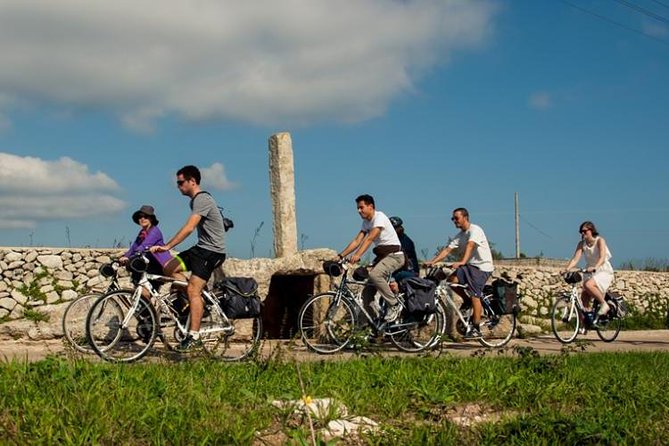
Cycling between these sites also helps you understand their setting. You are not being dropped at isolated stops by vehicle. The road between them becomes part of the experience, with the countryside acting as the link between different periods of history.
The 30-minute visit is enough for an introduction, though anyone fascinated by prehistoric archaeology may want more time. This tour favors range over long stays at a single monument.
More Cycling Trips in Italy:
- Rome EBike Tour: Appian Way, Catacombs & Roman Aqueducts
★ 5.0 · 1,766 reviews - Rome: Top Highlights & Hidden Gems Tour by Cannondale E-Bike
★ 4.9 · 1,760 reviews - Rome: Appian Way & Aqueducts E-Bike Tour (Catacombs & Food)
★ 4.9 · 1,498 reviews - Rome: Appian Way, Catacombs, & Roman Aqueducts E-bike Tour
★ 4.9 · 1,421 reviews
Lunch at a stone-oven bakery
The food stop comes in Uggiano La Chiesa, at a bakery with a stone oven. Lunch is arranged by the organization and includes a tasting of typical products, cheese, and wine.
This is more than a convenient meal. A regional spread gives you a direct taste of Salento without asking you to choose a restaurant, wait for service, or lose time from the route. After several hours of cycling, the chance to sit down for a prepared meal matters.
A complimentary iced coffee is also part of the day. In warm weather, that small detail can be especially welcome.
The food is one of the tour’s strongest practical features, but the schedule is worth noting. The full day is active, and lunch is a planned stop rather than an open-ended restaurant visit. If you need a large meal, have dietary restrictions, or rely on snacks between stops, ask about arrangements before setting out. The supplied details do not specify special-diet options.
The bakery setting also keeps the meal tied to the area. You are not being fed a generic packed lunch beside a parking lot. The stone oven gives the stop a clear local character.
Porto Badisco, swimming, and canoe time
After lunch, you cycle to Porto Badisco for a long break. If the weather permits, you can swim. Canoes may also be rented there.
This is the point where the day feels less like a history tour and more like a summer outing. The break gives you time to pause beside the coast instead of racing from one sight to the next.
Swimming is weather dependent, and canoe rental is an optional extra, not part of the tour price. Bring what you need for a comfortable break, but remember that the exact conditions can affect how much time you spend in the water.
Porto Badisco is also an important rest point. By this stage, you have been cycling for much of the morning and have already visited several sites. The long pause gives your legs a chance to recover before the coastal ride toward Otranto.
The tradeoff is that water activities can make the day feel less predictable. If you want a tightly timed sightseeing schedule, this loose break may feel too open. If you like having room to swim or rent a canoe, it is one of the tour’s best features.
Punta Palascìa and the bauxite quarry lake
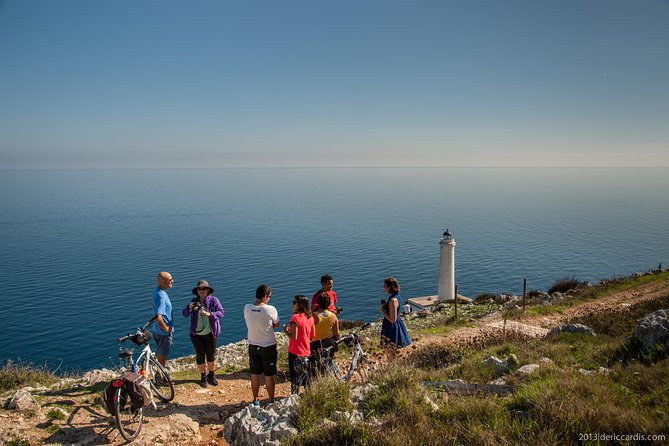
The final major section follows the coast road toward Otranto. The route includes Punta Palascìa lighthouse, identified as the easternmost point of Italy, and a peculiar lake in a disused bauxite quarry.
Punta Palascìa gives the ride a clear geographic finish. You are not simply cycling near the sea. You reach a marked extreme point of Italy, with the lighthouse providing a strong visual landmark.
The 19th-century lighthouse also brings the historical timeline forward. Earlier in the day, you saw megalithic remains and a Byzantine crypt. Here, the focus shifts to a much more recent piece of coastal history.
The bauxite quarry lake adds another unusual stop. This is a former industrial site, now notable for the water-filled quarry and its contrast with the surrounding coast. It gives the route a different texture from the religious and prehistoric stops.
The coastal section takes about two hours, including the stop at Punta Palascìa and the quarry. That is a substantial part of the day, so the return is not a quick glide into town. You should expect more time on the bicycle after lunch and the Porto Badisco break.
The route’s mix is what makes it memorable: sacred site, craft center, megalithic stones, bakery, swimming stop, lighthouse, and quarry. Each stop is modest on its own. Together, they create a fuller picture of the area.
Bikes, safety gear, and the question of an e-bike
A bicycle is included, along with a helmet, bags or pouches, and a repair kit. That matters because you do not need to arrange basic equipment separately.
The tour calls for moderate physical fitness. The supplied details do not give the total distance, elevation, or bike model, so you should not assume a completely flat or effortless ride. The dirt section through the Idro valley and the long coastal return are enough reason to take the fitness note seriously.
Hot weather is the key concern. Giulia specifically recommends considering an e-bike in high temperatures, and that is sensible advice. An electric bicycle can help you enjoy the sites and views instead of spending the whole day managing the effort.
Ask about e-bike availability before booking if that is important to you. The supplied information confirms the use of a bicycle, but it does not say that an e-bike is automatically included.
The safety equipment is useful, but it does not remove the need for sensible preparation. Wear comfortable clothing, bring suitable footwear, and be ready for a full day outdoors. The exact route conditions may vary with weather.
Price, group size, and overall value
At $163.85 per person, this is a premium day tour. The price makes more sense if you value a carefully arranged route, a guide, included equipment, and lunch. It is less attractive if you already have a bicycle, want to ride independently, or plan to visit only Otranto’s town center.
The lunch and iced coffee help with value, as do the included helmet, bags, and repair kit. You also avoid having to plan connections among Giurdignano, Casamassella, Porto Badisco, Punta Palascìa, and Otranto.
A maximum of 15 people keeps the group manageable. It is not a private ride, but it is small enough for a guide to handle questions and practical needs more easily than on a large excursion.
The tour is booked, on average, 36 days in advance, so early planning is wise if your dates are fixed. Confirmation is provided at booking, and free cancellation is available up to 24 hours before the start time.
The activity requires good weather and a minimum number of participants. If poor weather or low enrollment cancels the ride, you are offered another date or experience, or a full refund.
Who should book this ride
I would choose this tour if you want active sightseeing and prefer a day with several different types of stops. It suits visitors who enjoy archaeology, local craft, food, and coastal scenery in one outing.
It is also a good match if you want help connecting places outside Otranto. The route covers enough ground that independent planning could take time, especially if you do not have your own bicycle.
You should think twice if you dislike dirt paths, heat, or long periods of exercise. The Porto Badisco break helps, but it does not turn the tour into a relaxed sightseeing trip.
Families and mixed-ability groups should consider the moderate fitness requirement carefully. The supplied information does not set a minimum age or describe child-sized bicycles, so ask the provider before booking for younger participants.
Should you book the Otranto and Surroundings Full-Day Bike Tour?
Book it if you want to see more than Otranto’s old town and you like the idea of connecting history, food, craft, and coast under your own pedal power. The Byzantine crypt, Le Costantine weaving center, Giurdignano’s stones, stone-oven lunch, Punta Palascìa lighthouse, and bauxite lake give the day real variety.
Choose an e-bike if the forecast is hot, and do not underestimate the eight-hour schedule. For an active visitor who wants a well-organized route and a local guide, the price is defensible. For anyone seeking an easy, short, or vehicle-based outing, it will likely feel too demanding.
FAQ
Where does the bike tour start?
It starts at Parcheggio Le Palme, Via Presbitero Pantaleone 18, 73028 Otranto LE, Italy.
What time does the tour begin?
The tour starts at 9:00 am.
Where does the activity end?
It ends back at the original meeting point in Otranto.
How long does the tour last?
The activity lasts approximately eight hours and returns in the late afternoon.
Is lunch included?
Yes. Lunch includes a tasting of typical products, cheese, and wine. A complimentary iced coffee is also included.
Is bicycle equipment provided?
Yes. The tour provides a bicycle, helmet, bags or pouches, and a repair kit.
How large is the group?
The maximum group size is 15 people.
Is hotel pickup included?
Hotel pickup and drop-off are not included unless you select an option that provides them.
What happens if the weather is poor?
The activity requires good weather. If it is canceled because of poor weather, you are offered a different date or a full refund.
Newest rides we have reviewed in Italy
- The heart of the 5 Terre: Monterosso and national park ebike tour★ 5.0 · 40 reviews
- Wine Tour Ebike Experience★ 5.0 · 175 reviews
- Montecatini Terme cycle and wine tasting visit★ 5.0 · 19 reviews
- E-Bike Val d’Orcia Experience★ 5.0 · 20 reviews
- 3 Hour E-bike Tour with Parmesan and Balsamic Vinegar★ 5.0 · 36 reviews
- Miles and smiles /// Milan’s ride★ 5.0 · 77 reviews
- Small-group Milan Highlights e-Bike Tour★ 5.0 · 113 reviews
- Highlights of Milan Bike Tour★ 5.0 · 31 reviews
Lecce Cycling Tours, compared.
Lecce to Galatina E-Bike: Olive Mill & Wine Tasting + Taxi back
Read our review →
Lecce to Gallipoli E-Bike Tour with Swim, Farm Tasting +Taxi back
Read our review →
Gallipoli Inland and Surroundings Full-Day Bike Tour
Read our review →
Cycling Across Salento: Capo di Leuca 4-Hour Bike Tour
Read our review →Other lists this ride turns up in