
REVIEW · BUDAPEST
Budapest Historic Downtown Bicycle Tour in small groups
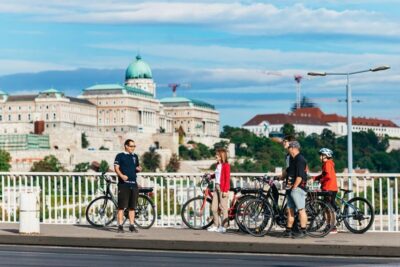
Budapest opens up quickly from a bicycle. In about three and a half hours, you move from the Jewish District to Heroes’ Square, City Park, Parliament, and the Danube, covering far more ground than you could on foot. The route gives you a useful first look at both Pest and the riverfront edge of Buda.
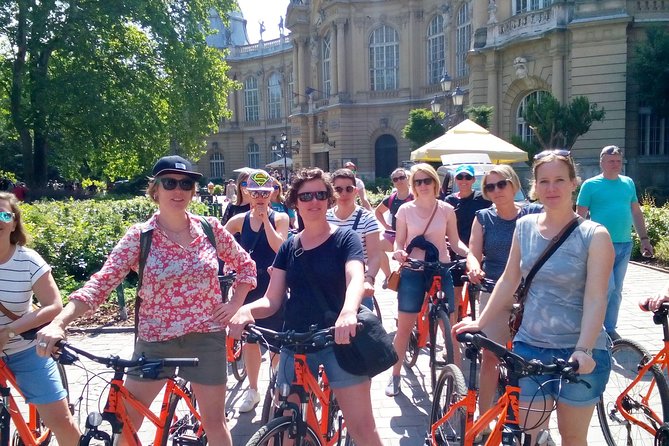
I like the small-group format, capped at 10 people, because a guide can keep an eye on the group and answer questions. I also like the route’s mix of grand architecture, difficult history, parks, bridges, and everyday city streets. The main caution is traffic. Some bike lanes share space with cars, so you should be a confident rider, even though much of the route is flat.
Key points to know before you book
- A citywide introduction in 3.5 hours: You see major sights on both sides of the Danube without spending the day walking.
- Small groups make a difference: The group limit is 10, allowing the guide to manage street crossings and keep the pace together.
- History comes with the scenery: Expect context on the Holocaust, communism, Hungary’s kings, the 1956 era, and Budapest’s architecture.
- Most stops are outside only: You do not enter the Opera, Parliament, House of Terror, churches, baths, or synagogues.
- E-bikes may be available as an upgrade: Some groups received them when numbers were low, but the standard inclusion is bicycle use.
- Plan for city traffic: The ride is not recommended for beginners, people with visual impairment, or anyone over the 110-kilogram weight limit.
Why this bike tour works for a first look at Budapest
The route is built as an overview, not a deep visit to any single museum or monument. That is its strength. You get a mental map of central Budapest, learn which places deserve a return visit, and avoid spending your first day zigzagging between distant sights.
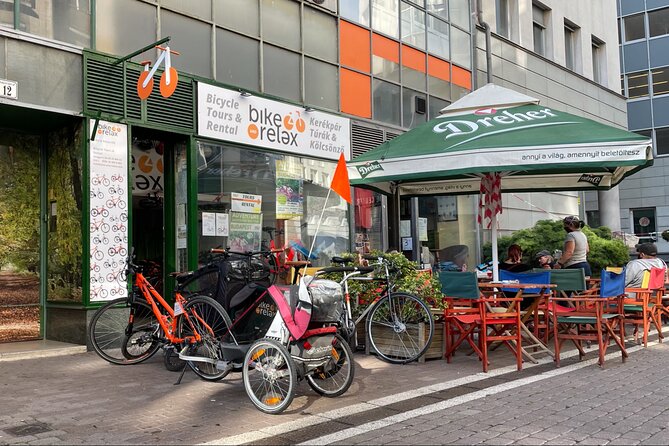
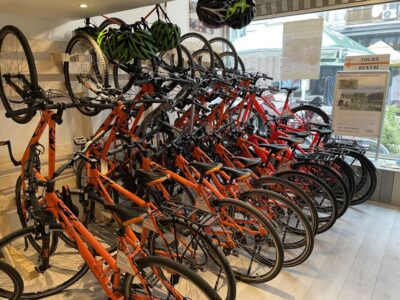
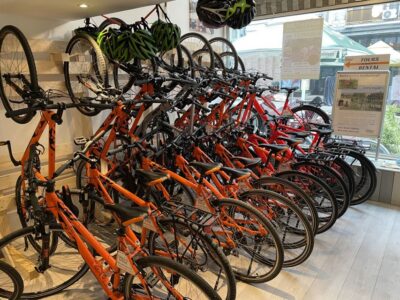
The meeting point is at Madách Imre út 12 in the city center, with a 10:30 a.m. start. You return to the same place. Bicycle use, a helmet, bottled water, and free luggage storage are included, which keeps the practical side simple.
The group size matters more than it might seem. A large bike group can become a slow-moving chain at traffic lights. With up to 10 people, the guide can usually keep the ride together and respond when someone needs a slower pace. Guides including Oliver, Thomas, Dori, Katalin, Valentin, and Bálint have been praised for clear explanations, safe riding, and good timing.
You should treat the advertised three and a half hours as an approximate length. Several rides have lasted closer to four hours, especially when the group pauses for questions or receives a longer route. The pace is designed to cover a lot, not to provide long photo sessions at every stop.
More Cycling Trips in Budapest:
- Budapest: Grand Sightseeing Bike Tour
★ 4.8 · 984 reviews - Budapest Highlights Bike Tour
★ 5.0 · 770 reviews - Budapest: Guided City Discovery Bike Tour
★ 4.7 · 702 reviews
From the Jewish District to Andrassy Avenue
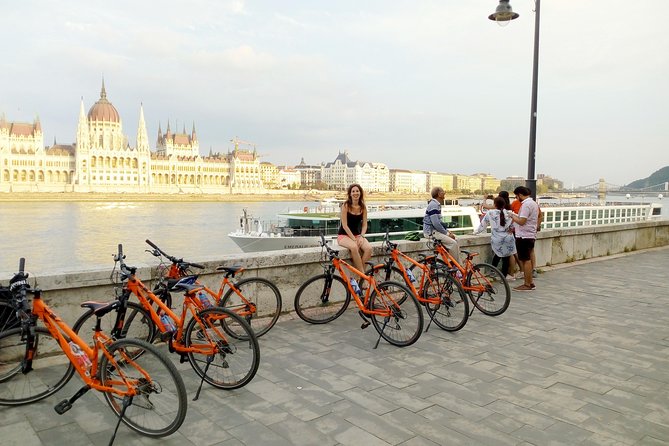
The tour begins at Bike & Relax, where you collect the bicycle and get ready for the ride. The opening section takes you through the city center and toward the Jewish District, beginning with the Rumbach Street Synagogue.
The Rumbach Synagogue is a striking art deco building, and the surrounding streets also offer examples of Budapest street art. You stop outside, so this is a quick orientation rather than a synagogue visit. If you want to see the interior, arrange a separate visit.
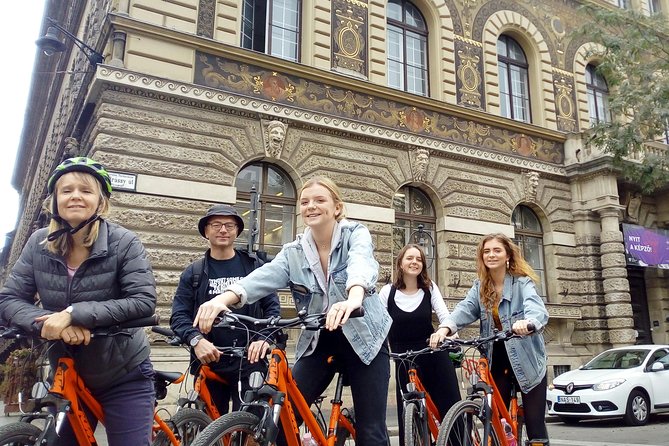
Nearby, the Liszt Academy gives you an early lesson in Budapest’s musical identity. The building is admired for its architecture, and it remains a working school for classical music with two concert halls. Again, the stop is outside. The guide explains what you are seeing, but the tour does not include a performance or admission.
The ride then follows Andrassy Avenue, Budapest’s grand boulevard linking the center with Heroes’ Square and City Park. Along the way, you pass Liszt Square, Nagymező Street, known as the city’s theater district, and the Ring Roads. This stretch is especially useful because the guide connects the buildings to the historic M1 subway, one of Europe’s early underground railway lines.
The Hungarian State Opera is one of the architectural highlights. Designed by Miklós Ybl, it represents the confidence and wealth of late nineteenth-century Budapest. You view it from outside, and no opera admission is included. If you want a full look at the interior, save that for another part of your stay.
Difficult history beside grand buildings
The House of Terror Museum is a short but serious stop. The building once served as a Gestapo headquarters and later as a prison during the communist period. A piece of the Berlin Wall sits outside.
You do not enter the museum, so the value here comes from the guide’s explanation and the building’s place in Budapest’s twentieth-century story. I appreciate that the route does not present the city as a string of pretty facades only. This stop adds political weight to the architecture around you.
At Heroes’ Square, the guide has more room to explain Hungary’s past. The monument was designed for the country’s 1,000-year celebration in 1896, with figures linked to Hungarian kings, national leaders, and political change. It is a quick visual lesson in Central European history, although you should not expect every statue to receive a long explanation.
The square is also a practical pause point for photographs. It is broad, open, and easier for a group to gather than a narrow downtown street. From here, the route continues into City Park.
City Park’s castles, museums, and modern design
City Park covers about one square kilometer and is used for leisure, sport, boating, and seasonal recreation. Parts of the park are being redesigned, so the setting may look different from one visit to the next.
You pass the City Park ice rink and boating lake. In winter, the rink is one of Budapest’s best-known public skating settings. In warmer months, the artificial lake offers boat rides, though that activity is not part of the bicycle tour.
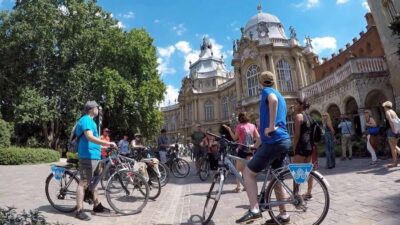
Vajdahunyad Castle is one of the park’s most entertaining sights. It looks like a medieval fortress, but it was created as a historical architectural display and brings together several styles. The guide explains why this so-called fake castle exists, which makes the stop more interesting than a quick castle photograph. You can also see the statue of Anonymous, a popular and slightly mysterious figure in Hungarian public art.
The route continues past the House of Music Hungary, a modern concert hall with an unusual design. The building provides a sharp contrast to the nineteenth-century Opera and the older monuments on Andrassy Avenue.
At the edge of the park, the Museum of Ethnography adds another modern architectural surprise. Its distinctive shape and raised design offer views toward the park and surrounding city. You do not enter, but the guide helps you read the building as part of Budapest’s current effort to reshape City Park.
This section is one of the tour’s best balances. You get statues, a castle-like building, green space, museums, and contemporary architecture without having to cross the city by public transport.
Same roads, a different saddle:
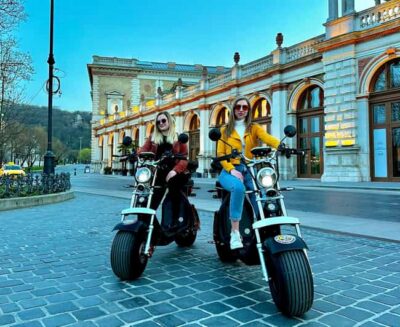
- Budapest: Guided Downtown Electric Bike Tour
★ 4.9 · 595 reviews - Budapest: Monster Bike Roller Guided City Tour
★ 5.0 · 538 reviews - Budapest Bike Tour
★ 5.0 · 365 reviews - Budapest: E-Bike Guided Tour and Castle Hill
★ 4.9 · 241 reviews
Parliament, the Danube, and Budapest’s painful memory
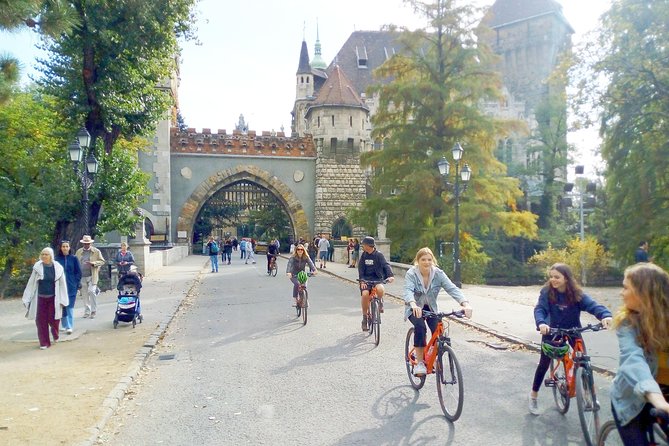
After City Park, the bicycle heads back toward central Pest and the river. St. Stephen’s Basilica is a short stop along the way. It is Budapest’s largest Catholic church and is known for the preserved right hand of St. Stephen, displayed under glass. You see the renovated exterior, but the tour does not enter the church.
Szabadság tér, or Liberty Square, offers a more complicated view of Budapest. It combines financial institutions with memorials tied to the Holocaust, the Second World War, and later political arguments. The square includes controversial and ironic elements, and your guide explains how these pieces reflect competing memories of Hungary’s past.
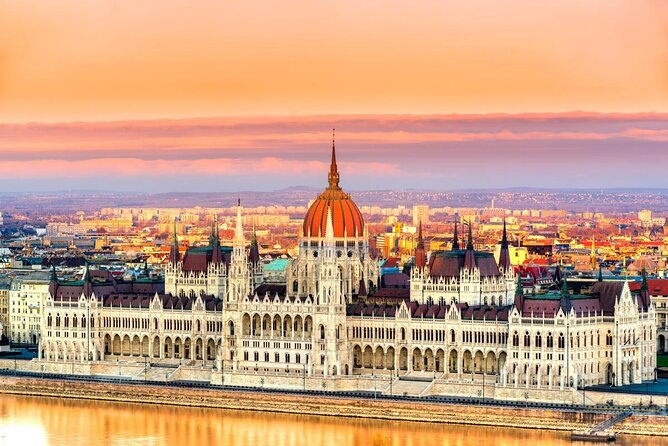
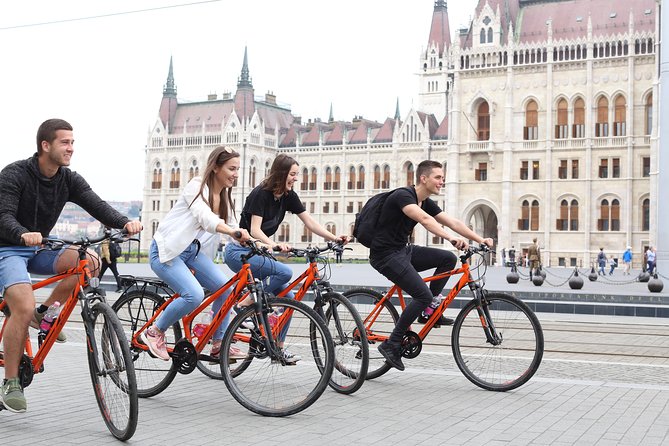
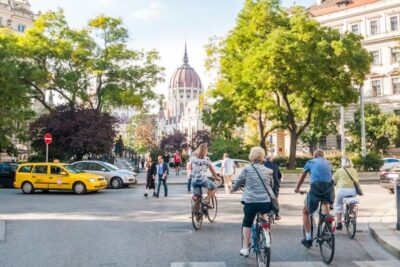
Then comes the Hungarian Parliament Building on the Danube. This is one of the tour’s major visual rewards. The ornate building remains an active government site, and the riverfront position gives you a broad view across to Buda.
You do not enter Parliament. That is important to understand before booking. The tour is about seeing the building, understanding its role, and taking in the river panorama, not touring the chambers.
Nearby, the Shoes on the Danube Bank memorial recalls Jewish people who were killed during the Second World War. The simple iron shoes along the river are among Budapest’s most powerful memorials. The group usually passes this point, but direct access may not always be possible because of traffic and street conditions.
The guide’s commentary is especially valuable in this central section. The buildings are impressive, but their meaning is not always obvious from the pavement. If traffic noise makes it hard to hear, move close to the guide before the group sets off again. One rider specifically found some commentary difficult to catch near traffic.
Across the bridges and along the Buda side
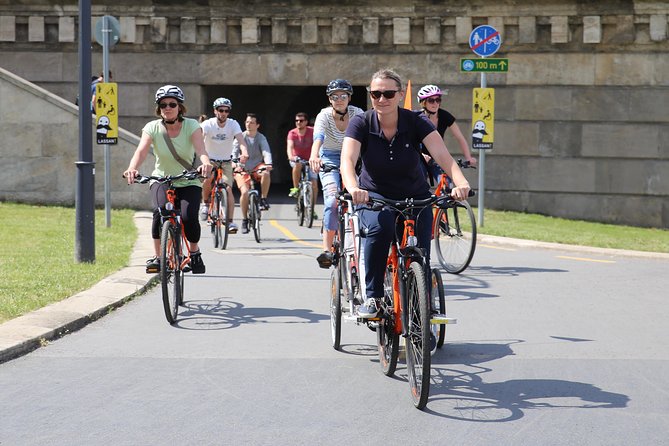
The route passes the Chain Bridge, the oldest bridge across the Danube in Budapest. Depending on the exact street conditions and traffic, you may see it while riding rather than stop for a long photo break.
Along the river, you pass Rudas Baths, one of Budapest’s oldest Turkish baths. Its historic bathing culture is still part of the city, but admission is not included. If you plan to return, check the opening schedule first, since the hammam has separate men’s and women’s days.
The route also reaches the Gellért Baths area, famous for its art deco design and position beside the river. The supplied route describes this as the last stop on the Buda side, but the bath itself is not visited.
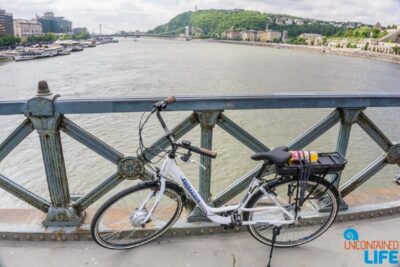
Liberty Bridge, or Szabadság híd, is another memorable crossing. It was originally associated with Emperor Franz Joseph and later took its present name after the end of the monarchy. The bridge is known as a meeting place for students and younger residents, and it gives you strong views along the Danube.
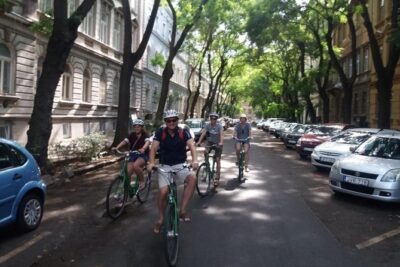
The ride may feel more demanding here if you are not used to city cycling. Some riders praise the mostly flat terrain, while others note that traffic can feel tense on roads where bike lanes overlap with cars. The guide’s role is important: Oliver and other guides have been praised for waiting at crossings, keeping nobody behind, and setting a safe pace.
Some groups have received e-bikes, including bikes with distinctive wooden frames, when low numbers made an upgrade possible. That can make hills much easier, especially if a longer version of the ride includes Buda Castle. Do not assume an e-bike is guaranteed. Book this experience expecting a regular bicycle unless the operator confirms otherwise.
The market, museum, and Great Synagogue finish
After Liberty Bridge, the route passes the Central Market Hall. This is not a food stop, but it is a useful suggestion for later. You can return to browse Hungarian food, produce, paprika, and the market atmosphere at your own pace.
The ride also passes the Hungarian National Museum. If you want a fuller account of Hungary and the many peoples who have lived in the region, this is a place to schedule separately. The bicycle tour gives you a general introduction, not enough time for a museum visit.
The final major stop is the Great, or Central, Synagogue at the edge of the Jewish Quarter. Its Moorish-style exterior is one of Budapest’s most recognizable religious buildings. You view it from outside, and admission is not included.
From the synagogue, you return to the starting point. That makes the tour convenient for a first morning or early afternoon activity. You can then return to any place that caught your attention, such as the market, Parliament, City Park, or one of the museums.
Price, pace, and what you receive
At $41.13 per person, the tour is priced fairly for a guided half-day ride that includes the bicycle, helmet, water, and luggage storage. The real value is the amount of ground covered and the guide’s historical context. You are paying for a route that connects sights scattered across several districts, not for entry to attractions.
The lack of admission tickets keeps the price down, but it also means you need a second plan for interiors. You will not enter the Opera, Parliament, House of Terror, either synagogue, St. Stephen’s Basilica, or the baths. That is a reasonable trade for an overview, but it matters if you want a museum-heavy day.
The tour is offered in English and has a 4.9 rating from 288 reviews, with 99 percent of participants recommending it. The strongest pattern is clear: guides such as Oliver and Thomas are praised for their history, patience, safety, and ability to adjust the pace. One guide also offered restaurant suggestions that proved useful later.
There are two practical weaknesses. First, stops can feel brief. One ride covered the city well but could have used more time for food, drinks, toilets, and photographs. Second, traffic noise can interfere with commentary, especially on busy roads. Stay near the guide and ask questions during the stops rather than trying to listen while riding.
Who should book this ride
This is a strong choice for you if you want a broad first look at Budapest, like learning history outdoors, and are comfortable riding in traffic. It suits independent visitors who want help building a plan for the rest of their stay.
It can also work for a novice who rides regularly and is willing to stay alert. Several riders found the pace manageable, and the route is mostly flat. Still, the operator says the tour is not recommended for beginners, so you should take that warning seriously if you are unsteady on a bicycle.
Children must be accompanied by an adult. The stated weight limit is 110 kilograms, and the tour is not recommended for people with visual impairment. Weather matters too. If poor weather cancels the ride, you can receive a different date or a full refund. Free cancellation is available up to 24 hours before the start time.
Should you book it?
Book this tour if you want to see Budapest’s main sights in one organized sweep and understand how the districts connect. I would choose it early in a stay, then return to the places that deserve more time.
Skip it if you want long museum visits, relaxed café breaks, or a fully car-free ride. You also should not book it if you rarely cycle or feel uneasy sharing roads with traffic.
For most confident riders, the combination of Parliament, Heroes’ Square, City Park, the bridges, the Jewish District, and the Danube offers good value. The tour gives you the city’s outline, its beauty, and some of its harder stories, all before you have worn out your walking shoes.
FAQ
Where does the Budapest Historic Downtown Bicycle Tour start?
The tour starts at Bike & Relax, Budapest, Madách Imre út 12, 1075 Hungary.
What time does the tour begin?
The scheduled start time is 10:30 a.m.
How long does the tour last?
The tour lasts approximately three hours and 30 minutes. Some rides may take closer to four hours.
What is included in the price?
The price includes bicycle use, a live guide, a helmet, bottled water, and free luggage storage during the tour.
Are attraction entrance fees included?
No. The tour does not include entry into buildings, so admission fees are not included.
Does the tour enter Parliament, the Opera, or the synagogues?
No. The route views these buildings from outside. It also does not include entry to the House of Terror Museum, St. Stephen’s Basilica, or the baths.
How many people can join the tour?
The activity has a maximum of 10 participants.
Is the tour suitable for beginner cyclists?
The operator does not recommend it for beginners. Most of the route is flat, but some bike lanes overlap with car lanes, and you need to be comfortable riding in city traffic.
Newest rides we have reviewed in Budapest
- Choose a bicycle and make your own tour in Budapest-24 hrs★ 4.6 · 16 reviews
- Budapest: Sunset guided bicycle ride★ 4.9 · 12 reviews
- Budapest ❤️Winter Bike Tour with Coffee Stop❤️★ 4.8 · 20 reviews
- Budapest: Historic Downtown Bicycle Ride with Scenic Views★ 4.8 · 151 reviews
- Budapest Highlights Bike Tour with a local guide★ 4.9 · 66 reviews
- Budapest: Guided Bike Tour Plus★ 4.7 · 62 reviews
- Budapest: Guided E-Bike Sightseeing Tour★ 4.8 · 51 reviews
- Budapest: E-Bike Guided Tour and Castle Hill★ 4.9 · 241 reviews
Budapest Cycling Tours, compared.
Historic Downtown Bicycle Ride with Scenic Views
Read our review →Other lists this ride turns up in