
REVIEW · SELF-GUIDED BIKE TOURS IN THE USA
Self-Guided GPS Audio E-Bike Tour Hawaii Volcanoes National Park
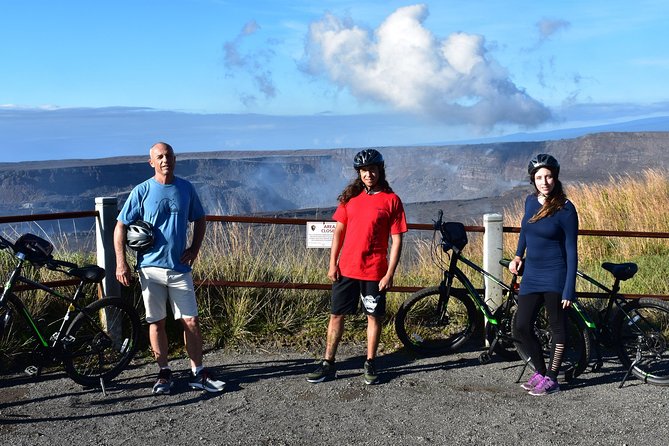
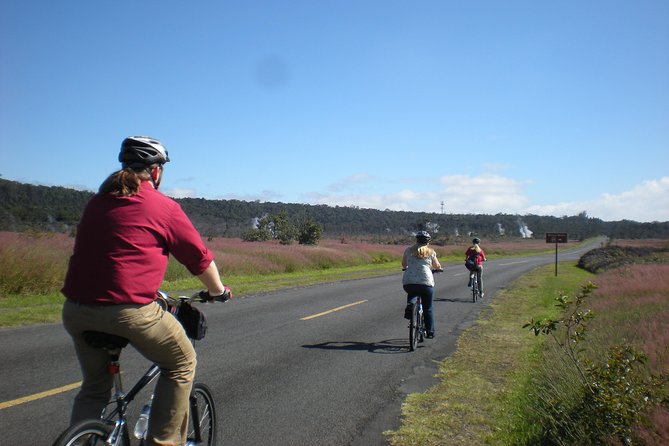
The best part of this tour is the freedom to explore Kilauea without sitting in a car or keeping up with a guide. You ride quiet park roads and bike paths, stopping for crater views, steam vents, rainforest, and lava fields whenever you like. I especially like the mostly downhill route and the chance to reach places where cars cannot park.
I also like that the tour combines riding with short walks, including Thurston Lava Tube, and leaves enough of the day for another Big Island activity. The tradeoff is that the GPS app depends on your own smartphone, and its audio controls can take some getting used to. Cool, wet summit weather is another real possibility.
Key points at a glance
- Mostly downhill riding: The route uses paved roads and paths, with only limited harder sections.
- Access beyond the car route: You can reach Keanakakoi Crater Overlook and other bike-access areas without hunting for parking.
- GPS storytelling: The app covers volcanic geology, Hawaiian culture, Pele, native plants, and park history.
- Short rainforest walk: The visit to Nahuku and Thurston Lava Tube adds a worthwhile break from the saddle.
- Useful base facilities: Secure parking, restrooms, a shaded staging area, and staff support are included.
- Plan for the summit: At about 4,000 feet, Kilauea can be chilly, misty, windy, and rainy even when the coast is warm.
Why an e-bike works so well at Kilauea
Hawaii Volcanoes National Park is too large to appreciate from a single overlook. Driving lets you cover ground, but busy stops can bring parking trouble, and a car keeps you separated from the forest air, bird calls, cool mist, and volcanic smells.
An e-bike gives you a better middle ground. You cover much more distance than you could comfortably walk, yet you remain outside for the whole ride. The electric assist also lets you choose your effort. You can pedal when you want exercise or use more assistance when the weather, hills, or long distance begin to wear you down.
The route is designed to be relaxed rather than athletic. Most of the riding is downhill or level, though you still need to steer, shift, balance, and control the bike on paved and gravel surfaces. This is not a good choice if you have never ridden a bicycle or feel uncertain handling one.
The tour lasts about four and a half hours, including setup, riding, stops, and walking. That is long enough to see several sides of the park without giving up your entire day. You return the bicycle at the original meeting point near Volcano village.
More E-Bike Tours in the USA
- Red Rock Canyon eBike Half-Day Tour
★ 5.0 · 1,870 reviews - Austin Biker Gang E-Bike Tour
★ 5.0 · 1,399 reviews - Asheville Historic Downtown Guided Electric Bike Tour with Scenic Views
★ 5.0 · 1,234 reviews
Starting at Bike Volcano near the park entrance
You begin at Bike Volcano on Old Volcano Road in Volcano, Hawaii. The operation provides an electric comfort hybrid bicycle, helmet, lock, and a safety orientation under a canopy. Secure parking and restroom access are useful extras, especially if you are arriving before spending several more hours in the park.
Give yourself time to get fitted. One family found that arriving early helped them get settled, and taller riders should provide their height in advance so the correct frame can be ready. You also need to provide your name, a Hawaii contact number, and a $1,500 pre-authorized equipment deposit per party.
The morning departure is listed for 9:30 a.m. The afternoon option begins at 12:30 p.m. and requires at least four riders. Another pickup note lists bicycle availability from 10 a.m. to 4 p.m., so I would confirm your exact departure time after booking rather than assume an early arrival guarantees an early start.
The most important preparation is your phone. You need a fully charged, functioning smartphone with internet access and the GPS audio app ready to use. Staff can explain the system, but they are not there to repair a phone that cannot connect or to complete all setup for you. A power bank is a smart addition because the map and audio can drain a phone battery quickly.
Riding toward Kilauea’s crater
After the briefing, you ride less than a mile to the park bike trail entrance. From there, the route takes you along the rim area of the active crater and onto quieter paths that are closed to most guided vehicle tours.
This is where the bicycle earns its keep. You can stop at viewpoints without squeezing into a tour bus schedule, pause for photographs, or linger when weather clears around the crater. The route connects several different environments: native fern forest, steaming vents, broad volcanic fields, and stark areas shaped by past eruptions.
The GPS narration fills in the story while you ride. It explains how the volcano formed, how lava changes the ground, and how plants return after an eruption. It also covers Hawaiian beliefs connected with Pele and stories tied to the land. I like the idea of learning in small pieces while moving through the places being discussed, rather than trying to absorb everything inside a visitor center.
The app is useful, but not perfectly simple. The map and audio commentary may open through separate links, and some people have found the controls less direct than expected. Download and test the app before setting off. Keep the phone where you can hear it without taking your attention from the road.
Nahuku and Thurston Lava Tube
One of the more memorable breaks is the short loop walk through Nahuku Crater. The walk takes about 15 minutes and leads through a shaded native rainforest filled with tall hāpuʻu ferns and other plants adapted to the volcanic setting.
The greenery here makes a sharp contrast with the open black lava fields. An audio segment explains the plants and the cultural meaning of the area before you reach Thurston Lava Tube, one of the park’s best-known sights.
Inside the tube, molten lava once moved through the ground and left a hollow passage behind. The cave is cool and enclosed, with smooth walls, hanging formations, and plant growth near the openings. It is a simple walk, but it changes the pace of the outing and gives you a close look at a feature that is easy to miss if you rush from one roadside stop to another.
Wear closed-toe shoes. You will also appreciate having a light jacket nearby, since summit weather and shaded volcanic spaces can feel much cooler than the coast.
More Self-Guided Bike Tours in the USA
- Red Rock Canyon Self-Guided Electric Bike Tour
★ 5.0 · 783 reviews - Haleakala Sunrise Best Self-Guided Bike Tour
★ 4.5 · 745 reviews - Best Haleakala Downhill Self-Guided Bike Tour with Maui Sunriders
★ 5.0 · 496 reviews - Self-Guided Ebike Tours of Acadia National Park Carriage Roads
★ 5.0 · 427 reviews
Kilauea Visitor Center and the park’s bigger story
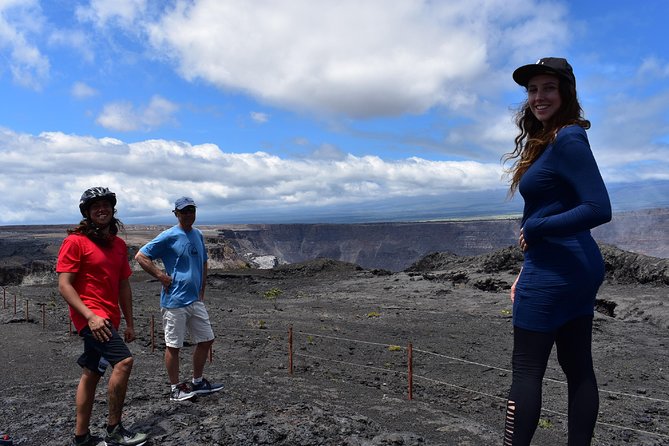
The Kilauea Visitor Center provides useful context for the ride. Exhibits cover volcanic forces, native wildlife, maps, and Hawaiian culture, including the connection between Pele and Kilauea. Park rangers can provide current safety information and explain which areas are open.
This stop is especially helpful if you want to understand what you are seeing beyond the basic label of crater or lava field. The park changes with eruptions, road closures, weather, and conditions around active areas. A short ranger conversation can help you make sensible choices for the rest of the day.
There is also a bookstore and gift shop. Since the bike tour is self-guided, this is a good place to add human context to the app’s narration. You are not simply following a route and checking off sights. You are building a clearer picture of how geology, plants, people, and ongoing volcanic activity fit together.
Keanakakoi Crater Overlook by bike
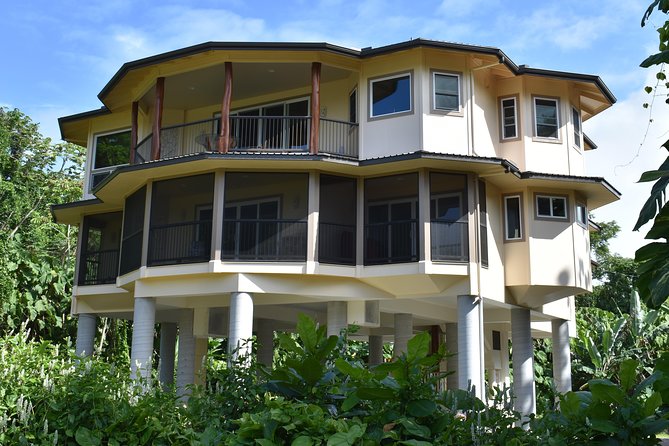
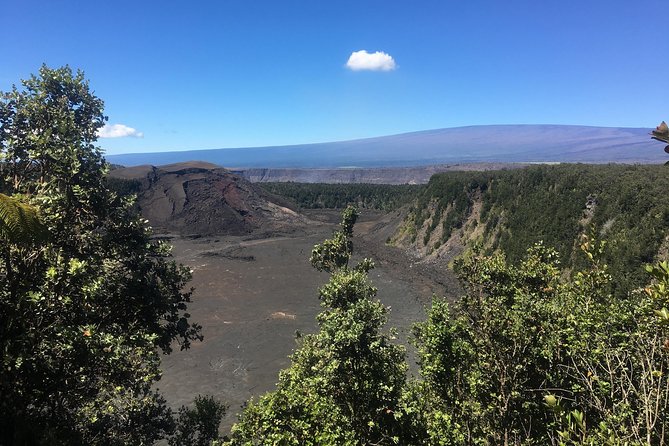
Keanakakoi Crater Overlook is one of the strongest reasons to choose a bicycle instead of a standard car visit. The area is accessible by bike or on foot, and the two-mile trail leads through koa and ʻōhiʻa forest before opening toward views of Halemaʻumaʻu Crater.
The overlook carries cultural importance as well as visual drama. It is associated with Pele, and the GPS narration explains volcanic activity, Hawaiian basalt quarrying, and the ecology along the route. The bicycle lets you reach the area without adding a long walk to an already busy park day.
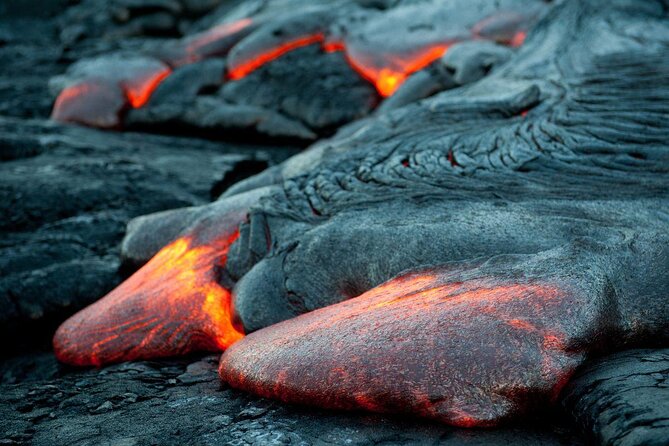
On rare days when conditions are right, you may see active lava, including fountains that can rise more than 1,000 feet. That possibility is exciting, but it should not be treated as a guarantee. Volcanic activity changes, and visibility depends on weather, daylight, and current park conditions.
The trail also offers a different angle on the crater than the main roadside overlooks. You can stop, look carefully, and take photographs without feeling pushed along by a vehicle queue. Follow all park rules, especially around walking paths and active areas. Bicycles are not allowed on every footpath, and park staff may remind you to stay on permitted routes.
What the $159 price really covers
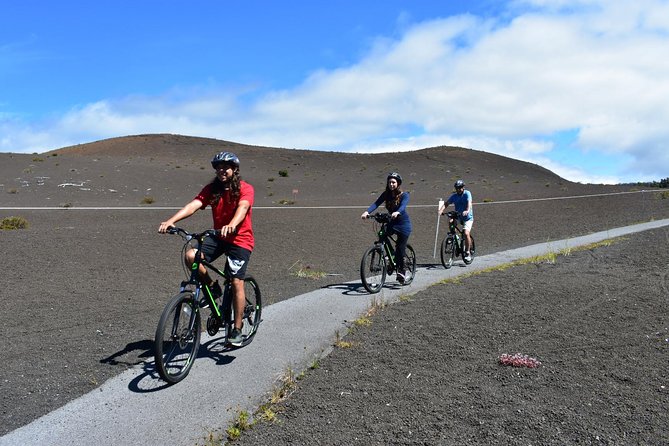
The tour costs $159 per person, before the national park entrance fee. The current entrance charge listed for this experience is $15 per person, so include that in your budget. A backpack can be rented for $5, while a rain jacket and bottled water are available for purchase nearby.
At first glance, this is not a cheap bicycle rental. The price includes the e-bike, helmet, lock, equipment setup, safety lecture, parking, restrooms, GPS audio app, and live staff support. You also get a route designed to cover a substantial part of the park without arranging your own bicycle, figuring out permitted roads, or dealing with parking at each stop.
The value is best for people who would otherwise rent a car and spend much of the day driving between viewpoints. It is less compelling if you only want a quick look at the crater or already have a full park plan by car. The tour is also not a challenging mountain-bike outing. One person expecting a harder ride found it too gentle, while many others appreciated the easy pace and adjustable electric assistance.
Remember the equipment deposit. It is a pre-authorization, not part of the tour price, but your credit card and identification are required.
Weather, clothing, and physical demands
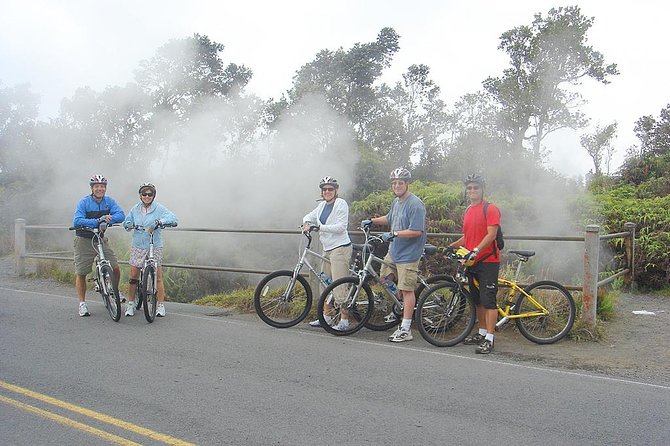
Kilauea’s summit sits far higher than the coast, so do not dress only for the beach. Temperatures can be 12 to 15 degrees cooler than at sea level, and conditions may turn wet, windy, misty, or chilly at any time of year.
Wear layers that you can add or remove while riding. Closed-toe shoes and protective eyewear are required. Bring sunglasses or prescription glasses, sunscreen, a hat, and a camera. A rain jacket is more useful than an umbrella on a bicycle, but it is not included.
The route is manageable for a recreational cyclist with moderate fitness. You will still need to balance, steer, shift, and control speed on both paved and gravel surfaces. Wet roads deserve extra care. Slow down before curves, leave space between riders, and do not assume electric assistance makes slippery conditions harmless.
The tour is not available to riders under 15 or to people weighing more than 270 pounds. It is a private activity for your own group, though other groups may be preparing at the same base.
Who should book this Kilauea bike tour?
I would choose this experience if you want to cover a lot of Hawaii Volcanoes National Park while remaining outdoors. It works particularly well for couples, families with older teenagers, and active adults who like to stop often and set their own pace.
It is also a good fit if parking worries you. You can reach bike-access areas and move between major sights without repeatedly returning to a car. The combination of riding, the lava tube walk, visitor center, and crater overlooks gives you more variety than a simple point-to-point bicycle rental.
I would hesitate if you dislike using a phone for navigation, have little cycling experience, need a fully guided tour, or want a strenuous ride. You also need to accept that the most dramatic feature, active lava, is dependent on nature and current conditions. The audio app cannot replace a live guide for every question, though staff are available for safety and park guidance.
FAQ
How long is the e-bike tour?
The experience takes about four hours and 30 minutes. The main park portion is described as about three hours, with additional time for setup, walking, and stops.
Where does the tour begin and end?
It begins at Bike Volcano, located at 19-3972 Old Volcano Road in Volcano, Hawaii. You return the bicycle to the same meeting point at the end.
What time does the tour start?
The morning pickup is listed for 9:30 a.m. An afternoon option begins at 12:30 p.m. and requires at least four riders. Confirm your exact departure time after booking because another operating note lists bicycle pickup from 10 a.m. to 4 p.m.
Is the national park entrance fee included?
No. The listed park entrance fee is $15 per person and must be purchased separately.
Do I need my own smartphone?
Yes. You need a fully functioning, fully charged smartphone with internet access to use the GPS audio app. The phone is not provided.
What equipment is included?
You receive an electric comfort hybrid bicycle, helmet, and lock. Parking, restroom access, a shaded staging area, the GPS audio app, and live staff assistance are also included.
Can I cancel if the weather is bad?
You can cancel up to 24 hours before the start time for a full refund. If the operator cancels because of poor weather, you will be offered another date or a full refund.
Should you book it?
Book this tour if you want an easy, flexible way to see Kilauea beyond the main car stops. The mostly downhill route, bike-only access points, Thurston Lava Tube, and crater views make the day feel active without demanding a serious cycling workout.
Skip it if you want a traditional guided excursion, have no confidence on a bicycle, or would rather explore entirely by car. For the right rider, though, $159 buys more than a bike: it buys time, access, parking relief, and a close-up view of one of Hawaii’s most unusual parks.
More Audio Tours in the USA
- Hawaii: Volcanoes National Park E-Bike Rental and GPS Audio
★ 4.8 · 16 reviews - Florence: 2.5 hour Audio Guided Bike Tour led by Tour Leader
★ 4.7 · 36 reviews - Sydney: Electric Bike Rental & Wheel Explorer Audio Guide
★ 4.9 · 19 reviews
More National Park Bike Tours in the USA
- Big Island: Fat Tire E-Bike Tour through Volcanoes National Park
★ 5.0 · 546 reviews - Guided Ebike Tour of Acadia National Park Carriage Roads
★ 5.0 · 408 reviews - Myakka State Park E-bike Safari
★ 5.0 · 407 reviews - Saguaro National Park East E-Bike Tour
★ 5.0 · 316 reviews
Newest rides we have reviewed in the USA
- History Ride: The Best of Buffalo by Bike★ 5.0 · 94 reviews
- Waterfront Ride: Outer Harbor History Bike Tour★ 5.0 · 15 reviews
- Rent an E-Bike and experience a fun, new way to explore Buena Vista, CO!★ 5.0 · 42 reviews
- Bryce Canyon E-bike Tour★ 5.0 · 147 reviews
- Manhattan and Brooklyn Bridge Bicycle Tour★ 4.5 · 60 reviews
- Bike Brooklyn NYC Like a Local by Original NYC★ 5.0 · 20 reviews
- Downtown Bike Tour with Stylish Dutch Bikes★ 5.0 · 21 reviews
- Hudson Valley Craft Brewery Bike Tour★ 5.0 · 23 reviews
National Park Bike Tours, compared.
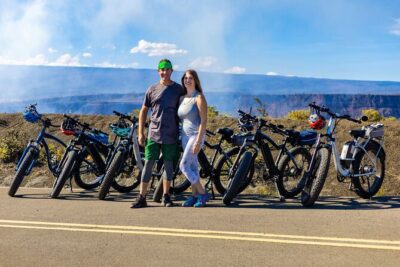
Big Island: Fat Tire E-Bike Tour through Volcanoes National Park
Read our review →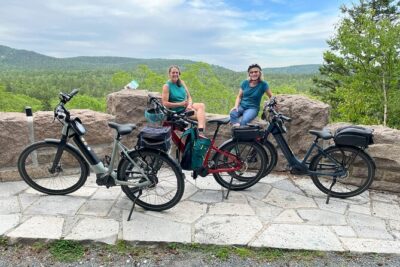
Self-Guided Ebike Tours of Acadia National Park Carriage Roads
Read our review →
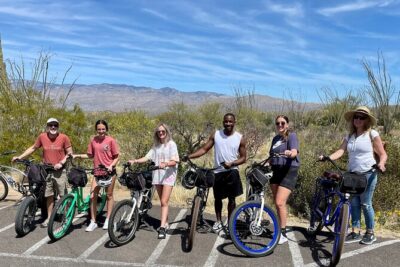
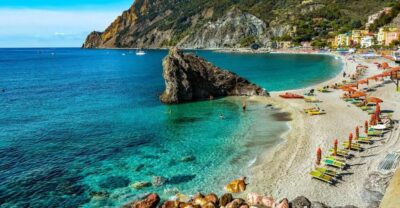
Monterosso al Mare: Cinque Terre National Park E-Bike Tour
Read our review →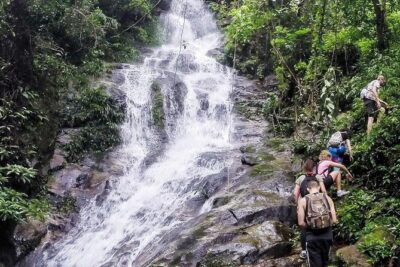
Chiang mai Hike & Downhill Bike Adventure –Suthep National Park
Read our review →
Suthep National Park Hiking & DH Mountain Biking
Read our review →
Other lists this ride turns up in