
REVIEW · BANGKOK
Past and Present Bike Tour of Bangkok
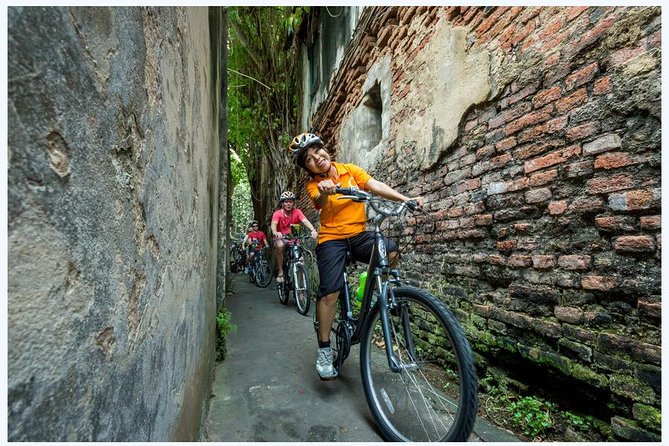
Bangkok makes more sense from a bicycle seat. This four-hour ride slips through Chinatown’s narrow lanes, crosses the Chao Phraya River by ferry and reaches three major temples on the quieter Thonburi side. You get a close look at daily life, not just a quick photo stop beside a famous monument.
I like the small maximum group of six, which lets the guide manage traffic and answer questions without shouting. I also like the mix of places: the Old Customs House, Muslim and Chinese neighborhoods, flower markets and Wat Arun all fit into one morning or afternoon. The catch is simple: you need moderate fitness and enough confidence to ride on narrow streets with other road users.
Key points to know before you book
- Chinatown by bicycle: Ride through lanes and alleys where shops, homes, food stalls and religious sites sit close together.
- Three temples on the Thonburi side: Visit Wat Arun, Wat Prayoon and Wat Kalayanamitr after crossing the Chao Phraya by ferry.
- Small-group format: The tour accepts a maximum of six people, giving the guide room to adjust the pace.
- Guides who add local color: Woody, Té, Kim, Jig and Qing are among the guides named in the tour feedback.
- A flexible four-hour outing: The planned duration is about four hours, though one outing lasted more than five.
- Useful extras included: Bicycle, helmet, ferry fees, free lockers and souvenir photos sent by email are covered.
Why a bicycle shows you more of Bangkok
Bangkok can feel sealed behind car windows, train doors and taxi air-conditioning. On a bicycle, you move slowly enough to notice the smells from markets, the sound of temple bells, the sudden change from a main road to a quiet lane and the mix of homes, workshops and shrines packed into the city.
This is not a race. The route uses streets and alleys, with stops where you leave the bicycle and walk around. That combination matters. Cycling gives you access to places a coach cannot reach, while the walking breaks keep the four-hour ride from becoming a test of endurance.
The group limit of six is one of the tour’s best practical features. Bangkok traffic can be confusing, and a small group is easier to guide across roads and through tight passages. It also gives you a better chance to hear the guide. Guides named in the feedback include Woody, Té, Kim, Jig and Qing. The exact guide depends on the departure, but the comments point to an important part of the experience: expect the human explanation to be central, not an afterthought.
More Cycling Trips in Bangkok:
- Bangkok: Temples, Canals & Local Life Bike Tour
★ 4.9 · 3,511 reviews - Experience Real Bangkok by Bike
★ 5.0 · 2,439 reviews - Bangkok: Bike and Canal Boat Tour with Lunch
★ 4.9 · 1,350 reviews
Starting near Charoen Krung Road
You meet at Bangkok Bike Tours, 69 Soi Charoen Krung 44, in the Bang Rak area. The tour ends at this same location, so you do not need to arrange a separate return transfer from the temples.
The base provides the bicycle and helmet. Free lockers are available, a helpful detail if you arrive with a small bag or want to ride without carrying valuables. You must provide your height when booking so the operator can prepare an appropriate bicycle frame. Bring a current passport or ID number on the day for insurance purposes.
You can choose a morning or afternoon departure. Morning is likely the better choice if you prefer cooler riding conditions, while an afternoon start may suit a slower day of sightseeing. The supplied information does not promise a particular weather plan, so check the local forecast and dress for heat, humidity and possible rain.
The Old Customs House and Bangkok’s river gateway
The first part of the route passes through a Muslim community toward the Old Customs House beside the river. This was an entry point for people arriving in Bangkok in earlier times, making it a useful place to begin a tour about the city’s past and present.
The stop also sets up the rest of the ride. Bangkok was shaped by water, trade and movement between communities. Here, you start thinking of the Chao Phraya not simply as scenery, but as the city’s working front door.
Do not expect a long museum visit at every stop. This is an active tour, and the guide keeps the route moving. You get short explanations, time to look around and a chance to ask questions. One helpful detail from the tour feedback is that guides may allow extra time at stops when the schedule permits.
Chinatown’s alleys, shops and mixed communities
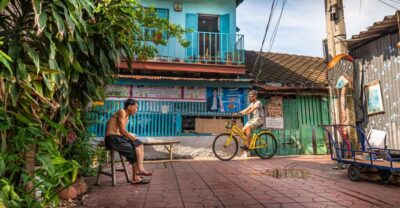
From the river, you pedal into Chinatown. The appeal is not one grand monument. It is the close-up view of lanes where commerce, worship and home life share the same small spaces.
You follow the guide through the maze of streets and alleys, seeing the neighborhood at ground level. Chinatown is a good place for a bicycle because many of its smaller passages are too tight for a large sightseeing vehicle. You can stop, turn and continue without losing the sense of how the district fits together.
The route also introduces the area’s mix of cultures. The tour begins in a Muslim community, moves through Chinatown and later reaches Thai Buddhist temples. That range gives the ride more substance than a simple list of photo stops. You are seeing how several communities occupy one old part of Bangkok.
The narrow streets require care. This is the point where cycling ability matters most. The tour information calls for moderate fitness, and one review specifically describes it as a good choice for someone comfortable riding on narrow streets. If you rarely cycle or feel uneasy around traffic, this may not be the right Bangkok activity.
Same roads, a different saddle:
- Bangkok Classical Bicycle Tour
★ 4.8 · 1,278 reviews - Bangkok: Night Bike Tour with Temples & Flower Market Visit
★ 4.8 · 751 reviews - Bangkok: Must-Try Hidden Bike & Food Experience
★ 4.9 · 613 reviews - Bangkok Jungle Bike Tour – Hotel-pickup & Lunch
★ 5.0 · 489 reviews
Flower and vegetable markets at street level
The next section takes you to flower and vegetable markets. Markets are among the best places to understand Bangkok because they operate on a practical rhythm. Flowers, produce and people move through the same space, and the scene changes by the hour.
You will not just view the market from a bus window. You arrive by bicycle, stop with the group and walk around. The tour information does not specify how long you spend there, so allow for a guided visit rather than a long, unstructured shopping stop.
This is also one of the places where your senses do much of the work. Look for color, listen to the activity around you and pay attention to how quickly the market connects with the surrounding streets. Keep your belongings secure and follow the guide closely, since market areas can be crowded and the group may need to move on at a set time.
Crossing the Chao Phraya by ferry
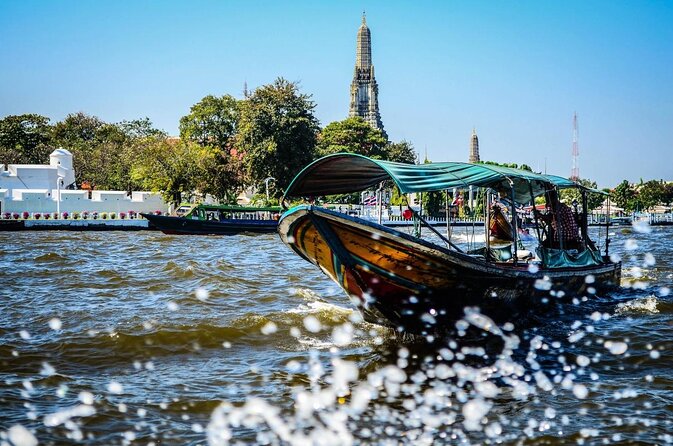
The ferry ride is a small part of the itinerary, but it changes the feel of the day. You load the bicycles, cross the broad Chao Phraya and reach Thonburi, the historic side of Bangkok west of the river.
The ferry fee is included, so you do not need to handle a separate fare during the tour. More important, the crossing gives you a view back toward the riverfront and the temples that define Bangkok’s skyline.
The river also explains why this route works so well. You are not simply visiting two disconnected neighborhoods. You are tracing a real link between them, using the same waterway that has shaped trade, settlement and transport for generations.
Wat Arun, Wat Prayoon and Wat Kalayanamitr
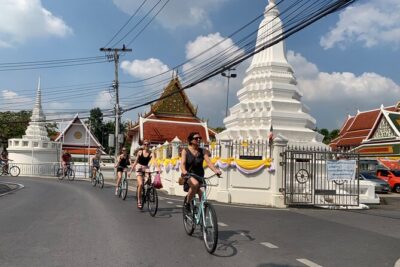
On the Thonburi side, the tour visits three temples: Wat Arun, Wat Prayoon and Wat Kalayanamitr. Each adds a different layer to the route, and together they give you a strong introduction to Thai religious architecture and local temple life.
Wat Arun is the best-known name of the three. Its position beside the river makes it one of Bangkok’s most recognizable sights. The tour allows time to look around its temple grounds, gardens and exhibitions rather than treating it as a quick stop for a single photograph.
Wat Prayoon provides another view of Thai temple design and worship. Wat Kalayanamitr completes the trio, giving you a chance to see a temple that may not receive the same attention as Wat Arun but remains part of the district’s religious character.
The tour data does not promise entry into every building or a private temple explanation, so your guide’s timing and the conditions on the day will shape the visit. Dress respectfully for the temple stops. Keep shoulders and knees covered, and follow any instructions given at the sites.
You also need to allow for walking. The bicycles are useful for getting between places, but you will leave them behind at stops and explore on foot. The activity specifically notes a moderate amount of walking, so comfortable shoes are more useful than stylish but delicate footwear.
What the guide adds to the ride
A route through Bangkok’s old districts can be confusing without context. The guide helps connect the buildings and neighborhoods instead of leaving you to guess what you are seeing.
Woody is praised in the supplied feedback for giving explanations throughout the ride and allowing time at different stops. Kim is described as energetic and well informed about the local area. Té is associated with visits to quiet backstreets and local neighborhoods, while Jig helped explain Bangkok’s social, cultural and religious life. Qing is noted for being friendly and polite, with a route that felt well managed and safe.
These names are useful because they show the range of guiding styles you might encounter. Some guides may focus more on facts, others on local atmosphere or route management. The important point is to ask questions as you ride. With no audio device or written guide listed, the live conversation is where much of the value lies.
The route can also be adjusted in some circumstances. One departure became a private ride after another person canceled, and the guide was able to tailor it to the rider’s preferences. Do not count on a private tour, but a small group gives the guide more room to respond to the people present.
Duration, fitness and riding conditions
The advertised duration is about four hours. In practice, the pace can vary. One outing lasted more than five hours, so avoid scheduling a flight, massage or important dinner immediately afterward.
You should be able to pedal for several hours, stop and start often, walk around temple grounds and handle a bicycle in narrow streets. Children must be accompanied by an adult. The tour is described as family-friendly, but that does not mean every child will enjoy it. A young rider needs enough control and stamina to stay with the group.
The operator requests every rider’s height in advance so the bicycle frame can be matched properly. That is worth taking seriously. A poor fit becomes uncomfortable quickly in Bangkok’s heat, especially when the route includes frequent stops and starts.
The helmets and bicycles are included. A review also described the bicycles as excellent, though equipment can change over time. Wear secure footwear, bring sun protection and carry water if you prefer your own supply. Free cold water and soft drinks are available back at the base after the ride.
What the $35.68 price covers
At $35.68 per person, this is a strong value if you want transport, a guide and several major sights in one half-day. The price includes the bicycle, helmet, ferry fees, local guide, lockers and souvenir photos emailed after the tour.
The value comes from the route as much as the equipment. You get Chinatown, the markets, a river crossing, Thonburi and three temples without arranging separate taxis or ferry tickets. You also avoid spending your limited Bangkok time trying to find the right alleys on your own.
Lunch is not included, and alcoholic drinks are available to buy only after the tour. Hotel pickup and drop-off are not included either. You need to make your own way to Charoen Krung Road and return from there, so add local transport costs to your budget.
For a short introduction to Bangkok, the price is fair. It is less suitable if you want a relaxed temple tour with lots of time inside each site. The bicycle is the main way you cover ground, and the route’s strength is variety.
Who should book this Bangkok bike tour
I would choose this tour for a first or second visit to Bangkok when you want to see how neighborhoods connect. It suits active families with older children, couples, solo riders and anyone who prefers local streets to a standard sightseeing circuit.
It is especially useful early in a trip. The guide can help you get your bearings, and the route introduces the river, Chinatown, Bang Rak and Thonburi in one outing. You may also find it useful after visiting Bangkok’s major central sights, since this ride shows a less polished side of the city.
I would think twice if you dislike heat, narrow lanes, market crowds or frequent bicycle stops. It is also not ideal if you need hotel transport or want a fully accessible activity with minimal walking. The operator asks for moderate fitness, and that requirement is real.
Free cancellation is available if you cancel at least 24 hours before the local start time. Changes or cancellations inside that window are not refunded, so leave some flexibility if your Bangkok plans are unsettled.
Should you book it?
Book this tour if you want Bangkok at street level, with a small group, a ferry crossing and a guide who can explain the city as you move through it. The combination of Chinatown, markets, Thonburi and three temples gives you a fuller picture than a single landmark visit.
Skip it if you are not comfortable cycling on narrow streets or if you need a slow, highly structured temple tour. For capable riders, the $35.68 cost buys a well-filled half-day and access to parts of Bangkok that are easy to miss from a car.
FAQ
How long does the Past and Present Bike Tour of Bangkok last?
The planned duration is approximately four hours. The timing can run longer, as one tour lasted more than five hours.
Where does the tour start and finish?
It starts at Bangkok Bike Tours, 69 Soi Charoen Krung 44, Talad Luang, Bang Rak, Bangkok. The tour ends back at the same meeting point.
Is hotel pickup included?
No. Hotel pickup and drop-off are not included, and you must arrange your own transportation to and from the meeting point.
What is included in the price?
The price includes a local guide, bicycle, helmet, ferry fees, free lockers at the headquarters and souvenir photos emailed after the tour. Cold water and soft drinks are available at the base after the ride.
How many people are in the group?
The maximum group size is six people. A booking can include up to six people, and you should contact the operator if your party is larger.
Do I need to be physically fit?
Yes. You need a moderate level of fitness for cycling, walking at the stops and riding on narrow streets. Children must be accompanied by an adult.
Can I choose a morning or afternoon departure?
Yes. The tour offers a choice of morning or afternoon departure.
Is the ferry crossing included?
Yes. Ferry fees for crossing the Chao Phraya River are included in the tour price.
Newest rides we have reviewed in Bangkok
- Bamboo Bicycle Tour in twilight: watch dancing Fireflies in Bangkok★ 5.0 · 228 reviews
- Bangkok City Bike Tour – Hotel-pickup & Lunch★ 5.0 · 27 reviews
- The Original Bicycle Tour in the Green Jungle of Bangkok★ 5.0 · 106 reviews
- Bangkok Green Oasis 4-Hour Bike Tour with Boat Ride★ 5.0 · 46 reviews
- Green Bangkok Bicycle Tour★ 4.5 · 59 reviews
- Half-Day Bangkok Bike Tour Including Lunch★ 5.0 · 257 reviews
- Colors of Ayutthaya Full-Day Bike Tour★ 5.0 · 60 reviews
- Family Bicycle Tour in the Green Oasis of Bangkok on Bamboo bikes★ 5.0 · 19 reviews
Bangkok Cycling Tours, compared.
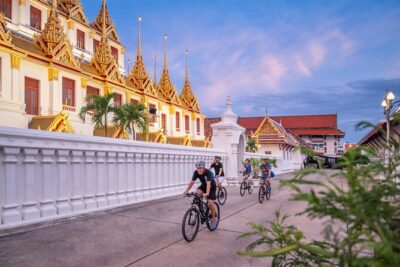
Night Bike Tour with Temples & Flower Market Visit
Read our review →
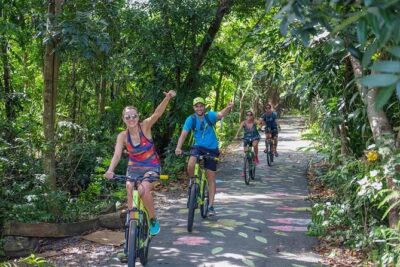
Bangkok Jungle Bike Tour – Hotel-pickup & Lunch
Read our review →
Bangkok Experiences Bike Tours-Backstreets and Hidden Gems
Read our review →Other lists this ride turns up in